
Jan Aushadhi Kendras to stay open during nationwide pharmacists’ strike tomorrow; assure uninterrupted medicine supply
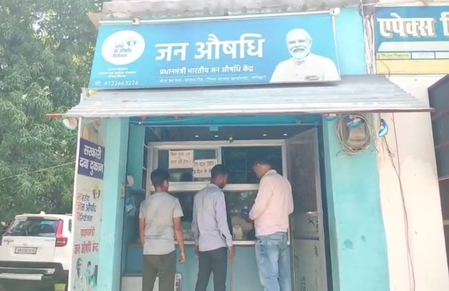
Patna, May 19 (IANS) Even as pharmacy operators across India have called for a one-day strike on Wednesday over the lack of clear regulations governing e-pharmacies, the Pradhan Mantri Bhartiya Janaushadhi Pariyojana (PMBJP) Kendras will remain operational, ensuring uninterrupted access to medicines.
The decision was taken by the PMBJK Retailer Association, which announced on Tuesday that Jan Aushadhi Kendras will continue to function, particularly at major hospitals such as AIIMS and Patna Medical College and Hospital, to avoid inconvenience to patients.
The nationwide strike by chemists has been called to demand a clear legal framework for the online sale of medicines, commonly referred to as e-pharmacy.
Industry representatives said that the absence of proper regulations has turned the sector into a grey area, raising serious concerns about public health and safety.
Pharmacists have flagged issues such as the easy availability of narcotics and Schedule H drugs online without adequate checks, which they say is contributing to misuse and societal harm.
According to pharmacy professionals, traditional chemists operate under strict provisions of the Drugs and Cosmetics Act, which mandate prescription verification and limit the quantity of medicines dispensed.
In contrast, they claim that e-pharmacies often lack such safeguards.
Ravi Kumar, associated with the Bihar Chemists and Druggists Association, emphasised that uniform regulations should apply to both online and offline pharmacies to ensure patient safety.
Prasanna Kumar Singh, President of the Bihar Chemists and Druggists Association, said that many medicines require strict temperature-controlled storage (cold chain), which is often compromised during online delivery via courier services.
He warned that such lapses can reduce the efficacy of medicines and, in some cases, make them harmful.
Additionally, concerns were raised about the circulation of counterfeit drugs and the lack of proper return mechanisms in online transactions.
The association also highlighted the financial strain on traditional pharmacies due to the rapid growth of e-pharmacies.
In areas like Govind Mitra Road in Patna -- a major pharmaceutical hub -- more than 900 wholesale and retail shops reportedly generate significant monthly business.
However, the rise of online medicine sales has led to an estimated 10 per cent decline in business for offline retailers.
In Bihar alone, the sector is reportedly incurring losses of around Rs 20 crore per month, forcing many shop owners to reduce staff.
--IANS
ajk/khz
No cosmetic permitted to be used as injection: CDSCO

New Delhi, May 19 (IANS) The Central Drugs Standard Control Organisation (CDSCO) said that cosmetic products are not permitted to be used through injections and warned that such practices violate provisions of the Drugs and Cosmetics Act, 1940, and Cosmetics Rules, 2020, according to a notice released on Tuesday.
In a public notice, the CDSCO said products supplied in injectable form do not fall under the definition of cosmetics and cannot be used by consumers, professionals or aesthetic clinics.
“No cosmetic is permitted to be used for injection by consumers, professionals or aesthetic clinics. Cosmetics are only intended to be rubbed, poured, sprinkled or sprayed on the human body,” the notice stated.
The regulator clarified that cosmetics are legally defined as products intended for cleansing, beautifying, promoting attractiveness or altering the appearance of the human body or any part thereof.
“Cosmetic means any article intended to be rubbed, poured, sprinkled or sprayed on, or introduced into, or otherwise applied to, the human body or any part thereof for cleansing, beautifying, promoting attractiveness, or altering the appearance, and includes any article intended for use as a component of cosmetic,” the regulatory stated in the notice.
It further stated that cosmetics are not permitted to be used for treatment purposes by professionals or individuals.
The CDSCO also warned against misleading claims and use of prohibited ingredients in cosmetic products, stating that such violations attract action under the Drugs and Cosmetics Act and related rules.
“As per the provisions of labelling, no cosmetic may purport or claim to convey any idea which is false or misleading to the intending user,” the notice said.
The regulator added that no person is allowed to alter, obliterate or deface any inscription or mark made by the manufacturer on the container, label or wrapper of a cosmetic product.
The CDSCO noted that the list of Generally Not Recognized as Safe (GNRAS) and restricted ingredients is published by the Bureau of Indian Standards (BIS).
The health regulator urged the public to report any such violations or suspicious activities to the regulatory authority or the respective state licensing authorities.
--IANS
ag/
Gujarat: Rajkot reports minimal vector-borne diseases amid intensified mosquito control
Rajkot, May 19 (IANS) Rajkot reported only one dengue case during the week of May 11-17, with no cases of malaria or chikungunya, according to the Rajkot Municipal Corporation’s health department, which credited sustained mosquito control and surveillance efforts across the city.
The department stated that dengue-carrying Aedes mosquitoes bite during the daytime and can transmit infection rapidly when they bite multiple individuals, particularly in densely populated areas.
It further noted that mosquito breeding tends to increase in urban areas due to the availability of stagnant clean water sources, alongside lapses in sanitation and public negligence regarding household hygiene.
The civic body said that the mosquito’s short life cycle and rapid reproduction contribute to the quick escalation of infestations if not controlled in time.
As part of vector control measures, anti-larval operations were carried out in 29,155 houses during the reporting week.
Fogging was conducted in 133 houses by field teams, while vehicle-mounted fogging machines were deployed in areas with higher mosquito density.
"Sensitive residential localities, public roads and locations with higher human footfall were included in the fogging coverage," the department said.
In addition to household-level action, inspections were conducted at 655 premises, including construction sites, schools, hospitals, hotels, industries, hostels, commercial complexes, scrap yards, cellars, halls, farmhouses, party plots, religious places, petrol pumps and government offices.
Following inspections for mosquito breeding sources, notices were issued under municipal by-laws to 245 residential premises and 32 commercial establishments.
The civic body also stated that owners, occupiers or responsible persons of premises where mosquito breeding was found are held accountable, and notices along with administrative charges are issued in such cases.
For mosquito-borne diseases during the week, the city recorded zero malaria cases, one dengue case and zero chikungunya cases.
Cumulative data from January 1 shows three malaria cases, 14 dengue cases and one chikungunya case.
The department also provided details of other communicable diseases recorded during the same period.
There were 606 cases of cold and cough, 819 cases of general fever, 429 cases of diarrhoea and vomiting, and three cases of typhoid fever.
Year-to-date figures show 15,838 cases of cold and cough, 13,950 cases of general fever, 5,052 cases of diarrhoea and vomiting, 13 cases of typhoid fever and 22 cases of jaundice.
No cases of dysentery or cholera were reported either during the week or in cumulative figures since the beginning of the year.
As part of water-borne disease prevention measures, 1,434 chlorine tests were carried out during the reporting period to monitor water safety and reduce the risk of infection spread.
The health department reiterated that prevention of vector-borne and water-borne diseases depends on sustained surveillance, timely civic intervention and public cooperation in eliminating potential breeding sites.
--IANS
mys/skp
Alembic Pharma shares tumble over 9 pc after weak margins performance

Mumbai, May 18 (IANS) Shares of Alembic Pharmaceuticals Limited fell more than 9 per cent on Monday after the Gujarat-based drugmaker reported lower-than-expected earnings for the March 2026 quarter, with pressure on operating margins weighing on investor sentiment.
The stock declined as much as 9 per cent to hit an intra-day low of Rs 710.70 on the National Stock Exchange of India (NSE).
At the closing bell, the shares were down by 7.42 per cent or Rs 58.20 at Rs 725.90. On a year-to-date basis, the stock has declined around 7 per cent.
The company’s market capitalisation stood at Rs 14,142 crore. The stock has touched a 52-week high of Rs 1,107.90 and a 52-week low of Rs 635.80.
For the fourth quarter of FY26, Alembic Pharmaceuticals reported a 29 per cent year-on-year rise in consolidated net profit to Rs 202 crore, compared to Rs 157 crore in the corresponding period last financial year.
Revenue from operations increased 4.4 per cent year-on-year to Rs 1,848 crore from Rs 1,770 crore in the year-ago quarter.
However, operating performance remained weak during the quarter. EBITDA declined 16.2 per cent year-on-year to Rs 228 crore from Rs 272 crore, while EBITDA margin narrowed sharply to 12.3 per cent from 15.4 per cent in the same period last financial year.
The company’s India-branded business grew 4 per cent year-on-year to Rs 568 crore during the quarter, supported by growth in gynaecology, gastrology, ophthalmology and animal healthcare segments.
Alembic also launched two new products in the domestic market during the quarter. Its international business rose 11 per cent year-on-year to Rs 564 crore, led by the US formulations business.
During the quarter, the company launched six products in the US market, while revenue from the ex-US generics business stood at Rs 369 crore. Alembic also received four ANDA approvals during the quarter.
--IANS
pk
Zydus Wellness’ net profit nearly halved in FY26
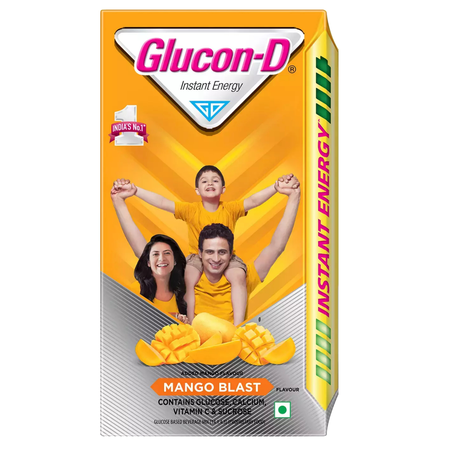
Mumbai, May 18 (IANS) Consumer wellness company Zydus Wellness Limited, which owns brands such as Sugar Free and Glucon-D, on Monday reported a nearly halved profit for FY26.
The company’s consolidated net profit for the financial year fell 47 per cent year-on-year to Rs 197 crore, even as consolidated net sales rose 46.4 per cent to Rs 3,940 crore.
For the March quarter, consolidated net profit declined nearly 6 per cent year-on-year to Rs 162 crore, according to its stock exchange filing.
However, consolidated revenue from operations surged 62.1 per cent to around Rs 1,476 crore compared to the corresponding quarter last financial year.
The company said topline growth during the year was driven by contributions from newly acquired businesses, although profitability remained under pressure due to integration-related expenses and higher operational costs.
Operating performance remained relatively stable, with EBITDA rising 34.2 per cent year-on-year to Rs 509 crore during FY26.
The board of directors recommended a final dividend of Rs 1.20 per equity share of face value Rs 2 for the financial year, subject to shareholder approval at the annual general meeting scheduled for August 4.
Among its key brands, the company said Sugar Free maintained its dominance in the sugar substitute category with a market share of 96.1 per cent.
The brand also expanded into adjacent categories through new launches, including Sugar Free D’lite Choco Spread.
Protein snacking brand RiteBite Max Protein continued to scale up operations and improved profitability to near double-digit EBITDA margins.
The company attributed the improvement to new product introductions such as protein drinks and functional snack bars.
Hydration brand Glucon-D retained leadership in its segment with a 58.9 per cent market share while also expanding into performance hydration products.
In the skincare segment, Everyuth maintained strong market positions across scrubs and peel-off masks, while Nycil continued to lead the prickly heat powder category.
The company added that its broader nutraceutical and wellness portfolio, including brands such as Nutralite and Complan, continued to witness steady momentum during the year, although overall earnings remained impacted by cost pressures and integration expenses linked to acquisitions.
--IANS
pk
Emcure Pharma receives 7 observations from USFDA after Gujarat plant inspection

New Delhi, May 16 (IANS) Emcure Pharmaceuticals on Saturday said the United States Food and Drug Administration (US FDA) completed a current Good Manufacturing Practices (cGMP) inspection at its formulations manufacturing facility in Sanand, Ahmedabad, Gujarat, and issued a Form 483 with seven observations.
The inspection was conducted between May 6 and May 15, 2026, at the company’s facility located in the G.I.D.C. industrial area in Taluka-Sanand, Ahmedabad. According to the company, the observations raised by the USFDA are procedural in nature.
Emcure Pharmaceuticals said it is taking corrective steps to address the observations comprehensively and will submit its response to the US health regulator within the stipulated timeline. Under USFDA norms, companies are generally required to respond to Form 483 observations within 15 days.
A Form 483 is issued by USFDA inspectors after the completion of an inspection when conditions or practices are observed that may constitute deviations from cGMP regulations. The observations are discussed with the company during the closing conference, but the issuance of a Form 483 does not indicate a final determination on the facility’s compliance status.
The regulatory update came alongside the company’s strong quarterly earnings performance. Emcure Pharmaceuticals reported a 29 per cent year-on-year increase in net profit for the quarter at Rs 243 crore, compared with Rs 189 crore in the corresponding period last financial year.
Revenue from operations rose 16.7 per cent year-on-year (YoY) to Rs 2,469.7 crore from Rs 2,116.2 crore, driven by growth across key markets.
EBITDA increased 19.2 per cent to Rs 479.5 crore, while EBITDA margins improved marginally to 19.4 per cent from 19 per cent in the year-ago quarter.
The company’s international business continued to remain the primary growth driver, with revenue rising 25.7 per cent year-on-year to Rs 1,493 crore, aided by expansion in the base business and new product launches.
Domestic sales grew 5.2 per cent to Rs 977 crore, though growth was partially impacted by weaker performance in the Zuventus portfolio and organisational restructuring initiatives.
Shares of Emcure Pharmaceuticals ended Friday’s trading session at Rs 1,702.30 apiece on the BSE, up Rs 28.90 or 1.73 per cent from the previous close.
--IANS
pk
SCTIMST developing world-class, cost-effective indigenous medical devices: Dr. Jitendra Singh
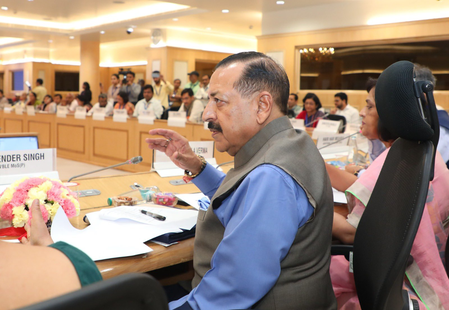
New Delhi, May 16 (IANS) Union Minister of State (Independent Charge) for Science and Technology and Earth Sciences Dr. Jitendra Singh on Saturday praised the Sree Chitra Tirunal Institute for Medical Sciences and Technology (SCTIMST) for developing world-class, indigenous and affordable medical devices and successfully transferring innovative technologies to industry every year.
Virtually addressing the annual convocation of the 42nd batch of SCTIMST in Thiruvananthapuram, Singh congratulated the graduating students and the institute on its Golden Jubilee celebrations.
He highlighted the institute’s growing contribution to healthcare innovation, medical research and advanced clinical care.
“The institute’s unique focus on creating highly effective, indigenous and cost-efficient medical devices has made it one of the leading institutions of its kind,” the minister stated.
“Several technologies developed at the institute are transferred to industry annually, including seven technologies scheduled for transfer this year,” he added.
Singh also lauded the approval for the appointment of nearly 800 permanent faculty members, stating that the move would almost double the institute’s working capacity.
He appreciated the Ministry of Health and Family Welfare for establishing the nine-floor Pradhan Mantri Swasthya Suraksha Yojana (PMSSY) block and the four-floor services block, saying the facilities would strengthen SCTIMST into one of the country’s largest centres for neurosurgery and cardiac sciences.
He congratulated the institute’s doctors for treating over 17,000 patients under the Ayushman Bharat scheme since 2020.
Referring to the foundation stone laid by Prime Minister Narendra Modi for the Malini Vasundhara Centre, Singh described it as a major step forward in precision-based and non-invasive treatment for neurological and oncological diseases.
Highlighting the institute’s collaborative initiatives, Singh referred to the eight-institution MoU initiative as a unique effort that brought together leading national institutions to create a synergistic research ecosystem and strengthen interdisciplinary innovation in healthcare and science.
The minister also appreciated the collaboration between the Indian Space Research Organisation and SCTIMST in the field of space medicine, stating that the partnership would open new opportunities for research, innovation and clinical practice in emerging medical science domains.
--IANS
pk
Palm oil shouldn’t be defamed without evidence: Experts

New Delhi, May 15 (IANS) Palm oil is crucial for India’s edible oil security and reduced import dependence, experts said at an event held this week, adding that it should not be defamed without adequate evidence, PHDCCI said on Friday.
Food Safety and Standards Authority of India said that it does not endorse or defame any food ingredient without credible scientific evidence and called for balanced, evidence‑based public messaging.
In a conference on edible oils held by PHDCCI and AYUSH Committee, Dr. Alka Rao, Advisor, FSSAI said palm oil continues to be widely used in Indian households and the food industry owing to its stability and suitability for high-temperature cooking applications.
"Our stakeholder consultation framework remains open and inclusive, allowing individuals, industry bodies and experts to present scientific data and perspectives for consideration.
India’s apex food regulator, FSSAI remains committed to promoting evidence-based nutrition awareness and encouraging balanced, informed dietary choices among consumers," she said.
The interactive conference drew over 90 delegates from industry, hospitals and academia and featured three technical sessions on palm oil science, food labels and the truth about saturated and trans fats.
Speakers emphasised the role of palm oil in food security and affordability and urged clarity in public discourse.
India’s renewed focus on strengthening domestic palm oil cultivation is a significant step towards strengthening the country’s edible oil security and reducing import dependence, said Dr. Shri Rishi Kant, Additional Economic Advisor, Department of Agriculture & Farmers Welfare, Ministry of Agriculture & Farmers Welfare.
Through initiatives such as the National Mission on Edible Oils, the government is creating an enabling ecosystem for farmers through improved infrastructure, financial incentives and stronger market linkages, the release said.
India has also expanded its oil palm cultivation ambitions significantly, with the targeted area increasing from 6.5 lakh hectares to nearly 10 lakh hectares by 2025–26, it added.
Dr. Vivek Srivastav, Chair, Nutraceuticals Task Force, PHDCCI & CEO, Multani Pharmaceuticals Ltd said palm oil is often misunderstood due to selective interpretation of data and social media narratives.
Palm oil offers a balanced fatty acid profile along with beneficial antioxidants when consumed in moderation, he said.
On the sustainability front, he pointed out that palm oil is one of the most efficient oil crops and that responsible, sustainable production practices are already being adopted globally.
Dr. Narendra Tripathi, Co-Chair, Nutraceuticals Task Force, PHDCCI & AVP-Quality & Regulatory Affairs, Bacfo India Limited said that palm oil is the most consumed vegetable oil in the world, contributing nearly one third of global vegetable oil production.
"Its widespread use is not accidental but driven by efficiency, affordability, and versatility. For a country like India, where ensuring food affordability is critical, palm oil plays a significant role in meeting the edible oil demand of millions of households," Tripathi said.
—IANS
aar/pk
SC lauds Harish Rana family’s decision to donate organs after passive euthanasia

New Delhi, May 13 (IANS) The Supreme Court on Wednesday lauded the family of 31-year-old Harish Rana for donating his organs after his death, months after the apex court had permitted withdrawal of life support for the Ghaziabad resident who remained in a permanent vegetative state for nearly 13 years.
A bench of Justices J.B. Pardiwala and K.V. Viswanathan was informed that Rana passed away on March 24 after being shifted to the palliative care unit at the All India Institute of Medical Sciences (AIIMS), New Delhi, in terms of the top court’s March 11 judgment allowing passive euthanasia.
During the hearing, counsel appearing for Rana’s family submitted that his death certificate has been placed on record before the apex court registry.
The counsel further informed the top court that Rana’s heart valve and corneas were donated after his death, as they were the only organs found fit for donation.
Recording its appreciation, the Justice Pardiwala-led bench observed that despite suffering an irreparable loss, the family displayed immense generosity through the decision to donate organs.
It said that Rana breathed his last with "love and compassion" and observed that his family’s selfless act would ensure that his memory lives on through the lives touched by the donations. It further remarked that Rana’s peaceful passing away, free from prolonged dependence on tubes and machines, reflected dignity and autonomy in both life and death.
The Supreme Court said that the case was also a reminder that medicine has its limitations and that extending life against the wishes and dignity of a person cannot always be regarded as meaningful care.
"This litigation has taught many things to one and all, including two of us as judges," the bench remarked.
The apex court directed that Rana’s death certificate be preserved with the case records for a period of three years. It also ordered that the report submitted by AIIMS be kept in a sealed cover.
The bench expressed gratitude to the doctors at AIIMS who attended to Rana during his final days. It also appreciated the assistance rendered by advocate Rashmi Nandakumar, appearing for the family, and Additional Solicitor General Aishwarya Bhati, appearing for the Union government.
The apex court directed the Centre to place on record another status report by July in relation to compliance with certain directions issued earlier in the matter.
On March 11, the Supreme Court had permitted the withdrawal of life-sustaining treatment for Rana, who had suffered severe head injuries after falling from the fourth floor while he was a student. Allowing the plea moved by his parents, the apex court had directed that Rana be admitted to the palliative care unit at AIIMS and observed that the medical Board could take an appropriate clinical decision in accordance with the principles laid down in the 2018 Common Cause judgment on passive euthanasia.
Medical experts who examined Rana had stated that he was in a permanent vegetative state with 100 per cent disability and quadriplegia, requiring continuous medical support for breathing and feeding, with negligible chances of recovery. The matter had initially reached the Delhi High Court through a plea filed by Rana’s parents seeking the constitution of a medical board to examine whether passive euthanasia could be considered. After the High Court declined relief, the family approached the Supreme Court, which later allowed withdrawal of treatment after considering medical reports and the deteriorating condition of Rana.
--IANS
pds/vd
IndiaAI Mission, NHA felicitate winners of AI hackathon to boost claims processing under Ayushman Bharat
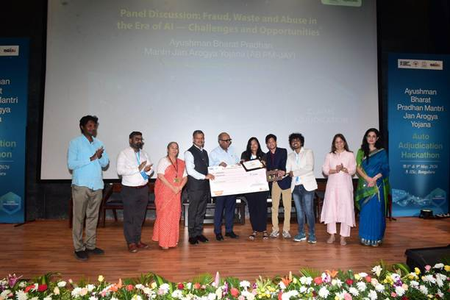
New Delhi, May 13 (IANS) The government on Wednesday felicitated winners of the AB PM-JAY Auto-Adjudication Hackathon Showcase 2026, aimed at developing AI-driven solutions to improve claims adjudication, transparency and fraud detection in public health insurance.
Organised jointly by the IndiaAI Mission, NHA and IISc Bengaluru, the hackathon focused on creating advanced technological solutions to improve the speed, transparency and accuracy of claims adjudication while also strengthening fraud detection mechanisms within the healthcare ecosystem.
Senior officials including Sunil Kumar Barnwal, CEO of the National Health Authority; Abhishek Singh, Director General of the National Testing Agency; Jyoti Yadav, Joint Secretary, NHA; and Shikha Dahiya, Joint Director, Ministry of Electronics and Information Technology (MeitY), felicitated the winners during the event.
Officials said the selected solutions have the potential to transform AI-driven adjudication of claims under AB PM-JAY.
The hackathon invited participants to develop solutions around three major problem statements linked to claim processing under the scheme, which handles a large number of claims daily across more than 1,900 treatment packages.
The first problem statement focused on clinical document classification and Standard Treatment Guideline (STG) compliance.
Participants were tasked with developing systems capable of reading mixed-quality healthcare documents, extracting key data, identifying mandatory visual elements and checking compliance with treatment guidelines issued by the NHA.
Vinay Babu Ulli emerged as the winner in this category, while Khushi Singh secured the runner-up position and Vijay Balaji was named the second runner-up.
The second challenge centred on radiological image-based condition detection and report correlation.
Participants developed solutions to validate investigations such as X-rays, CT scans and MRIs submitted as evidence under treatment guidelines and correlate them with medical reports for accurate claims adjudication.
Harish Kumar won the category, followed by Bharath Varma Sangaraju as runner-up and Arnold Sachith as second runner-up.
The third problem statement addressed document forgery and deepfake detection, with innovators building systems capable of detecting forged or synthetically generated documents, including manipulated discharge summaries, altered bills, ghost identities and AI-generated artefacts during claim submission.
Praveen Sridhar won the category, while Nikhileswara Rao Sulake and Sumanth Naidu Mathireddy secured the runner-up and second runner-up positions, respectively.
Winning teams were awarded cash prizes of Rs 5 lakh, Rs 3 lakh and Rs 2 lakh.
--IANS
pk