
Rising pesticide, chemical fertiliser use creating major environmental concern in Bangladesh
New Delhi, Oct 10 (IANS) Bangladesh is facing acute environmental and public‑health risks from rising pesticide and chemical fertiliser use, a new report has said.
The report from Dhaka-based The Daily Star said that chemical fertiliser application has surged from a historical rate of 8.8 kg per hectare to 700 kg per hectare.
A study conducted in rice fields in the Jhenaidah and Kushtia districts found that the combined use of chemical fertilisers and different pesticides significantly reduced the nitrogen and carbon content of the soil.
Such abuse of fertilisers and pesticides alters soil microbial diversity, inhibits soil respiration and leads to soil infertility, the report said, adding that it has become a “major environmental concern” in the country.
The report blamed weaknesses in pesticide governance, inadequate monitoring, weak enforcement, poor institutional coordination, and limited accountability for the environmental concern.
Administration’s poor oversight of pesticide sales and use, along with insufficient training and awareness, led to the misuse and overuse of these chemicals.
The Soil Resource Development Institute in 2022 reported about 80 per cent of agricultural land is losing organic matter and Bangladesh Bureau of Statistics (BBS) survey in 2025 reported 44.37 per cent of farmland is productive and sustainable, but only 1.20 per cent qualified as highly efficient.
"Data from the Department of Agricultural Extension (DAE) show that approximately 77 per cent of farmers apply pesticides more than twice during a cropping season, while nearly 95 per cent do not observe the recommended pre-harvest interval (PHI) before harvesting," the report said.
Pesticide imports have risen sharply over recent decades, from 3,000 metric tonnes in 1990 to over 45,000 metric tonnes in 2021.
The Department of Agricultural Extension (DAE), under the Ministry of Agriculture (MoA), the principal agency responsible on this front apparently exercised limited oversight of local markets, where farmers continue to use numerous unknown and unregistered pesticide products.
"Illegal, expired, and highly hazardous pesticides are reportedly entering the country through unauthorised channels and being sold without regulatory approval," the report noted.
—IANS
aar/na
Bangladesh: Jamaat tightens grip on university campuses, pushes pro-Pakistan agenda
London, Oct 10 (IANS) Bangladesh’s radical Islamist party Jamaat-e-Islami has leveraged the patronage it received under the former Muhammad Yunus-led interim government to strengthen its presence in major centres of learning, including Dhaka University and Chittagong University, through its student wing, Islamic Chhatra Shibir, a report has stated.
It noted that the party is now using its student wing to promote pro-Pakistan sentiments among the student community in Dhaka.
“The Dhaka University Central Students Union, now affiliated to Islamic Chhatra Shibir, had lately displayed in the university museum photographs and speeches of the founder of Pakistan, Muhammad Ali Jinnah. Of particular concern was one of his speeches delivered at the Race Course Maidan in Dhaka in 1948 when Jinnah declared that ‘Urdu and Urdu alone’ would be the state language of Pakistan, ignoring the sentiments of the Bengalis of East Pakistan. He repeated his position in an address at Dhaka University three days later,” a report in the British newspaper 'Asian Lite' detailed.
“Notably, the Jatiyatabadi Chhatra Dal, the student wing of the ruling BNP, condemned the display, calling it a ‘disgraceful act’ that tarnished the image of the university. The Dhaka University authorities have since formed a committee to investigate how these photographs were put on display,” it added.
According to the report, Jamaat-e-Islami, a major Islamic fundamentalist force in Bangladesh, was instrumental in the "so-called" July Uprising of 2024 that ousted the Awami League government led by former Prime Minister Sheikh Hasina.
The party subsequently strengthened its organisational network during the interim government headed by Yunus.
The report noted that a major flashpoint between the ruling BNP and the opposition 11-party alliance led by Jamaat-e-Islami is the proposed constitutional reforms formulated under the former interim government.
Citing observers, it said the proposed reforms are aimed at weakening the secular character of Bangladesh’s Constitution and curbing the Prime Minister’s authority and expanding that of the President, potentially leaving the government mired in instability.
“The BNP members of parliament of Bangladesh had refused to join a constitutional reforms council on the ground that the constitution of Bangladesh had no provision for the formation of such a council. The BNP wanted to form a parliamentary committee to examine the issue of constitutional reforms. Members of Parliament of the Jamaat and its allies have, however, refused to join such a parliamentary committee,” the report mentioned.
--IANS
scor/as
B’desh authorities under fire over ‘sustained harassment campaign’ against Hindu women’s rights activist
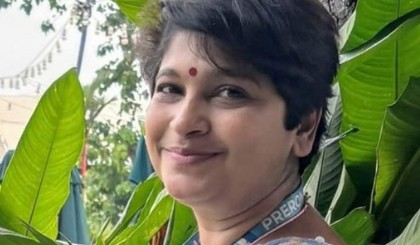
Dublin, Oct 10 (IANS) A leading international human rights organisation has raised the alarm over targeted attacks against Bangladeshi Hindu woman human rights defender Shampa Goswami, warning that the harassment is rooted in her gender and minority identity amid a wider climate of violence and discrimination against Hindu minorities in Bangladesh.
Ireland-based rights group Front Line Defenders (FLD) expressed grave concern over the travel ban imposed on Goswami by Bangladeshi authorities and a police investigation ordered against her by Bangladesh’s Ministry of Home Affairs.
The rights body said that these measures form part of a “sustained campaign of stigmatisation, harassment and administrative obstruction” against the woman human rights defender, her family and PRERONA, the women-led organisation she heads in Satkhira district of Bangladesh.
According to FLD, following the imposition of a travel restriction, Goswami was stopped at the airport on August 21 this year and prevented from travelling to Bali, Indonesia, where she was scheduled to participate in an international conference. On September 20, she filed a writ petition before Bangladesh’s High Court challenging the travel ban and is awaiting a hearing date.
The rights body further said that Goswami received a letter on September 28, informing her that the Ministry of Home Affairs had ordered the Inspector General of Police to investigate allegations of corruption and misuse of funds against her.
Condemning the harassment, FLD said that “the gendered nature of the attacks against Shampa Goswami, which draw on her identity as a woman and as a member of a minority community, and take place in a wider context of violence against minorities in Bangladesh, where members of the Hindu community, Ahmadiyya Muslims and indigenous groups continue to face discriminatory practices.”
The rights body called on the Bangladeshi government to immediately lift the travel ban imposed on Goswami and cease all forms of harassment and intimidation against her, her family and PRERONA
FLD further urged the authorities to carry out a prompt, thorough and impartial investigation into the threats, extortion attempts and online harassment targeting Goswami, her daughters and PRERONA staff, and to bring those responsible to justice in accordance with international standards.
It also appealed to authorities to ensure that all human rights defenders in Bangladesh, including women human rights defenders and defenders from minority communities, can carry out their peaceful and legitimate human rights activities without fear of reprisals and free from arbitrary restrictions, including judicial and administrative harassment.
--IANS
scor/rs
China’s youth unemployment crisis structural transformation driven by AI adoption, govt inaction
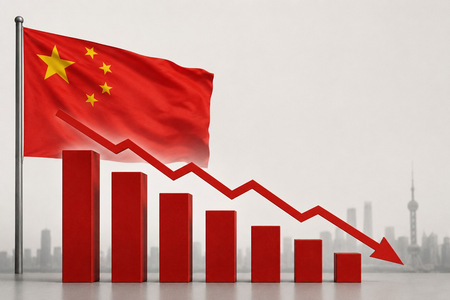
New Delhi, Oct 10 (IANS) The Chinese Communist Party (CCP) continues to champion AI as a symbol of national progress, but there is no parallel policy to retrain displaced workers, create new employment avenues, or provide social safety nets, a new report has revealed.
Instead, the country “obscures real unemployment figures, presenting an overly optimistic picture while millions of young professionals spiral into uncertainty,” reports Nepal-based media outlet Hamrakura.
China’s youth unemployment crisis is no longer a temporary shock; it is a structural transformation driven by AI adoption and government inaction.
“Once considered the backbone of the country’s digital economy, programmers now find themselves discarded in droves as artificial intelligence reshapes the industry. What was once a respected, high-paying career path has become a precarious existence, marked by layoffs, shrinking opportunities, and a pervasive sense of despair,” the report argued.
China has between 7-9.4 million programmers, and AI has rendered many of their skills obsolete.
In 2025, large internet companies reported that only 20–30 per cent of their code was AI-generated. By mid-2026, that figure had surged to 90 per cent in some firms, leaving human programmers sidelined.
“Across platforms like Alibaba, Tencent, ByteDance, Meituan, and JD.com, stories of mass layoffs have become routine,” said the report.
It further stated that by prioritising technological advancement over human livelihoods, “the CCP has abandoned the very generation that once fuelled China’s rise”.
After repeated layoffs, some of them have returned to their hometowns and “retrained as an electrician, plumber, carpenter echoing Nvidia CEO Jensen Huang’s prediction that electricians and plumbers will be in high demand in the AI era”.
However, China’s slowing economy, declining real estate sector, and shifting supply chains leave fewer opportunities for graduates entering the workforce.
Moreover, this atmosphere of collective anxiety has transformed workplaces into pressure cookers, where survival depends not on skill but on whether someone else is forced out first, said the report.
--IANS
na/
Concerns mount over violence, persecution of minorities across Pakistan
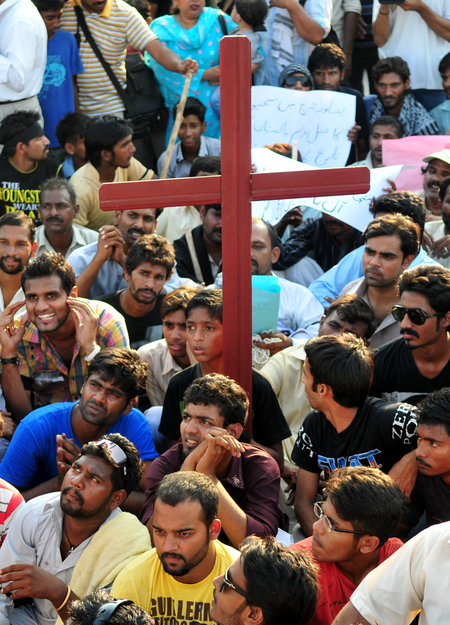
Islamabad, Oct 10 (IANS) Pakistan’s religious minorities continued to face violence, discrimination and persecution throughout 2025, with blasphemy accusations and minority women and girls remaining at risk of abduction, forced conversion and forced marriage, a minority rights organisation said, citing a report by the National Commission for Justice and Peace (NCJP).
The Voice of Pakistan Minority (VOPM) referred to the 2026 human rights report of the NCJP, a human rights body of the Pakistan Catholic Bishops’ Conference that recorded eight Christians accused of blasphemy during the year, and documented 35 incidents affecting women, girls and families.
It added that one case involved 15-year-old Hindu girl Premi Bheel, who was reportedly abducted, forcibly converted and married in December, while local police allegedly refused to register her complaint.
Expressing grave concern over the alarming trend of violence against minorities, the VOPM said that these are not isolated incidents but reflect a system in which vulnerable citizens are often denied equal protection under the law.
Citing the findings, the rights body highlighted deadly violence against the Christian minorities in Pakistan. Kashif Masih, a Christian labourer from Sialkot, was allegedly tortured to death after being accused of stealing a mobile phone.
The report noted that police initially failed to register the incident as murder, prompting protests from the Christian community.
Highlighting the relentless brutalities against minorities, the rights body further said Afzal Masih was shot dead in September last year while travelling with Christian pilgrims after reportedly confronting men who had harassed female passengers.
Accountability for attacks on minorities remains painfully weak, the VOPM said, noting that two years after the 2023 attacks in Jaranwala city of Punjab province, in which more than 25 churches and 85 Christian homes were damaged, the perpetrators had still not been convicted, according to the report.
Emphasising that legislation alone will not end persecution, the VOPM said, “Pakistan must enforce equal citizenship, protect places of worship, prosecute attackers and defend minority women and children. A country cannot claim religious heritage while allowing part of its population to live in fear.”
“The NCJP’s warning is clear: minorities will remain invisible unless the state treats their rights as a constitutional duty, not a matter of political choice,” it added.
--IANS
scor/rs
Gagan Thapa re-elected Nepali Congress President as rival faction plans December convention
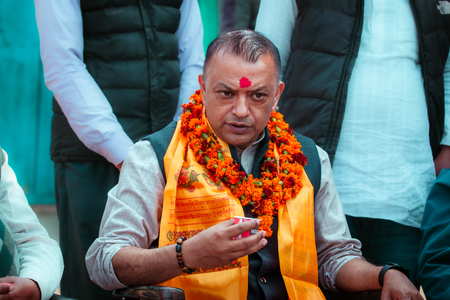
Kathmandu, Oct 10 (IANS) Gagan Thapa was re-elected president of the Nepali Congress with an overwhelming majority at the party's 15th general convention, as a rival faction led by former Prime Minister Sher Bahadur Deuba prepares to hold its own general convention in December.
Thapa, who was first elected party president following a controversial Special General Convention (SGC) convened by his faction in January, secured 6,584 votes against 375 for his rival, Shyam Krishna Khadgi, in the election held as part of the 15th general convention, according to the Nepali Congress Central Election Committee.
A total of 7,013 votes were cast, of which 54 were declared invalid, the committee said in a statement late Friday.
Thapa's re-election comes at a challenging time for the party, which finished a distant second in the March 5 parliamentary elections. Thapa himself lost his constituency as the relatively new Rastriya Swatantra Party (RSP) emerged as the largest party in the 275-member House of Representatives, the lower house of parliament, securing nearly a two-thirds majority.
Thapa also faces the prospect of a formal party split, with the rival faction led by Deuba scheduled to hold its own 15th general convention from December 7 to 9. The Deuba-led faction claims to represent the legitimate Nepali Congress.
The legitimacy of the two factions is under review by the Supreme Court, although the Election Commission recognised the Thapa-led faction as the legitimate Nepali Congress ahead of the March 5 general elections, allowing it to field candidates in the polls.
Thapa, 50, rose to prominence as a student leader during the 2006 people's movement, when his speeches denouncing the monarchy and advocating the establishment of a republic resonated strongly with young people.
As leader of the party's student wing, the Nepal Student Union, he delivered fiery speeches against the monarchical system -- at a time when the country was under royal rule.
During that period, the Nepali Congress leadership itself was largely silent on transforming the country into a republic, instead adhering to the "two-pillar theory" of constitutional monarchy and multiparty democracy.
Since emerging into the national spotlight two decades ago, Thapa has remained a popular figure within the party and, to a considerable extent, among the general public.
Following the success of the 2006 people's movement, the party included him on its proportional representation list for the 2008 Constituent Assembly election, through which he entered the Assembly.
After the first Constituent Assembly failed to deliver a new constitution, fresh elections were held in 2013. Thapa contested from the Kathmandu-4 constituency and won. He retained the seat in the 2017 and 2022 elections, cementing his position as a key figure in national politics.
Within the party, Thapa was defeated when he first contested the post of general secretary at the 13th general convention in 2016. However, he ran again for the same position at the 14th convention in 2021 and won.
Following the 2022 general election, Thapa challenged Deuba for the leadership of the Nepali Congress parliamentary party but was defeated.
Deuba came under renewed pressure from Thapa following the Gen Z movement in September last year. Thapa teamed up with then fellow General Secretary Bishwa Prakash Sharma to call for a Special General Convention, arguing that the party needed leadership and organisational changes ahead of the elections scheduled for March this year.
Thapa and Sharma have now been elected president and senior vice-president, respectively, as they seek to transform the Nepali Congress by bringing youthful energy into the party.
--IANS
scor/sd/
China’s military airfield in Laos could complicate US operations in region: Report
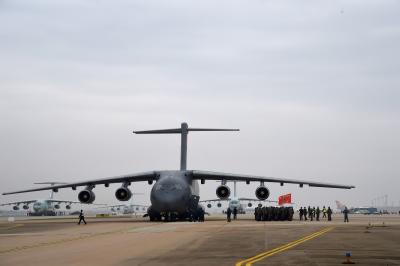
Vientiane, Oct 10 (IANS) China’s newly-opened military facility at Ban Keun Airport in Laos, its first publicly acknowledged overseas facility centred on air power, could give the air force of People’s Liberation Army (PLA) a staging and transit base in Southeast Asia and be used to complicate US military operations in the Andaman Sea and the Strait of Malacca, a report has cautioned.
According to a report in The Diplomat, China inaugurated the air force support and training centre in Laos on September 29, marking its third overseas military facility.
“Analysts have noted that the arrangement could expand the People’s Liberation Army’s military presence in Southeast Asia and strengthen China’s regional interests, although there is currently no evidence that Beijing has deployed large-scale forces at the site,” the report said.
Citing China’s Ministry of National Defence, the report said the China-Laos Joint Support and Training Centre and the China-Laos Friendship Aviation Academy had formally begun operations at the airport, mainly to help train Lao Air Force pilots. Beijing has not disclosed the number of Chinese personnel or the equipment stationed there, and has said the facilities are “not directed" against any third party.
“Ban Keun Airport is significant because it is China’s first publicly acknowledged overseas military facility centred on air power. This differs from China’s overseas facilities in Djibouti and Cambodia, which have largely been associated with naval operations,” the report stated.
The airport, in Vientiane Province about 45 km from the Lao capital, has the longest runway of about 2,000 metres and sits close to the China-Laos Railway, which means personnel and some equipment from China need not rely solely on air transport.
“For an overseas joint support base, this logistical advantage is highly significant,” the report said.
It added that Ban Keun was unlikely to be primarily intended for operations in the South China Sea, where China already has facilities on Woody Island.
“The greater significance of Ban Keun lies in its potential role as a transit base for the PLA Air Force. From this location, Chinese forces would have a certain level of operational reach toward Myanmar and farther south toward Singapore,” the report said.
While the facility poses only a limited direct threat to the Taiwan Strait, the report said it would enhance China’s ability to place pressure on US naval forces operating around Singapore.
“For the United States, Singapore and Thailand are both important logistical and replenishment locations, particularly during periods when US aircraft carriers are rotating or undergoing maintenance. These locations would potentially fall within the operational range of aircraft operating from Ban Keun,” it noted.
“In the future, the facility could also be used to complicate US military operations in the Gulf of Thailand, the Andaman Sea, and even the Strait of Malacca,” the report added.
--IANS
ksk/as
Trump’s Russian diesel deal fuels US double-standard row
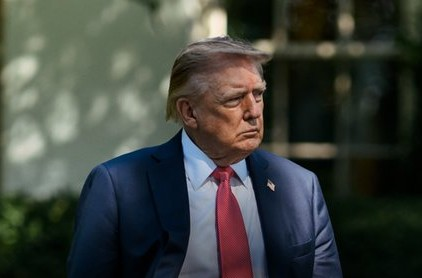
Washington, Oct 10 (IANS) President Donald Trump's agreement to secure Russian diesel supplies has triggered accusations of double standards from American commentators and social media users, who questioned why Washington penalised India for buying Russian oil while now seeking fuel from Moscow to ease its own energy crisis.
The controversy intensified on Friday after Trump announced that Russian President Vladimir Putin had agreed to supply millions of tonnes of diesel to American and global markets, prompting the US Treasury Department to temporarily ease sanctions on Russian diesel transactions.
The decision came less than a month after Trump signed bipartisan legislation authorising tariffs of up to 100 per cent on major purchasers of Russian oil and gas, including countries such as India and China.
American journalist Catherine Rampell raised the contradiction in a sharply worded post on X.
"does this mean we will soon start tariffing ourselves?" she asked, referring to the administration's newly acquired powers to penalise major purchasers of Russian energy.
Political journalist Sam Stein also highlighted the reversal, noting that Trump had recently signed legislation intended to tighten economic pressure on Moscow.
"Three weeks ago Trump signed the Lindsey Graham Russia Sanctions bill as a testament to Graham's commitment to put an economic stranglehold on Putin," Stein wrote, before contrasting it with Friday's announcement of Russian fuel supplies.
The reactions echoed criticism emerging from social media accounts, where users questioned the consistency of Washington's approach towards Russian energy purchases.
The verified X account News Matrix recalled Trump's earlier criticism of India's oil imports and asked whether the same reasoning applied to the United States.
"If India buying Russian oil = funding Putin’s war machine... does the same logic apply to the USA?" it asked.
"Or is it only ‘funding Russia’ when INDIA does it?"
Similar reactions appeared in discussion forums on Reddit.
In a discussion on r/IndianStockMarket, one user wrote, "Rules for thee but not for mee," while another questioned whether Washington would impose a 100 per cent tariff on itself.
A separate discussion on r/IndianStreetBets also criticised the apparent contradiction between Washington's sanctions policy and the new diesel arrangement.
The online reactions were accompanied by criticism from senior American lawmakers.
Democratic Senators Jeanne Shaheen, Chuck Schumer and Elizabeth Warren issued a joint statement condemning the administration's decision to allow Russian diesel sales for six months.
"The President must end his war with Iran instead of funding Russia’s war machine," they said.
The senators argued that the move undermined congressional efforts to restrict Moscow's energy revenues and weakened pressure on Putin over the war in Ukraine.
Their criticism followed an October 7 bipartisan letter from Shaheen and Republican Senator Roger Wicker urging Secretary of State Marco Rubio and Treasury Secretary Scott Bessent to enforce tougher sanctions against Russia's oil tankers, financial networks and military technology suppliers.
The lawmakers called for action against Russia's shadow fleet and warned that delaying economic pressure would allow Moscow to sustain its military campaign.
Trump defended the diesel agreement, arguing that additional fuel supplies were necessary to reduce prices for American consumers, farmers and truckers.
Speaking to reporters at the White House, he thanked Putin for the arrangement and said the United States needed additional diesel supplies.
According to Trump's announcement, Russia would initially supply more than 300,000 tonnes of diesel, followed by 500,000 tonnes in November and one million tonnes thereafter, with further deliveries dependent on refinery capacity.
The Treasury Department issued General License 135, authorising specified transactions involving Russian-origin diesel until April 2027.
Ukrainian President Volodymyr Zelenskyy criticised the agreement, warning that additional Russian energy revenues could strengthen Moscow's ability to continue the war.
--IANS
lkj/rs
Musk’s ex-partner alleges $40 million silence offer: US media

Washington, Oct 10 (IANS) Ashley St. Clair, the mother of one of billionaire Elon Musk's children, has alleged that she was offered a financial arrangement worth nearly $40 million in exchange for remaining silent about their relationship, a claim Musk has publicly denied.
In an interview published by The New York Times on Friday, St. Clair, a former conservative social media influencer, said she rejected a proposed nondisclosure agreement because it would have prevented her from discussing Musk and their relationship indefinitely.
The proposed arrangement included a $15 million lump-sum payment and $100,000 a month for 21 years, according to St. Clair. Together, those amounts would total $40.2 million.
Musk disputed the allegation after an earlier report about the proposed agreement.
"She was never offered that and has a history of making false claims," Musk wrote on X, according to the newspaper.
St. Clair, who gave birth to a child in 2024, said the proposed confidentiality agreement was sent to her two months after childbirth by Jared Birchall, Musk's financial manager.
She alleged that the document was transmitted through Signal, an encrypted messaging application, and would have restricted her ability to discuss the relationship even with members of her family.
According to St. Clair, the restrictions would also have extended to her heirs.
She said she rejected the agreement because she considered the proposed conditions unacceptable, particularly where they concerned her children.
The newspaper reported that Musk did not respond to its requests for comment on the interview.
St. Clair's account comes as she appears in "Musk," a nearly four-hour documentary directed by Oscar-winning filmmaker Alex Gibney examining the technology entrepreneur's personal life, business interests and public influence.
The former influencer told the newspaper that her decision to participate in the documentary was partly motivated by concerns about the influence of wealth and power.
She said she had become increasingly uncomfortable with the expectation that people should trust powerful individuals simply because of their financial success.
St. Clair described meeting Musk in 2023 after he contacted her through Twitter, now known as X, where she had developed a following by promoting conservative political positions.
At the time, she was working for the conservative satirical publication The Babylon Bee and raising a child from an earlier relationship.
She said the two began communicating regularly and subsequently developed a personal relationship.
During a trip to St. Barts in January 2024, Musk raised the possibility of having a child together, according to her account.
St. Clair said she initially viewed the relationship positively but became concerned after learning more about Musk's custody dispute with musician Grimes, with whom he shares three children.
She also described becoming increasingly disillusioned with the political movement surrounding President Donald Trump, which she had previously supported.
In the interview, St. Clair acknowledged having promoted political positions and rhetoric that she now regrets, including commentary concerning race, gender and transgender people.
She said her changing views developed gradually and were not solely the result of her personal dispute with Musk.
Musk has criticised Gibney's documentary, accusing the filmmaker of assembling accounts from people with grievances against him or little personal knowledge of him.
The allegations surrounding the proposed financial agreement remain disputed, and the interview does not establish that Musk personally authorised the terms described by St. Clair.
Musk is the chief executive of Tesla and SpaceX and the owner of X. His business interests span electric vehicles, space exploration, artificial intelligence and digital communications, giving him a prominent role in American technology and public affairs.
--IANS
lkj/rs
Manipulation of farcical PoK polls exposes Pakistan’s deeply flawed ‘democratic’ system
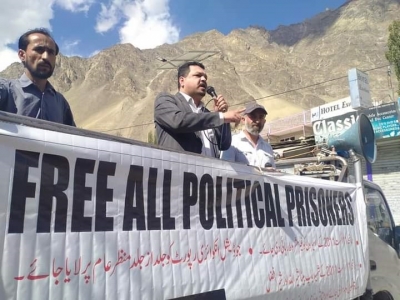
Athens, Oct 10 (IANS) The manipulation of the so-called legislative elections in Pakistan-occupied Kashmir (PoK) is yet another reflection of Pakistan’s deeply flawed democratic system, a report has stated.
It noted that historically, Pakistan has struggled to ensure free and fair elections, meaningful parliamentary proceedings and credible legislative lawmaking.
The legitimacy of the recent PoK elections, held amid a popular uprising, has been widely questioned, with some of the strongest criticism coming from within Pakistan itself, according to a report in Athens-based ‘Directus’,
Citing a Human Rights Commission of Pakistan (HRCP) fact-finding report, it highlighted grave concerns over allegations of lethal and excessive force used by Pakistani authorities against protesters during the recent PoK unrest, which was triggered by longstanding political and socio economic grievances.
Despite being unable to reach Rawalakot, a major hotspot of the violence, the HRCP mission received multiple accounts from families who alleged that protesters were killed or seriously injured by security forces, the report mentioned.
“Raising concerns at the government’s use of anti-terrorism and preventive-detention provisions against political activists, HRCP’s report questions whether the use of force by the forces was lawful, necessary and proportionate. The report expresses alarm over the government’s use of anti-terrorism and preventive-detention provisions against political activists,” it noted.
The findings revealed that at least 147 Joint Awami Action Committee (JAAC) activists were initially placed on the Fourth Schedule of Pakistan’s Anti-Terrorism Act, with a series of notifications issued between June and August reportedly taking the total number of political workers, journalists, residents and activists listed under anti-terrorism laws to at least 157, the report detailed.
Casting doubt on the credibility of the electoral process, it said, the HRCP mission questioned the heavy deployment of security personnel, prolonged communication restrictions and curbs on independent observation in PoK.
“Democratic erosion is a gradual process that has been an ongoing process in Pakistan. Historically, Pakistan’s democratic development has been interrupted by the military essentially taking over the government. Although a formal sense of military rule ended in 2008, it left the system fractured and without a sense of structure for a democracy,” Directus stated.
The report noted that Pakistan’s drift towards authoritarianism is rooted largely in its long history of military intervention and control.
In a recent podcast titled “Beyond the Indus”, Ayesha Siddiqa, a senior fellow in the Department of War Studies at King’s College London and author of 'Military Inc', described Pakistan not as a hybrid regime but as a case of constitutional militarism.
“The legal framework which allows the system where the military has greater say, or complete control, almost complete control, has been condoned and supported by the Parliament itself. The Parliament is still there. Technically, Pakistan has elections. It is going to have the next elections in 2029. But do we have a decision-making system where civilians have a say? The answer is no,” Directus quoted Siddiqa as saying.
--IANS
scor/as