
US lawmakers slam Trump administration for suspending tech firms green card route
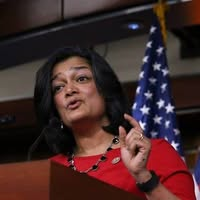
Washington, Oct 9 (IANS) Two Democratic lawmakers have sharply criticised the Trump administration's decision to suspend Microsoft and other technology companies from a key employment-based green-card programme, warning that the move threatens legal immigration pathways for skilled foreign professionals already working in the United States.
Representatives Pramila Jayapal and Suzan DelBene, both from Washington state, said Thursday that the restrictions could hurt American innovation, disrupt families and create uncertainty for workers seeking permanent residency.
The administration's action affects the Permanent Labour Certification programme, known as PERM, which employers use to sponsor foreign workers for certain employment-based green cards.
Jayapal, the ranking Democrat on the House immigration subcommittee, said the decision represented another attempt to restrict legal immigration.
“This is a crucial issue for me as the top Democrat on the Immigration Subcommittee, the only member of Congress to have actually had an H-1B visa, and the Representative for tens of thousands of Microsoft workers,” she said.
Jayapal, an Indian-American lawmaker who represents a Seattle-area congressional district, said the programme provides an established process for foreign professionals seeking permanent residency while protecting American workers.
“The PERM program is the first step toward an employment-based green card for countless workers who want to contribute to this country, and it lays out a clear process with steps to ensure that this is a net benefit to our economy and does not harm American jobs,” she said.
She argued that the administration's action would make it harder for immigrants to contribute their skills to the American economy.
“You don’t fix a broken immigration system by taking a hammer to legal immigration,” Jayapal said.
She also defended Microsoft's longstanding support for immigration reform, saying the company had advocated modernising the system and expanding lawful opportunities for foreign workers.
“Targeting Microsoft or the PERM program in this way simply undermines legal immigration and weakens America’s ability to innovate,” she said.
DelBene, whose district includes a substantial technology industry presence, also condemned the suspension.
“The Trump administration’s action today is an attack on current H-1B visa holders already in the United States,” she said.
“Haphazardly taking away the pathway to a lawful green card for skilled workers at certain American companies is a biased and punitive misuse of the law.”
DelBene said the restrictions would not address alleged abuse of the H-1B visa programme.
“Let’s be clear: this move will have no impact on purported H-1B visa abuse,” she said.
She argued that the decision would instead undermine an established legal process allowing skilled workers to remain in the United States with their families.
“This will inject even more uncertainty into our already turbulent economy while hamstringing innovation, competitiveness, and ultimately American workers,” DelBene said.
The lawmakers' statements came after the administration suspended Microsoft, Adobe and other companies from participating in the PERM programme.
The action does not automatically cancel existing H-1B visas. Its immediate implications concern employer access to a labour certification process used for certain permanent residency applications.
The H-1B programme allows American employers to recruit foreign professionals for specialised occupations, including technology, engineering and scientific research.
--IANS
lkj/rs
US senators warn of China threat to 6G
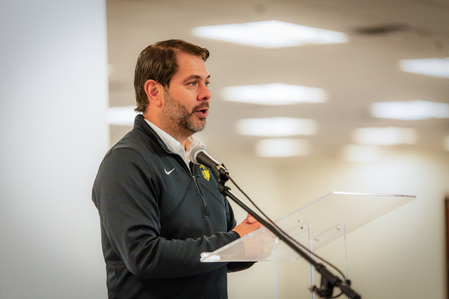
Washington, Oct 9 (IANS) Two US senators have warned that China could gain a strategic advantage in shaping global 6G and satellite communications rules unless the Trump administration moves quickly to appoint the American delegation's leader for a major international telecommunications conference in Shanghai next year.
Democratic Senator Ruben Gallego of Arizona and Republican Senator Jim Banks of Indiana have urged Secretary of State Marco Rubio to designate a US head of delegation before November 30, when regional negotiations are scheduled to begin in Bogotá, Colombia.
In a bipartisan letter released this week, the senators said the 2027 World Radiocommunication Conference, known as WRC-27, would determine important international rules governing radio spectrum used by next-generation wireless networks and satellite communications.
The conference is scheduled to take place in Shanghai in October and November 2027, bringing together the United States and 193 other member states.
The senators warned that China, as host, could use its position to influence negotiations in favour of its domestic technology companies, including Huawei.
“As host, the People’s Republic of China (PRC) will enjoy a homefield advantage as it attempts to sway spectrum and technology standards a direction that supports the interests of the Chinese Communist Party (CCP) and its subservient companies such as Huawei,” they wrote.
They argued that Washington needed to coordinate its negotiating positions with allies well before the conference.
“A strong US delegation, coordinating its position well in advance alongside likeminded allies and partners, is the best defense against the CCP’s authoritarian agenda,” the senators said.
The letter, dated September 29, identified the selection of a delegation chief as an immediate priority.
Gallego and Banks warned against repeating difficulties encountered during preparations for the 2023 World Radiocommunication Conference, when the head of the American delegation was replaced at short notice.
According to the senators, former delegation members had reported that the change cost Washington valuable time needed to build relationships and regional coalitions.
“We cannot afford to enter WRC-27 under similar conditions,” they wrote.
The lawmakers said decisions concerning 6G were particularly consequential because technical standards for the next generation of wireless communications were still being developed.
They warned that proposals aligned with Huawei could influence those standards before the United States and its partners had established coordinated alternatives.
The senators also highlighted the rapid expansion of non-geostationary satellite constellations, which has increased the importance of international coordination over radio spectrum.
They acknowledged progress already made by the administration.
The National Telecommunications and Information Administration and Federal Communications Commission have submitted American proposals to the Inter-American Telecommunication Commission, or CITEL.
Washington plans to submit its remaining positions at the next meeting of CITEL's Permanent Consultative Committee II, beginning November 30 in Bogotá.
Gallego and Banks asked the administration to appoint the delegation leader before that meeting so the official could participate in developing the positions Washington would eventually defend.
They also requested details of how the United States would work with international partners to develop trusted telecommunications supply chains.
The letter specifically called for alternatives to Huawei and other Chinese companies for countries in the Global South.
The senators sought a written response or briefing by October 23 and a closed briefing by spring 2027 on Washington's strategy for countering Chinese influence at WRC-27.
The World Radiocommunication Conference is organised by the International Telecommunication Union, a United Nations specialised agency responsible for international telecommunications coordination. Its decisions influence how countries allocate radio frequencies for mobile networks, satellites and other wireless services.
--IANS
lkj/rs
EAM Jaishankar arrives in Ethiopia to advance strategic partnership
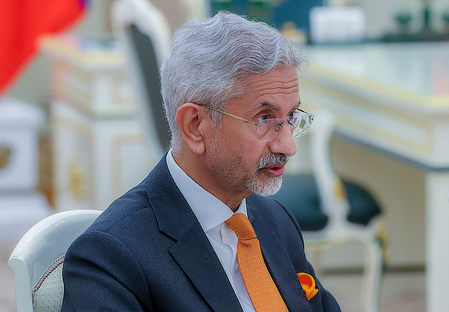
New Delhi, Oct 9 (IANS) External Affairs Minister S. Jaishankar arrived in Ethiopia and expressed his keenness to advance India's strategic partnership with the African nation through productive engagements.
Sharing an update on his arrival, EAM Jaishankar posted on X, “Hello Addis Ababa!
Delighted to arrive in Ethiopia. Thank State Minister @BerhanuTsegaye for the warm reception. Look forward to productive engagements to advance our Strategic Partnership.”
During his visit, Jaishankar is scheduled to meet Ethiopia's leadership to discuss the full range of bilateral ties and exchange views on regional and global matters of mutual interest. He will also chair the Regional Heads of Mission (HoMs) Conference in Addis Ababa, according to the Ministry of External Affairs (MEA).
In an earlier statement, the MEA said EAM Jaishankar would hold bilateral meeting with his counterpart to review close ties of friendship and cooperation.
“The visit of EAM is reflective of India’s commitment to deepen its partnership with Africa, and will further India’s solidarity with Global South,” the ministry said.
The visit is expected to provide an opportunity to review bilateral cooperation across key sectors and explore avenues for further strengthening India's engagement with Ethiopia and the wider African region.
EAM Jaishankar arrived in Ethiopia after concluding his visit to Cote d'Ivoire.
Earlier on Thursday, EAM Jaishankar congratulated Gedion Timothewos Hessebon on his reappointment as Ethiopia's Minister of Foreign Affairs and expressed his eagerness to meet him to further strengthen the strategic partnership between the two countries.
“Congratulate Gedion Timothewos Hessebon on your re-appointment as the Minister of Foreign Affairs of Ethiopia. Look forward to meeting you soon to further strengthen our Strategic Partnership,” EAM Jaishankar posted on X.
Hessebon was reappointed following Ethiopian Prime Minister Abiy Ahmed Ali's formation of a new Cabinet. The Ethiopian House of Peoples' Representatives (HoPR) on Monday established the new federal government, with the ruling Prosperity Party appointing Abiy Ahmed Ali as Prime Minister for a second five-year term.
--IANS
rs/
Trump calls Musk modern-day Thomas Edison
Washington, Oct 9 (IANS) US President Donald Trump has described billionaire entrepreneur Elon Musk as a modern-day Thomas Edison, calling him a national treasure whose technological achievements have advanced America's strategic interests, transformed space exploration and saved lives during natural disasters.
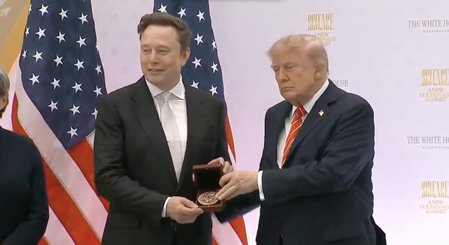
Honouring Musk with the National Medal of Science at the New Golden Age Summit on Thursday, Trump delivered an unusually personal tribute to the SpaceX and Tesla founder, praising his engineering achievements and recalling how his satellite communications network helped people stranded during a devastating hurricane in North Carolina.
"Few Americans in history have done more to advance America's national interest than Elon, in one field after another, his genius and determination have made science fiction into reality," Trump said.
The US President credited Musk with changing the economics of space exploration through SpaceX, which he founded in 2002.
He said the company's development of privately built rockets had reduced America's dependence on foreign countries for transporting astronauts into space.
Trump also congratulated SpaceX on what he described as the safe return of Crew-12 from the International Space Station just hours before the ceremony.
"SpaceX saved NASA from relying on foreign nations to send our astronauts into space," he said.
The US President praised Starship, SpaceX's massive rocket designed for rapid reuse, and Starlink, its satellite communications network.
But his most personal remarks focused on North Carolina, where he said Starlink helped restore vital communications after a hurricane left communities isolated by floodwaters.
Trump recalled receiving an appeal for assistance because residents trapped by flooding had lost their ability to communicate with emergency responders.
He said he contacted Musk directly and that Starlink equipment arrived within hours despite logistical difficulties.
"So I never forgot that experience. It was a terrible time and the job he (Elon Musk) did, and he acted so fast," Trump added.
The US President claimed the intervention had saved hundreds of lives. The figure was not independently substantiated in the summit transcript.
Trump also praised Musk's contributions to the automobile industry through Tesla and his work on brain-computer interfaces through Neuralink.
He said Neuralink was developing technology intended to restore functions such as sight, speech and movement to people with severe disabilities.
The US President then recalled an unusual historical connection between his family and the scientist Nikola Tesla.
He said his uncle, Dr. John Trump, a longtime professor at the Massachusetts Institute of Technology, had been asked by the US government to assess Tesla's scientific work.
According to Trump, his uncle concluded that Tesla was a genuine scientific genius.
Trump also highlighted Musk's involvement in artificial intelligence, placing his achievements within the administration's broader effort to strengthen American leadership in emerging technologies.
"Elon is our modern-day Thomas Edison. And Elon, I wanna congratulate you, you're my friend and all of that, but you are a very, very special guy," Trump said.
The National Medal of Science is among America's highest honours for scientific achievement. Musk received the award for engineering contributions spanning space exploration, communications, intelligence systems and manufacturing.
Musk's companies operate across several strategically important industries, including commercial space launches, electric vehicles, satellite communications and artificial intelligence. SpaceX has become a major partner of NASA, while Starlink has expanded access to satellite-based internet services in different parts of the world.
--IANS
lkj/ksk/khz
Trump honours Nadella, Musk, five other tech giants
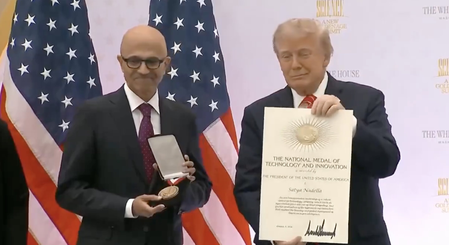
Washington, Oct 9 (IANS) US President Donald Trump has honoured six of America's leading technology pioneers, including Indian-origin Microsoft CEO Satya Nadella, with the country's highest awards for scientific achievement and technological innovation, describing their contributions as central to America's global leadership.
At the New Golden Age Summit on Thursday, Trump presented the National Medal of Technology and Innovation to Nadella and Dell Technologies founder Michael Dell.
Elon Musk, Google co-founder Sergey Brin, Nvidia CEO Jensen Huang and AMD CEO Lisa Su received the National Medal of Science.
The ceremony brought together some of the most influential figures in artificial intelligence, semiconductor technology, cloud computing and space exploration.
Trump singled out Nadella for transforming Microsoft into a global technology powerhouse and positioning the company at the forefront of artificial intelligence.
"For more than three decades, Satya Nadella has been a key figure in the transformation of Microsoft," the US President said.
Trump credited Nadella with developing Microsoft's cloud computing capabilities and expanding its reach among businesses, students and consumers worldwide.
"Then he (Satya Nadella) had the vision to make Microsoft an early leader in super intelligence," the US President said.
"Satya, we are honoured to give you the National Medal of Technology and Innovation. It is so well deserved. Congratulations, Satya, Trump added.
The award citation recognised Nadella's leadership in revitalising Microsoft for the cloud computing era and building infrastructure capable of supporting the development and global deployment of advanced artificial intelligence.
Trump also praised Musk's achievements in space exploration, electric vehicles and satellite communications.
"Elon is our modern day Thomas Edison," Trump said, describing the Space X founder as a national treasure.
He highlighted SpaceX's reusable rockets, Starlink satellite network and efforts to advance space exploration.
Google co-founder Sergey Brin was recognised for developing algorithms that transformed how people access information.
Trump said Brin had returned to Google to personally drive progress in superintelligence.
Nvidia's Jensen Huang received recognition for advancing graphics processing technology that now powers much of the world's artificial intelligence infrastructure.
"The entire world is now running on Nvidia," Trump added.
AMD's Lisa Su was honoured for her contributions to semiconductor engineering and high-performance computing.
Michael Dell received the technology and innovation medal for helping make personal computers widely accessible and building a global technology company.
The US President also outlined his administration's scientific priorities, including quantum computing, nuclear energy, artificial intelligence and space exploration.
He said the United States was working towards developing a quantum computer for scientific discovery by 2028.
Trump also referred to the Genesis mission and a White House accord on superintelligence aimed at maintaining American technological leadership.
The National Medal of Science recognises outstanding contributions to scientific knowledge, while the National Medal of Technology and Innovation honours achievements that strengthen technological progress and innovation in the United States.
--IANS
lkj/ksk/khz
Trump sets 2028 target for quantum computing
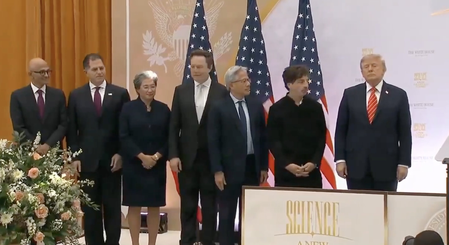
Washington, Oct 9 (IANS) US President Donald Trump has announced an ambitious target to develop a quantum computer for scientific discovery by 2028, outlining a sweeping technology agenda that includes superintelligence, advanced nuclear reactors and renewed American exploration of the Moon and Mars.
Addressing the New Golden Age Summit on Thursday, Trump said his administration was taking steps to strengthen America's dominance in emerging technologies and accelerate scientific breakthroughs.
"I signed in order to support the advancement of quantum computing and set the goal of delivering a quantum computer for scientific discovery by 2028," he added.
The announcement placed quantum computing alongside artificial intelligence and advanced energy technologies as priorities for the administration's scientific programme.
Trump said the government was also removing regulatory obstacles to deploying next-generation nuclear energy systems.
"Our country started up four cutting-edge small modular reactors just this year alone," he added.
The US President linked these initiatives to a broader effort to revitalise America's scientific institutions and technological capabilities.
"From day one, my administration has taken decisive action to ensure that America continues to dominate the frontiers of science and technology," he said.
Trump also highlighted the Genesis mission, an administration initiative aimed at using advanced Artificial Intelligence to address complex scientific problems.
"And we've also created the Genesis mission to solve some of the biggest mysteries in science and technology with superintelligence," he said.
He referred to a White House agreement on superintelligence reached the previous week, describing it as another step towards maintaining America's technological leadership.
"And last week, we brokered the White House Accord on Super Intelligence, keeping America at the forefront of Super Intelligence (SI)," Trump said.
The US President also outlined plans for renewed American space exploration, including establishing a permanent presence on the Moon under NASA's Artemis programme.
"American astronauts will soon return to establish a permanent American presence on the Moon," he said.
Trump added that Mars would be the next major destination for American space exploration.
During his remarks, he acknowledged NASA Administrator Jared Isaacman and praised his leadership.
"We're gonna be going to Mars pretty soon, Jared?" Trump said, addressing the NASA Chief.
Michael Kratsios, Director of the White House Office of Science and Technology Policy, said the administration wanted to revive the ambition that had produced some of America's greatest scientific breakthroughs.
He recalled the Manhattan Project, the development of integrated circuits, the Apollo Moon landing and the early internet as examples of technological progress driven by American scientific ambition.
"Today, our dream is a new golden age of scientific progress and technological innovation," Kratsios added.
The announcements came during a summit that also recognised six prominent technology leaders with the National Medal of Science and the National Medal of Technology and Innovation.
Quantum computing uses principles of quantum mechanics to process information differently from conventional computers. Researchers are exploring its potential applications in materials science, chemistry, medicine and other fields, although major technical challenges remain before large-scale practical systems become widely available.
The Artemis programme is NASA's effort to return astronauts to the Moon and establish capabilities for sustained lunar exploration.
The programme is also intended to support technologies and experience needed for future human missions to Mars.
--IANS
lkj/ksk/khz
US Congress to honour Indian pilot for bravery

Washington, Oct 9 (IANS) Indian pilot Captain Smit Machchhar, whose bravery helped save 172 passengers and crew members aboard a Flydubai flight after a fellow pilot allegedly attacked him with an axe, will be honoured in the Congressional Record of the United States House of Representatives.
Indian-American Congressman Raja Krishnamoorthi announced on Thursday that he would enter a statement into the Congressional Record on Friday, recognising Machchhar's extraordinary courage during the September 30 incident aboard Flydubai Flight 1073 from Dubai to Tel Aviv.
The Illinois Democrat said the Indian captain's actions helped avert a catastrophe after the aircraft's first officer attacked him and attempted to seize control of the plane.
According to Krishnamoorthi's statement, the aircraft plunged around 16,000 feet in just 30 seconds during the incident.
Despite suffering serious injuries, Captain Machchhar managed to reach the cockpit door and open it, allowing passengers and crew members to enter and overpower the attacker.
Two reserve Flydubai pilots travelling aboard the aircraft subsequently took control and landed the plane safely in Tabuk, Saudi Arabia.
The flight was carrying 172 passengers, including four American citizens and 27 children, according to the Congressman's statement.
Captain Smit Machchhar, an Indian national, has 17 years of flying experience, including 11 years as a captain.
In his statement prepared for the Congressional Record, Krishnamoorthi praised the pilot's determination to protect those aboard despite facing a life-threatening attack.
"Even as Captain Machchhar fought for his own life, he understood that the lives of everyone aboard depended on what he did next," the Congressman said.
"Despite his injuries, his years of experience told him that the aircraft was going down, and he found the strength to reach that door."
Krishnamoorthi said the captain's quick thinking and determination had given others aboard the aircraft an opportunity to intervene.
"His presence of mind, determination, and courage gave the passengers and crew the chance they needed to stop the attack and avert a catastrophe," he added.
The Congressman also drew attention to the families whose loved ones survived the incident.
"Behind every person aboard Flight 1073 is a family that was spared an unimaginable loss," he said.
"Because Captain Machchhar refused to give up, the passengers and crew aboard that aircraft had the chance to return to the people who love them."
Krishnamoorthi urged fellow lawmakers to join him in recognising the Indian pilot's actions.
"We extend our warmest wishes to him, his wife Sonal, their two children, and their entire family, and we hope for the captain's full-speed recovery from his injuries at the earliest," he said.
The Congressional Record is the official record of proceedings and debates in the US Congress.
Lawmakers use it to document legislative proceedings and place statements recognising individuals, organisations and significant events on the Congressional record.
--IANS
lkj/ksk/khz
US lawmaker seeks Indian market for California wine
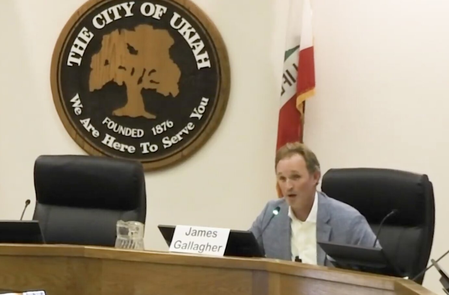
Washington, Oct 8 (IANS) A US lawmaker has urged the Trump administration to open India's market to California wines as American growers struggle with declining domestic consumption, restricted access to Canada and federal regulations they say favour imported products.
Republican Congressman James Gallagher of California has asked US Trade Representative Jamieson Greer to prioritise India and Vietnam as potential export markets while addressing domestic policies that growers say put American grapes at a disadvantage.
In a letter released Thursday, Gallagher said California's wine industry was facing mounting pressure from weakening demand and uncertainty over international trade.
“Industry leaders have identified countries such as India and Vietnam as promising high-growth markets, but the barrier to entry is still high due to ongoing tariff negotiations,” Gallagher wrote.
He urged USTR to prioritise opening those markets while working to restore access to Canada, where market opportunities for American wines have been severely reduced.
The request comes as India and the United States pursue negotiations aimed at expanding bilateral trade and reducing barriers to market access.
“North State growers produce some of the best wine grapes in the world, but right now they are competing in a market where federal policy can actually make it easier to use foreign products than grapes grown here at home,” Gallagher said.
“We need to make sure our trade policies are working for American growers while opening new markets where California wine can compete and win.”
Gallagher also called for changes to US wine-labelling regulations that allow products marketed as American wines to contain imported ingredients.
Under existing Alcohol and Tobacco Tax and Trade Bureau rules, wine labelled “United States” or “American” must contain at least 75 per cent American-grown agricultural products and be fully finished in the United States.
The remaining 25 per cent can come from foreign-grown products without disclosing their origin on the label.
Gallagher said growers believe the provision undermines demand for California grapes, puts downward pressure on prices and makes it difficult for consumers to distinguish wines made entirely from American agricultural products from those containing imported ingredients.
He asked USTR to work with the Treasury Department and the Alcohol and Tobacco Tax and Trade Bureau to review the regulation.
The congressman also raised concerns about federal duty drawback provisions affecting imported bulk wine.
Under certain circumstances, federal excise taxes paid on imported wine can be refunded when substituted wine is exported, even when the exported product did not carry an equivalent excise-tax burden.
Gallagher said the practice could make imported bulk wine more economically attractive than purchasing domestically produced wine or California-grown grapes.
He urged USTR to support US Customs and Border Protection in reviewing the arrangement and its impact on American producers.
The letter separately called for scrutiny of bulk products imported from Canada that do not meet the US definition of wine but receive customs and tax treatment applicable to wine.
Natalie Collins, president of the California Association of Winegrape Growers, welcomed Gallagher's intervention.
“California winegrape growers are facing an incredibly difficult market, and federal policies should not make it harder for American-grown grapes to compete,” Collins said.
Gallagher said Washington should address the concerns as the 2026 harvest draws to a close.
“California growers don’t need Washington making a tough market even tougher,” he said.
“We should be looking for ways to give them a fair shot here at home and more opportunities to sell American wine around the world.”
--IANS
lkj/ksk/dan
US advances nuclear-powered Moon missions
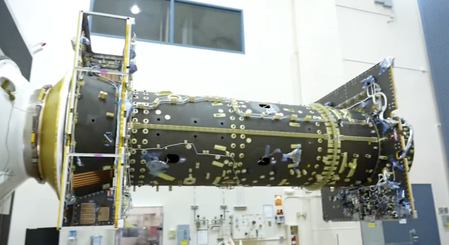
Washington, Oct 8 (IANS) NASA and the US Department of Energy have signed an agreement to accelerate the development of nuclear-powered spacecraft and lunar infrastructure, including plans for a space reactor mission in 2028 and a nuclear power system to support a future American base on the Moon.
The agreement, signed Thursday in Washington, brings the two agencies together on nuclear fuel development, advanced research, testing, launch integration and operations as the United States seeks to expand its presence in deep space.
NASA Administrator Jared Isaacman and Energy Secretary Chris Wright signed the memorandum of understanding, titled “Accelerating American Leadership in Space Nuclear Power and Propulsion,” during the Golden Age Summit at the Donald J. Trump Institute of Peace.
The agreement will take effect November 1.
“We are entering the ‘Nuclear NASA-era,’ which represents a major transformation for space exploration,” Isaacman said.
“Nuclear power will allow us to go farther, operate longer, and field more capable spacecraft and instruments than ever before.”
He said the work would lay the foundation for future fission-powered spacecraft and expand opportunities for scientific exploration.
The agreement establishes a framework for cooperation between NASA and the Energy Department across the development of space nuclear technologies, from fuel production to operational deployment.
The agencies said safety would remain central to the programme.
NASA plans to launch Space Reactor-1 Freedom in 2028, a mission intended to move nuclear-powered space technology from laboratory development towards operational use in deep space.
The mission is expected to support the development of Lunar Reactor-1, a fission-based surface power system designed to provide electricity for a future Moon base.
Unlike solar power, a nuclear reactor could operate through prolonged periods of darkness and in permanently shadowed regions of the lunar surface.
NASA said nuclear power would be needed to support habitats, communications systems, scientific instruments, rovers and other infrastructure required for sustained human activity on the Moon.
Such systems could also support future missions to Mars, where spacecraft and surface operations would face demanding energy requirements.
US President Trump signed an executive order in December 2025 directing NASA to develop a launch-ready lunar surface reactor by 2030.
The latest agreement strengthens cooperation between the agencies as they work towards that target.
“Thanks to President Trump, America’s nuclear renaissance is reaching a new frontier,” Wright said.
“The Energy Department is proud to partner with NASA as we help American space missions reach uncharted territory.”
NASA said the two reactor programmes would also help establish an American industrial base capable of developing and supplying nuclear technologies for space exploration.
The agencies are continuing work on radioisotope power systems, which use heat generated by radioactive decay to provide electricity or maintain equipment temperatures.
NASA's Dragonfly mission to Saturn's moon Titan, scheduled for launch in 2028, will use a radioisotope thermoelectric generator and 24 lightweight heater units to power and warm the spacecraft.
The mission will investigate Titan's environment and its potential habitability.
NASA and the Energy Department also plan to support the European Space Agency's Rosalind Franklin Mars rover by providing 24 radioisotope heater units to protect scientific instruments from extreme cold.
NASA has used nuclear power systems for decades on missions where solar energy is insufficient or impractical, including exploration of the outer solar system.
--IANS
lkj/ksk/dan
Vance says US wants only elite foreign talent
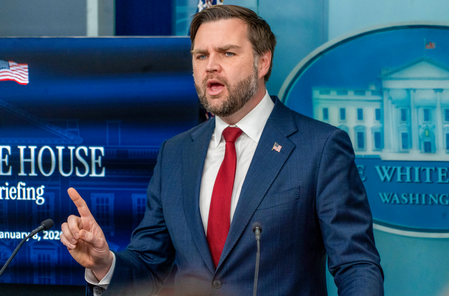
Washington, Oct 8 (IANS) US Vice-President J.D. Vance said on Thursday that the Trump administration wants to attract exceptional foreign talent, including people like Elon Musk, but will not allow immigration programmes to be used to replace American workers with lower-paid employees from overseas.
Vance said the United States would continue welcoming foreigners with extraordinary skills and abilities, but added that the H-1B visa programme had moved away from its original purpose.
"We want a lot of other people to come into the United States of America if they have truly elite specialised skills," he told reporters during a press conference on visa fraud.
His remarks came in response to a question about Musk, who had studied in the United States and was accepted at Stanford University before building his business empire.
A reporter asked how the administration could identify the next Musk while restricting opportunities for foreign workers and researchers.
Vance said immigration authorities should apply two tests when considering foreign professionals.
The first, he said, was whether the applicant would fill a position that could not be filled by an American worker.
The second was whether the individual possessed exceptional abilities.
"Are they truly bringing in a special set of skills and abilities and work ethic and competence?" he asked.
Vance said the administration was not opposed to foreign professionals contributing to American innovation and economic growth.
He cited Musk and AMD chief executive Lisa Su as examples of people whose contributions demonstrated the value of exceptional international talent.
However, he added that many employers were using immigration programmes to recruit foreign workers for jobs that Americans could perform.
"Unfortunately, what we see with most H-1Bs is that you're taking somebody, I'm sure in most cases, a decent human being, and they're using them to replace an American middle-class worker," Vance said.
The Vice-President also defended the administration's decision to impose an additional fee on H-1B applications.
He said that companies seeking genuinely exceptional workers should be willing to pay more to recruit them.
"If you're actually bringing a truly elite, genius-level, super-specialised person into the United States of America, you're gonna be willing to pay a little bit extra to bring that person into the, into your company," Vance added.
He said that the higher cost would discourage employers seeking foreign workers primarily to reduce wages.
The H-1B programme allows American employers to hire foreign professionals in specialised occupations, including technology, engineering and scientific research. Employers must meet applicable eligibility and wage requirements.
The programme is particularly significant for Indian professionals, who have historically accounted for a large share of H-1B visa recipients.
Changes in the administration's approach to eligibility and recruitment could therefore have important implications for Indian technology workers seeking employment in the United States.
--IANS
lkj/ksk/khz