
India calls for stronger climate action, implementation of Paris Agreement at pre-COP31 in Fiji
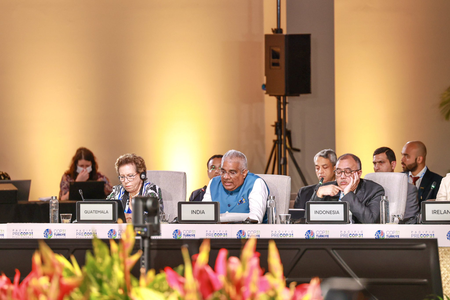
Suva, Oct 7 (IANS) Union Environment, Forest and Climate Change Minister Bhupender Yadav on Wednesday called for greater focus on closing gaps in understanding, fulfilling existing climate commitments and accelerating implementation of the Paris Agreement at the Pre-COP31 meeting in Fiji.
Yadav is leading the Indian delegation at the Pre-COP31 meetings under the United Nations Framework Convention on Climate Change (UNFCCC), being co-hosted by Australia, Fiji and Tuvalu.
Pre-COP is a preparatory meeting held a few weeks before the annual UN Climate Change Conference, with COP 31 scheduled to be held in Turkey in November this year.
Addressing the plenary discussion on COP31 priorities at the UNFCCC Pre-COP31 meeting in Fiji, Yadav said the UNFCCC and its Paris Agreement have already established long-term objectives and goals, including the ambition of limiting global temperature rise to 1.5°C.
He emphasised that achieving this ambition would require commensurate means of implementation, with the focus on assessing how the world can accelerate its journey towards these goals.
Referring to the COP31 Presidencies’ focus on consensus, decision-making and implementation, Yadav said there is an overall consensus on the long-term goals and direction of climate multilateralism.
He stressed the need to identify and develop consensus on existing gaps in understanding, including gaps between science and traditional knowledge and community practices, between practices and ethics, and between available resources and felt needs. The Union Minister said that COP31 should endeavour to close these gaps in understanding, according to the Ministry of Environment, Forest and Climate Change.
On decision-making, Yadav said the key decision required from parties is to fulfil their commitments under the UNFCCC and the Paris Agreement “in true letter and spirit” and enable each party to fulfil these commitments.
Additionally, on implementation, the Minister called for addressing identified gaps where the need is highest, and the impact is visible and felt by the majority.
He emphasised the need for greater capacity building and urged parties to bring concrete examples and success stories every year—demonstrating high-impact mitigation, large-scale adaptation and effective delivery of means of implementation, the Ministry mentioned.
Yadav held talks with Amina J Mohammed, UN Deputy Secretary-General, and Simon Stiell, UNFCCC Executive Secretary, on the sidelines of Pre-COP in Fiji, where they discussed key climate priorities ahead of COP 31.
“Glad to have met with Ms. Amina J Mohammed, UN Deputy Secretary-General, and Mr Simon Stiell, UNFCCC Executive Secretary, on the sidelines of Pre-COP in Nadi, Fiji today. We had an extensive discussion on matters related to the upcoming COP31 with emphasis on means of implementation, just transition, adaptation, and climate finance," Yadav posted on X.
"India remains committed to engaging with upcoming COP Presidency and UNFCCC constructively, extending all required support,” he added.
The Union Minister also met with Wopke Hoekstra, European Commissioner for Climate, Net Zero and Clean Growth, with discussion focused on matters related to clean energy, including access to energy, and the importance of science-based support enabling an inclusive policy-making process.
“We further discussed the importance of native wisdom in terms of providing tangible solutions supported with technology transfer. India and the EU will work together closely to have a productive, solution-oriented COP31 in November,” Yadav posted on X.
--IANS
scor/rs
India-Africa partnership built for generations, not just today: EAM Jaishankar
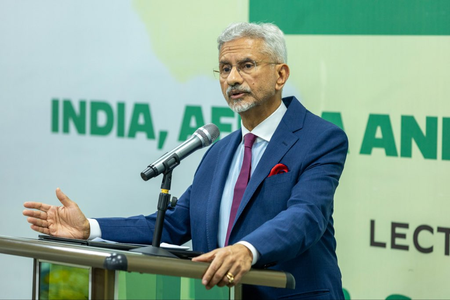
Accra, Oct 7 (IANS) External Affairs Minister (EAM) S. Jaishankar addressed a distinguished gathering at the Foreign Service Institute of Ghana on India, Africa and the Global South, affirming that India carries Africa in its heart and will build a partnership not just for today but for generations to come.
Speaking on the evolving global landscape, EAM Jaishankar said, “In today’s turbulent times, the challenge before diplomacy is to manage competition without allowing it to become confrontation, and to promote cooperation even when interests diverge.”
He highlighted the India story of ambition, execution, and confidence, underlining how transformations in the economy, infrastructure, digital, manufacturing, entrepreneurship, and aspirations are making the country a significant engine of global growth.
EAM noted that national security is linked with supply chain resilience, technological capabilities, and the ability to produce essential goods. He said that India values self-sufficiency in key sectors while promoting cooperation in many others.
The External Affairs Minister emphasised the importance for India and Africa of converting their youthful population into productive, skilled and empowered citizens.
“Our growing scientific and technological capabilities demonstrating vision, commitment and cost effectiveness. And the importance of widely sharing benefits of technology. The imperative of supply chain resilience, including of fuel, food, fertilizer and finance. As well as the Global South’s right to industrialise,” EAM Jaishankar stated
Stressing that India's foreign policy outlook is driven by strategic autonomy, he said, “We believe that partnerships should expand our options, not restrict them.”
Reaffirming India’s commitment to strengthening the voice of the Global South, EAM said, “It was witnessed in the inclusion of the African Union in the G20 during India’s presidency.”
He highlighted India’s vision of a reformed global order – “supportive of development, progress and prosperity of Africa and the Global South.”
EAM Jaishankar underscored India’s robust partnership with Africa spanning trade, infrastructure, capacity development, humanitarian assistance and disaster relief (HADR), agriculture, health and clean energy.
“An India with greater capabilities is a more serious and effective partner. We carry Africa in our hearts and will build a partnership not just for today but for generations to come,” EAM stated.
EAM Jaishankar also interacted with the Indian community and friends of India in Ghana, while lauding their efforts in deepening the partnership between the two countries.
Following the meeting, EAM took to X on Wednesday and posted: “Delighted to interact with members of the Indian community and friends of India in Accra. Spoke about how India is seen as a friend and a reliable & effective partner in Ghana. Also appreciated the contributions of the community in deepening our special bonds with a valued partner,”
EAM Jaishankar, along with Ghana’s Foreign Minister, Samuel Okudzeto Ablakwa, and Minister of Education Haruna Iddrisu, planted a Frangipani (Plumeria) sapling, underlining the spirit of India’s ‘Ek Ped Maa Ke Naam’ and Ghana’s ‘Tree for Life’ initiative.
“Joined FM Ghana Samuel Okudzeto Ablakwa and Minister of Education Haruna Iddrisu in planting Frangipani (Plumeria) sapling, a tribute to ‘Ek Ped Maa Ke Naam’ and Ghana’s ‘Tree for Life’ initiative. A symbol of our commitment to sustainable development. A symbol of our commitment to sustainable development,” he posted on X.
--IANS
scor/rs
US plans ‘Golden Fleet’ for maritime supremacy
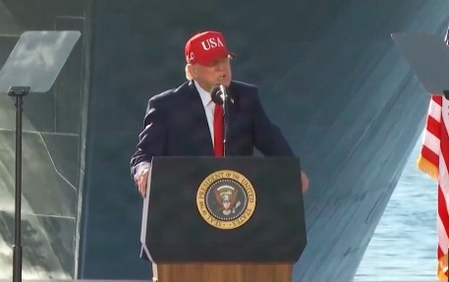
Washington, Oct 7 (IANS) The Trump administration is pursuing a new “Golden Fleet” designed to restore American maritime dominance for the next century, linking an expansion of naval power with a broader effort to rebuild the country's diminished shipbuilding industrial base.
The strategy was outlined Tuesday as President Donald Trump visited Sparrows Point, Maryland, where his administration announced a new high-tech shipyard to expand production for the US Navy.
“This facility will be a vital linchpin in our overarching naval strategy,” an administration official said during the event, according to a transcript of the proceedings.
“Under President Trump's visionary leadership, our mandate is clear. We are building the Golden Fleet.”
The official described the planned fleet in sweeping terms.
“The Golden Fleet is a maritime force designed to dominate the seas, project overwhelming power, and guarantee American maritime supremacy for the next century, just as the Great White Fleet did 100 years ago.”
Trump said his administration had already secured more than $76 billion in funding for shipbuilding, with plans to produce more than 80 new vessels for the Navy.
The push comes amid concern in Washington over the erosion of America's shipbuilding capacity and the ability of the defence industrial base to produce ships and submarines quickly enough to meet military requirements.
The administration has made rebuilding domestic shipbuilding a central part of its defence and industrial policy, combining federal investment with private capital and seeking to bring new companies into a sector traditionally dominated by a small number of established contractors.
Trump used his Maryland appearance to argue that the United States had allowed a once-formidable shipbuilding industry to decline.
He said the new investment at Sparrows Point was part of what he described as a “golden age of shipbuilding” in the United States.
The Maryland project is intended to add production capacity for Virginia-class nuclear-powered attack submarines, torpedo tubes and other submarine components, as well as autonomous underwater vessels.
It also represents an effort to bring newer defence technology companies into large-scale naval manufacturing.
Defence Secretary Pete Hegseth said the administration was demanding greater speed and production capacity from both the Pentagon and industry.
“In order to make America great again, you need to make your Navy great again,” Hegseth said. “You need to make shipbuilding great again, our manufacturing great again, our defense industrial base strong and robust again.”
“From day one, President Trump has demanded from the War Department speed, scale and urgency to build an arsenal of freedom befitting our warriors and considering the threats of the 21st century,” he said.
The administration's naval expansion goes beyond the Maryland facility.
Trump has directed the Pentagon to address persistent delays and cost overruns across major Navy programmes, increase competition among shipbuilders and expand the industrial base supporting nuclear-powered submarines and aircraft carriers.
A presidential memorandum issued in August ordered the Pentagon to prepare plans for establishing a fifth public Navy shipyard, which would be the first such facility in more than 80 years. It also directed greater use of private-sector capacity and investment to improve submarine and aircraft carrier readiness.
The administration has acknowledged that US naval shipbuilding faces significant structural problems. It has cited complex designs, repeated design changes, insufficient competition and an atrophied supplier base as factors contributing to delays and rising costs.
--IANS
lkj/rs
US spice industry seeks tariff shield for India

Washington, Oct 7 (IANS) The US spice industry is seeking continued tariff exemptions for Indian spices and wants the protection made permanent as Washington and New Delhi move towards a trade agreement, arguing that many of the products cannot be grown commercially in the United States.
Donald Pratt, president of the American Spice Trade Association (ASTA), said the industry's priority was to preserve tariff exemptions for agricultural products unavailable domestically but widely used by American consumers and businesses.
“Well, for our industry, it's about the continued exemption, you know, from tariffs, of agriculture that's not grown in this hemisphere and cannot be grown in this hemisphere, but that is beloved by our consumers, you know, and our business partners, worldwide,” Pratt told IANS at an event at India House in Washington.
Pratt said the Indian Embassy and others involved in the negotiations had already undertaken significant advocacy on the issue.
“But also I think as they go to wrap up the next phase of that, we hope that that continues the exemption now that we're seeing and becomes hopefully permanently, you know, enshrined, you know, as an exception to tariffs,” he said.
Pratt's comments put a spotlight on a segment of India-US commerce in which the American industry argues imports are essential because domestic production cannot meet demand.
Addressing the gathering separately, Pratt said India grows more than half of the 109 spices recognised by the International Organization for Standardization and is an essential supplier to the US industry.
The United States is the largest market for Indian spices, importing about $700 million worth last year, according to figures cited by Pratt.
“Here's the reality for our industry. The United States grows only a small fraction of the spices we use. Many spices simply can't be grown here at scale,” he said.
Pratt said the industry had spent considerable effort explaining why spices should be treated differently when tariffs were being considered.
He said there was now greater recognition that many spices are tied to particular climates and growing conditions and cannot simply be replaced with US production.
“So we rely on India for cumin, fennel, chilies, and dozens more spices,” he said. “They season the food Americans enjoy every day.”
Pratt said ASTA had worked closely with the Indian Embassy on tariffs over the past 18 months and described those discussions as “open, practical, collaborative”.
The association also mounted its own campaign to keep spices outside new tariff barriers.
“Asta led the industry advocacy for spices to be exempt from new, tariffs,” Pratt said.
“Our advocacy paid off last year with most spices included on exemption lists for Section 122 as well as 301 tariffs as unavailable natural resources,” he said.
“And as India and the US move towards a final trade agreement, we're hopeful for further considerations that keep spices accessible and affordable.”
The industry's case is built partly around the argument that tariffs on spices unavailable in the United States would raise costs without providing protection to a significant competing domestic industry.
Roberto Fanni, who chairs ASTA's science and regulatory committee, said the association had secured exemptions for spices because the United States was not a major producer.
“However, spices are exempt because it's recognized that US is not a producer of spices, so there is no any national production that can be, I would say pushed if there is a ban or there are tariffs for spices,” he told IANS.
Fanni said the relationship between suppliers in India and the US market was also evolving, with Indian producers increasingly understanding American requirements.
“The spice trace is definitely strategic. It's growing and it's really amazing to see how the relationship between the two countries are getting better,” he said.
He said suppliers and producers in India were addressing food safety and compliance issues from the farm level to make products more readily acceptable in the United States and allow trade volumes to expand.
Laura Schumer, executive director of the American Spice Trade Association, said India occupies a central position in the industry's supply chain.
“India is absolutely our most critical trade partner,” Schumer told IANS.
“Historically, we've relied so heavily on India, both for the breadth of spices, the volume of spices, and the value of spices that we import into the United States. India is our most critical trade partner, bar none.”
Schumer said the association represents about 100 companies that import, process, manufacture and sell spices in the United States. The India House event brought industry members together with government representatives and organisations working across the food and agriculture supply chain.
India and the United States have a broad trade relationship spanning goods and services, with tariffs and market access among the issues that have periodically produced differences between the two sides. Agriculture is particularly sensitive because trade policy can directly affect domestic producers, importers and consumers.
The spice industry's position distinguishes products that can be produced domestically from those that cannot be grown commercially in the United States. ASTA's case is that exempting unavailable natural resources such as many spices allows American businesses to maintain supplies without undermining comparable US agricultural production.
--IANS
lkj/rs
US watching Russia plague case ‘hour by hour’
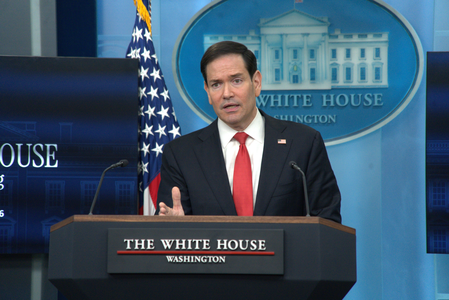
Washington, Oct 7 (IANS) US Secretary of State Marco Rubio said the United States and international agencies are monitoring a suspected plague case in Russia “hour by hour”, while urging Moscow to provide more information to the world.
Rubio declined to speculate on whether the case could be linked to an accidental release of an intentionally modified strain, saying available information remained limited.
“Any time you hear that there's some disease that infected someone in a lab anywhere in the world, you're going to be concerned about it,” Rubio said during a joint media availability with Icelandic Foreign Minister Thorgerdur Katrin Gunnarsdottir in Reykjavik.
Asked about reports of a fatal suspected plague case in Siberia and whether it could involve an altered strain, Rubio said it would be premature to draw conclusions.
“It would be irresponsible for me here to sit and speculate because we just don't have all the information yet,” he said.
Rubio called on Russia to provide greater transparency about the case.
“I think it's incumbent upon Russia to obviously share more information with the world. That's what they should do. That's what we hope they will do,” he said.
The Secretary of State stressed that Washington had not reached any conclusion about the nature or seriousness of the incident.
“Maybe, you know, there's nothing there. Maybe it's bigger than we thought. We don't know,” Rubio said.
He said the United States was nevertheless closely following developments because more information could determine what response might be necessary.
“We're watching it very closely, and I think the whole world is watching it very closely because depending on what we learn about it, we would know how to respond,” he said.
Rubio said measures were already available if authorities determine the situation is more serious than currently acknowledged.
“We already, you know, have measures in place to be able to address it if it's -- if it's something more serious than what so far has been acknowledged,” he said.
He added that several US and international agencies were involved in monitoring the situation.
“We're watching it very closely, hour by hour. We have multiple agencies, not just in the United States but internationally, that are watching it,” Rubio said.
“We encourage Russia to be transparent and share more information with the world, so that all of us could react accordingly and appropriately.”
Rubio said decisions would depend on information received in the coming period. “So far, that's still quite limited, but hopefully that will change in the next few hours and days,” he said.
--IANS
lkj/rs
Trump launches $6.6 billion US shipyard project
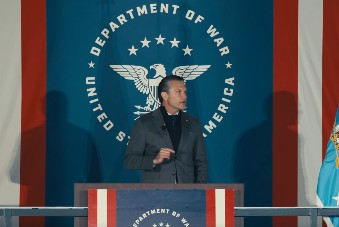
Washington, Oct 7 (IANS) US President Donald Trump and Defence Secretary Pete Hegseth announced a $6.6 billion public-private investment to develop what the administration says will be the largest new shipyard built in the United States since World War II, expanding production of nuclear submarine components and autonomous underwater vessels.
The new facility, called Arsenal-2, will be developed at Sparrows Point, Maryland, on a site with a long history of American industrial production.
Anduril Industries will invest $3.7 billion to build and operate the facility, while the US Navy is contributing up to $2.9 billion under an agreement tied to production outcomes.
“Today, we're officially launching the construction of the largest new shipyard in the United States,” Trump said at the site. “Since World War II, there's been nothing like what we're doing today.”
The facility will manufacture components for Virginia-class nuclear-powered attack submarines and eventually produce autonomous underwater vessels, according to the administration and Anduril.
“In a tremendous victory for our country and for the city of Baltimore, Anduril is investing $3.7 billion dollars in a state-of-the-art shipyard that will be known forever as Arsenal-2,” Trump said.
The administration said the project would create more than 3,100 jobs in Maryland and support another 11,000 jobs around the country.
“This massive project will create over 3,100 new jobs right here in Maryland and will support an additional 11,000 jobs across the nation,” Trump said.
Anduril said Arsenal-2 would initially increase production capacity for the Virginia-class submarine programme, an area where the Navy has sought to expand the industrial base and accelerate production.
The company said its $3.7 billion private investment, combined with the Navy contract of up to $2.9 billion, amounts to a $6.6 billion expansion of the US submarine industrial base.
Trump described the project as part of a broader effort to revive American shipbuilding and domestic defence manufacturing.
“When you come back in two years, you're not going to believe what you see,” he said.
“Now, with the men and women of Anduril, the workers of Maryland, and the warriors of the U.S. Navy ... this place will roar with the sound of high-tech manufacturing, building ships and submarines.”
Hegseth said rebuilding shipbuilding capacity was central to strengthening the US military-industrial base.
“In order to make America great again, you need to make your Navy great again,” Hegseth said. “You need to make shipbuilding great again, our manufacturing great again, our defense industrial base strong and robust again.”
He said the administration was pushing the Pentagon and defence industry to increase the speed and scale of weapons production.
“From day one, President Trump has demanded from the War Department speed, scale and urgency to build an arsenal of freedom befitting our warriors and considering the threats of the 21st century,” Hegseth said.
The project represents an unusual expansion for Anduril, a defence technology company best known for autonomous systems, into the industrial base supporting nuclear-powered submarines.
--IANS
lkj/rs/
Trump says Covid exposed US reliance on China
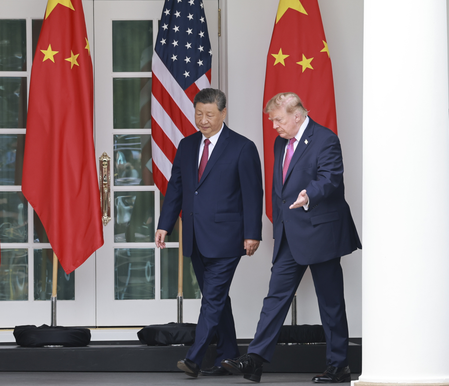
Washington, Oct 7 (IANS) US President Donald Trump said that the Covid pandemic exposed America's dependence on China and other countries for critical products, arguing that the United States must rebuild domestic manufacturing capacity to protect its economic and national security.
Trump says Covid exposed US reliance on China
Speaking at Sparrows Point in Maryland, Trump linked his administration's push to expand American shipbuilding with a wider effort to bring strategic manufacturing back to the United States.
“We learned that from COVID,” Trump said, referring to America's dependence on foreign suppliers.
“We didn't make our farmers -- we didn't make our drugs, it was made in China and lots of other places, Ireland, all over Europe,” he said, according to a transcript of his remarks.
Trump's comments came as he announced a major expansion of American shipbuilding capacity at the former industrial site outside Baltimore.
The president has made reshoring manufacturing and reducing US dependence on foreign supply chains a central element of his economic and national-security agenda.
He has particularly targeted America's economic relationship with China, using tariffs and other trade restrictions while pushing companies to manufacture more products in the United States.
But Trump also said Tuesday that Washington continues to have an important economic relationship with Beijing.
“We have a very good -- we've had -- always had a good relationship, but we're making a lot of money with China,” Trump said.
Trump tied that approach to defence production, saying his administration had secured more than $76 billion in shipbuilding funding to produce more than 80 new vessels for the US Navy.
The administration has argued that industrial capacity itself should be viewed as a national-security asset, particularly as the United States competes with China across military technology, advanced manufacturing and maritime power.
At Sparrows Point, Trump and Defence Secretary Pete Hegseth announced a new shipyard intended to manufacture submarine components and autonomous underwater vessels.
The project brings together federal funding and private investment as Washington attempts to expand an industrial base that officials say has become too concentrated and unable to produce ships and submarines at the speed required by the military.
Hegseth said the administration was seeking “speed, scale and urgency” from the Pentagon and defence companies.
The strategy reflects a broader shift in US economic policy in which supply chains for semiconductors, pharmaceuticals, critical minerals, energy and defence equipment are increasingly viewed through the lens of national security.
--IANS
lkj/rs
Free trade agreement era may be over: Rubio
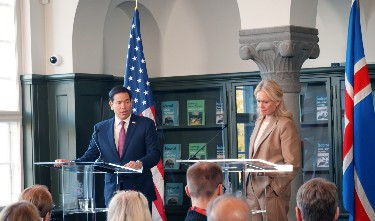
Washington, Oct 7 (IANS) US Secretary of State Marco Rubio has said the era of free trade agreements is unlikely to return “for the foreseeable future”, signalling that Washington sees bilateral and reciprocal trade arrangements as a more viable path for expanding economic ties.
Rubio made the remarks in Reykjavik when asked whether the United States was willing to explore a free trade agreement with Iceland.
“As far as free trade agreements are concerned, look, I think the era of free trade agreements for the foreseeable future is probably not going to be there,” Rubio said during a joint media availability with Icelandic Foreign Minister Thorgerdur Katrin Gunnarsdottir.
He made clear that his assessment was not specifically directed at Iceland.
“I mean, not with Iceland, but just in general writ large,” he said.
Rubio instead pointed to bilateral arrangements based on reciprocal trade as an area where Washington sees opportunities.
“Where I do think we have real opportunities is a bilateral trade agreement, bilateral trade, a reciprocal trade understanding between our countries,” he said.
Rubio said meetings aimed at pursuing such an arrangement between the United States and Iceland were already being organised before his visit.
“And it's my understanding that meetings to try to pursue and further that are being organized as already pre-existing to my visit, and hopefully those will be very positive,” he said.
The comments offered a broader indication of the administration’s approach to international trade as Rubio discussed opportunities to deepen economic relations with Iceland.
He said the two countries could expand investment and commercial cooperation in sectors where Iceland has specialised companies, including pharmaceuticals and biotechnology.
“There are companies here to do very unique things that we would like to see in the United States and there are companies in the United States that I think could find some real positive economic opportunities to invest and be a part of here,” Rubio said.
He said Washington wanted to organise visits by American businesses to Iceland to identify investment opportunities. Icelandic companies could similarly be encouraged to explore investment and markets in the United States.
Rubio said the US government and the two countries’ embassies could help connect businesses and investors.
“We want to use the government, our embassy, our presence here, your embassy in the United States, to connect and create that synergy,” he said.
“We will both benefit from it. You'll become more prosperous, we'll become more prosperous, and I think will only bind us together more closely.”
Rubio’s comments come as US trade policy increasingly emphasises reciprocity and bilateral negotiations rather than the broad tariff reductions traditionally associated with free-trade agreements.
--IANS
lkj/rs
India accuses OIC of ‘wilful blindness’, failing to distinguish between terror’s victim and perpetrator
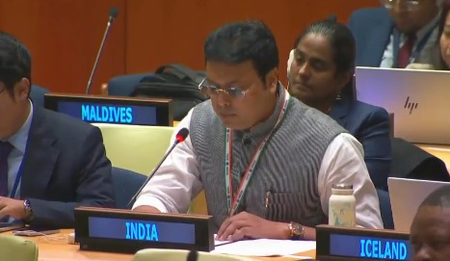
United Nations, Oct 7 (IANS) India has strongly criticised the Organisation of Islamic Cooperation (OIC), accusing it of being unable to distinguish between “victim and perpetrator” and between fact and fiction due to "wilful blindness" when it brings up Kashmir and New Delhi's action against Pakistan-based terror infrastructure.
“India retains the right to defend its people against cross-border terrorism emanating from Pakistan”, BJP MP Biplab Kumar Deb said here on Tuesday.
“Indeed, there will be consequences for indulging in terrorism”, he warned while responding to the statements made by OIC's chair, Saudi Arabia, at the General Assembly's Sixth Committee, which deals with international legal matters.
“It is regrettable that those delivering the statement are unable to separate fact from fiction and distinguish between victim and perpetrator,” he said.
He exposed the OIC's refusal to condemn Pakistan's brutal suppression of people in the part of Kashmir it occupies, saying, “Such wilful blindness only speaks of bigotry and intolerance”.
The statement by Saudi Arabia on behalf of the OIC did not directly name India while making identifiable references to its retaliation against terrorist bases in Pakistan in the aftermath of the Pahalgam massacre by a Pakistan-based terror organisation last year, and to Kashmir.
Deb said he was addressing “the statement delivered by the chair of the OIC on India's focused and measured actions against terror infrastructure in Pakistan and Pakistan-occupied Jammu and Kashmir, from where terrorist attacks against India were planned and directed”.
He said, “It is regrettable that those delivering the statement are unable to separate fact from fiction and distinguish between victim and perpetrator.”
Referring to what he characterised as “the OIC's unwarranted reference to the Indian Union Territory of Jammu and Kashmir”, Deb said, “The OIC chair would do better to focus on Pakistan's illegal occupation, especially in Rawalakot, where wanton killings, brutal violence, and the denial of basic rights to the people living there are so visible”.
According to human rights groups, over 90 people have been killed in recent months in Pakistan-occupied Kashmir. The Pakistan government, which has been fronting for the military, has brutally put down a popular movement for economic rights and against importing people from elsewhere to take over the area and against election manipulation.
Deb, a national secretary of the BJP and former Chief Minister of Tripura, is one of the MPs in India's delegation to the UN General Assembly session.
--IANS
al/dpb
US senator seeks $140,000 H-1B wage threshold
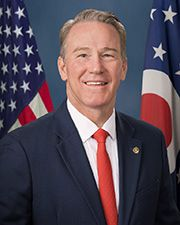
Washington, Oct 7 (IANS) A Republican US senator has introduced legislation that would effectively raise a key H-1B salary threshold from $60,000 to nearly $140,000, arguing that the current level is outdated and allows some companies to avoid requirements designed to protect American workers.
Sen. Jon Husted of Ohio introduced the Protecting American Workers Through H-1B Modernization Act on Tuesday. The legislation would replace the fixed $60,000 threshold with a formula tied to the Social Security Administration's National Average Wage Index.
The change would apply to H-1B dependent employers — companies whose H-1B workers make up more than a specified share of their workforce.
Under current law, such employers generally must attest that they have first sought to hire American workers before sponsoring additional H-1B employees.
Employers, however, are exempt from that requirement if an H-1B worker is paid at least $60,000 a year or holds a master's degree or higher.
Husted's proposal targets the salary exemption.
“For decades, companies have been able to sidestep hiring American workers because of a salary threshold that hasn’t budged since 1998. That’s not modernization, that’s a loophole,” Husted said.
“This bill simply asks that when a company is heavily reliant on these visas and wants to bring in more H-1B workers, they shouldn’t be relying on an outdated law to get around offering these jobs to qualified American workers first,” he said.
The $60,000 level was established in 1998 and was intended to represent twice the Social Security Administration's National Average Wage Index at the time, according to Husted's office.
It has not subsequently been adjusted for inflation or wage growth.
The National Average Wage Index is now nearly $70,000, according to the material released by the senator. Applying the original formula today would therefore put the H-1B salary threshold at nearly $140,000.
Under Husted's bill, the fixed $60,000 figure would be replaced by a dynamic threshold set at twice the National Average Wage Index calculated by the Social Security Administration.
That would also mean the threshold would change over time as US wages rise rather than requiring Congress to periodically revise a fixed dollar amount.
“American workers should always come first, and this bill closes an outdated loophole that lets companies bypass them,” Husted said.
The visas are widely used by technology companies and other US employers to recruit foreign professionals for specialised jobs.
The H-1B programme has also been a recurring subject of political debate in Washington. Supporters say it helps US employers obtain specialised talent that may be difficult to find domestically, while critics have argued that parts of the programme can be used to bring in foreign workers at the expense of American employees.
--IANS
lkj/rs