
US planning security strategy 10 years ahead
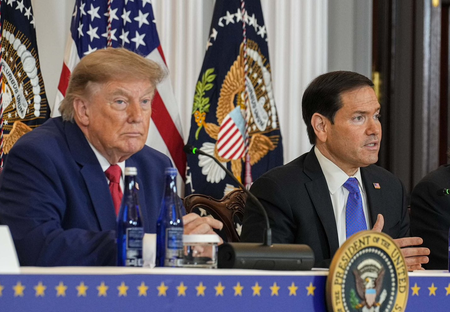
Washington, Oct 6 (IANS) President Donald Trump's national security team is conducting strategic planning that extends as far as five to 10 years into the future, Secretary of State Marco Rubio said, describing a weekend meeting at Camp David as part of the administration's longer-term approach to global challenges.
Rubio said the meeting brought national security officials together in a setting with fewer distractions and was not centred solely on immediate crises confronting the administration.
"We constantly are meeting for long-term strategic planning and things of this nature," Rubio told reporters at Joint Base Andrews when asked about the Camp David meeting on Friday.
"It's not unusual for us as a team to get together," he said.
Rubio did not identify the specific issues discussed at Camp David or disclose who participated in the meeting.
He said such sessions were part of the role played by the National Security Council in bringing together officials responsible for different areas of US national security policy.
"That was just an opportunity to do it in a setting where there were less distractions, but we're constantly – that's just part of the role the National Security Council plays," Rubio said.
The secretary offered an unusually broad description of the time horizon involved in the administration's strategic discussions.
He said the NSC brings stakeholders together "to sort of do long-term planning – six months, nine months, but in many cases five or 10 years down the road."
Rubio cautioned against characterising the Camp David session simply as routine, given the scope of the issues involved.
"I wouldn't call it routine because the topics being discussed are global by nature, but they are long-term in thinking," he said.
Rubio said the administration had held similar meetings previously and that the latest session differed principally because it took place at the presidential retreat.
"We've had many meetings like that before. This one just happened to be in Camp David," he said.
The secretary did not elaborate on what he meant by topics that were "global by nature."
His comments came during a press interaction covering several immediate national security challenges, including Russia and Ukraine, fighting involving the Houthis and Saudi-backed Yemeni forces, a suspected plague case in Russia and the security of US military installations in Britain.
Rubio was speaking before departing on a trip that includes Iceland, Portugal and Greece, three NATO members.
Asked about the European visit, Rubio described Iceland as a good friend of the United States and said the stop followed conversations with Icelandic leaders during the NATO summit earlier this year.
He called Portugal a strong ally and described Greece as "a very important US ally," citing both the American military presence and strong economic ties.
The National Security Council is the principal White House mechanism for coordinating national security and foreign policy across the US government. It brings together the president and senior officials responsible for diplomacy, defence, intelligence and other national security matters.
Camp David, the presidential retreat in Maryland, has frequently been used by US presidents for high-level national security discussions, diplomatic meetings and strategic planning away from the day-to-day activity of the White House.
--IANS
lkj/rs/
15 MPs representing India’s political, geographic diversity at UN General Assembly
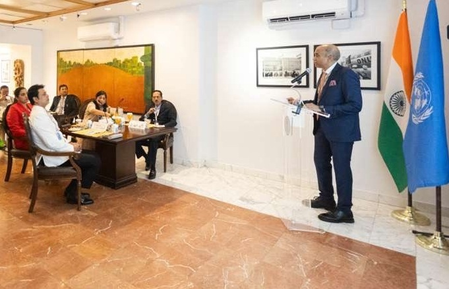
United Nations, Oct 6 (IANS) Fifteen members of Parliament, representing the political and geographic diversity of India have joined the India's delegation to General Assembly, showcasing the nation's democracy.
They paid homage on Monday to Mahatma Gandhi at his statue on the UN campus before heading out to their General Assembly assignments.
India's Permanent Representative P Harish, the senior diplomat who heads India's UN Mission, briefed the MPs on India's engagement with the UN.
The MPs met with Assistant Secretary-General Kanni Wignaraja, who is also the regional director for Asia and the Pacific, and discussed the work of the UN Development Programme in India.
During the meeting, they explored how parliamentarians can advance the UN's Sustainable Development Goals.
The MPs plunged immediately into their assignments representing India.
Two of the BJP MPs, Banshilal Gurjar from Madhya Pradesh and C P Joshi from Rajasthan, spoke in Hindi with simultaneous translation.
Gurjar addressed the Assembly's Fifth Committee that deals with budgetary and administrative matters on the scale of assessments for the apportionment of UN expenses.
C P Joshi, who heads the Parliament Committee on Petitions, addressed the Second Committee that deals with economic and financial matters.
Gumma Thanuja Rani, a YSR Congress MP from Andhra Pradesh, spoke in English on the organisation of work at the Fifth Committee.
Traditionally, MPs reinforce India's presence at the General Assembly during the months after its new session begins in September.
There are six MPs from the BJP, and besides Joshi and Gurjar, they are Mahima Kumari Mewar from Rajasthan; Biplab Kumar Deb, BJP national general secretary from Tripura; Vishweshwar Hegde Kageri from Karnataka; and Sikander Kumar from Himachal Pradesh.
The two Congress Party MPs in the delegation are Rahul Kaswan from Rajasthan and Anil Kumar Yadav from Telangana.
The others, besides them, are LK Sudhish of Desiya Murpokku Dravida Kazhagam from Tamil Nadu; Asit Mal of the Trinamool Congress from West Bengal; Smajwadi Party's Priya Saroj from Uttar Pradesh; Lovely Anand of the Janata Dal (United) from Bihar; Sanjay Yadav of the Rashtriya Janata Dal also from Bihar, and Rajabhau Waje of the Shiv Sena (Uddhav Balasaheb Thackeray) from Maharashtra.
--IANS
al/rs
US monitors suspected plague case in Russian lab worker amid fears of internal spread, says Rubio
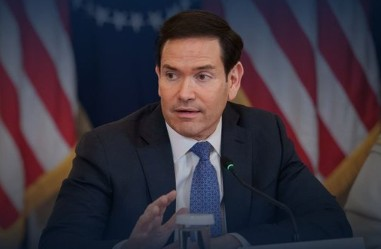
Washington, Oct 6 (IANS) The United States is closely monitoring a suspected plague case involving a worker at a Russian laboratory amid concern that the infection may have spread internally, Secretary of State Marco Rubio said.
Rubio said Washington's information about the incident was limited to what Russian authorities had provided, but US officials were watching the situation because of the potential for an infectious disease to spread beyond its initial location.
"We don't – we know what we know, obviously, about whatever the Russians have provided, which is it seems that there was a worker at the lab that was infected, and there's concern that that could have spread, at least internally," Rubio told reporters at Joint Base Andrews before departing on a European trip.
"So you've seen them do quarantines with this – of that nature," he said.
Rubio stressed that travel between Russia and the United States is limited but said Washington was taking the situation seriously because of the possibility of wider transmission.
"There's very limited travel between the U.S. and Russia, obviously. But like anything else, something like that gets out, it could quickly spread," Rubio said.
"So we're watching and monitoring it closely. I don't think it's cause for alarm, but it is cause for focus and a cause to just keep an eye on it, and we're doing that," he said.
Rubio did not identify the Russian laboratory, the location of the suspected case or the form of plague involved. He also did not say whether US officials had independently confirmed the infection.
His comments indicated that the information available to Washington had come from Russia.
Rubio spoke during a wide-ranging exchange with reporters that also covered Russia's war in Ukraine, Yemen, Saudi Arabia, US military deployments in Britain and the administration's longer-term national security planning.
Asked separately about Russia urging foreign diplomats in Kyiv to leave the Ukrainian capital, Rubio said Moscow had been issuing such warnings for months.
The United States, he said, continued to maintain an embassy presence in Kyiv and would make its own assessment of the security situation.
"We analyze every single day the safety of every diplomatic mission in the world, and if a threat arises that we feel needs to be addressed by a change in posture, we'll do so," Rubio said.
"We haven't done that up to this point there."
Rubio was also questioned about the movement of American bombers from RAF Fairford in Britain following a threat the previous week.
He cautioned against directly connecting the aircraft movements with the threat, saying US military assets and personnel are routinely rotated and redeployed.
"The Department of War is constantly reallocating resources where they need to be," Rubio said.
Asked whether Washington remained confident about British security at the base, Rubio said it did.
"We have confidence in the security of all of our bases, because all of our bases are theoretically – could be threatened at any moment, and that's why there's so much security built around them," he said.
Rubio said British authorities had worked closely with the United States on the investigation into the threat.
Plague is an infectious disease caused by the bacterium Yersinia pestis and occurs in several forms, including bubonic, septicaemic and pneumonic plague. Transmission risks differ depending on the form of the disease, with pneumonic plague capable of spreading between people through respiratory droplets.
--IANS
lkj/rs
Trump in no rush for Canada trade talks
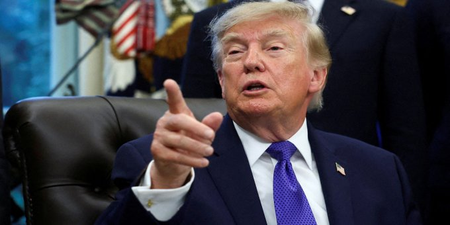
Washington, Oct 6 (IANS) US President Donald Trump said he was in no rush to resume trade talks with Canada, accusing the neighbouring country of treating the United States badly and saying any eventual agreeme6t would require Ottawa to be “honest” with Washington.
Trump made the remarks when asked by reporters whether he would resume trade negotiations with Canada before the US midterm elections.
“I don't know. Canada behaves very badly with the United States and I don't know,” Trump said before departing aboard Marine One.
“We caught them in the act; they charged us a lot of tariffs that nobody knew about except me. And it will work out eventually, but I don't know about -- I'm in no rush.”
Trump offered no timetable for restarting negotiations and did not identify the Canadian tariffs he was referring to.
His remarks indicated that he did not view an early resumption of negotiations with Ottawa as a priority, despite saying that the trade dispute would eventually be resolved.
The President asserted about the imbalance he sees in the commercial relationship between the two countries.
“You know, Canada does all their business with us, we do very little business with them,” Trump said.
“And all we ask of one thing in Canada, they have to be honest. They are not honest with the United States; they've been ripping us off for years.”
Trump did not provide figures or examples during the exchange to support the accusation.
His comments were among the sharper foreign economic policy remarks during a wide-ranging interaction with reporters before his departure.
The President did not say whether his administration was currently engaged with Canadian officials at other levels or what conditions would have to be met before formal trade negotiations could resume.
He also did not specify whether his reference to resuming talks before the midterm elections meant he was ruling out negotiations during that period. His response instead repeatedly stressed that he was not in a hurry to restart the process.
--IANS
lkj/rs
US, nine nations target Iran activities
Washington, Oct 6 (IANS) The United States, Canada and eight Latin American and Caribbean countries on Monday accused Iran and its proxies of terrorist activities and other malign operations in the Western Hemisphere and pledged greater coordination to counter them.
The joint declaration followed a US-Paraguay forum held last month to strengthen law enforcement cooperation against what Washington describes as Iranian terrorist activity in the region.
The governments accused Iran and its proxies of engaging in lethal plotting, illicit fundraising, political interference and foreign influence operations across the hemisphere.
"We stand united in our determination to protect our countries and our people against such threats," the countries said in a joint statement released by the US State Department.
"The Islamic Republic of Iran and its proxies must halt these actions now," they said.
The statement was signed by the governments of the United States, Argentina, Canada, Colombia, Costa Rica, the Dominican Republic, Guyana, Paraguay, Peru and Trinidad and Tobago.
The declaration represents an effort by Washington to build a broader regional coalition against suspected Iranian and proxy operations beyond the Middle East.
The participating countries alleged that Iranian and proxy-sponsored activities in the Western Hemisphere included operations intended to strengthen terrorist networks, coerce perceived enemies, compromise legal or administrative processes and damage regional security.
They did not identify individual incidents, organisations or alleged plots in Monday's statement.
The countries said they welcomed efforts already undertaken by governments in the region to counter what they described as malign Iranian activities, including lethal plotting.
"We are together resolved to undertake further measures to halt them, and pledge to enhance our coordination and cooperation to address this threat," the joint statement said.
The State Department said the declaration followed the Countering Transnational Terrorism Forum, co-hosted last month by the United States and Paraguay.
According to the department, the forum was intended to enhance law enforcement cooperation among governments in the Western Hemisphere in disrupting Iranian terrorist activity.
The State Department described the initiative as part of the Trump administration's efforts to strengthen cooperation on security across the hemisphere.
The inclusion of Canada alongside the United States and eight Latin American and Caribbean governments gives the declaration a broader hemispheric dimension.
Washington has long accused Tehran of supporting armed groups and carrying out or facilitating operations abroad through Iranian state institutions and allied organisations.
Iran has repeatedly rejected US accusations about its regional and international activities and has accused Washington of using sanctions and military pressure to advance its objectives against Tehran.
--IANS
lkj/rs
US backs Saudi right to defend against Houthis
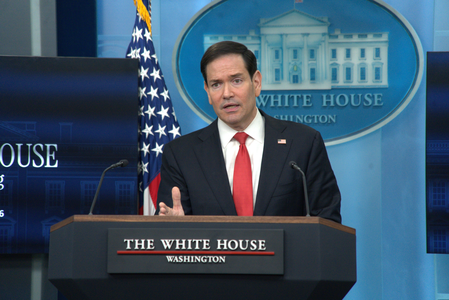
Washington, Oct 6 (IANS) The United States intends to honour its defence and security commitments to Saudi Arabia as Saudi-backed Yemeni forces counter a Houthi offensive, Secretary of State Marco Rubio said, while declining to say whether Washington would provide air support.
Rubio said Saudi Arabia had come under Houthi attack and had a right to defend itself, as fighting continued over territory near a strategically important strait.
"The United States has a defence and security agreement with Saudi Arabia, and we intend to live by it," Rubio told reporters at Joint Base Andrews.
"I won't discuss details further than that," he added.
Rubio was responding to questions about recent operations by Yemeni government forces, with Saudi support, against the Houthis and whether the United States would provide air support or had coordinated the operations.
He did not directly answer whether Washington was providing or considering air support.
Rubio instead described the fighting as a counteroffensive against territory previously seized by the Houthis.
"I think it's – the Saudis and Yemeni forces clearly are not in favour of the Houthis controlling that territory close to the – to the strait there," he said.
"And it's territory that was gained as a result of a Houthi offensive, and this is the counter to it. We expected that would happen and that's what's happening."
Rubio said the threat posed by the Houthis gave Saudi Arabia grounds to respond.
"So obviously the Saudis have come under Houthi attack and see the threat that that poses, and they have a right to defend themselves," he said.
"And obviously the Yemeni forces are going to try to retake territory that they were ousted from."
The Houthis have previously demonstrated their ability to threaten commercial and military vessels operating in waters around Yemen, making control of territory near strategic waterways an international security concern.
Rubio's comments came during a wide-ranging exchange with reporters before he departed Washington for Europe.
The United States and Saudi Arabia have maintained a longstanding security relationship that includes defence cooperation, arms sales, military training and coordination on regional security threats.
Yemen has endured years of conflict involving the Houthis, the internationally recognised government and regional powers. The Houthis seized the capital, Sanaa, in 2014, prompting a Saudi-led military intervention the following year.
The conflict has also become intertwined with wider regional tensions involving Iran. Washington has accused Tehran of providing military support to the Houthis, while Iran has said its relationship with the group is political and has rejected US characterisations of its role in the conflict.
--IANS
lkj/rs
G20 trade talks yield gains, expose divisions
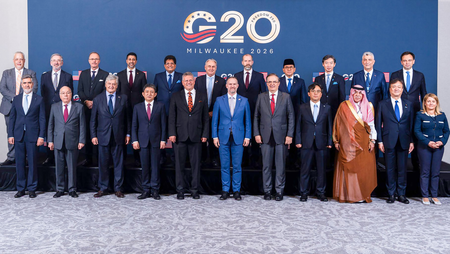
Washington, Oct 6 (IANS) The United States pointed to a G20 agreement against using food trade as economic or political coercion as a key outcome of last week's trade ministerial in Milwaukee, while acknowledging that major economies remained divided over forced abour, industrial overcapacity and changes to global trading rules.
The Office of the US Trade Representative released its assessment of the September 30-October 1 meeting hosted by US Trade Representative Jamieson Greer, outlining areas where ministers reached agreement and others where differences prevented broader G20 action.
India was represented at the meeting by Commerce and Industry Minister Piyush Goyal.
The ministerial meeting focused on four issues put forward by the United States: the weaponisation of food through coercive trade actions, forced labour in global supply chains, structural excess capacity and production, and the Most-Favoured-Nation principle that underpins much of the global trading system.
The clearest consensus emerged on food and agriculture.
"For decades, trade in food, agricultural products, and agricultural inputs has been weaponised to exert coercive pressure for economic or political reasons," USTR said in its account of the meeting.
The G20 trade ministers reached consensus on a statement addressing the weaponisation of food through coercive trade actions.
"This week's G20 Trade Ministerial in Milwaukee was a success. It is especially significant that the entire G20 was able to reach consensus on the statement on the weaponisation of food through coercive trade actions," Greer said.
But efforts to secure a common position on forced labour were less successful.
The United States, Mexico and Argentina issued a separate statement calling for the elimination of forced labour from global supply chains after the broader G20 failed to reach consensus.
"While I am disappointed that the G20 Trade Ministers did not reach consensus on this issue, I am hopeful that discussions on this topic will continue and that other economies will join us in taking increased action to combat forced labor in global supply chains," Greer said.
Industrial overcapacity was another point of friction.
Washington has argued that structural excess production, particularly when supported by non-market policies, can distort global markets, depress prices and hurt producers operating under market conditions.
Greer said many G20 members expressed a determination to address structural excess capacity and production, but agreement on collective action proved elusive.
He said, "A handful of members rejected creating a pathway toward cooperative action."
There was more movement in a separate discussion on steel.
On the sidelines of the ministerial, Greer chaired a meeting of the Global Forum on Steel Excess Capacity, where participating economies agreed to what USTR described as the "Milwaukee Framework" for joint action.
The framework is intended to strengthen cooperation among participating economies in addressing excess steelmaking capacity and its effects on global markets.
Ministers also discussed the future of the Most-Favoured-Nation principle, a central feature of the multilateral trading system under which trade advantages granted to one trading partner generally must also be extended to others covered by the principle.
The Trump administration has questioned whether the principle, in its current form, adequately responds to differences among economies and to non-market policies that Washington says have contributed to persistent trade imbalances.
According to USTR, participants representing economies at different levels of development indicated that there was merit in considering ways to improve the MFN principle to better address the current global trading environment.
The discussions did not produce an agreement on specific changes to the principle.
The Milwaukee ministerial was held as part of the US presidency of the G20 in 2026 and came amid the Trump administration's push to reshape international trading arrangements around reciprocity, domestic production and greater scrutiny of non-market practices.
The G20 brings together the world's major advanced and emerging economies and serves as a forum for economic coordination rather than a treaty-based organisation with authority to impose binding trade rules. Trade disputes and changes to multilateral trade obligations continue to be governed principally through national policies, negotiated agreements and institutions such as the World Trade Organization.
--IANS
lkj/rs
Trump warns Iran, open to direct talks
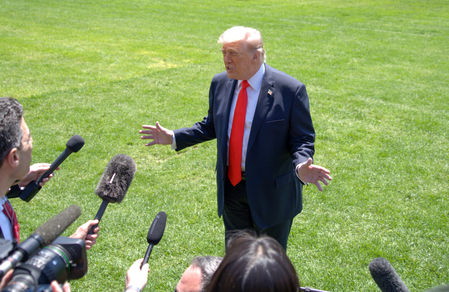
Washington, Oct 6 (IANS) US President Donald Trump has warned that Iran would “suffer greatly” if it was behind threats that prompted Washington to move military assets from Britain, even as he said he remained open to direct talks with Tehran.
Trump, speaking to reporters before departing aboard Marine One, addressed Iran several times as he fielded questions about the movement of US bombers, tensions in the Middle East, energy supplies and an attack involving FlyDubai.
Asked whether a specific threat had prompted the United States to pull bombers back from Britain, Trump confirmed there had been threats.
“Yeah, I think we can say that. I mean, they didn't fly out by accident, yeah,” Trump said.
“No, but there were some threats and, rather than tempting the enemy, we'll capture the enemy and beat the enemy. But why should we leave them there? So, we moved them around a little bit, not very far.”
Trump did not initially identify those behind the threat.
Later, he was asked whether there was a risk that Iran had brought combat drones into Britain and whether that was why the US assets had been moved.
“I can't tell you that but if they did, they'll suffer greatly,” Trump said.
The President then disclosed that US authorities knew who was behind the threat.
“So, we had a threat and if we're going to be threatened, we'll just move them and that sort of alleviates that. And we actually know the people that made the threat and they've got themselves a big problem,” he said.
Asked whether those responsible were linked to Iran, Trump replied: “They would be linked to Iran.”
Trump nevertheless said Britain remained a safe location for American forces.
“I think it is and I have a very good relationship with your new prime minister,” he said when asked whether the UK was still a safe space for US forces.
Despite his warning to Tehran, Trump also left the door open to diplomacy.
Asked directly whether he was open to direct talks with the Iranians, Trump gave a one-word response: “Yeah, always.”
The President also accused Iran of responsibility for an attack involving FlyDubai.
Asked whether he thought Iran was responsible for what the questioner described as a terrorist attack involving the airline, Trump said: “I do; I personally do.”
He did not elaborate or present evidence during the exchange to support the allegation.
Iran also surfaced as Trump discussed oil and fuel prices and the consequences of disruptions to Russian refineries.
“Gasoline prices are going down very rapidly. When the war ends, they'll drop like a rock and the war is going to end very soon,” Trump said.
He said attacks on Russian refineries were creating problems for diesel supplies and that Europe and the United States were drawing on reserves.
“And oil prices are coming down and here's the nice part -- Iran will never have a nuclear weapon,” Trump said.
--IANS
lkj/rs
US, Japan deepen technology partnership
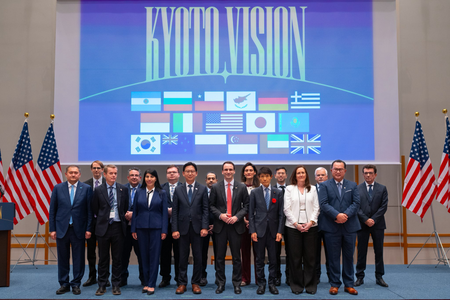
Washington, Oct 6 (IANS) The United States and Japan have agreed to deepen cooperation on artificial intelligence, quantum technology, telecommunications, pharmaceuticals, biotechnology and space as the two allies expand a technology partnership aimed at strengthening secure supply chains and setting standards for emerging technologies.
The two countries outlined progress under their Technology Prosperity Deal in a joint statement released by the US State Department on Monday.
Michael Kratsios, Assistant to the President and Director of the White House Office of Science and Technology Policy, met Japan's Minister of State for Science and Technology Policy Toshiharu Furukawa in Kyoto on Sunday.
The talks reviewed progress since the two governments signed a memorandum of cooperation on the Technology Prosperity Deal on October 28, 2025.
The two sides reaffirmed the importance of strengthening collaboration in strategic science and technology capabilities and standards as technological innovation accelerates worldwide.
A major focus is artificial intelligence, described as "super intelligence" in the agreement.
The United States and Japan committed to enhanced dialogue on the technology and said they would work towards best practices for industry standards and a secure innovation ecosystem.
They also agreed to promote the adoption of trusted AI technologies and a pro-innovation regulatory environment across the Indo-Pacific.
Washington reaffirmed a $20 million commitment announced at the 2025 APEC Summit, while Japan said it intends to match the US contribution.
The two countries are also expanding cooperation on what they call "physical SI," combining Japan's strengths in hardware, industrial robotics manufacturing and industrial data with US capabilities in artificial intelligence models.
The effort will include bilateral exchanges, joint research and development programmes, joint challenges and supply-chain mapping.
The announcement comes alongside a broader expansion of scientific cooperation.
The two governments signed a protocol on October 2 indefinitely extending their 1988 agreement on cooperation in research and development in science and technology. The updated arrangement includes revised intellectual property protections.
Washington and Tokyo also highlighted a $1 billion strategic partnership established in June between the US Department of Energy and Japanese ministries.
Japan became the first international partner in President Donald Trump's Genesis Mission under the initiative.
Eleven joint scientific teams have since been launched, bringing together 12 US Department of Energy national laboratories, a DOE Office of Science user facility and 12 Japanese research institutions.
Their work covers quantum information science, fusion energy, biotechnology, advanced materials, particle physics and autonomous laboratory systems.
Telecommunications is another significant part of the partnership.
The countries are also pursuing joint research on technologies relevant to Beyond 5G and 6G networks and expanding cooperation on digital connectivity across the Indo-Pacific.
The agreement extends into critical health and pharmaceutical supply chains. The two sides said they have identified essential active pharmaceutical ingredients for an initial supply-chain analysis aimed at informing strategies to increase production.
US and Japanese regulators have established an information-sharing platform on advanced pharmaceutical manufacturing, while health research agencies are working towards joint biomedical research opportunities.
Quantum technology is another priority. Washington and Tokyo committed to cooperation aimed at securing quantum-sector supply chains, strengthening measurement standards and exploring applications of quantum sensing in healthcare.
Cooperation is also expanding in fusion energy and space.
US and Japanese researchers are working on fusion projects including Japan's JT-60SA programme and research at the US DIII-D National Fusion Facility.
NASA and the Japan Aerospace Exploration Agency, meanwhile, marked the August launch of the Nancy Grace Roman Space Telescope, for which Japan supplied optical elements and established ground stations to receive mission data.
The US-Japan technology initiative forms part of a wider effort by Washington and Tokyo to align their economic and national-security policies around strategically important technologies and resilient supply chains.
The two countries are treaty allies and have increasingly expanded cooperation beyond traditional defence ties into semiconductors, artificial intelligence, telecommunications, quantum computing, energy and space as emerging technologies become a central element of economic and strategic competition.
--IANS
lkj/rs
Vance backs Alaska gas pipeline to Asia
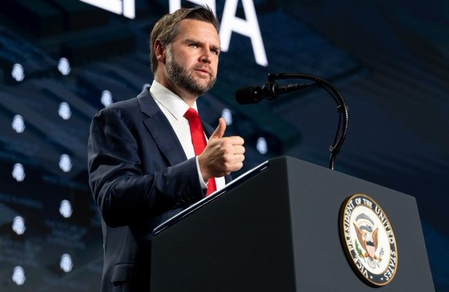
Washington, Oct 6 (IANS) US Vice President JD Vance said that the Trump administration expects a major Alaska natural gas pipeline to move forward, citing strong demand from Japan and other Asian economies, even as details involving South Korea remain unresolved.
Vance, speaking to reporters before departing aboard Air Force Two for Alaska, said the administration “really” wants to see the project happen and argued that demand for American natural gas would help overcome outstanding issues.
“The pipeline is something that we really want to see happen and a lot of our Asian friends want to see happen as well,” Vance said.
“It's not just the South Koreans the Japanese would love to see this pipeline a lot of the East Asian economies that have suffered from higher natural gas prices would love to see more American gas flowing into their economies.”
Asked whether Alaskans should trust that the pipeline would proceed even though South Korea has said a deal was not finalised, Vance acknowledged that negotiations were not complete.
“So I think it's something that's going to happen obviously, you still got to work out some of the details,” he said.
“And the South Korean, you know, have spoken to that but when there's a demand for this stuff and there really is strong demand for American natural gas, I think we're going to be able to get it done.”
Vance's comments on energy came during a wide-ranging exchange that also touched on Iran, the attempted hijacking of a FlyDubai flight and security precautions surrounding US military assets in Britain.
Asked whether Iran was involved in the FlyDubai incident, Vance said he would defer to CIA Director John Ratcliffe and other intelligence officials.
“I don't want to get ahead of any announcements there, but it's certainly something we're looking at but I wouldn't say I've seen anything conclusive just yet,” he said.
Vance said the incident was also prompting the administration to examine procedures governing people who could pose flight risks.
“We're certainly looking at our procedures within the United States to make sure that people who are obviously flight risks are not getting behind the wheel of an airplane,” he said.
He invoked the Sept. 11, 2001, terrorist attacks while arguing for greater scrutiny of people entering the United States.
“Any time you have any person coming from outside the United States, you've got to be extra careful that that person is actually one a good human being is going to contribute to American society,” Vance said.
On a separate suspected security threat in Britain that resulted in US bombers being moved from a base, Vance said the administration was taking precautions.
“What you saw there is the Secretary of war, out of an abundance of caution, trying to protect our guys,” he said.
“We do feel with some confidence that the Iranians are you know, they're trying to do what the Iranian state has done for 49 years, which is engage in acts of terrorism against the United States and against a lot of other people as well.”
“So we are being extremely cautious and that's all I'd say about that,” Vance added.
The Vice President was travelling to Alaska to campaign for Republican Sen. Dan Sullivan, whom he described as “a really great guy, a Marine Corps veteran.”
Vance said Alaska's political history made the Senate contest competitive regardless of the national political environment.
“In very deep red years alaska is competitive in very deep blue years alaska is still competitive,” he said.
He also acknowledged the state's distinctive electoral system. “They obviously have the kind of weird ranked choice voting system that I don't fully understand,” Vance said.
Alaska's vast natural gas reserves have long generated interest in projects designed to move gas from the state's North Slope to markets beyond the state. Asian economies have been viewed as important potential customers because of their demand for liquefied natural gas.
--IANS
lkj/rs