
EAM Jaishankar begins five-day visit to Ghana, Cote d’Ivoire and Ethiopia
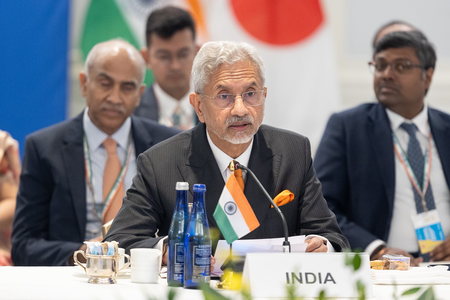
New Delhi, Oct 6 (IANS) External Affairs Minister (EAM) S. Jaishankar embarked on a five-day official visit to Ghana, Cote d'Ivoire and Ethiopia starting Tuesday, aimed at deepening India's bilateral partnership with the three African nations.
According to the Ministry of External Affairs (MEA), during the visit from October 6 to 10, EAM will hold bilateral meetings with his counterparts and meet with the leadership of all three nations to review close bilateral ties of friendship and cooperation.
"Discussions will cover the whole gamut of bilateral ties across sectors, including trade and economic, development cooperation, capacity building, and people-to-people ties. He will also exchange perspectives on regional and global matters of mutual interest," the MEA stated
In Ethiopia's Addis Ababa, the External Affairs Minister will also chair the Regional Heads of Mission (HoMs) Conference.
"The visit of EAM is reflective of India's commitment to deepen its partnership with Africa, and will further India's solidarity with the Global South," the MEA mentioned.
During his transit in Addis Ababa, EAM Jaishankar met Shirley Ayorkor Botchwey, Secretary-General of the Commonwealth.
"Was so nice to see Secretary-General of the Commonwealth Shirley Ayorkor Botchwey during our transit in Addis Ababa," he posted on X.
Earlier, the External Affairs Minister met former Australian Prime Minister Kevin Rudd in New Delhi, where the two leaders discussed global developments and the evolving situation in the Indo-Pacific.
In a post on X on Tuesday, EAM said, "A pleasure to meet up with former PM Dr Kevin Rudd in New Delhi yesterday. Exchanged perspectives on global developments and the Indo-Pacific."
On Monday, Ghana's Ministry of Foreign Affairs said that EAM Jaishankar will pay an official visit to Ghana from October 6 to 7 at the invitation of Ghana's Minister for Foreign Affairs, Samuel Okudzeto Ablakwa.
"Ghana looks forward to hosting His Excellency Dr S. Jaishankar on this historic visit, which will afford the two countries the opportunity to renew their inseparable bond of solidarity and shared values," the Ministry said in a Facebook post.
"During the visit, Ghana and India will hold discussions that will advance their relations in pharmaceutical development within the framework of President (John Dramani) Mahama's Accra Reset philosophy; deepening agricultural cooperation in mechanisation and value addition; support for President Mahama's industrialisation and job creation agenda; and expanding scholarships and IT partnerships," it added.
--IANS
scor/sd/
South Korea’s Assembly speaker to embark on four-nation trip to Europe
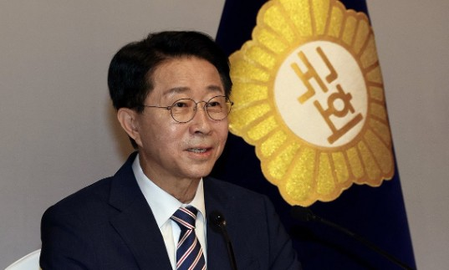
Seoul, Oct 6 (IANS) South Korea's National Assembly Speaker Cho Jeong-sik is set to depart on a four-nation trip to Europe on Tuesday to discuss economic and industrial cooperation.
Cho plans to visit Italy, Vatican City, Croatia and Greece over nine days on his first overseas trip since taking office in June.
In Italy, he is scheduled to meet with Lorenzo Fontana, president of the country's Chamber of Deputies, and Gian Marco Centinaio, vice president of its Senate, on Wednesday to discuss expanding exchanges between the countries' parliaments and supporting economic and industrial cooperation, Yonhap News Agency reported.
In Vatican City, he is scheduled to meet with Cardinal Pietro Parolin, secretary of state of the Holy See, and Cardinal Lazarus You Heung-sik to convey the commitment of the National Assembly to support World Youth Day 2027, which South Korea will host.
Cho also plans to use the meetings to ask for the Vatican's continued attention and support for peace on the Korean Peninsula and the resumption of dialogue between South and North Korea.
On the next leg of his trip, the speaker will travel to Croatia where he will hold a series of meetings with Croatian President Zoran Milanovic, Parliament Speaker Gordan Jandrokovic and Prime Minister Andrej Plenkovic on Friday.
The two sides are expected to discuss expanding cooperation in advanced technologies and the energy and defence industries.
From Croatia, Cho will visit Greece for talks with Greek President Constantine Tassoulas and President of the Hellenic Parliament Nikitas Kaklamanis on Monday.
Among the agenda items are cooperation in shipbuilding and shipping, electric cars and batteries, and in solar and wind energy.
In July, South Korea's National Assembly held a ceremony commemorating the 78th anniversary of the proclamation of the country's Constitution in 1948.
The ceremony, attended by hundreds of senior government officials, foreign diplomats and other guests, marked the first of its kind since the government redesignated Constitution Day as a public holiday after 18 years.
South Korea's National Assembly Speaker Cho Jeong-sik called for opening a new era of transformation with a constitution that best protects citizens, signaling a push for a constitutional amendment.
"The old framework can no longer embrace today's blind spots in human rights or social conflicts in the future," Cho said in the congratulatory remarks.
"Let us open a new era of grand transformation with a 'constitution for all' that upholds the dignity of every citizen," he said.
--IANS
akl/
Union Minister Bhupendra Yadav arrives in Fiji to attend Pre-COP discussions
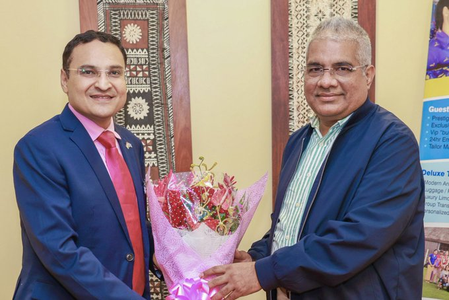
Suva, Oct 6 (IANS) Union Minister for Environment Bhupender Yadav arrived in Fiji’s Nadi on Tuesday to participate in the Pre-COP discussions co-hosted by Australia and Fiji.
This meeting comes ahead of the COP31 conference under the United Nations Framework Convention on Climate Change (UNFCCC) to be held in Turkey next month.
Yadav is expected to engage in bilateral and multilateral discussions on key issues on the COP31 agenda and put forward India’s position on the critical matters under consideration.
“Arrived in Nadi, Fiji to participate in the Pre-COP discussions co-hosted by Australia and Fiji. Over the next few days, across bilaterals and multilaterals, will put forward India's views on matters related to critical agenda items leading up to COP31 next month in Turkiye. Will also highlight how India, under the leadership of Hon'ble PM Shri Narendra Modi, through its domestic policies and international collaborations, has emerged as a leader in proactive climate actions,” Yadav posted on X.
Last month, Yadav met Australian Climate Change and Energy Minister Chris Bowen in New Delhi, where both leaders discussed key priorities for the Pre-COP meeting in Fiji and upcoming COP31 in Turkey.
Bowen is also serving as President of the COP31 negotiations under the UNFCCC.
Following the meeting, Yadav took to X and posted, "Happy to have met with Mr Chris Bowen, Australia's Minister for Climate Change and Energy and President of the COP31 negotiations, in New Delhi today. We had an engaging discussion on key agenda items for the upcoming Pre-COP in Fiji and COP31 in Turkey."
The Union Minister stated that during the meeting, he highlighted the "success stories" of India's climate action under the leadership of Prime Minister Narendra Modi over the past decade.
"I also reaffirmed India's commitment to being a supportive partner to Australia in its role as President of the COP31 negotiations," he added.
Bowen said that India is an indispensable voice in shaping the future of global climate and energy policy, and its clean-energy expansion demonstrates that the transition to cleaner sources can support economic prosperity.
Addressing a Pre-COP Dialogue titled Partners in Green Transition: Advancing Ambition, Action and Partnerships for COP31 in New Delhi, he said India’s experience would be important to the global climate conversation as countries work to accelerate implementation of their climate commitments.
--IANS
scor/rs
India reiterates call to reform international financial institutions to ensure funding for development
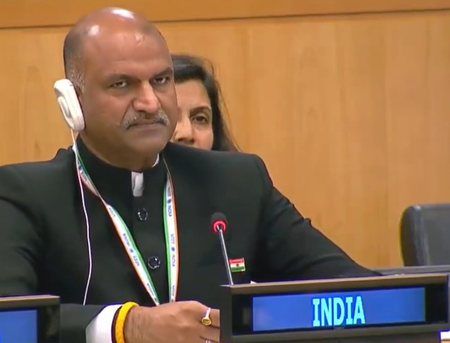
United Nations, Oct 6 (IANS) India has reiterated its call for reforming international financial institutions to give the Global South its due representation and ensure developing nations have access to affordable and predictable funds.
Speaking at the General Assembly's Second Committee, whose portfolio is economic and financial matters, BJP MP C P Joshi highlighted India's financing of the development needs of the Global South countries through the India–UN Development Partnership Fund (I-UNDPF), IBSA Fund (jointly with Brazil and South Africa), the International Solar Alliance (ISA), and the Coalition for Disaster Resilient Infrastructure (CDRI) launched in 2016 by Prime Minister Narendra Modi.
Joshi, who is from Rajasthan and heads the Parliament Committee on Petitions, spoke in Hindi with simultaneous interpretation into the five UN official languages.
He said that India was sharing its expertise in digital public infrastructure, financial inclusion and domestic resource mobilisation with other developing countries.
He said the UN's Sustainable Development Goals (SDGs) should respect national priorities and its unfinished elements should continue beyond 2030.
The 17 SDGs cover a gamut of human endeavours from eradicating poverty, education, and health to the environment, peace, and gender equality, and were adopted in 2015 with a 2030 deadline for achieving them.
India has committed $150 million to the I-UNDPF, and the programme's unique feature is that it lets the recipients set the priorities themselves and has no loan element.
For the CDRI, whose secretariat India hosts, it has pledged about $70 million.
The global financial institutions like the World Bank and the International Monetary Fund were created after World War II with a focus on rebuilding a war-ravaged Europe, and they have to refocus and update their structures to meet the 21st century's needs, India has said.
--IANS
al/rs/
India urges all members to pay UN dues on time, highlights its record of prompt payments
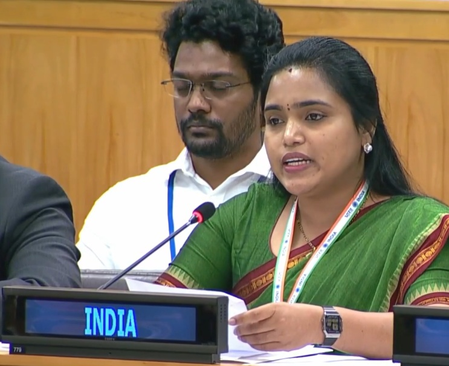
United Nations, Oct 6 (IANS) India which has consecutively made the UN “Honours List” for prompt payment of its dues, has urged all member nations to send in their dues on time, and to ensure adequate funding for development agenda.
Speaking on Monday at the General Assembly's Fifth Committee, which deals with the UN's budget, BJP MP Banshilal Gurjar highlighted India's timely payment of its contribution to the general budget, putting it on the Honour Roll.
He emphasised that everyone should pay their assessed contributions in full, on time, and without preconditions.
That was an implied criticism of the US, which has been withholding part of its dues to the UN and setting conditions for paying its assessed dues under the UN Charter.
Delayed payments by the US and China, the two largest contributors to the UN, have brought it to the brink of a financial crisis before Washington paid a part of its share and Beijing sent in this year's dues in full just before the high-level meeting of the General Assembly last month.
Gurjar spoke in Hindi with simultaneous translation piped into the five official languages of the UN.
Gumma Thanuja Rani, of the YSR Congress Party from Andhra Pradesh, who spoke at the same committee, said it was important to continue the reform agenda during the current session of the General Assembly.
She highlighted the needs of the UN's development agendas and said adequate allocations should be ensured for these key UN endeavours.
Gurjar expressed concern over the delayed payments by the UN of the dues to countries that provide troops and police for peacekeeping operations.
Most of the countries are developing countries, and they are being made to indirectly finance the peacekeeping operations by not getting prompt payments in order to keep them afloat, while some countries withhold or delay their payments.
He reiterated India's support for the principle of “capacity to pay” while apportioning the share of dues for members, and he added that this is non-negotiable.
Developing countries must not be made to carry a disproportionate financial burden, he said.
--IANS
al/rs
Nepal Home Minister Sudan Gurung to visit India next week
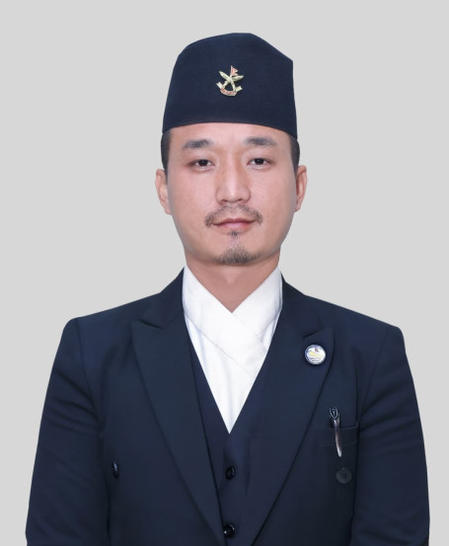
Kathmandu, Oct 6 (IANS) Nepal's Home Minister Sudan Gurung is scheduled to visit India next week to participate in the first meeting of the home ministers of the Bay of Bengal Initiative for Multi-Sectoral Technical and Economic Cooperation (BIMSTEC), scheduled for October 13, a senior official has said.
It will be Gurung's first foreign trip since he assumed office following the formation of the government led by Prime Minister Balendra Shah on March 27.
The meeting will bring together home ministers from the seven-member regional grouping -- Nepal, India, Bangladesh, Bhutan, Myanmar, Sri Lanka and Thailand.
"Home Minister Gurung is scheduled to travel to New Delhi on October 12 to participate in the first meeting of the BIMSTEC Home Ministers," said Ananda Kafle, spokesperson for the Home Ministry.
The meeting is expected to cover a range of cross-cutting security issues, including cross-border crime, drug trafficking and human trafficking among member states, Kafle said.
He, however, said the minister's detailed itinerary, including possible meetings with Indian leaders, has yet to be finalised.
Gurung is also expected to hold bilateral meetings with his counterparts on the sidelines of the event, including Indian Home Minister Amit Shah, according to Nepali officials. "There can also be a meeting with the Nepali diaspora in India," he said.
Gurung's visit comes as BIMSTEC members seek to strengthen regional cooperation on security matters and build on discussions among senior security and home officials of the member states.
Security cooperation has been an important component of BIMSTEC's regional agenda. The security sector comprises three sub-sectors, namely counterterrorism and transnational crime, energy, and disaster management, according to the BIMSTEC website.
At the Fourth BIMSTEC Summit, held in Kathmandu, Nepal, on August 30-31, 2018, BIMSTEC leaders expressed their determination to strengthen cooperation and coordination among law enforcement, intelligence and security agencies and decided to hold meetings at the level of BIMSTEC home ministers.
They also decided to continue the BIMSTEC National Security Chiefs' meetings as part of efforts to promote cooperation and coordination on counterterrorism and transnational crime.
According to Kafle, the ministerial gathering will be preceded by a meeting of BIMSTEC home secretaries to prepare agreements to be declared following the ministerial meeting.
In July this year, the 5th Meeting of the BIMSTEC National Security Chiefs was held in New Delhi, where the National Security Advisers and heads of delegations exchanged views on various measures to combat terrorism and organised crime; ensure security in the cyber, maritime and energy domains; enhance connectivity; facilitate efficient disaster management; and tackle new and emerging security threats.
The meeting adopted the BIMSTEC Guidelines for the Maritime Component of Humanitarian Assistance and Disaster Relief. The guidelines will help BIMSTEC member states undertake relief operations in the region in an expeditious manner.
They also endorsed a set of Guiding Principles on the Conduct of Maritime Law Enforcement Agencies during Interactions at Sea. These principles are expected to provide reference points for increasing predictability and promoting safety during maritime engagements among member states.
--IANS
scor/sd/
US bill seeks steep H-1B fraud penalties
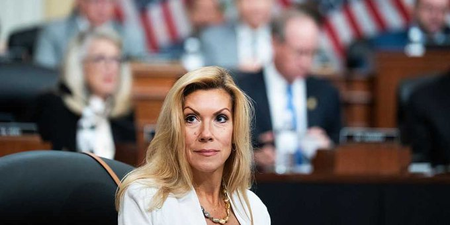
Washington, Oct 6 (IANS) A Republican lawmaker has introduced legislation that would raise penalties for serious H-1B visa violations to as much as $250,000, extend some employer sponsorship bans to at least 10 years and sharply increase fines for immigration document fraud.
Rep. Beth Van Duyne of Texas announced the H-1B Visa Fraud Crackdown Act on Monday, saying existing penalties were too small to deter employers from abusing the programme.
The legislation, H.R. 10643, is co-sponsored by Republican Reps. Brian Babin, Pat Fallon, Brandon Gill, Keith Self and Pete Sessions, all of Texas.
"When a business can lie to the government and push American workers aside for cheaper labor, and the worst it faces is a $5,000 fine, many view that as the cost of doing business," Van Duyne said.
"The H-1B Visa Fraud Crackdown Act changes the penalties. American jobs should go to American workers, and fraudsters should face real accountability for their actions."
The bill would raise the maximum civil penalty for covered willful H-1B violations from $5,000 to $100,000. Van Duyne's office said those violations could include lying about the job being performed or underpaying an H-1B worker.
For violations involving the willful displacement of US workers, the maximum civil penalty would increase from $35,000 to $250,000.
The statutory changes are contained in the two-page legislation introduced in the House.
Employers found responsible for serious willful violations would also face longer periods during which they could not sponsor H-1B workers.
The minimum sponsorship ban would increase from two years to five years for serious willful violations. For violations that also involve displacement of US workers, the minimum ban would increase from three years to 10 years.
The legislation would separately impose substantially higher penalties for immigration document fraud.
For covered violations, penalties currently ranging from $250 to $2,000 would increase to between $1,000 and $10,000 per document. For violations following a previous order, fines would rise from the current $2,000-$5,000 range to between $20,000 and $50,000 per document.
Van Duyne linked the legislation to allegations of H-1B fraud in North Texas.
Her office said Homeland Security Secretary Mullin had confirmed that, as of June, nearly 60 per cent of H-1B employer fraud investigations nationwide were concentrated in the North Texas region.
Van Duyne's office also said Labor Department Inspector General D'Esposito visited North Texas in August and found nearly 500 instances of likely H-1B visa fraud in a single building. It said no one answered the door at addresses he visited where an H-1B application had been approved.
Those figures were presented by Van Duyne's office and were not contained in the text of the legislation.
"I'm thankful for the Administration's quick response," Van Duyne said.
"American workers should not lose opportunities because an employer is willing to break the law to get cheaper labor. If a business decides it makes more economic sense to break the law and kick American workers to the curb, they should feel major pain for undercutting our economy and our hardworking employees."
The measure is proposed legislation and has not become law. It would have to clear the House and Senate and be signed by President Donald Trump before the higher penalties could take effect.
--IANS
lkj/rs
US picks laser, microwave weapons against drones
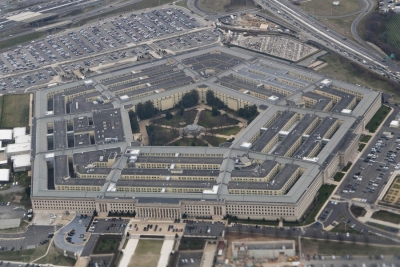
Washington, Oct 6 (IANS) The Pentagon has selected four high-energy laser and microwave weapon systems for operational testing as the United States moves to expand its ability to counter increasingly sophisticated drone threats to the homeland.
The systems will be evaluated under a directed-energy pilot run by Joint Interagency Task Force 401, the Defence Department organisation responsible for coordinating efforts against small unmanned aircraft systems.
The four selected systems are AeroVironment's Palletised High-Energy Laser, Epirus' Leonidas High-Powered Microwave system, Kord's Firefly High-Energy Laser and Boeing's Compact Laser Weapon System.
The Pentagon announced the selections Monday, describing the programme as the next phase in efforts to expand operational use of high-energy laser and high-powered microwave technologies.
"High-energy lasers and high-powered microwave systems are tools that can be effectively used in a layered drone defense," said US Army Brig. Gen. Matt Ross, director of JIATF 401.
"This pilot program will test these capabilities in an operational environment so we can understand how best to integrate and sustain them to defend the homeland," he said.
Directed-energy weapons offer an alternative to conventional missiles and guns for defeating drones.
High-energy lasers concentrate energy against individual targets, while high-powered microwave systems can use electromagnetic energy against electronic components, potentially providing another layer of defence against unmanned aircraft.
The Pentagon said the FAA and the task force earlier conducted a safety risk assessment during a live-fire high-energy laser demonstration at White Sands Missile Range in New Mexico.
Following that testing, the FAA determined that the system posed minimal risk to the National Airspace System and established a framework for continued coordination, according to the department.
The safety of directed-energy systems is particularly important when such weapons are tested or potentially operated within US airspace.
Ross said no single technology would provide a complete answer to the drone threat.
"There is no silver bullet, or one size fits all solution to countering the threat of drones," he said.
"Directed energy gives commanders another option within a layered defense, complementing existing counter-UAS capabilities with a scalable, safe, and effective way to respond to drone threats."
Ross said operational testing would provide information needed to determine how such systems could be employed for homeland protection.
The four weapons are the first systems selected for the pilot, but the Pentagon said it would continue evaluating additional directed-energy technologies.
A separate directed-energy "shoot-off" is scheduled for December at Dugway Proving Ground, Utah. The event will assess additional high-energy laser and high-powered microwave systems and identify technologies that could be considered for future operational use.
Counter-drone defence has become a major US military investment priority as relatively inexpensive unmanned aircraft have demonstrated their ability to threaten military installations, troops and critical infrastructure.
--IANS
lkj/rs
Lawsuit challenges new US green card rules
Washington, Oct 6 (IANS) Immigrant families, workers, university educators and advocacy groups filed a lawsuit challenging two new US immigration policies that they say could force some eligible green card applicants to leave the country to pursue permanent residence and separate them from their families and jobs.
The lawsuit targets policies issued by US Citizenship and Immigration Services in May and August that changed how the agency handles applications for adjustment of status, the process that allows eligible immigrants already in the United States to seek lawful permanent residence without applying for an immigrant visa at a US consulate abroad.
The plaintiffs are asking the court to block and ultimately set aside the policies and require USCIS to adjudicate affected applications under what they contend is controlling legal precedent.
The case remains pending, and the allegations have not been adjudicated.
Under the May policy, according to the lawsuit, USCIS officers are directed to treat an applicant's decision to seek permanent residence from inside the United States instead of pursuing consular processing abroad as a negative factor when exercising discretion.
The plaintiffs say applicants must demonstrate "unusual or even outstanding" considerations to overcome that negative factor.
The second policy, issued in August, allows USCIS officers in certain circumstances to deny applications without first giving applicants an opportunity to submit additional evidence, according to the lawsuit.
The challengers say that policy also applies to applications that were already pending when it was issued, raising concerns among applicants who filed their cases under the earlier procedures.
"For decades, people who met the requirements to apply for a green card from inside the United States were able to do so without having that choice count against them," said Leslie Dellon, a senior attorney for business immigration at the American Immigration Council.
Dellon said the new policies represented "a major shift with very real consequences," including possible family separation, job disruption and lengthy waits abroad for consular appointments.
The plaintiffs include the American Association of University Professors and its chapters at Harvard University and Boston University; the Service Employees International Union and two of its affiliates; Americans for Immigrant Justice; and six individual green card applicants.
They are represented by Democracy Forward, the American Immigration Council, the American Immigration Lawyers Association and Colombo & Hurd.
The individual plaintiffs include people pursuing permanent residence through family and employment pathways. The organisations involved in the case represent educators, researchers, health care and service workers and other immigrants seeking permanent residence in the United States.
Skye Perryman, president and CEO of Democracy Forward, said Congress had established a process allowing eligible immigrants already in the country to seek permanent residence without uprooting their lives.
"The executive branch cannot rewrite that system and then treat people's lawful actions as a reason to deny them said permanent residency," Perryman said.
The lawsuit could have broader implications for employment- and family-based immigrants who are legally eligible to seek permanent residence while living in the United States.
The case, American Association of University Professors et al. v. U.S. Department of Homeland Security et al., was filed October 5 and remains pending. No court ruling has yet determined whether the challenged USCIS policies are unlawful.
--IANS
lkj/rs
US planning security strategy 10 years ahead
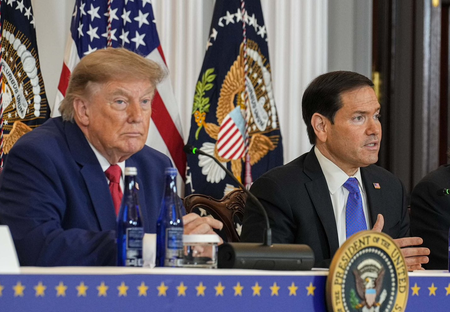
Washington, Oct 6 (IANS) President Donald Trump's national security team is conducting strategic planning that extends as far as five to 10 years into the future, Secretary of State Marco Rubio said, describing a weekend meeting at Camp David as part of the administration's longer-term approach to global challenges.
Rubio said the meeting brought national security officials together in a setting with fewer distractions and was not centred solely on immediate crises confronting the administration.
"We constantly are meeting for long-term strategic planning and things of this nature," Rubio told reporters at Joint Base Andrews when asked about the Camp David meeting on Friday.
"It's not unusual for us as a team to get together," he said.
Rubio did not identify the specific issues discussed at Camp David or disclose who participated in the meeting.
He said such sessions were part of the role played by the National Security Council in bringing together officials responsible for different areas of US national security policy.
"That was just an opportunity to do it in a setting where there were less distractions, but we're constantly – that's just part of the role the National Security Council plays," Rubio said.
The secretary offered an unusually broad description of the time horizon involved in the administration's strategic discussions.
He said the NSC brings stakeholders together "to sort of do long-term planning – six months, nine months, but in many cases five or 10 years down the road."
Rubio cautioned against characterising the Camp David session simply as routine, given the scope of the issues involved.
"I wouldn't call it routine because the topics being discussed are global by nature, but they are long-term in thinking," he said.
Rubio said the administration had held similar meetings previously and that the latest session differed principally because it took place at the presidential retreat.
"We've had many meetings like that before. This one just happened to be in Camp David," he said.
The secretary did not elaborate on what he meant by topics that were "global by nature."
His comments came during a press interaction covering several immediate national security challenges, including Russia and Ukraine, fighting involving the Houthis and Saudi-backed Yemeni forces, a suspected plague case in Russia and the security of US military installations in Britain.
Rubio was speaking before departing on a trip that includes Iceland, Portugal and Greece, three NATO members.
Asked about the European visit, Rubio described Iceland as a good friend of the United States and said the stop followed conversations with Icelandic leaders during the NATO summit earlier this year.
He called Portugal a strong ally and described Greece as "a very important US ally," citing both the American military presence and strong economic ties.
The National Security Council is the principal White House mechanism for coordinating national security and foreign policy across the US government. It brings together the president and senior officials responsible for diplomacy, defence, intelligence and other national security matters.
Camp David, the presidential retreat in Maryland, has frequently been used by US presidents for high-level national security discussions, diplomatic meetings and strategic planning away from the day-to-day activity of the White House.
--IANS
lkj/rs/