
Concerns mount over violence, persecution of minorities across Pakistan
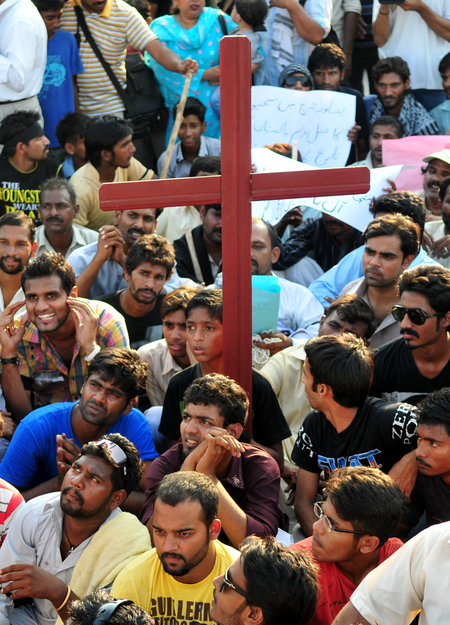
Islamabad, Oct 10 (IANS) Pakistan’s religious minorities continued to face violence, discrimination and persecution throughout 2025, with blasphemy accusations and minority women and girls remaining at risk of abduction, forced conversion and forced marriage, a minority rights organisation said, citing a report by the National Commission for Justice and Peace (NCJP).
The Voice of Pakistan Minority (VOPM) referred to the 2026 human rights report of the NCJP, a human rights body of the Pakistan Catholic Bishops’ Conference that recorded eight Christians accused of blasphemy during the year, and documented 35 incidents affecting women, girls and families.
It added that one case involved 15-year-old Hindu girl Premi Bheel, who was reportedly abducted, forcibly converted and married in December, while local police allegedly refused to register her complaint.
Expressing grave concern over the alarming trend of violence against minorities, the VOPM said that these are not isolated incidents but reflect a system in which vulnerable citizens are often denied equal protection under the law.
Citing the findings, the rights body highlighted deadly violence against the Christian minorities in Pakistan. Kashif Masih, a Christian labourer from Sialkot, was allegedly tortured to death after being accused of stealing a mobile phone.
The report noted that police initially failed to register the incident as murder, prompting protests from the Christian community.
Highlighting the relentless brutalities against minorities, the rights body further said Afzal Masih was shot dead in September last year while travelling with Christian pilgrims after reportedly confronting men who had harassed female passengers.
Accountability for attacks on minorities remains painfully weak, the VOPM said, noting that two years after the 2023 attacks in Jaranwala city of Punjab province, in which more than 25 churches and 85 Christian homes were damaged, the perpetrators had still not been convicted, according to the report.
Emphasising that legislation alone will not end persecution, the VOPM said, “Pakistan must enforce equal citizenship, protect places of worship, prosecute attackers and defend minority women and children. A country cannot claim religious heritage while allowing part of its population to live in fear.”
“The NCJP’s warning is clear: minorities will remain invisible unless the state treats their rights as a constitutional duty, not a matter of political choice,” it added.
--IANS
scor/rs
Gagan Thapa re-elected Nepali Congress President as rival faction plans December convention
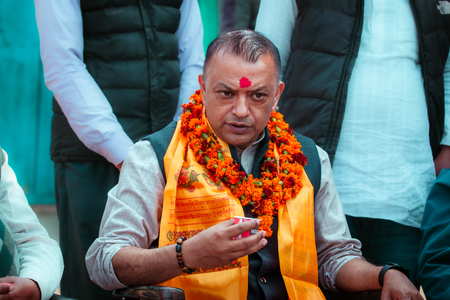
Kathmandu, Oct 10 (IANS) Gagan Thapa was re-elected president of the Nepali Congress with an overwhelming majority at the party's 15th general convention, as a rival faction led by former Prime Minister Sher Bahadur Deuba prepares to hold its own general convention in December.
Thapa, who was first elected party president following a controversial Special General Convention (SGC) convened by his faction in January, secured 6,584 votes against 375 for his rival, Shyam Krishna Khadgi, in the election held as part of the 15th general convention, according to the Nepali Congress Central Election Committee.
A total of 7,013 votes were cast, of which 54 were declared invalid, the committee said in a statement late Friday.
Thapa's re-election comes at a challenging time for the party, which finished a distant second in the March 5 parliamentary elections. Thapa himself lost his constituency as the relatively new Rastriya Swatantra Party (RSP) emerged as the largest party in the 275-member House of Representatives, the lower house of parliament, securing nearly a two-thirds majority.
Thapa also faces the prospect of a formal party split, with the rival faction led by Deuba scheduled to hold its own 15th general convention from December 7 to 9. The Deuba-led faction claims to represent the legitimate Nepali Congress.
The legitimacy of the two factions is under review by the Supreme Court, although the Election Commission recognised the Thapa-led faction as the legitimate Nepali Congress ahead of the March 5 general elections, allowing it to field candidates in the polls.
Thapa, 50, rose to prominence as a student leader during the 2006 people's movement, when his speeches denouncing the monarchy and advocating the establishment of a republic resonated strongly with young people.
As leader of the party's student wing, the Nepal Student Union, he delivered fiery speeches against the monarchical system -- at a time when the country was under royal rule.
During that period, the Nepali Congress leadership itself was largely silent on transforming the country into a republic, instead adhering to the "two-pillar theory" of constitutional monarchy and multiparty democracy.
Since emerging into the national spotlight two decades ago, Thapa has remained a popular figure within the party and, to a considerable extent, among the general public.
Following the success of the 2006 people's movement, the party included him on its proportional representation list for the 2008 Constituent Assembly election, through which he entered the Assembly.
After the first Constituent Assembly failed to deliver a new constitution, fresh elections were held in 2013. Thapa contested from the Kathmandu-4 constituency and won. He retained the seat in the 2017 and 2022 elections, cementing his position as a key figure in national politics.
Within the party, Thapa was defeated when he first contested the post of general secretary at the 13th general convention in 2016. However, he ran again for the same position at the 14th convention in 2021 and won.
Following the 2022 general election, Thapa challenged Deuba for the leadership of the Nepali Congress parliamentary party but was defeated.
Deuba came under renewed pressure from Thapa following the Gen Z movement in September last year. Thapa teamed up with then fellow General Secretary Bishwa Prakash Sharma to call for a Special General Convention, arguing that the party needed leadership and organisational changes ahead of the elections scheduled for March this year.
Thapa and Sharma have now been elected president and senior vice-president, respectively, as they seek to transform the Nepali Congress by bringing youthful energy into the party.
--IANS
scor/sd/
China’s military airfield in Laos could complicate US operations in region: Report
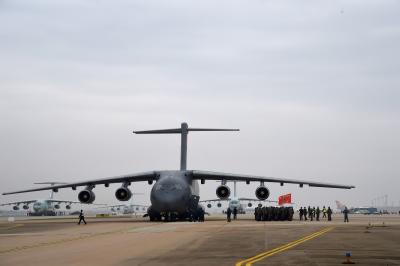
Vientiane, Oct 10 (IANS) China’s newly-opened military facility at Ban Keun Airport in Laos, its first publicly acknowledged overseas facility centred on air power, could give the air force of People’s Liberation Army (PLA) a staging and transit base in Southeast Asia and be used to complicate US military operations in the Andaman Sea and the Strait of Malacca, a report has cautioned.
According to a report in The Diplomat, China inaugurated the air force support and training centre in Laos on September 29, marking its third overseas military facility.
“Analysts have noted that the arrangement could expand the People’s Liberation Army’s military presence in Southeast Asia and strengthen China’s regional interests, although there is currently no evidence that Beijing has deployed large-scale forces at the site,” the report said.
Citing China’s Ministry of National Defence, the report said the China-Laos Joint Support and Training Centre and the China-Laos Friendship Aviation Academy had formally begun operations at the airport, mainly to help train Lao Air Force pilots. Beijing has not disclosed the number of Chinese personnel or the equipment stationed there, and has said the facilities are “not directed" against any third party.
“Ban Keun Airport is significant because it is China’s first publicly acknowledged overseas military facility centred on air power. This differs from China’s overseas facilities in Djibouti and Cambodia, which have largely been associated with naval operations,” the report stated.
The airport, in Vientiane Province about 45 km from the Lao capital, has the longest runway of about 2,000 metres and sits close to the China-Laos Railway, which means personnel and some equipment from China need not rely solely on air transport.
“For an overseas joint support base, this logistical advantage is highly significant,” the report said.
It added that Ban Keun was unlikely to be primarily intended for operations in the South China Sea, where China already has facilities on Woody Island.
“The greater significance of Ban Keun lies in its potential role as a transit base for the PLA Air Force. From this location, Chinese forces would have a certain level of operational reach toward Myanmar and farther south toward Singapore,” the report said.
While the facility poses only a limited direct threat to the Taiwan Strait, the report said it would enhance China’s ability to place pressure on US naval forces operating around Singapore.
“For the United States, Singapore and Thailand are both important logistical and replenishment locations, particularly during periods when US aircraft carriers are rotating or undergoing maintenance. These locations would potentially fall within the operational range of aircraft operating from Ban Keun,” it noted.
“In the future, the facility could also be used to complicate US military operations in the Gulf of Thailand, the Andaman Sea, and even the Strait of Malacca,” the report added.
--IANS
ksk/as
Trump’s Russian diesel deal fuels US double-standard row
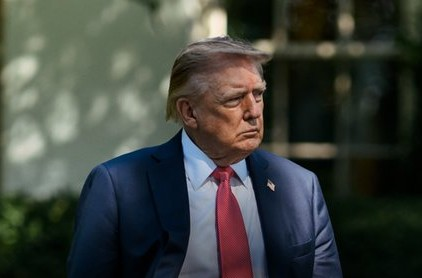
Washington, Oct 10 (IANS) President Donald Trump's agreement to secure Russian diesel supplies has triggered accusations of double standards from American commentators and social media users, who questioned why Washington penalised India for buying Russian oil while now seeking fuel from Moscow to ease its own energy crisis.
The controversy intensified on Friday after Trump announced that Russian President Vladimir Putin had agreed to supply millions of tonnes of diesel to American and global markets, prompting the US Treasury Department to temporarily ease sanctions on Russian diesel transactions.
The decision came less than a month after Trump signed bipartisan legislation authorising tariffs of up to 100 per cent on major purchasers of Russian oil and gas, including countries such as India and China.
American journalist Catherine Rampell raised the contradiction in a sharply worded post on X.
"does this mean we will soon start tariffing ourselves?" she asked, referring to the administration's newly acquired powers to penalise major purchasers of Russian energy.
Political journalist Sam Stein also highlighted the reversal, noting that Trump had recently signed legislation intended to tighten economic pressure on Moscow.
"Three weeks ago Trump signed the Lindsey Graham Russia Sanctions bill as a testament to Graham's commitment to put an economic stranglehold on Putin," Stein wrote, before contrasting it with Friday's announcement of Russian fuel supplies.
The reactions echoed criticism emerging from social media accounts, where users questioned the consistency of Washington's approach towards Russian energy purchases.
The verified X account News Matrix recalled Trump's earlier criticism of India's oil imports and asked whether the same reasoning applied to the United States.
"If India buying Russian oil = funding Putin’s war machine... does the same logic apply to the USA?" it asked.
"Or is it only ‘funding Russia’ when INDIA does it?"
Similar reactions appeared in discussion forums on Reddit.
In a discussion on r/IndianStockMarket, one user wrote, "Rules for thee but not for mee," while another questioned whether Washington would impose a 100 per cent tariff on itself.
A separate discussion on r/IndianStreetBets also criticised the apparent contradiction between Washington's sanctions policy and the new diesel arrangement.
The online reactions were accompanied by criticism from senior American lawmakers.
Democratic Senators Jeanne Shaheen, Chuck Schumer and Elizabeth Warren issued a joint statement condemning the administration's decision to allow Russian diesel sales for six months.
"The President must end his war with Iran instead of funding Russia’s war machine," they said.
The senators argued that the move undermined congressional efforts to restrict Moscow's energy revenues and weakened pressure on Putin over the war in Ukraine.
Their criticism followed an October 7 bipartisan letter from Shaheen and Republican Senator Roger Wicker urging Secretary of State Marco Rubio and Treasury Secretary Scott Bessent to enforce tougher sanctions against Russia's oil tankers, financial networks and military technology suppliers.
The lawmakers called for action against Russia's shadow fleet and warned that delaying economic pressure would allow Moscow to sustain its military campaign.
Trump defended the diesel agreement, arguing that additional fuel supplies were necessary to reduce prices for American consumers, farmers and truckers.
Speaking to reporters at the White House, he thanked Putin for the arrangement and said the United States needed additional diesel supplies.
According to Trump's announcement, Russia would initially supply more than 300,000 tonnes of diesel, followed by 500,000 tonnes in November and one million tonnes thereafter, with further deliveries dependent on refinery capacity.
The Treasury Department issued General License 135, authorising specified transactions involving Russian-origin diesel until April 2027.
Ukrainian President Volodymyr Zelenskyy criticised the agreement, warning that additional Russian energy revenues could strengthen Moscow's ability to continue the war.
--IANS
lkj/rs
Musk’s ex-partner alleges $40 million silence offer: US media
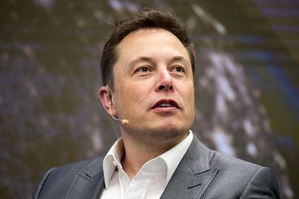
Washington, Oct 10 (IANS) Ashley St. Clair, the mother of one of billionaire Elon Musk's children, has alleged that she was offered a financial arrangement worth nearly $40 million in exchange for remaining silent about their relationship, a claim Musk has publicly denied.
In an interview published by The New York Times on Friday, St. Clair, a former conservative social media influencer, said she rejected a proposed nondisclosure agreement because it would have prevented her from discussing Musk and their relationship indefinitely.
The proposed arrangement included a $15 million lump-sum payment and $100,000 a month for 21 years, according to St. Clair. Together, those amounts would total $40.2 million.
Musk disputed the allegation after an earlier report about the proposed agreement.
"She was never offered that and has a history of making false claims," Musk wrote on X, according to the newspaper.
St. Clair, who gave birth to a child in 2024, said the proposed confidentiality agreement was sent to her two months after childbirth by Jared Birchall, Musk's financial manager.
She alleged that the document was transmitted through Signal, an encrypted messaging application, and would have restricted her ability to discuss the relationship even with members of her family.
According to St. Clair, the restrictions would also have extended to her heirs.
She said she rejected the agreement because she considered the proposed conditions unacceptable, particularly where they concerned her children.
The newspaper reported that Musk did not respond to its requests for comment on the interview.
St. Clair's account comes as she appears in "Musk," a nearly four-hour documentary directed by Oscar-winning filmmaker Alex Gibney examining the technology entrepreneur's personal life, business interests and public influence.
The former influencer told the newspaper that her decision to participate in the documentary was partly motivated by concerns about the influence of wealth and power.
She said she had become increasingly uncomfortable with the expectation that people should trust powerful individuals simply because of their financial success.
St. Clair described meeting Musk in 2023 after he contacted her through Twitter, now known as X, where she had developed a following by promoting conservative political positions.
At the time, she was working for the conservative satirical publication The Babylon Bee and raising a child from an earlier relationship.
She said the two began communicating regularly and subsequently developed a personal relationship.
During a trip to St. Barts in January 2024, Musk raised the possibility of having a child together, according to her account.
St. Clair said she initially viewed the relationship positively but became concerned after learning more about Musk's custody dispute with musician Grimes, with whom he shares three children.
She also described becoming increasingly disillusioned with the political movement surrounding President Donald Trump, which she had previously supported.
In the interview, St. Clair acknowledged having promoted political positions and rhetoric that she now regrets, including commentary concerning race, gender and transgender people.
She said her changing views developed gradually and were not solely the result of her personal dispute with Musk.
Musk has criticised Gibney's documentary, accusing the filmmaker of assembling accounts from people with grievances against him or little personal knowledge of him.
The allegations surrounding the proposed financial agreement remain disputed, and the interview does not establish that Musk personally authorised the terms described by St. Clair.
Musk is the chief executive of Tesla and SpaceX and the owner of X. His business interests span electric vehicles, space exploration, artificial intelligence and digital communications, giving him a prominent role in American technology and public affairs.
--IANS
lkj/rs
Manipulation of farcical PoK polls exposes Pakistan’s deeply flawed ‘democratic’ system
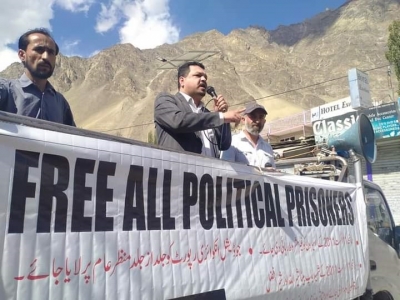
Athens, Oct 10 (IANS) The manipulation of the so-called legislative elections in Pakistan-occupied Kashmir (PoK) is yet another reflection of Pakistan’s deeply flawed democratic system, a report has stated.
It noted that historically, Pakistan has struggled to ensure free and fair elections, meaningful parliamentary proceedings and credible legislative lawmaking.
The legitimacy of the recent PoK elections, held amid a popular uprising, has been widely questioned, with some of the strongest criticism coming from within Pakistan itself, according to a report in Athens-based ‘Directus’,
Citing a Human Rights Commission of Pakistan (HRCP) fact-finding report, it highlighted grave concerns over allegations of lethal and excessive force used by Pakistani authorities against protesters during the recent PoK unrest, which was triggered by longstanding political and socio economic grievances.
Despite being unable to reach Rawalakot, a major hotspot of the violence, the HRCP mission received multiple accounts from families who alleged that protesters were killed or seriously injured by security forces, the report mentioned.
“Raising concerns at the government’s use of anti-terrorism and preventive-detention provisions against political activists, HRCP’s report questions whether the use of force by the forces was lawful, necessary and proportionate. The report expresses alarm over the government’s use of anti-terrorism and preventive-detention provisions against political activists,” it noted.
The findings revealed that at least 147 Joint Awami Action Committee (JAAC) activists were initially placed on the Fourth Schedule of Pakistan’s Anti-Terrorism Act, with a series of notifications issued between June and August reportedly taking the total number of political workers, journalists, residents and activists listed under anti-terrorism laws to at least 157, the report detailed.
Casting doubt on the credibility of the electoral process, it said, the HRCP mission questioned the heavy deployment of security personnel, prolonged communication restrictions and curbs on independent observation in PoK.
“Democratic erosion is a gradual process that has been an ongoing process in Pakistan. Historically, Pakistan’s democratic development has been interrupted by the military essentially taking over the government. Although a formal sense of military rule ended in 2008, it left the system fractured and without a sense of structure for a democracy,” Directus stated.
The report noted that Pakistan’s drift towards authoritarianism is rooted largely in its long history of military intervention and control.
In a recent podcast titled “Beyond the Indus”, Ayesha Siddiqa, a senior fellow in the Department of War Studies at King’s College London and author of 'Military Inc', described Pakistan not as a hybrid regime but as a case of constitutional militarism.
“The legal framework which allows the system where the military has greater say, or complete control, almost complete control, has been condoned and supported by the Parliament itself. The Parliament is still there. Technically, Pakistan has elections. It is going to have the next elections in 2029. But do we have a decision-making system where civilians have a say? The answer is no,” Directus quoted Siddiqa as saying.
--IANS
scor/as
Indian-American truckers’ plight raised with US Transportation Secretary
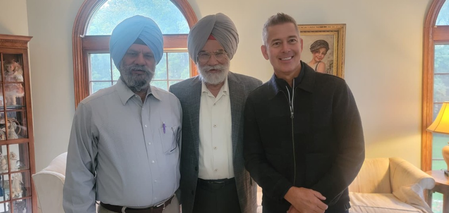
Milwaukee, Oct 10 (IANS) Prominent Indian-American businessman and philanthropist Darshan Singh Dhaliwal has raised concerns with US Transportation Secretary Sean Duffy over new trucking regulations that he said have cost tens of thousands of drivers their livelihoods, including a large number of Sikhs and other Indian-Americans.
Dhaliwal, a native of Punjab's Patiala district and a 2023 recipient of the Pravasi Bharatiya Samman, India's highest honour for overseas Indians, raised the issue during a meeting with Duffy last week at his Milwaukee-area residence, urging the Trump administration to address the impact of commercial driving licence cancellations on drivers and trucking businesses.
In an exclusive interview with IANS on Friday, Dhaliwal estimated that between over 50,000 drivers had been affected by the measures, many of whom had been earning a comfortable living before losing their ability to work.
"Our people are suffering. Our people are good truck drivers," Dhaliwal said, arguing that the actions had affected experienced drivers who had been working in the industry for years.
"They were making good money, good living, and all of a sudden they're off the job," he said.
Dhaliwal said the problem extended beyond the Sikh community, affecting Indian-origin drivers from Punjab, Haryana, Gujarat and other states.
"It's not only Sikh. If you take as a Indian community," he said, stressing that the concerns should be viewed in the broader context of the Indian-American community and the trucking industry.
He said the consequences were being felt not only by individual drivers but also by trucking businesses, some of which operated fleets of hundreds of vehicles.
According to Dhaliwal, several Indian-American trucking operators had suffered substantial financial losses, while the reduction in available drivers was also contributing to higher transportation costs.
Asked whether the disruption had affected consumer prices, he replied, "Yes, that's one of the reasons."
Dhaliwal said Duffy had emphasised road safety as his principal concern during their discussions, referring to serious highway accidents and allegations involving driving schools that had issued fraudulent credentials.
He said community representatives supported strict enforcement against improperly trained drivers and fraudulent licensing practices but opposed measures that indiscriminately affected qualified drivers.
"We don't want anybody to get a fake license or not do proper driving," he said.
Dhaliwal also acknowledged the importance of English-language proficiency for commercial drivers, saying those operating heavy vehicles across the United States should meet the necessary standards.
The community's position, he said, was that drivers who fulfilled training, safety and language requirements should be treated equally and allowed to continue working.
Dhaliwal said the Transportation Secretary had listened to their concerns and indicated that he would work on the issue.
The meeting lasted approximately two hours.
Dhaliwal explained the economic and social consequences of the licensing restrictions directly to a senior member of President Donald Trump's administration. The Sikh leader said he had been receiving calls from affected families, including those concerned about relatives facing deportation after working in the trucking industry.
--IANS
lkj/rs
Trump outlines sweeping agenda ahead of midterms
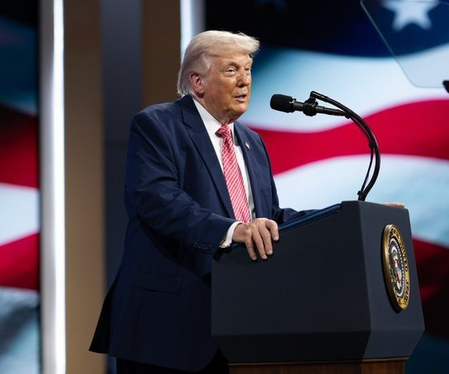
Washington, Oct 10 (IANS) US President Donald Trump laid out an ambitious economic and legislative agenda ahead of next month's congressional elections, promising cash payments to American citizens, tougher immigration enforcement, expanded tariffs and sweeping changes to healthcare and taxation if Republicans retain control of Congress.
Addressing a campaign rally in Syracuse, New York, Trump sought to make the November 3 elections a referendum on his administration's policies. He proposed a $5,000 payment to every adult American citizen to a Republican victory in both the House of Representatives and Senate.
The President also pledged to strengthen border restrictions, make tax cuts permanent, overhaul healthcare payments and accelerate domestic manufacturing, while defending his administration's handling of the conflicts involving Iran and Russia.
"If Republicans win the House of Representatives and the Senate, I am going to give all adult citizens in the United States of America $5,000 each," Trump told supporters.
He said the proposed payment, which he described as a "Trump dividend", would cost approximately $1 trillion and be financed through tariff revenues and economic growth.
"The only caveat on the Trump dividend is that you must spend your money in the United States of America," he said.
The payment, as described by Trump, would be limited to adult American citizens, excluding non-citizens, including green-card holders and temporary visa workers.
Trump said his administration had secured more than $21 trillion in investment commitments, which he attributed largely to tariffs and incentives encouraging companies to manufacture in the United States.
"Tariffs are making us rich as hell," he said, arguing that foreign manufacturers could avoid import duties by establishing production facilities in America.
He cited Micron's planned semiconductor investment in central New York as an example of his administration's manufacturing strategy.
"Micron is investing over $100 billion in creating 50,000 jobs in central New York," Trump said.
The President did not distinguish between announced investment commitments and expenditure already undertaken.
He also said that more than one million federal government jobs had been eliminated, while employment in the private sector had expanded.
On immigration, Trump promised legislation intended to prevent future administrations from reversing his border enforcement policies.
He said Republicans would pursue the proposed No Invasion of Our Country Act and seek to prohibit sanctuary jurisdictions that limit cooperation with federal immigration authorities.
The President also renewed his demand for voter identification requirements and proof of citizenship in federal elections.
"We will pass the Save America Act to defend our sacred American elections that will include, of course, voter ID and proof of citizenship," he said.
Trump accused Democratic-led states of failing to enforce immigration laws and allowing immigrants with criminal records to remain in American communities.
Turning to healthcare, Trump proposed redirecting federal payments from insurance companies to individuals, allowing them to purchase their own coverage.
He also promised to make permanent tax provisions involving tips, overtime income and Social Security benefits.
Separately, Trump said that more than 20 million senior citizens would receive payments of at least $100 each from funds his administration had identified within federal programmes.
On foreign policy, Trump asserted that the United States had secured control of the Strait of Hormuz and said increased oil shipments through the strategic waterway would help lower energy prices.
He also defended his agreement with Russian President Vladimir Putin to facilitate additional Russian diesel supplies, an arrangement that has drawn criticism from American lawmakers concerned about weakening economic pressure on Moscow over the Ukraine war.
Trump repeated his warning that Iran would not be permitted to acquire nuclear weapons and suggested that further military action remained possible if Tehran failed to meet American demands.
The rally also featured sharp attacks on New York Governor Kathy Hochul, whom Trump accused of mismanaging taxation, energy policy and public safety.
--IANS
lkj/rs
Expect Seoul to ‘uphold’ alliance standards amid intelligence cooperation concerns: US
Seoul, Oct 10 (IANS) A senior US official has said that Washington expects Seoul to "uphold" the standards of their decades-long alliance, amid heightened concerns over apparent friction in the countries' intelligence cooperation.
"We expect the ROK to uphold the standards of our decades-long alliance, in particular concerning matters of intelligence and counterintelligence," the senior US administration official told Yonhap News Agency in a written statement on Friday (local time), referring to South Korea's official name, the Republic of Korea.
The statement was provided in response to an inquiry from Yonhap News Agency regarding the state of bilateral intelligence cooperation.
The remarks follow growing speculation over bilateral friction after South Korea's National Intelligence Service acknowledged it was excluded from a June trilateral meeting, also involving Japan, on North Korean cyber threats. Local media reports indicated the agency was left out at Washington's request.
South Korea and the United States have faced signs of friction in the intelligence field after Seoul Unification Minister Chung Dong-young's public disclosure of a North Korean uranium enrichment facility in Kusong, North Korea, in March.
While Chung has said he only shared what was already in the public domain, the move appears to have prompted Washington to restrict Seoul's access to some intelligence related to North Korea in apparent protest over the disclosure.
The strain in bilateral relations was also apparent in a delayed issuance of a US visa for Rep. Jung Chung-rae, former leader of South Korea's ruling Democratic Party. Jung had planned to visit the United States for a parliamentary audit of Seoul's diplomatic missions.
Jung addressed the issue in a Facebook post, noting that his US visa is under review and asking others to refrain from remarks that could harm the South Korea-US alliance.
--IANS
sd/
UN chief calls for cessation of hostilities in Ethiopia
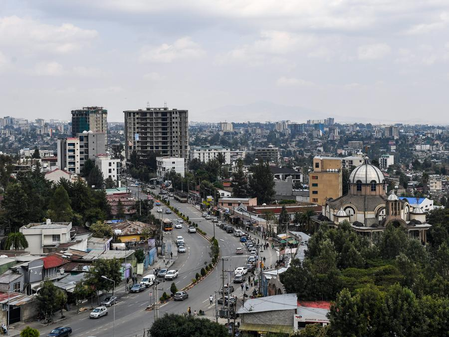
United Nations, Oct 10 (IANS) UN Secretary-General Antonio Guterres is gravely concerned about renewed fighting in northern Ethiopia and calls for an immediate cessation of hostilities, said his spokesman.
"The secretary-general is gravely concerned by the renewed fighting in the Tigray, Afar and Amhara regions of Ethiopia. He calls on all parties to cease hostilities immediately and urges the signatories to return to dialogue under the framework of the Pretoria Agreement," Stephane Dujarric, the spokesman, said in a statement.
Guterres warns of the risks of escalation that further undermine regional stability, reports Xinhua news agency.
"The secretary-general reminds all states in the region of their obligation under the United Nations Charter to refrain from the threat or use of force against the territorial integrity or political independence of any state, and of the principle of non-interference in internal affairs," said the statement.
Guterres calls on all states with influence on the parties to use it to support de-escalation and refrain from any action that could fuel the conflict. He stands ready to offer his good offices, the statement said.
Meanwhile, UN humanitarians on Friday said that the first convoy of aid trucks and humanitarian personnel has reached Ethiopia's Tigray region since the latest outbreak of hostilities.
The UN Office for the Coordination of Humanitarian Affairs (OCHA) said a convoy of four World Food Programme trucks carrying 90 metric tons of supplies to treat acute malnutrition arrived in Mekelle, the capital of Tigray, on Thursday via the Semera-Abala corridor in the neighbouring Afar region.
Food aid distribution in Tigray had resumed earlier in the week, OCHA said.
Humanitarian workers previously stranded in Addis Ababa, the Ethiopian capital, and Semera, in the Afar region, have also reached Mekelle, helping sustain life-saving relief operations, the office said.
However, more humanitarian supplies and emergency assistance are urgently needed to meet the growing needs of people affected by fighting that erupted on Aug. 1 in Tigray, near the border with Eritrea, OCHA said.
"Once again, the UN stresses the need to protect civilians and ensure continued access to critical assistance, including functioning health facilities," the office said.
--IANS
sd/