
Greek PM proposes ban on ministers holding parliamentary seats after subsidy scandal
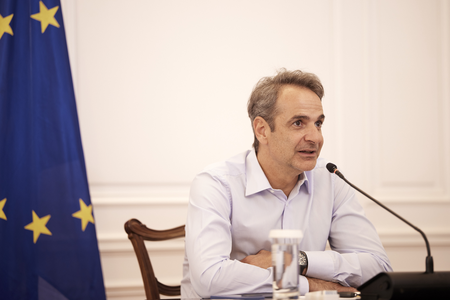
Athens, April 6 (IANS) Greek Prime Minister Kyriakos Mitsotakis on Monday proposed an institutional reform banning government ministers from concurrently serving as Members of Parliament, a move aimed at enhancing transparency and modernising state governance.
Under the proposal, which would take effect after the 2027 general elections, any lawmaker appointed to the cabinet would be required to temporarily relinquish their parliamentary seat. The vacancy would be filled by the next eligible candidate on the party's electoral list for the duration of the minister's tenure.
The initiative comes amid an ongoing investigation by the European Public Prosecutor's Office (EPPO) into the alleged misuse of European Union agricultural subsidies, with several former ministers reportedly mentioned in case files submitted to Greek authorities, Xinhua News Agency reported.
Last week, Mitsotakis carried out a cabinet reshuffle. Meanwhile, the Greek parliament is expected to initiate procedures in the coming days to lift the immunity of 11 lawmakers implicated in the investigation.
In a statement, the Prime Minister urged the EPPO to promptly clarify "how many and which individuals" may face prosecution once parliamentary immunity is lifted. He noted that those under scrutiny have the right to defend themselves following what he described as significant personal and political repercussions.
Mitsotakis said the proposed reform forms part of broader efforts to modernize the Greek state and strengthen institutional transparency. "I strive to transform Greece into a modern European state," he said, adding that the measure is intended to address long-standing systemic deficiencies.
Since last year, nearly two dozen former ministers and members of parliament, all affiliated with the ruling New Democracy party, have been named in three criminal case files submitted by the EPPO. The investigation focuses on the alleged mismanagement of farm subsidies between 2019 and 2021.
Following the cabinet reshuffle, the main opposition party, PASOK-KINAL, renewed its call for early elections. The current government's term is scheduled to expire in June 2027.
--IANS
akl/as
British parliamentary group voices concern over kidnapping and forced marriage of Christian girl in Pakistan
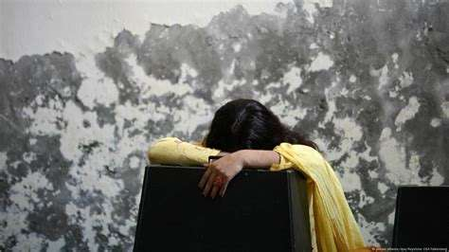
Islamabad, April 6 (IANS) A British parliamentary group has expressed deep concerns over the case of a Christian girl, Maria Shehbaz, who was allegedly kidnapped and forced to marry in Pakistan.
The parliamentary group's statement comes after Pakistan's Federal Constitutional Court termed the marriage of Maria Shehbaz lawful. However, the girl's father has said that she was underage at the time and was forced to convert. For years, girls from Christian and Hindu communities in Pakistan have been targetted by older Muslim men for rape, forced conversion and forced marriage, Christian Today reported.
In a statement, the All-Party Parliamentary Group for Pakistani Minorities (APPG) said that there has been "a broader and well-documented pattern of allegations concerning the abduction, forced conversion, and marriage of girls from religious minority communities, particularly Christians and Hindus." Minorities in such cases often face legal and social hurdles in getting justice while courts frequently support abductors.
"The protection of children and the safeguarding of religious minorities are fundamental principles recognised across all legal systems. Allegations of forced marriage and conversion, particularly involving minors, demand the highest level of scrutiny, transparency, and sensitivity to ensure that justice is both done and seen to be done," said APPG co-chair Lord Alton.
The group urged the Pakistani government to carry out investigation into allegations of forced marriage, especially those involving minors and implementation of laws. It also demanded greater international cooperation to protect religious minorities in Pakistan, Christian Today reported.
Last week, the APPG for Pakistani Minorities had voiced concern over reports that Islamabad's Capital Development Authority (CDA) is preparing demolitions operations targeting informal settlements largely inhabited by low-income Christian families.
In the statement shared on Facebook, the APPG for Pakistani minorities said that residents in several informal settlements have received notices indicating imminent clearance. It warned that forced evictions conducted without legal safeguards or alternative housing could violate constitutional guarantees of Pakistan and international human rights allegations. The APPG urged Pakistan government, the CDA and local authorities to suspend demolition plans and hold talks with affected communities.
--IANS
akl/as
Pakistan lacks coherent plan to combat HIV as cases continue to rise: Report

Islamabad, April 6 (IANS) Recent reports have indicated that Pakistan has 84,421 registered HIV/AIDS patients, with Punjab province recording the most number of cases, followed by Sindh, Khyber Pakhtunkhwa, Balochistan and the Islamabad Capital Territory. Healthcare authorities in Pakistan must create a coherent and sustained plan to combat HIV, a report has cautioned.
Transmission can occur through unsafe practices like barber services, dental procedures and related factors. According to the World Health Organisation (WHO), majority of HIV patients in Pakistan do not know about their condition.
HIV/AIDS cases have increased by 200 per cent in Pakistan over the past 15 years - from 16,000 in 2010 to 48,000 in 2024. The WHO estimated that around 350,000 people have HIV in Pakistan, however, nearly eight in 10 affected individuals remain unaware about their status, according to an editorial in Pakistan's leading daily 'The News International'. Children are also getting infected by HIV/AIDS, with cases among those aged between 0-14 years increasing from 530 in 2010 to 1,800 in 2023.
"HIV has long remained a taboo in this part of the world. Misinformation surrounding the disease has created a situation where patients often blame themselves if they contract the virus. In the past, such individuals were ostracised and forced to live in isolation. While there has been some improvement, the situation is still far from adequate. Unawareness of the disease continues to put others at risk," the editorial mentioned.
"There have been cases where individuals contracted HIV after using equipment previously used on infected patients. Criminal negligence – such as the reuse of medical equipment – further exacerbates the crisis. The harrowing example of a hospital in rural Sindh, where hundreds of children were infected due to the reuse of single-use syringes and other tools, is still a terrifying reminder of the extent of systemic failure," it added.
Healthcare authorities must create a coherent and sustained plan to combat HIV. Reducing stigma and encouraging people to undergo testing and treatment should be the first step. Awareness campaigns should be launched in Pakistan to share details regarding the virus with the people.
According to the editorial, HIV education should be included in school curriculum and religious and community leaders should be asked to share accurate information. The government should increase free or low-cost testing centres for people, introduce rapid test kits and encourage routine testing in hospitals.
--IANS
akl/as
Israel will continue with full force on all fronts until threat is removed: Netanyahu
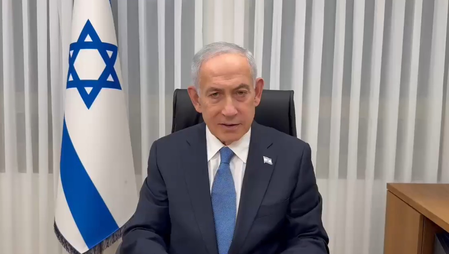
Jerusalem, April 6 (IANS): Israeli Prime Minister Benjamin Netanyahu on Monday vowed that Israel will continue its assault on Iran with full force on all fronts until the threat is removed and the war's objectives are fulfilled. Netanyahu expressed Israel's resolve while welcoming the killing of Islamic Revolutionary Guard Corps (IRGC) head of intelligence Majid Khademi and Commander of Unit 840 in the Quds Force, Asghar Bagheri.
He also warned of severe consequences for those who direct terror against Israel or build the "Iranian axis of evil."
"Another central arm of the Iranian terror regime has been severed. Tonight, we eliminated Majid Khademi, head of the Intelligence Division in the Revolutionary Guards, one of the Iranian regime's senior officials, who had only recently assumed his role after his predecessor was eliminated. In addition, we eliminated Asghar Bagheri, commander of Unit 840 in the Quds Force, who is responsible for attacks against Jews and Israelis around the world," Netanyahu posted on X.
"Whoever acts to murder our citizens, whoever directs terror against the State of Israel, whoever builds the Iranian axis of evil — their blood is upon their head. We are acting with strength and determination — we will reach everyone who seeks to harm us. We will continue with full force, on all fronts, until the threat is removed and all the war's objectives are achieved," he added.
Earlier in the day, Israel Defence Forces (IDF) said that it has killed IRGC's Head of Intelligence Majid Khademi. In the statement shared on X, IDF said that Khademi worked to advance terrorist attacks around the world and was responsible for monitoring people of Iran as part of the regime’s suppression of internal protests.
"ELIMINATED: Majid Khademi, the Head of Intelligence of the IRGC. Khademi was one of the IRGC’s most senior commanders and had accumulated extensive experience over many years. Khademi worked to advance terrorist attacks worldwide, and was responsible for monitoring Iranian civilians as part of the regime’s suppression of internal protests," IDF posted on X.
In a separate statement shared on X, IDF also confirmed the killing of Asghar Bagheri. "ELIMINATED: Asghar Bagheri, Commander of the Quds Force’s Special Operations Unit. In recent years, Bagheri advanced numerous attacks against both Israel and worldwide. In addition, Bagheri personally commanded operations targeting IDF soldiers on the Syrian-Israel border."
On Sunday, IDF said that it had killed Head of Commerce at the IRGC’s Oil Headquarters in Tehran, Mohammad Reza Ashrafi Kahi.
"ELIMINATED: Mohammad Reza Ashrafi Kahi, the Head of Commerce at the IRGC’s Oil Headquarters in Tehran. Ashrafi managed the commercial operations of the Oil Headquarters, estimated at billions of dollars annually, and advanced the development of the IRGC’s military capabilities, as well as those of the Houthis, Hezbollah and Hamas," it posted on X.
--IANS
akl/as
Nine killed, several injured as heavy rains batter eastern Afghanistan
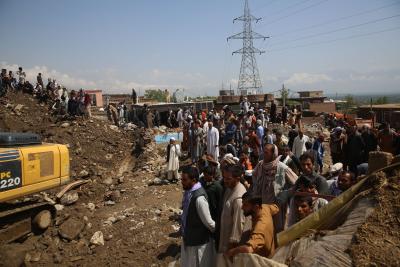
Kabul, April 6 (IANS) At least nine people were killed and nine others injured after the roofs of several houses collapsed in Eastern Afghanistan following heavy rains and floods that swept across several parts of the country, local media reported on Monday.
The deaths were reported in Afghanistan's Nangarhar and Maidan Wardak provinces. Officials in Nangarhar said six people were killed as roofs of three houses collapsed in Pachiragam, Khogyani and Spin Ghar districts after heavy rainfall. According to local reports, seven people, including children, were injured, in the incident, Afghanistan's leading news agency Khaama Press reported.
Taliban police spokesman Mohammad Yousuf Israr said a woman and two children were killed in Maidan Wardak after the roof of a house collapsed in Jaghato district during heavy rain on Sunday. Local authorities said two people were injured in the same incident.
The latest casualties have been reported as floods wreak havoc across various provinces of Afghanistan, with roads, farmland and residential areas heavily impacted over the past 10 days.
On Sunday, disaster officials said that at least 99 people were killed while 154 others were injured in rain-related incidents and floods in Afghanistan. Furthermore, thousands of families have lost homes, crops and access to basic services due to heavy rains and floods.
Aid groups and meteorological authorities have predicted that more rain is expected in several parts of Afghanistan, raising the risk of further flash floods, landslides and structural collapses. Homes made of mud and other fragile materials in rural areas of Afghanistan are susceptible to collapse during prolonged rains.
Meanwhile, the United Nations Human Settlements Programme has said that more than 31,000 people were affected by flash floods in Afghanistan in 2025. In a statement, the United Nations Human Settlements Programme emphasised the need for disaster-resilient infrastructure, Khaama Press reported.
The agency said it was making efforts in cooperation with the Special Trust Fund for Afghanistan to help people better deal with future shocks.
--IANS
akl/as
Nepal announces crackdown measures to address fake rescue of mountaineers
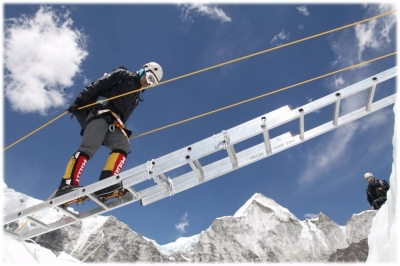
Kathmandu, April 6 (IANS) The Nepali government on Monday announced a series of immediate and long-term measures to strengthen transparency, accountability, and governance in the country's mountain rescue operations, amid allegations that fake rescue missions for climbers have been conducted to secure large insurance claims.
Some media reports also suggested that certain trekkers were deliberately harmed through contaminated food to trigger expensive aerial evacuations as part of a multi-million dollar insurance fraud scheme. These reports surfaced after the government, in late March, prosecuted 32 individuals in connection with a fake rescue scam.
An investigation by Nepal Police has indicated possible collusion among three helicopter companies, three hospitals, more than a dozen trekking companies, insurance agents, and trekking guides to fraudulently claim insurance payouts through staged rescue operations involving foreign climbers and trekkers.
As the issue has resurfaced at a time when the spring mountaineering season is underway, the Ministry of Culture, Tourism and Civil Aviation said in a press statement that a zero-tolerance policy has been enforced against fraudulent practices in the sector.
“The government authorities will carry out strict investigations, blacklist offenders, and publicly disclose individuals and agencies found involved in malpractice,” the ministry said.
It added that the government would engage directly with global insurance providers to establish reliable verification mechanisms and prevent the misuse of rescue claims, as part of efforts to restore international confidence.
According to the ministry, a joint monitoring task force has already been mobilised to enhance oversight and coordination. The task force includes the ministry, the Civil Aviation Authority of Nepal (CAAN), Nepal Police, the Nepal Tourism Board (NTB), and aviation stakeholders.
The ministry said the task force will conduct regular audits and ensure timely and authentic communication across the sector.
In parallel, the government said it is advancing broader structural reforms aimed at improving long-term governance. These include the development of a technology-driven Rescue Management System integrating trekker registration, rescue requests, and insurance verification processes.
Additional reforms will focus on tightening licensing requirements for trekking guides and agencies, with mandatory ethical compliance standards.
“The government also plans to standardise medical protocols for diagnosing altitude sickness, strengthen governance at the local level in trekking regions, and promote ethical tourism certification practices,” the ministry said.
However, the ministry clarified that claims that trekkers were deliberately harmed through contaminated food to trigger rescues have not been substantiated by investigations conducted by the Central Investigation Bureau (CIB) of Nepal Police.
Earlier on Saturday, the CIB said no evidence had been found to support allegations that guides in the Everest region intentionally made tourists ill by mixing poisonous substances into their food to facilitate fraudulent rescue operations.
The fake rescue scam first came to light in 2018, and an investigation committee had recommended action under organized crime and fraud laws. However, the probe did not progress adequately at the time. It was only seven years later that police formally launched a comprehensive investigation into fraudulent rescue flights targeting trekkers and climbers.
--IANS
/as
Taliban claims capturing Pakistani border post in Eastern Afghanistan
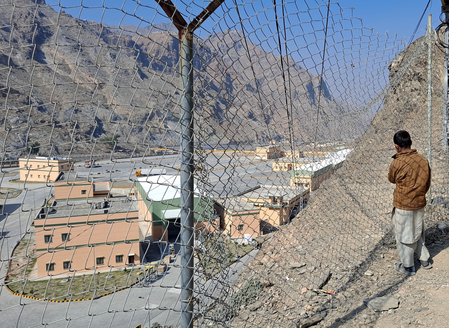
Kabul, April 6 (IANS) Taliban on Monday claimed that it has captured a Pakistani border post in Eastern Afghanistan after a clash with the soldiers of the neighbouring country, local media reported.
Local officials confirmed the exchange of fire betweenTaliban forces and Pakistani soldiers in a border area, Amu TV reported citing Taliban-run national broadcaster RTA. They said that an outpost was captured during the clashes and casualities have been reported on the Pakistani side.
The incident comes amid escalating tensions between Pakistan and Afghanistan as cross-border clashes between two sides enter sixth week. The fighting between two nations has included drone strikes, air raids and artillery exchanges.
The latest clashes have been reported while talks continue between Pakistan and Afghanistan in China to de-escalate tensions. Delegations from Taliban and Pakistan have been holding dialogue in China's Urumqi since last week.
On Sunday, Afghanistan's Foreign Minister Amir Khan Muttaqi said that his delegation was participating in the dialogue "with sincerity and a solution-oriented approach,” stressing that Taliban wants to resolve disputes through talks. However, he emphasised Afghanistan's right to defend its territorial integrity.
Last week, local residents accused Pakistani soldiers of targetting civilian houses in the Tani district of Afghanistan's Khost as fighting continued on the country's border with Pakistan.
According to sources, many local residents have started leaving their homes to escape the violence while casualties were also reported from the region, Afghanistan's leading news agency Khaama Press reported. However, no verified death or injury had been confirmed so far. Meanwhile, clashes were also reported in Gurbuz district of Khost, Khaama Press reported.
On March 31, participants at a 'Pakistan-Afghanistan Peace Jirga' organised in Peshawar, urged governments of both countries to stop the border clashes and resolve their differences through dialogue.
Organised under the auspices of a think-tank Aspire Khyber Pakhtunkhwa and National Reform Movement (Qaumi Islahi Tehreek), various political, religious leaders, representatives of business community and media attended the jirga, Pakistan's leading daily Dawn reported. They urged Pakistan and Afghanistan to use diplomatic channels to resolve their differences as both nations share common religious and cultural heritage, traditions and social values.
They said that the ongoing conflict was a matter of concern for people of both nations and stressed that the current tense situation would lead to dire consequences for the people of Pakistan and Afghanistan. After the discussion at the jirga, the participants issued a joint declaration and urged both nations to immediately declare and implement a ceasefire to de-escalate tensions.
--IANS
akl/as
Canada’s anti-hate bill offers ray of hope amid rising Khalistani extremism
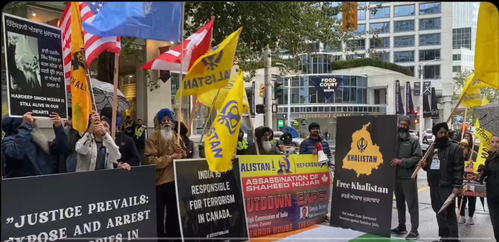
Ottawa, April 6 (IANS) Canada's recent legislation, Bill C-9, the 'Combatting Hate Act', directly addresses the kinds of incidents promoted by Khalistani extremists that have caused concern among Indian diaspora communities by criminalising the intimidation or obstruction of individuals seeking to access religious or cultural spaces, a report said on Monday.
Writing for India Narrative, India's former High Commissioner to Canada, Sanjay Kumar Verma said that the effectiveness of law will hinge on its consistent enforcement, the confidence it builds among the public, and its capacity to restore normalcy in the lives of the diaspora.
"In recent years, the Indian diaspora in Canada has found itself navigating a climate that feels increasingly charged, performative, and at times, openly hostile, driven by Canada-based Khalistani extremism. What once appeared as the fringes of political expression has, in several instances, crossed into the realm of intimidation, incitement to violence and hate speech, directed not only at symbols of India but at individuals representing the Indian state," Verma wrote.
Until recently, the seasoned diplomat wrote, Canada's legal framework struggled to respond decisively to such developments. The system, he opined, was designed to intervene only when speech crossed into clear and demonstrable harm.
"The difficulty, as events since 2022 have shown, is that contemporary forms of intimidation do not always fit neatly within those categories. The display of threatening imagery, the strategic use of public demonstrations to target specific communities or institutions, and the obstruction, implicit or otherwise, of access to religious spaces often fall into a grey zone. They create an environment of pressure and unease without always meeting the legal standard required for prosecution."
Highlighting the relevance of Canada’s Bill C-9, he highlighted that the legislation is not simply an update to existing law; it is an acknowledgement that the nature of harm has evolved and that the legal framework must evolve with it.
"By criminalising the obstruction of access to places of worship and recognising the role of symbolic hate in creating insecurity, it offers a form of legal acknowledgment that these concerns are neither exaggerated nor isolated. It affirms that safety is not limited to protection from physical violence, but includes the ability to participate in community life without intimidation.
"At the same time, the legislation raises important questions about balance. The Indian diaspora, like other communities in Canada, values the country’s tradition of robust free expression. The challenge for Canadian authorities will be to ensure that enforcement remains precise, targeting genuine instances of hatred without casting an unnecessarily wide net," he stated.
Highlighting the growing threat of Khalistani extremism, Verma said that, as India’s High Commissioner in Canada, he saw firsthand how several acts, which once appeared as the fringes of political expression, crossed into the realm of intimidation, incitement to violence and hate speech.
He recalled the "disturbing tableau" at a Nagar Kirtan procession in Toronto which depicted the violent assassination of former Indian Prime Minister Indira Gandhi, not as history to be reflected upon, but as a spectacle to be re-enacted. In another instance, a poster bearing the image of India's then High Commissioner was displayed with simulated bullet marks, a gesture that was meant to incite violence and hatred.
"Effigies of Indian leadership grotesquely displayed in public protests, incendiary slogans calling for violence, and demonstrations staged in close proximity to Indian diplomatic missions have created a pattern that goes beyond dissent," he stated.
"In some cases, threats, both implicit and explicit, have been directed at India's High Commissioner and other diplomats. This is not dissent stretching its voice; it is dissent testing how far intimidation can travel before the law catches up. When violence is staged as memory and threat is aestheticised as protest, the question is no longer about freedom of expression but about the erosion of its boundaries," he added.
According to Verma, the cumulative effect for the Indian diaspora has been a growing sense of insecurity, with community spaces not immune to this atmosphere. He stressed that these are not isolated incidents but calculated performative acts that blur the boundary between expression and intimidation, testing the extent to which public space can normalise threat.
"Hindu temples have been vandalised with graffiti carrying extremist messaging, often designed less to persuade than to provoke. The repetition of such incidents has created a sense that these are not isolated acts of mischief but part of a broader attempt to challenge India’s sovereignty and territorial integrity through disruption and symbolic aggression,” he wrote in India Narrative.
The issue of vandalism of places of worship, the former diplomat mentions, illustrates both the necessity and the complexity of this approach.
"Such acts are rarely random. They are designed to send a message, to mark territory, and to provoke reaction. By bringing symbolic acts within the ambit of criminal law, Bill C-9 acknowledges their impact. Yet the credibility of this approach will depend on whether these acts are investigated thoroughly and prosecuted decisively. A law that promises protection but fails to deliver it risks deepening, rather than alleviating, community anxiety."
--IANS
scor/as
Pakistan’s 5G launch faces steep infrastructural, financial hurdles
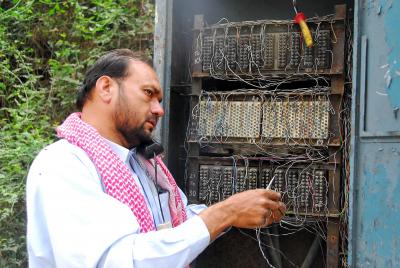
New Delhi, April 6 (IANS) The launch of 5G services in select parts of Pakistan is a milestone, but the county's structural financial and infrastructural bottlenecks makes the technology rollout "closer to a marketing story than a working reality," a new report has said.
The report from Daily Mirror flagged that Pakistan suffers from lack of physical infrastructure required to carry 5G signals, especially the network that connects cell sites to the core.
Globally, fibre-optic cable is the gold standard, capable of carrying terabits per second with latency measured in fractions of a millisecond. For 5G standalone networks, backhaul bandwidth above 10 Gbps per site and round-trip times under 5 milliseconds are essential.
Only about 15 per cent of cell sites are connected via fibre, while the remaining 85 per cent rely on microwave radio links that have fixed capacity ceilings, degrade in bad weather and cannot scale to 5G traffic load requirements, the report added.
The spectrum auction held in Islamabad in early March sold 480 megahertz of spectrum for $507 million and nearly tripled usable spectrum.
However, the spectrum auction, celebrated as a breakthrough, is only the first step "in a long and difficult journey," it said.
To fibre a single site costs between $10,000 and $20,000, and with tens of thousands of sites needing upgrades but such a capital commitment far exceeds the half‑billion dollars raised in the auction.
The problem is compounded by Pakistan’s Right-of-Way fee structure, which levies PKR 35 to PKR 60 per metre every year, unlike India's one-time fee. This changes a one‑time capital expense into a permanent operational drain, discouraging investment.
Consequently, Pakistan ranked 76th out of 93 economies on the GSMA Fiber Development Index. "Without reform, fiberisation will remain the Achilles’ heel of the country’s 5G rollout," the report warned.
Pakistan also faces a demand-side problem as only one percent of handsets in the country support 5G. Roughly 90 per cent of locally assembled devices are currently limited to 2G or 3G compatibility, it noted.
—IANS
aar/na
Abrupt petrol price cut after hike in Pak reflects a deeper policy failure: Report
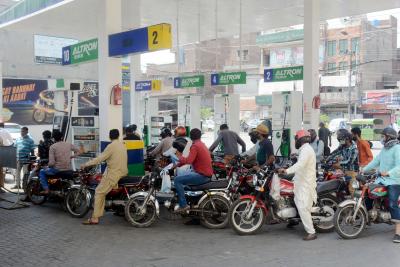
New Delhi, April 6 (IANS) The reduction of Rs 80 per litre in petrol prices in Pakistan is nothing but a “populist move” by a government struggling to balance emerging economic constraints and domestic political compulsions, a new report has said.
New Delhi, April 6 (IANS) The reduction of Rs 80 per litre in petrol prices in Pakistan is nothing but a “populist move” by a government struggling to balance emerging economic constraints and domestic political compulsions, a new report has said.
According to a report in Dawn, the initial fuel price hike — 43 per cent for petrol and 55 per cent for diesel — was “undeniably inflationary”, feeding directly into transport costs, food prices and broader inflation expectations.
Now, “the prime minister’s decision to reduce petrol prices reflects a deeper policy failure,” the report argues.
The decision underscores a tendency to respond to political pressure instead of governing by principle, it adds.
“Such reactive policymaking will neither protect people from the next wave of inflation nor contribute to building a stable and predictable economic framework,” the report further lamented.
According to Dawn, the move shows the government’s reliance on across-the-board relief regardless of income level rather than targeted intervention.
“In a country with limited fiscal space, such blanket measures risk misallocation of scarce resources,” it adds.
The fact is that failure to fully pass on the surge in global energy prices triggered by the US-Israel war on Iran to consumers has already cost the exchequer Rs 129 billion, with the meagre development budget absorbing a hit of around Rs 100 billion.
Thus, the fiscal gap created by subsidising petrol will not disappear; it will merely shift and low- and middle-income households will end up paying the price, whether through higher taxes and levies, reduced public spending, or inflation.
The abrupt fuel price revision has pointed to political pressure and a degree of confusion within official circles over how to manage the crisis. Analysts said the latest move highlights Pakistan’s limited capacity to cushion fuel price shocks.ank
--IANS
na/