
India aiming for 10 pc share in global 6G patents: Scindia
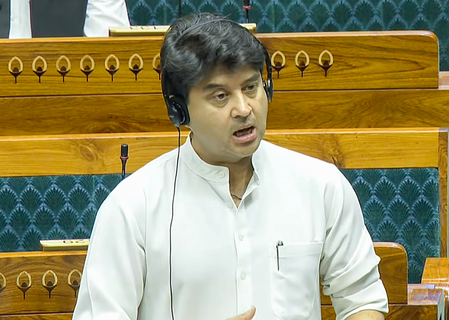
New Delhi, March 25 (IANS) Union Minister of Communications and Development of North Eastern Region, Jyotiraditya M. Scindia, informed the Lok Sabha on Wednesday of significant progress made in the growth of the Bharat 6G Alliance and the strengthening of India’s research ecosystem through the Anusandhan National Research Foundation.
Scindia underlined that the Bharat 6G Alliance, established under the guidance of PM Modi, has witnessed substantial growth and India aims to contribute nearly 10 per cent of global 6G patents, with around 4,000 patents already contributed.
India’s proposal on ubiquitous connectivity has also been accepted by international bodies such as the 3rd Generation Partnership Project (3GPP) and the International Telecommunication Union (ITU).
From an initial 14 institutions, the Bharat 6G Alliance has expanded to 85. Seven working groups have been constituted, focusing on spectrum, devices, technology and components, alliances, green and sustainability, outreach, and 6G use cases.
He noted that the ministry undertakes a quarterly analysis of all seven working groups to ensure steady progress.
Responding to a query, the minister stated that the Anusandhan National Research Foundation (ANRF) was established under the leadership of PM Modi and became operational in February 2024 with the objective of imparting fresh momentum to innovation and research in the country.
He stated that the foundation operates through a Governing Council and an Executive Council to ensure effective, transparent decision-making.
ANRF aims to raise Rs 50,000 crore in funds during 2023-28.
A budgetary provision of Rs 14,000 crore is made by the Central Government, and the remaining amount will be sourced through donations from any other source, including public sector enterprises, the private sector, philanthropic organisations, foundations, or international bodies.
Elaborating further, Scindia highlighted that this budgetary provision has been announced to support key programmes aimed at advancing cutting-edge research, which include the Mission for Advancement in High Impact Areas, EV Mission, 2D Innovation Hub, MedTech Mission, AI for Science and Engineering, and the CRM Research Programme.
In addition, several grant initiatives, such as the Advanced Research Grant, the Prime Minister Early Career Research Grant, and the Inclusivity Research Grant, have been introduced to broaden participation in research and innovation.
The government has also announced the Rs 1.0 lakh crore Research, Development and Innovation (RDI) Scheme to provide long-term financial support for undertaking research and innovation in critical and emerging technology areas vital for national development and global competitiveness.
The Department of Science and Technology is the nodal department for implementing the RDI Scheme.
The minister added that the scheme aims to catalyse private sector investment in research and development and support innovation in key domains such as energy security and climate action; deep technologies, including quantum computing, robotics and space technologies; artificial intelligence and advanced digital technologies; as well as biotechnology and medical devices.
--IANS
sps/dan
India adds 9.56 GW rooftop solar capacity PMSG
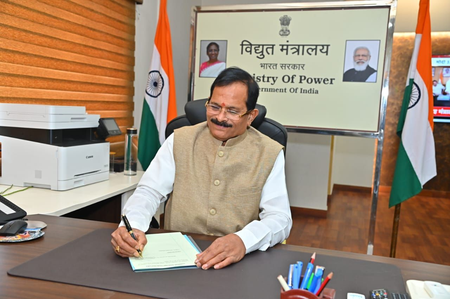
New Delhi, March 25 (IANS) Since the PM Surya Ghar Muft Bijli Yojana's launch in February 2024, 9,566.89 megawatts (MW) of rooftop solar capacity has been added across the country, the government said on Wednesday.
Rooftop solar installations in one crore households would produce about 1,000 billion units of renewable electricity and cut 720 million tonnes of CO2‑equivalent emissions over a 25‑year project life, an official statement cited government estimates.
PM Surya Ghar Muft Bijli Yojana is estimated to create around 17 lakh jobs across manufacturing, logistics, supply chain, sales and installations, O&M services and financial services, the statement from Ministry of New and Renewable Energy said.
Further, the government also informed that India’s Green Hydrogen production capacity is likely to reach 5 million metric tonnes per annum by 2030.
"As per available information, around 8000 tonnes per annum of green hydrogen production capacity has been commissioned in India till February 2026," MoS, Ministry of New and Renewable Energy, Shripad Yesso Naik said in Rajya Sabha.
National Green Hydrogen Mission (NGHM) aims to make India a global hub of production, usage and export of green hydrogen and its derivatives.
World Bank Group said that renewable energy accounts for 50-70 per cent of the total cost of green hydrogen production.
Residential consumers having grid connected electricity connection of the local DISCOM can avail the benefits of PMSG: MBY for installation of RTS systems, by applying on the National Portal of the scheme.
To promote the rooftop solar adoption and achieve target of installation of rooftop solar for one crore households in the country, the government has enabled an online process from application to disbursal of subsidy directly into the bank account of the residential consumer through the National Portal.
Further, collateral-free loan from nationalized banks is available to applicants at a concessional interest rate of repo-rate plus 50 bps, or at 5.75 per cent per annum for the present, with a tenure of 10 years.
—IANS
aar/pk
Online train ticket bookings surge to 88 pc in FY26: Govt
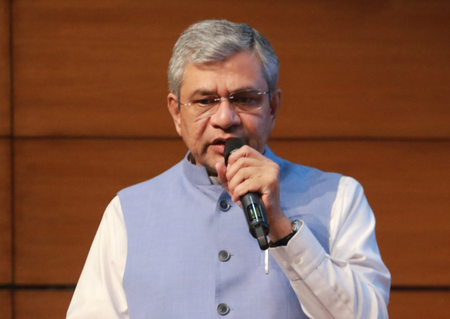
New Delhi, March 25 (IANS) The government on Wednesday said online train ticket bookings have seen a sharp rise, with over 48.25 crore tickets, or 88 per cent of total reserved bookings, made digitally in FY 2025–26 till February.
In a written reply to a question in Lok Sabha, Union Minister Ashwini Vaishnaw, said that the increasing shift towards online booking through IRCTC has made ticketing easier for passengers by reducing the need to visit reservation counters and cutting travel time and costs.
“The online ticket booking facility provided by IRCTC is one of the most passenger friendly initiatives of Indian Railways and its acceptance can be gauged from the fact that at present approximately 88 per cent of the reserved tickets are booked online,” the minister stated.
“IRCTC incurs substantial expenditure on providing online ticketing facility and in order to defray the cost incurred in maintenance, upgradation and expansion of ticketing infrastructure, a very nominal convenience fee is levied by IRCTC,” the minister added.
The online system has become one of the most passenger-friendly initiatives of Indian Railways, with a large majority of tickets now being booked digitally.
To ensure fair access and prevent misuse, the government has taken several steps to curb fraudulent activities.
From July 1, 2025, Tatkal tickets can be booked online only by Aadhaar-authenticated users.
This has helped limit the use of fake accounts and improved the chances of genuine passengers getting tickets.
“During 2025, 3.04 crore user accounts were deactivated and 2.94 crore user accounts were put under temporary suspension with option of Revalidation,” Vaishnaw stated.
“However, during the period 01.01.2025 to 28.02.2026, 1,80,474 user accounts have been re-activated,” he added.
IRCTC has also strengthened its technology systems to tackle cyber threats. Its anti-bot technology is able to block about 64 per cent of malicious traffic, helping improve the booking experience for genuine users.
“13,023 suspicious email domains have been blocked in the year 2025-26 until February 28, 2026,” Vaishnaw explained.
--IANS
pk
Siddaramaiah’s misleading narrative on K’taka finances: BJP on Budget 206-27
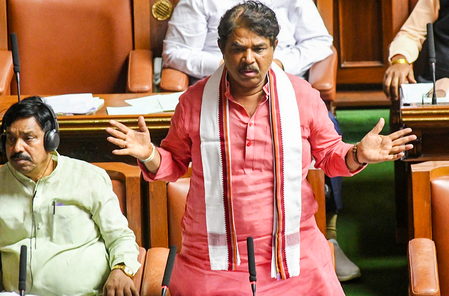
Bengaluru, March 25 (IANS) Responding to Chief Minister Siddaramaiah’s defence of the 2026–27 Budget, the Karnataka BJP on Wednesday accused him of presenting a misleading narrative on the state’s finances.
Senior BJP leader and Leader of the Opposition R. Ashoka, in a statement, criticised that the Chief Minister, who has presented a record 17 Budgets and expressed readiness to present more, was overlooking key distinctions between capital expenditure and revenue spending.
He argued that while borrowing in itself is not an issue, the purpose for which the borrowed funds are used is crucial.
Drawing a comparison with the Union government, Ashoka noted that a significant portion of Central borrowings is allocated towards capital expenditure.
He said the Centre’s capital outlay is estimated at around Rs 12.2 lakh crore, accounting for about 3.1 per cent of GDP and nearly 22–23 per cent of total expenditure, largely directed towards infrastructure such as roads and railways, as well as long-term economic capacity building.
In contrast, Ashoka noted that the Karnataka government’s 2026–27 Budget, with a total outlay of Rs 4.48 lakh crore, allocates Rs 74,682 crore towards capital expenditure.
This constitutes roughly 16-17 per cent of total spending and about 2.2–2.5 per cent of the state’s Gross State Domestic Product (GSDP).
He also pointed out that the state’s total outstanding debt has reached approximately Rs 8.24 lakh crore, nearly 25 per cent of GSDP, with fresh borrowings of Rs 1.32 lakh crore proposed for the current financial year.
Ashoka further raised concerns about the revenue deficit of Rs 22,957 crore, indicating that the state is borrowing funds even to meet routine administrative expenses.
This, critics argued, suggests that a substantial portion of borrowings is not being used for asset creation but for day-to-day expenditures.
Ashoka emphasised that while the Union government focuses on using borrowed funds to create productive assets and drive long-term growth, the state government’s spending pattern reflects a greater reliance on loans for recurring expenses.
According to him, the issue is not the volume of borrowing but the quality and purpose of expenditure.
Ashoka further accused the Chief Minister of selectively quoting statements of senior party leaders to suit his political narrative. He said Siddaramaiah had cited remarks made by veteran BJP leader Murli Manohar Joshi regarding the Food Security Bill, but had taken them out of context.
The party clarified that Joshi’s criticism in 2013, where he termed the proposed law a “vote security bill,” was made in a specific context – referring to the timing of the National Food Security Act brought by the UPA government just months ahead of the 2014 general elections after a prolonged delay.
According to Ashoka, the remark was aimed at questioning the legislation's political intent and timing, not directed against welfare measures for the poor. He alleged that Siddaramaiah had misrepresented the statement in the Karnataka Assembly to mislead the public.
He also hit back at the Congress, pointing to past remarks by Congress leader Rahul Gandhi, who had once described poverty as a “state of mind,” terming it insensitive.
Criticising the Congress’s approach, Ashoka alleged that the party often treats the poor as a political tool during elections, whereas the BJP’s welfare approach focuses on empowerment with dignity rather than electoral tokenism.
The statement further urged Siddaramaiah to refrain from distorting facts and instead concentrate on governance, alleging that Karnataka is facing administrative challenges under the current Congress government.
--IANS
mka/dan
More flights operating from Middle East to India: Centre
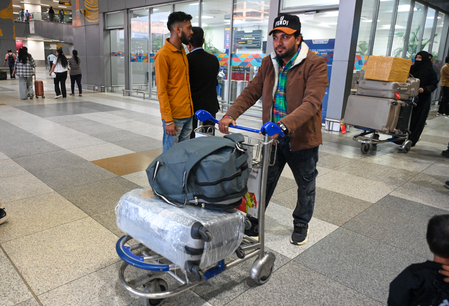
New Delhi, March 25 (IANS) The overall flight situation from the Middle East countries to India continues to improve with additional flights operating from the region. In the UAE, airlines continue to operate limited non-scheduled flights based on operational considerations, with around 80 flights expected to operate on Wednesday from various airports to India, according to an update issued by the Ministry of External Affairs.
Flights continue to operate from Saudi Arabia and Oman to India as well. With the Qatar airspace also partially open, Qatar Airways is expected to operate around nine non-scheduled commercial flights to India on Wednesday, the statement said.
Kuwait and Bahrain airspaces remain closed. Special non-scheduled flights are being operated from Saudi Arabia by carriers such as Jazeera Airways and Gulf Air, facilitating travel of Indian nationals to India.
Indian nationals in Iran continue to be assisted for travel to India via Armenia and Azerbaijan, with 1,043 individuals, including 717 students and 326 Indian citizens have crossed out of Iran with the Indian mission’s assistance, the statement said.
Indian nationals in Israel are being facilitated to travel to India via Jordan. In view of restrictions in Kuwait, Bahrain and Iraq, transit through Saudi Arabia continues to be facilitated for Indian nationals.
Since February 28, around 4,26,000 passengers have returned from the region to India. During this period, a total of 2,149 flights, including scheduled and non-scheduled flights of Indian as well as foreign carriers, have operated from the region to India.
The Ministry is also providing support for repatriation of mortal remains of Indian nationals. The mortal remains of an Indian national who passed away in Riyadh on 18th March have been brought back to India, and the Government remains in close contact with the family, the statement said.
Indian missions in Oman, Iraq and the UAE are in touch with local authorities regarding missing and deceased Indian nationals and are facilitating early repatriation of mortal remains, the statement added.
--IANS
sps/na
India’s engineering exports cross $10 billion in Feb despite geopolitical tensions

New Delhi, March 25 (IANS) Despite geopolitical conflicts and global economic slowdown, India's engineering goods exports recorded double-digit growth in February 2026 crossing $10 billion, a report said on Wednesday.
India’s engineering exports achieved 12.9 per cent year-on-year (YoY) growth as it touched $10.36 billion. Among 25 key markets for Indian engineering goods exports, shipments to 17 countries grew during the month, EPC India said in the report.
Engineering shipments to the US and UAE declined in February, but exports to China, Saudi Arabia, the UK, Singapore, and the Republic of Korea showed an uptick.
Engineering goods exports to China more than doubled to $436.18 million in February 2016 as compared to $207.45 million in the same month last year.
India's top market US saw shipments fall 4.9 per cent year-on-year to $1.57 billion in February 2026 while shipments UAE, the second largest market declined 14 per cent YoY.
EEPC India Chairman Pankaj Chadha called the performance in February a “silver lining for the engineering community,” amid slowdown in global trade due to supply chain breakdown in several countries and high freight charges.
"Exporters have been complaining of escalating financial burdens, including war-risk surcharges, high insurance premiums, and extraordinarily high freight costs. Energy prices have skyrocketed, and even in many cases, exporters have faced critical raw materials shortages," Pankaj Chadha said.
The share of engineering in total merchandise exports was recorded at 28.3 per cent in February 2026, as against 28.5 per cent in January 2026, according to government data.
Chadha also welcomed the government's timely intervention by bringing the Rs 497 crore Resilience & Logistics Intervention for Export Facilitation (RELIEF) scheme to provide credit insurance cover for exporters affected in West Asian conflict.
Prime Minister Narendra Modi has already indicated that the West Asia crisis could be very challenging not only for India but for the world economy.
—IANS
aar/pk
IndiaAI Mission onboards 38,231 GPUs, 190 projects approved: Jitin Prasada
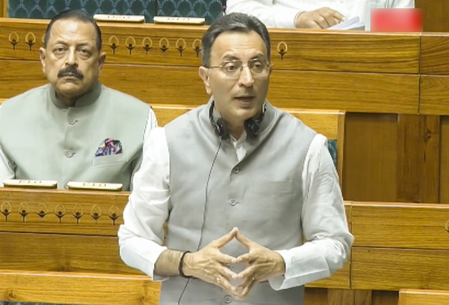
New Delhi, March 25 (IANS) Union Minister of State for Electronics and IT, Jitin Prasada, on Wednesday said that the government's IndiaAI Mission has onboarded over 38,000 GPUs and approved 190 projects to strengthen the country’s artificial intelligence ecosystem, while the Semicon India Programme has cleared 10 semiconductor units to boost domestic chip manufacturing.
Prasada in Lok Sabha stated that as part of the initiative, 38,231 GPUs have been onboarded through a common compute facility and are being provided to startups and academia at subsidised rates of around Rs 65 per GPU per hour.
According to him, of the 190 projects approved under the mission, 78 are with government entities, 46 with startups and MSMEs, 30 with early-stage startups, 27 with academia and researchers, five with students, and four with early-stage researchers, reflecting broad-based participation.
The government is also supporting the development of indigenous AI capabilities, including processors and accelerators, under the National Supercomputing Mission using the open-source RISC-V architecture.
In parallel, the Semicon India Programme has approved 10 semiconductor manufacturing units, with one unit already in commercial production and three in pilot stage.
Tata Electronics is setting up a semiconductor fabrication unit in Gujarat with an investment of Rs 91,526 crore, with a planned capacity of 50,000 wafer starts per month across technology nodes ranging from 110 nm to 28 nm, the minister said.
To boost chip design, the Design Linked Incentive (DLI) scheme has approved 24 semiconductor design projects, with 14 companies securing venture capital funding.
Moreover, the minister also said that 103 fabless chip design firms have been supported with access to design infrastructure, while 7 chips have been fabricated out of 16 designs taped out, including at advanced nodes such as 12 nm.
The government said over 140 reusable semiconductor IP cores have been developed and 10 patents filed, strengthening India’s design ecosystem.
On the AI front, the mission is supporting 12 organisations and consortia to develop indigenous foundational models, with select models already launched and made available on public platforms for wider use.
The initiative is also promoting global expansion of Indian startups, with 10 AI startups selected under an international programme in collaboration with partners in France.
Further, 30 AI applications focused on sectors such as agriculture, healthcare, climate change and disaster management have been identified, while 13 projects on responsible AI are currently underway.
According to the minister, the Indian government is supporting 500 PhD scholars, 5,000 postgraduates and 8,000 undergraduates, and has established 27 AI labs in Tier-2 and Tier-3 cities, with 543 ITIs and polytechnics approved for similar facilities.
The IndiaAI Mission was launched with an outlay of Rs 10,372 crore, aimed at democratising access to high-performance computing and supporting startups, academia and research institutions.
--IANS
ag/na
India to scale up rare earth magnet production to 5,000 tonnes by 2030

New Delhi, March 25 (IANS) India has accelerated efforts to expand domestic production of rare earth permanent magnets and exploration of critical minerals such as lithium, targeting production capacity of 5,000 tonnes by 2030, the government said on Wednesday.
The country’s current requirement of rare earth permanent magnets at about 4,000 tonnes is projected to rise to nearly 8,000 tonnes by 2030, highlighting the need for rapid expansion of domestic capabilities, MoS, Science & Technology, Earth Sciences, Dr. Jitendra Singh said in the Lok Sabha.
A pilot project on neodymium‑iron‑boron permanent magnets has been launched and a samarium‑cobalt magnet plant at Visakhapatnam has been made operational with an initial production capacity of 500 tonnes per year.
This capacity will be scaled up to 2,000 tonnes in the next phase and further to 5,000 tonnes by 2030, the Department of Atomic Energy said in a statement.
Regarding lithium reserves in Rajasthan's Degana, the minister said that preliminary survey activities are underway, and further exploration is expected to begin soon, adding similar efforts are in progress in Reasi district of Jammu & Kashmir.
Dr Singh said that lithium and rare earth elements are critical for sectors such as electric vehicles, renewable energy, electronics, defence, aerospace, and space applications, and will play an important role in supporting clean energy transition as well as emerging technologies requiring reliable energy systems.
The government is working in close coordination across ministries to fast-track exploration and development of critical minerals, the minister said.
Policy measures, including provisions under the Atomic Energy (Amendment) framework, have opened exploration of several critical minerals to private sector participation, with safeguards in place for strategic resources such as uranium.
He also mentioned rare earth corridors being recently announced in Tamil Nadu, Odisha, Andhra Pradesh, and Kerala to strengthen the domestic ecosystem for processing and value addition.
Rare earth elements are found both in beach sand minerals and rock formations, and their exploration requires different approaches depending on geological conditions. Rajasthan, Gujarat, and Jharkhand, have significant deposits of rock-based minerals which are relatively more complex to explore, the minister said.
—IANS
aar/pk
India’s markets to recoup lost ground, RBI rate hike unlikely: Report
New Delhi, March 25 (IANS) India’s markets are likely to recoup some lost ground after the US announced a five‑day reprieve for Iran’s energy infrastructure, a report said on Wednesday.
Radhika Rao, Senior Economist and Executive Director at DBS Bank, predicted that the RBI will keep rates on hold in 2026, while addressing specific pockets of strain.
The bar for rate hikes is high, due to the "stagflationary" shock and exogenous nature of the event risk, the report said.
"Foreign reserve coverage ratios are at a healthy level, providing sufficient firepower to the authorities, with signs of regular intervention presence in spot and forwards," the bank said in a note.
Banking system liquidity returned to a modest deficit amid advance tax outflows and strong foreign‑exchange intervention.
The Reserve Bank of India (RBI) infused Rs 793 billion via an overnight Variable Rate Repo (VRR) auction and announced plans for a three‑day auction worth Rs 1 trillion.
More such auctions are likely if defence against rupee weakness continues, the report said.
Rupee bond yield might cool off slightly after the immediate reprieve, with 10‑year yield to settle within 6.70–6.78 per cent, while INR settles around 92.80–93.50, according to Rao.
"As markets whiplash, a durable improvement in sentiment will require indications that a reopening of the Strait of Hormuz is imminent, which will help energy prices stabilise, in the absence of which gains could be tentative," the bank said.
Markets saw a sharp rise in India’s risk barometer VIX this week, and over 2.5 per cent drop in benchmark equities, a record low rupee and a jump in bond yield.
India being a net importer of oil and other energy commodities, faces the twin headwinds of a wider current account gap and weak capital inflows, in the face of high prices and delayed supplies.
Meanwhile, petroleum dealers associations has assured people that there is no shortage of fuel, and adequate stock is available with HPCL, IOCL and BPCL.
—IANS
aar/na
Over 2,300 OSOP outlets at railway stations benefit 1.32 lakh people: Govt
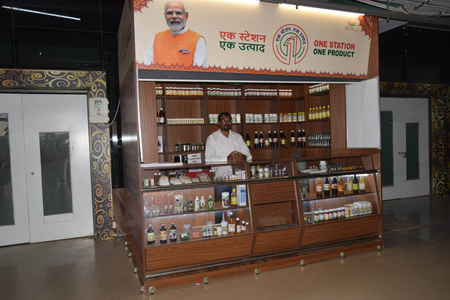
New Delhi, March 25 (IANS) The Centre’s ‘One Station One Product’ (OSOP) initiative has expanded to over 2,000 railway stations with around 2,326 outlets, benefiting more than 1.32 lakh people across the country, it was informed on Wednesday.
Products showcased under the initiative reflect regional diversity, ranging from Madhubani paintings at Patna station to cane crafts at Tenkasi Junction in Tamil Nadu.
Similar trends are visible across stations, with handloom products and artefacts attracting buyers at Asansol in West Bengal, while cotton textiles and traditional attar perfumes are being showcased at Chennai’s Moore Market Complex station.
In Odisha’s Balangir, handcrafted toys made by local SHGs are generating steady income for artisans, particularly women, while Jaipur’s OSOP outlet is promoting Sanganeri print textiles. At Tatanagar in Jharkhand, local handicrafts are reaching a wider customer base through the initiative.
According to the government, the scheme prioritises inclusion by focusing on artisans and groups with limited access to formal markets, helping them scale their businesses and sustain traditional skills.
Beyond commerce, OSOP is also enhancing passenger experience by offering authentic local products as souvenirs, blending cultural exposure with everyday travel.
With its growing footprint, the initiative is emerging as a key platform for promoting 'Vocal for Local' and strengthening grassroots entrepreneurship through India’s railway network.
Launched in the Union Budget 2022–23, the initiative aims to promote indigenous products by providing dedicated retail spaces at railway stations, enabling local artisans, weavers, farmers and Self-Help Groups (SHGs) to access a wider market.
The scheme, rolled out on March 25, 2022, after a pilot across 19 stations, has been scaled up in phases, with stalls allotted on a rotational basis at nominal charges to ensure broader participation.
As of October 2025, the Northeast Frontier Railway (NFR) had achieved significant progress under the initiative, with a total of 112 stations under the jurisdiction of the NFR that have operational OSOP outlets, covering 135 functional units.
--IANS
ag/pk