
India housing affordability likely to stabilise this year

New Delhi, March 26 (IANS) Buying a home in India may stop getting tougher from this year, as rising incomes and supportive policies are expected to balance out high property prices, according to a new report released on Thursday.
India’s housing affordability is likely to stabilise between 2026 and 2028, offering some relief to homebuyers who have struggled with rising property prices and high loan costs in recent years, a report by CBRE South Asia Private Limited said.
The consultancy, in its India Residential Market Outlook 2026, noted that for the first time since 2021, household income growth is expected to grow faster than property prices.
This shift is likely to ease the burden of home loans for a wide range of buyers across major cities.
The report analysed the EMI-to-income ratio across six key cities, including Mumbai, Delhi NCR, Bengaluru, Hyderabad, Chennai and Pune, covering three income groups between 2021 and 2028.
According to the findings, affordability had worsened steadily between 2021 and 2024, mainly due to higher interest rates and faster growth in property prices compared to incomes.
However, the trend is now expected to reverse. From 2026 onwards, the EMI-to-income ratio is likely to stabilise across income groups -- indicating that buying a home will become more manageable.
Industry experts said this marks an important turning point for India’s housing market. The combination of easing interest rates, slower price growth and rising household incomes is expected to support demand going forward.
The report also suggests that India’s progress towards becoming an upper-middle-income economy by 2030 will further strengthen housing demand.
The study also highlighted that the residential market remained strong in 2025, with both new launches and sales crossing 2.7 lakh units.
There has been a noticeable shift towards premium and luxury housing, with high-end homes accounting for around 27 per cent of total sales.
Sales in this segment grew over 30 per cent compared to the previous year, the report stated.
--IANS
pk
India office market leasing jumps 15 pc Q1 2026

New Delhi, March 26 (IANS) India’s office real estate market has begun 2026 on a strong note, with leasing activity touching 18.3 million square feet in the January–March quarter, a report said on Thursday.
This marks a 15 per cent increase compared to the same period last year, according to a report by Colliers India.
The growth was largely driven by major cities like Bengaluru and Hyderabad, which together accounted for nearly half of the total leasing activity at 8.7 million square feet.
Other key markets including Mumbai, Pune, Delhi NCR and Chennai also saw healthy demand, each recording leasing between 2 and 3 million square feet.
Notably, Hyderabad and Pune witnessed more than double the demand compared to a year ago.
The report highlights that India continues to remain a preferred destination for office space in the Asia-Pacific region, supported by the expansion of Global Capability Centers (GCCs) and strong occupier demand across sectors.
GCCs alone contributed nearly half of the total leasing during the quarter, indicating sustained confidence among global firms in India’s office market.
On the supply side, new office space additions remained robust at 11.8 million square feet in the first quarter, up 19 per cent year-on-year.
Bengaluru led the supply pipeline, contributing nearly 47 per cent of the total new completions, followed by Delhi NCR with a 17 per cent share.
Chennai and Mumbai also saw significant additions of about 1.5 million square feet each.
Conventional office leasing continued to dominate, accounting for 14.4 million square feet of the total demand.
Technology and BFSI (banking, financial services and insurance) companies were the key drivers, together making up nearly two-thirds of this segment.
Technology firms alone contributed 36 per cent of conventional leasing, with Bengaluru and Hyderabad emerging as the top destinations.
At the same time, flexible workspace operators are gaining traction. Leasing by flex space providers rose sharply by 77 per cent year-on-year to nearly 4 million square feet, making up 21 per cent of overall leasing.
Delhi NCR and Hyderabad led this segment, while cities like Kolkata and Delhi NCR saw particularly strong adoption, with flex operators accounting for around 40 per cent of total leasing.
--IANS
pk
S. Korea to expand fuel tax cuts; budget airlines cut flights
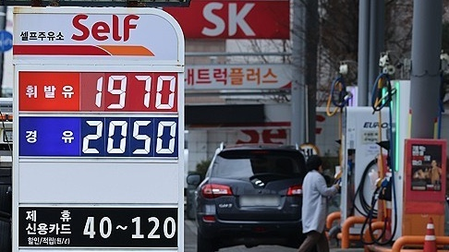
Seoul, March 26 (IANS) South Korea will significantly expand its temporary fuel tax cut in a bid to ease the financial burden on consumers amid the prolonged conflict in the Middle East, the finance ministry said on Thursday.
Under the latest measures to support people's livelihoods, the current tax cuts -- 7 percent on gasoline and 10 percent on diesel -- will be expanded to 15 percent and 25 percent, respectively, reports Yonhap news agency.
The measure, which had been set to expire in April, will be extended through the end of May, according to the ministry.
As a result, fuel taxes per litre, including value-added tax, will fall by 65 won (US$0.04) to 698 won for gasoline and by 87 won to 436 won for diesel.
The decision is aimed at easing the burden of rising oil prices and supporting small and midsize businesses, as well as vulnerable households affected by the prolonged conflict.
South Korea first introduced the fuel tax cut in November 2021 as a response to rising energy prices. The government has since extended the measure, adjusting the rates in accordance with changes in the global energy market.
Meanwhile, South Korea's low-cost carriers (LCCs) are cutting international flights to mitigate the impact of surging fuel costs amid prolonged tensions in the Middle East, industry sources said on Thursday.
Air Premia Co. plans to suspend 10 flights on its Incheon-San Francisco and Incheon-New York routes in May, following an earlier decision to cancel 26 flights on the Incheon-Los Angeles route and six on the Incheon-Honolulu route between April 20 and May 31, the sources said.
Eastar Jet Co. plans to suspend 50 flights on the Incheon-Phu Quoc route from May 5 to May 31, citing limited local refueling conditions in Vietnam.
Air Busan Co. and Aero K Airlines Co. have already reduced flights on some international routes starting in April.
The country's three largest LCCs -- Jeju Air Co., T'way Air Co. and Jin Air Co. -- are also considering cutting services on select Southeast Asian routes, according to industry watchers.
Jet fuel prices in Asia and Oceania rose 16.6 percent to US$204.95 per barrel in the week of March 13-20, compared with the previous week, and were sharply higher than the prior month's average, according to the International Air Transport Association.
—IANS
na/
India remains Asia Pacific’s most cost-competitive office fit out market: Report

New Delhi, March 26 (IANS) India continues to reinforce its position as the most cost-competitive office fit-out market in Asia Pacific, offering global occupiers a compelling combination of cost efficiency, scale and quality, a new report showed on Thursday.
Across India’s major office markets, fi-out costs ranged between $65–73 per square feet, significantly lower than key regional markets such as Tokyo ($215), Sydney ($161) and Singapore ($140), said Cushman & Wakefield’s ‘Asia Pacific Office Fit Out Cost Guide 2026’.
This reinforces India’s position as the most economical destination for delivering high-quality, collaborative workplace environments at scale.
"India continues to stand out as one of the most cost-competitive fit out markets in Asia Pacific, not just on absolute cost benchmarks but also in terms of consistency across cities and depth of delivery capability. As occupiers increasingly look to deliver higher-quality, experience-led workplaces, this cost advantage becomes even more relevant,” explained Shashi Bushan, Executive Managing Director-Project and Development Services (PDS) India, and Lead Occupier-PDS APAC, Cushman & Wakefield.
In the current environment, where global supply chains are adjusting and input costs remain sensitive to energy prices, India’s relative positioning is strengthening further.
The country's cost advantage comes at a time of strengthening occupier activity across the region. Prime office net absorption across Asia Pacific’s 27 markets reached 92 million sq ft in 2025, up from 76 million sq ft in 2024, reflecting continued recovery in demand.
India has been central to this growth, with its top eight cities accounting for nearly two-thirds of regional office demand, underlining the depth and resilience of its occupier base.
On the supply side, the divergence across the region is becoming more pronounced. Total office supply under construction across the Asia Pacific stood at approximately 386 million sq ft at the start of 2026, of which around 192 million sq ft is concentrated in India’s top eight cities.
Overall, we are seeing a clear shift—organisations are not stepping back from workplace investments but becoming more deliberate in how and where they deploy capital. In that context, India continues to offer a compelling balance of cost, quality and scalability, said Bushan.
Mumbai remains the highest-cost market at approximately USD 73 per sq ft, reflecting strong demand from multinational corporations, financial institutions and Global Capability Centres (GCCs) seeking premium office environments.
—IANS
na/
India’s commercial drone market to grow at 18 pc till FY29: Report

Mumbai, March 26 (IANS) India’s commercial drone industry had a market size of $1.88 billion (Rs 17,000 crore) in FY26, which is expected to grow at a compounded 17.98 per cent rate during FY25–29, a report showed on Thursday.
Globally, the US leads the commercial drone industry, followed by China, with India currently ranked seventh, according to a research report by B2K Analytics.
As per the report, drones can cut the cost of agrochemical spraying by nearly 80 per cent compared with manual spraying.
A study analysed small and medium-sized drones costing Rs 6.4–7.1 lakh with a maximum operational life of three years versus annual manual labour costs of about Rs 1.7 lakh.
“Despite the higher upfront cost, drones can cover 6–6.6 acres in the time manual labour covers one acre. After accounting for efficiency and depreciation, drones were found to be over 78 per cent more cost effective than manual labour,” the findings showed.
In India, there are currently 122 holders of the Type Certificate — an approval issued by the DGCA confirming that a drone model meets safety, airworthiness, and performance standards for commercial use.
Among these, about 70 per cent have obtained certification for drones used in agriculture, mainly for agrochemical spraying. Another 24 per cent operate in surveillance and mapping, highlighting agriculture as the dominant use-case for drones at present.
Government policies have supported the local drone ecosystem through measures such as the ban on completely built drone units and the production-linked incentive scheme for manufacturing and R&D.
Initiatives like the Namo Drone Didi scheme aim to empower women Self-Help Groups with drone technology for agricultural services and encourage wider adoption, said the report.
The Ministry of Agriculture and Farmers Welfare offers subsidies for drone purchases, while the Ministries of Mines and Road Transport and Highways use drones to monitor mines and highway development projects.
The Ministry of Defence has procurement mechanisms for remotely piloted aerial vehicles to strengthen operational readiness.
Additionally, about 90 per cent of India falls within the green zone, where drones can be operated without prior permission.
“Following states such as Punjab, Haryana and Andhra Pradesh, drone adoption in agriculture is expected to expand, creating a wider farm-based market,” the report mentioned.
—IANS
na/
Middle East crisis could add upward pressure on market interest rates: BOK
Seoul, March 26 (IANS) Market interest rates could face significant upward pressure if the conflict in the Middle East persists amid rising inflationary pressures and growing concerns about global monetary tightening, the central bank said on Thursday.
The Bank of Korea (BOK) issued the warning in its latest financial stability report, as U.S.-Israeli strikes on Iran that began late last month have escalated into a broader regional conflict, reports Yonhap news agency.
"If tensions in the Middle East persist, market interest rates could face upward pressure as rising oil prices intensify supply-side inflationary pressures and heighten concerns about global monetary tightening," the BOK said.
"Disruptions to the energy supply chain could lead to higher international energy prices, affecting both inflation and economic growth," the report added, noting that heightened risk-aversion sentiment would likely amplify volatility across the domestic foreign exchange and financial markets.
The conflict has driven global oil prices higher due to the effective closure of the Strait of Hormuz, disrupting international supplies. South Korea relies on imports for about 98 percent of its fossil fuels and obtains roughly 70 percent of its crude oil from the Middle East, according to industry and government data.
"If Middle East tensions persist, foreign investors' preference for safe-haven assets would likely continue, which could limit any easing of volatility in stock prices and exchange rates," the report said.
The Korean won weakened significantly against other major currencies amid risk-aversion sentiment and broad dollar strength.
The BOK also cautioned that a prolonged crisis could affect corporations, with higher energy costs potentially reducing profitability and weakening debt repayment capacity for vulnerable firms.
"Given the heightened uncertainty surrounding the conflict, it is necessary to enhance monitoring and risk management of foreign exchange and financial markets, as well as vulnerable sectors. Authorities should strengthen coordination to implement timely market stabilization measures if needed," the BOK said.
At its latest rate-setting meeting in February, the BOK kept its benchmark interest rate steady at 2.5 percent, marking the sixth consecutive hold. Analysts expect the central bank to maintain a prolonged pause to support financial stability.
--IANS
na/
Lee urges cooperation on energy-saving efforts, pledging no change in electricity prices

Seoul, March 26 (IANS) President Lee Jae Myung on Thursday urged the nation to cooperate on energy-saving efforts as the prolonged war in the Middle East has disrupted global energy markets, but pledged no change in electricity prices.
Lee made the remarks during an emergency economic response meeting, as the government is set to impose another round of a fuel price cap to help protect the nation's economy from impacts from the US-Israel war with Iran, reports Yonhap news agency.
"(I) urge gas stations to actively cooperate in setting prices in line with the intended purpose of the oil price cap system," Lee said.
"Taking advantage of a national crisis to seek unfair profits through practices such as collusion and hoarding will not be tolerated and the government will continue to respond strictly under a zero-tolerance principle," Lee said.
Lee said the government will not raise electricity bills for now, but emphasised the need to conserve electricity, which is supplied by the state-run Korea Electric Power Corp. (KEPCO).
"The government does not plan to adjust electricity rates for now, but keeping them at the current level could significantly widen KEPCO's losses," Lee said.
He warned that greater reliance on electricity over petroleum-based products could further deepen KEPCO's financial burden and ultimately add pressure on government finances.
KEPCO has accumulated about 206 trillion won (US$136.9 billion) in debt after supplying electricity below production costs, even as global energy prices surged between 2021 and 2023 following the Russia-Ukraine War.
As part of an energy-saving campaign, Lee urged the public sector to actively adopt a five-day vehicle license plate rotation system and encouraged citizens to use public transportation.
He also instructed officials to draw up a detailed supplementary budget to prepare for the broader economic impact of a prolonged conflict, as the ruling Democratic Party plans to submit the extra budget bill to the National Assembly next Tuesday.
—IANS
na/
Sensex, Nifty to remain closed on Ram Navami
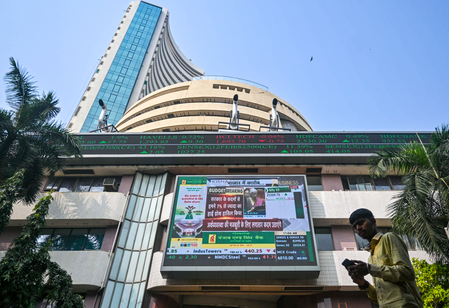
Mumbai, March 26 (IANS) The Indian stock markets will remain closed for trading on Thursday on the occasion of Ram Navami.
According to the stock market holiday calendar, the Bombay Stock Exchange (BSE) and the National Stock Exchange (NSE) will remain shut and no trading will take place.
Moreover, the Equity Segment, Equity Derivative Segment, Currency Derivatives Segments and NDS-RST and Tri Party Repo segments will remain closed for trading.
The Multi Commodity Exchange of India (MCX) declared a trading holiday for the first half, or the morning session. Trading in commodities on all exchanges will begin in the evening session at 5 pm.
The stock exchanges will also observe trading holidays on March 31 for Mahavir Jayanti and April 3 for Good Friday. There will be no stock market holidays in July and August this year.
On Wednesday, stock markets ended higher for the second straight session, supported by easing oil prices and positive global cues.
Investor sentiment improved after US President Donald Trump reiterated that talks are ongoing to bring an end to the conflict in the Middle East.
The benchmark indices saw strong gains, with the Nifty rising 1.72 per cent, or 392.70 points, to close at 23,306.45. The Sensex also advanced 1.63 per cent, or 1,205 points, to settle at 75,273.45.
Going ahead, 23,300–23,350 remains a critical zone. Sustaining above this range could provide short-term stability, while failure to hold may invite renewed selling pressure, a market expert stated.
On the upside, 23,500–23,600 continues to act as a strong supply zone, followed by 23,800. On the downside, 23,000 remains a crucial support backed by strong demand and OI build-up, with 22,900 as the next support in case of weakness, an analyst added.
Analysts said that the market rally was driven by hopes of easing geopolitical tensions and softer oil prices, which boosted investor confidence across sectors.
—IANS
na/
India Post, TRIFED join hands to boost tribal e-commerce, strengthen delivery network
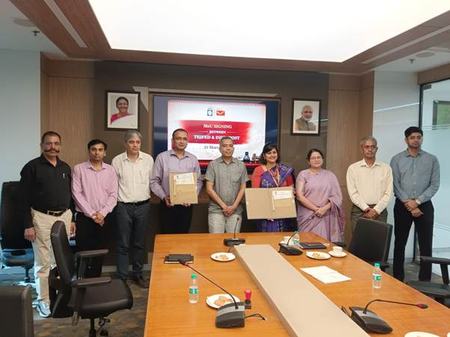
New Delhi, March 25 (IANS) In a major push to support tribal artisans and promote indigenous products, the Department of Posts under the Ministry of Communications on Wednesday signed a Memorandum of Understanding (MoU) with the Tribal Cooperative Marketing Development Federation of India, which works under the Ministry of Tribal Affairs.
The partnership aims to create a strong and cost-effective delivery system for products sold through TRIFED’s online platforms, including the Tribes India e-marketplace.
This move is expected to make it easier for tribal products to reach customers across the country.
Under the agreement, the Department of Posts will handle complete logistics for orders placed online.
With its wide network and strong last-mile delivery system, the postal department will ensure smooth pickup, transport, and delivery of products to buyers, even in remote areas.
Officials said this collaboration will help tribal artisans and entrepreneurs get better access to markets.
Faster and more reliable deliveries are also expected to improve customer experience and increase demand for tribal products.
The Department of Posts will also offer services like shipment tracking, regular reports, and technical integration with TRIFED’s system to ensure seamless order processing. This will make the entire supply chain more efficient and transparent.
To make operations smoother, TRIFED will get access to a “Book Now Pay Later” facility under the National Account system. This will allow easy booking and payment for deliveries through Speed Post.
On its part, TRIFED will ensure that products are properly packed and labelled, and that all order details are shared correctly to avoid delays.
The system will cover product pickups from various regional centres across India, ensuring wider reach.
The government believes this initiative will boost income opportunities for tribal communities by connecting them more effectively to the digital economy.
It is also expected to increase the visibility and demand for authentic tribal products in the market.
The MoU has been signed for an initial period of two years and may be extended after review by both sides.
--IANS
pk
LIC gets Rs 71,000 crore tax demand from income tax department
New Delhi, March 25 (IANS) Life Insurance Corporation of India (LIC) on Wednesday said that it has received a massive tax demand from the Income Tax Department for the financial year 2021–22.
In its disclosure in a regulatory filing, LIC said the Assessment Unit of the tax department has raised a demand of Rs 61,46,71,18,015 as income tax, along with an additional interest amount of Rs 9,53,25,87,935.
The insurer clarified that it plans to challenge this order and will file an appeal before the Commissioner of Income Tax (Appeals) through the legal process available.
The tax demand has arisen due to several adjustments made by the tax authorities during the assessment.
These include treating interim bonuses as income, adding losses from the Jeevan Suraksha Fund as income, and considering negative reserves as income.
The department has also disallowed certain deductions claimed by LIC under Section 80M, along with interest expenses linked to delays in depositing tax deducted at source (TDS).
Despite the large amount involved, LIC stated that the order will not have any material impact on its overall operations or business activities.
The financial implication, it said, is limited to the tax and interest amounts mentioned in the demand.
The disclosure was made in compliance with Regulation 30 of the Securities and Exchange Board of India (Listing Obligations and Disclosure Requirements) Regulations, 2015, which requires listed companies to inform stock exchanges about significant developments.
LIC also confirmed that the information has been shared with stock exchanges and uploaded on its official website.
Following the update, LIC’s shares closed higher on the market. On the NSE, the stock ended at Rs 779.60, gaining Rs 20.90 or 2.75 per cent, while another recorded closing price showed it at Rs 781.10, up Rs 22.40 or 2.95 per cent.
--IANS
pk