
DGCA aims to ease rules for airlines amid rising challenges

New Delhi, March 26 (IANS) The Directorate General of Civil Aviation is working to make regulations easier for airlines while also protecting passenger rights, its chief Faiz Ahmed Kidwai said on Thursday.
Speaking at the Indian Chamber of Commerce Aviation and Tourism Summit here, Kidwai said the regulator is trying to strike a balance between ensuring passenger rights and helping airlines grow.
“India’s aviation market is one of the fastest-growing in the world, but airlines are currently dealing with several operational hurdles,” he noted.
“These include longer flight routes and higher costs due to restrictions on certain airspaces,” Kidwai explained.
Kidwai pointed out that the ongoing tensions in West Asia have added to the pressure, forcing airlines to reduce services to the region.
“At the same time, the closure of Pakistan’s airspace for Indian carriers has made flights longer, increasing fuel consumption and costs,” he stated.
He explained that carrying extra fuel reduces the capacity for passengers and cargo, which in turn affects airline revenues.
“Operating costs go up, and these are big challenges for the sector,” he said, adding that the industry is going through a difficult phase but expressed hope for improvement in the future.
Highlighting the need for policy support, Kidwai said several airlines in India have shut down in the past, and it is important to create a supportive environment for existing carriers.
As part of recent measures, the government has withdrawn fare caps that were imposed after operational disruptions faced by IndiGo in December 2025.
It has also decided that 60 per cent of seats on domestic flights will be offered without additional charges, aiming to benefit passengers.
“Such steps are part of broader efforts by the DGCA and the civil aviation ministry to strengthen the sector while ensuring that both airlines and passengers are supported during challenging times,” Kidwai said.
--IANS
pk
Pakistan’s AI policy faces slow progress 6 months after launch

New Delhi, March 26 (IANS) Six months after Pakistan approved its National Artificial Intelligence Policy, concerns are growing over slow implementation, with key systems and plans still not in place, a report has said.
When Pakistan’s federal cabinet approved the National Artificial Intelligence Policy in July last year, it was seen as a major step towards building a digital future.
The policy aimed to promote responsible use of AI, boost innovation, and prepare the country for a global economy driven by technology and data.
However, six months later, progress on the ground appears limited, according to Maldives Insight report.
While the policy outlined ambitious goals, the systems needed to turn those plans into action are still unclear.
Experts said the delay could affect Pakistan’s ability to keep up in a fast-moving technology space.
The policy had set big targets for 2030, including training one million AI professionals, developing thousands of AI-based projects, and creating locally built AI products.
It also promised scholarships and wider use of AI in sectors like healthcare, education, and governance. But so far, there is little visible progress in achieving these goals.
One of the major challenges has been the lack of coordination between the federal and provincial governments.
Reports suggest that provinces have not responded to requests for input on implementing the policy.
This is a concern because key sectors like education and healthcare fall under provincial control, making their involvement essential.
Another delay has been in setting up the National AI Council, which was supposed to guide and monitor the policy’s implementation.
The council has not yet been formed, and there is currently no clear system to coordinate efforts across different departments, the report stated.
The policy is based on six key areas, including building infrastructure, promoting innovation, and forming global partnerships.
But apart from some awareness-related activities, most areas have seen little movement.
Projects related to infrastructure, sectoral use, and international cooperation are still at an early stage, the report mentioned.
--IANS
pk
Domestic consumption, investments to keep India’s GDP growth above 7 pc in FY27
New Delhi, March 26 (IANS) Strong domestic consumption and rising investments are expected to help India maintain GDP growth above 7 per cent in the next financial year 2026–27, a report said on Thursday.
The data compiled by Assocham noted that India’s GDP is expected to grow by 7.6 per cent in the financial year 2025-26, with growth likely to stay above 7 per cent in FY27 as well.
This steady performance comes even as global economic conditions remain uncertain due to geopolitical tensions, particularly in West Asia.
Assocham President Nirmal K Minda said that consistent government reforms over the years have played a key role in boosting business confidence.
He highlighted that India’s consumption levels are currently at a multi-year high, driven by reforms in taxation and ease of doing business, while investments are also picking up pace alongside demand.
The industry body said India’s economy has become more resilient in recent years, especially after the COVID-19 pandemic.
Despite facing global challenges such as geopolitical conflicts and trade tensions, the country has managed to grow at over 7 per cent for the past three years.
Key economic indicators also reflect this strength. India’s purchasing managers' index (PMI) stood at 56.9 for manufacturing and 58.1 for services in February 2026, placing it ahead of major economies like the United States, China and Germany.
Exports have also shown steady growth, rising around 6 per cent between April and February of FY26 to reach $791 billion, compared to $748 billion in the same period last year.
The growth has been supported by sectors such as engineering goods, electronics, chemicals, gems and jewellery, and agricultural products.
Assocham expressed confidence that exports could cross $870 billion this year, up from $824 billion last year.
However, the report flagged potential risks from ongoing tensions in West Asia. Sectors such as gems and jewellery, pharmaceuticals, and agriculture could face disruptions due to higher logistics costs and delays in shipments.
The Middle East remains a key market for these industries, and any prolonged conflict could affect trade flows.
--IANS
pk
Air India Delhi-London flight returns mid-air after technical snag
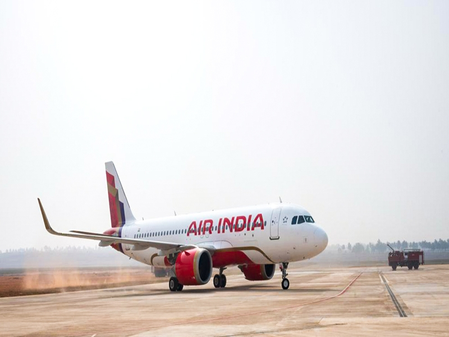
New Delhi, March 26 (IANS) An Air India flight from Delhi to London Heathrow had to return to the national capital on Thursday afternoon after a suspected technical issue was detected mid-air.
The flight, AI111, had taken off from Delhi at around 6 am and remained in the air for nearly seven hours before returning. It safely landed back in Delhi at approximately 12:30 pm.
According to an Air India spokesperson, the aircraft made a precautionary return after a suspected technical issue was noticed during the journey. The airline said that the decision was taken keeping passenger safety as the top priority.
The spokesperson confirmed that the aircraft landed safely in line with the airline’s strict safety standards.
The plane is now undergoing detailed technical checks, which are expected to take some time before further decisions are made.
Air India also expressed regret over the inconvenience caused to passengers due to the unexpected situation.
The airline said it is making all possible efforts to ensure that affected passengers can continue their journey to London at the earliest.
Further details about the nature of the technical issue are awaited as inspections continue.
Meanwhile, last week, an Air India flight that took off from Delhi for Canada's Vancouver returned to the national capital after 9 hours, as the B777 Boeing version that was deployed on the route did not have clearance from Canada’s aviation regulator to fly into the country.
The Air India flight with the call sign AI185 took off from Delhi with a full load of passengers at 12.18 p.m. on March 20 for Vancouver using a Boeing 777-200LR plane, even though Air India has approval from Canadian authorities only for its Boeing 777-300ER planes on this route.
--IANS
pk
India’s real estate PE inflows jump 59 pc in 2025: Report

New Delhi, March 26 (IANS) Private equity investments in India’s real estate sector saw a sharp rise of 59 per cent in 2025, reaching $6.7 billion, driven by strong demand and stable economic conditions, a report said on Thursday.
The report highlighted that India’s economic performance remained strong during the year, with GDP growth reaching 7.8 per cent in the first quarter of FY26 and rising further to 8.2 per cent in the second quarter.
This growth helped position India as the world’s fourth-largest economy, with an estimated size of $4.18 trillion.
Lower inflation also allowed for a reduction in interest rates, which supported investment activity, as per the report.
Most of the private equity inflows were directed towards core real estate segments. The office sector attracted the highest investment at $2.4 billion, accounting for over one-third of total inflows.
This was followed by data centres and residential assets, which saw growing interest from investors due to rising demand for digital infrastructure and premium housing.
Foreign investors continued to dominate the market, contributing around 76 per cent of total investments, or $5.1 billion.
This reflects continued global confidence in India’s real estate sector. Land investments also played a significant role, making up nearly 25 per cent of total inflows.
A large portion of these investments was directed towards office and data centre developments, especially in Mumbai and Pune, which together accounted for the majority share.
The report also noted that investors showed interest in both ready and under-construction projects, with each category attracting nearly equal investment.
This indicates a balanced approach, with investors looking at both income-generating assets and future development opportunities.
Looking ahead, the report said that investment activity is expected to remain steady in 2026, supported by stable economic conditions and consistent policy support.
Continued demand for office spaces, data centres and residential projects, along with ongoing land investments, is likely to ensure a steady supply of high-quality real estate assets in the coming years.
--IANS
pk
India to boost critical mineral exploration, push startup-led mining ecosystem: Dr Jitendra Singh
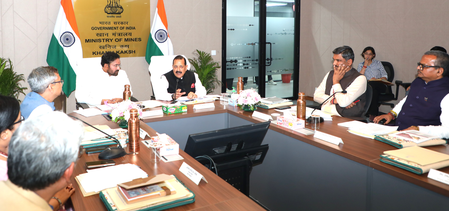
New Delhi, March 26 (IANS) India is stepping up efforts to explore critical minerals, promote startups in mining and build strong domestic supply chains to reduce import dependence, Minister of State Dr. Jitendra Singh said on Thursday.
Speaking at the governing body meeting of the National Mineral Exploration and Development Trust (NMET), the minister highlighted the need to speed up exploration activities, especially for important minerals like lithium, which are crucial for new-age technologies.
“India is in the process of scaling up exploration of critical minerals, creating a startup-driven mining ecosystem and building strong domestic value chains to reduce import dependence,” Singh mentioned.
He said that India must align its exploration efforts with global demand and its own strategic needs.
Ongoing work in regions such as the Siwana belt in Rajasthan and the Salal–Haimna block in Jammu and Kashmir was mentioned as examples, with a push to expand such efforts to more potential areas.
“India must create a conducive environment for Indian companies and startups to enter the mining and critical minerals sector,” the minister stated.
Referring to the success of the biotechnology startup ecosystem, he added that similar institutional support, targeted incentives, and handholding mechanisms can enable innovation in mining technologies and exploration methods.
“Building capacity in private exploration agencies is essential for long-term growth of the sector,” Dr. Singh mentioned.
The government is also focusing on improving project timelines by simplifying approval processes and addressing issues such as forest clearances, which often delay exploration work.
The minister said better coordination among different authorities will be necessary to maintain momentum.
“Faster approvals, better procurement systems, and timely pre-exploration clearances are necessary to maintain momentum in exploration activities,” the minister noted.
“Reducing dependence on imports requires development of end-to-end domestic supply chains, including processing and value addition,” he added.
--IANS
pk
India’s e-commerce hiring surges 35 pc in last 2 years: Report

New Delhi, March 26 (IANS) Hiring in India’s e-commerce and quick commerce sector has grown sharply by 35 per cent over the last two years, with companies increasingly focusing on technology and execution capabilities, a new report said on Thursday.
According to a report by CIEL HR, total hiring demand in the sector rose from 73,320 roles in 2023 to nearly 98,750 roles in 2025.
“This growth is also accelerating a structural shift in hiring, as e-commerce companies move beyond expansion-led recruitment to build deeper capability in platform resilience, fulfilment precision and AI-enabled customer experience,” it said.
Technology and engineering roles have seen the biggest jump, with demand increasing more than three times in the last two years.
Roles such as software developers, DevOps engineers, solution architects and AI and machine learning experts are now at the centre of hiring strategies.
Supply chain and fulfillment demand has risen by 25 per cent over the same period, the report stated.
Positions like warehouse managers, inventory controllers and city operations leads are becoming increasingly important, especially for quick commerce companies as companies expand their reach into smaller cities and focus on improving delivery efficiency.
The report also highlights a growing premium for advanced digital skills. Professionals working in artificial intelligence and machine learning are earning 30 to 40 per cent more than traditional tech roles.
Specialists in areas like generative AI and large language models are also commanding higher salaries, while experienced professionals in fields such as natural language processing and computer vision are earning up to Rs 50 lakh annually.
India’s gig workforce has crossed 12 million in 2025 and is expected to nearly double to 23.5 million by 2030, the report stated.
Among cities, Bengaluru and Hyderabad remain key hubs for technology and engineering roles, while Chennai is emerging as a centre for product and analytics-related jobs.
--IANS
pk
Private fuel retailer Nayara hikes petrol by Rs 5, diesel by Rs 3

New Delhi, March 26 (IANS) Nayara Energy on Thursday increased petrol and diesel prices, becoming one of the first fuel retailers in India to pass on the recent rise in global crude oil prices to consumers.
The company has raised petrol prices by Rs 5 per litre and diesel by Rs 3 per litre, according to sources.
The actual increase may vary slightly across states due to differences in local taxes such as VAT. In some regions, petrol prices have gone up by as much as Rs 5.30 per litre.
The move comes at a time when global oil prices have surged sharply following tensions in the Middle East.
Prices had jumped nearly 50 per cent since late February, after Israel carried out military strikes on Iran, leading to retaliation and fears of supply disruptions.
International crude prices recently touched around $119 per barrel before easing to about $100.
Despite this surge, state-owned oil marketing companies such as Indian Oil Corporation, Bharat Petroleum Corporation Limited and Hindustan Petroleum Corporation Limited have not changed the prices of regular petrol and diesel, which have remained largely unchanged since April 2022.
These companies control about 90 per cent of the fuel retail market in India.
India depends heavily on imports for its energy needs, sourcing about 88 per cent of its crude oil from abroad.
A significant portion of these supplies passes through the Strait of Hormuz, a key shipping route now under threat due to rising geopolitical tensions in the region.
Meanwhile, earlier in the day, the government said that all retail outlets are operating normally with sufficient petrol and diesel stocks to meet national demand.
It added that a rapid rollout of PNG connections is currently underway across the country.
All refineries are operating at a high capacity with adequate crude inventories. While panic buying did occur in some areas due to rumours, the government has confirmed that all retail outlets are operating normally.
--IANS
pk
Nokia appoints Samar Mittal, Vibha Mehra to lead India business from April 1
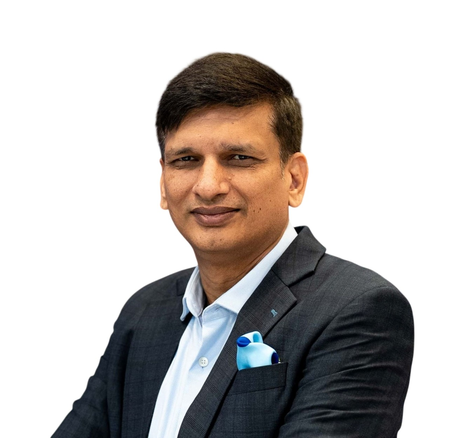
New Delhi, March 26 (IANS) Nokia on Thursday announced key leadership changes in India, appointing Samar Mittal as India Country Business Leader and Vibha Mehra as India Country Manager, effective April 1.
The move is part of the company’s renewed strategy to strengthen its presence and sharpen its business focus in the country.
In his new role, Samar Mittal will lead Nokia’s business strategy in India, focusing on expanding the company’s partnerships with telecom operators, as well as players in artificial intelligence, cloud services, and critical enterprise sectors.
He will also work on identifying new growth opportunities and aligning Nokia’s offerings with the changing needs of the Indian market.
Vibha Mehra, on the other hand, will oversee Nokia’s overall presence in India. She will handle communications, government relations, and public engagement, while also guiding the company’s corporate social responsibility initiatives and internal people strategy.
Her role will be key in strengthening Nokia’s reputation as a trusted technology company in India.
Both leaders bring extensive experience to their new roles. Mittal has nearly three decades of experience in the telecom and IT sectors and has previously led Nokia’s Cloud and Network Services business in the Middle East and Africa.
Mehra has over 26 years of experience and has worked with companies like Microsoft, Intel and Tata Consultancy Services, most recently heading government relations for Nokia in the Asia Pacific region.
The company said both leaders will work closely to drive its strategy in India and support its goal of advancing connectivity and digital growth.
The new leadership structure reflects Nokia’s long-term commitment to India and its aim to play a bigger role in the country’s digital and technological development.
“This renewed leadership model reflects Nokia’s long-term commitment to India and its ambition to play a leading role in shaping a more digital, sustainable, and efficient future for the country,” the company stated.
--IANS
pk
India credit growth surges 61 pc in FY26: Report
New Delhi, March 26 (IANS) India’s credit growth has seen a sharp jump in FY26, rising 61 per cent, driven mainly by strong demand from retail borrowers and MSMEs, a new report showed on Thursday.
Credit growth in India has accelerated significantly in FY26, with total credit flows rising to Rs 25.1 lakh crore, nearly matching deposit mobilisation of Rs 26.1 lakh crore, a report by Yes Bank said.
The report noted that strong demand across retail, MSME and infrastructure sectors has been the key driver of this growth.
However, deposit growth has been slowing since FY24, creating some pressure on liquidity in the banking system.
As a result, the credit-deposit (C/D) ratio has climbed to 82.4 per cent, its highest level in a decade.
Retail loans continue to dominate credit growth. Personal loans have seen their share rise from 29 per cent to 33 per cent in recent years, supported by tax relief measures and GST-related benefits that have boosted household incomes.
Within this segment, vehicle loans have emerged as the biggest driver, overtaking housing loans since the third quarter of FY26.
There is also a noticeable shift towards secured lending as growth in unsecured loans has slowed.
The report also highlighted a recovery in industrial credit, led by MSMEs. The segment now accounts for nearly one-third of total industrial credit and has seen strong growth due to government support, including credit guarantee schemes and revised MSME definitions.
Micro and small enterprises alone added Rs 2.38 lakh crore in loans during the year, while medium enterprises contributed Rs 63,000 crore, the report said.
Looking ahead, the report cautioned that credit growth may slow in FY27 due to several risks.
Higher oil prices, weaker exports and rising food inflation could impact economic activity and reduce demand for loans.
At the same time, the fading impact of GST benefits may also weigh on growth, the report stated.
--IANS
pk