
PNG users can now surrender LPG connection from home, no dealer visit needed: Secretary
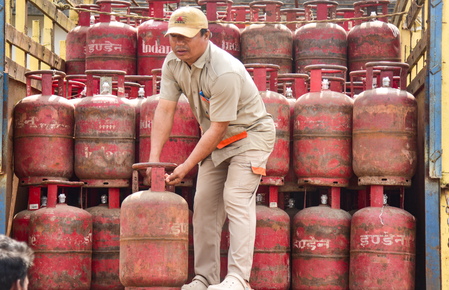
New Delhi, March 27 (IANS) Consumers who have switched to piped natural gas (PNG) can now surrender their LPG connection from home without visiting a dealership, using just their registered mobile number or LPG ID, Secretary Neeraj Mittal said on Friday.
The Ministry of Petroleum and Natural Gas (MoPNG) has launched a new digital platform, MyPNG-D Portal, to make it easier for PNG users to give up their LPG connections online.
Sharing the update on social media platform X, Neeraj Mittal, Secretary at the ministry, said that consumers who have already switched to PNG no longer need to visit LPG dealerships to surrender their connections.
The process can now be completed from home using either a registered mobile number or LPG ID.
“PNG consumers can surrender LPG from at home. You don’t need to visit the dealership. Just need you registered mobile or your LPGID,” Mittal said.
The move is aimed at simplifying the process and encouraging more consumers to voluntarily give up their LPG connections, which can then be made available to households that still do not have access to PNG.
According to the secretary, 1,797 consumers have already surrendered their LPG connections within a day of the portal’s launch.
He thanked these users for their participation and urged more people to come forward and support the initiative.
“1797 responsible citizens have surrendered theirs since yesterday! A big thanks to them,” he stated.
“You too surrender your LPG connection and help those who don’t have access to PNG,” he added.
The government believes that such steps will help improve access to cleaner cooking fuel and ensure better distribution of LPG connections, especially for those who are still dependent on traditional fuel sources.
--IANS
pk
ONDC’s DigiHaat brings artisans, farmers onto digital commerce grid

New Delhi, March 27 (IANS) Open Network for Digital Commerce’s (ONDC) new platform DigiHaat brings India’s artisans, farmers and small producers onto the digital commerce grid, as the government pushes to formalise the country’s vast informal economy, it was announced on Friday.
Launched by the Department for Promotion of Industry and Internal Trade (DPIIT), DigiHaat is a dedicated buyer-side application that directly connects rural and underserved seller communities with online markets.
Unlike other apps on the ONDC network that are privately run, DigiHaat represents ONDC’s own marketplace presence and also acts as a testing ground for new features before they are expanded across the network.
The platform already hosts a wide range of products, including handicrafts, agricultural goods, packaged foods and lifestyle items.
It has a strong focus on women entrepreneurs and self-help group (SHG)-linked producers from remote regions.
Sellers onboarded so far include block-print textile makers from Jaipur, bronze artisans from Bastar, shawl producers from Kashmir and organic farmer-producer organisations from Sikkim.
In a unique move, DigiHaat has also integrated mobility services into its platform. Ride-hailing service Namma Yatri is now live on the app, along with Bharat Taxi, which operates mainly in Tier 2 and Tier 3 cities.
More mobility players are expected to join the network in the coming months, according to the official statement.
To make digital onboarding easier, a Beta AI toolkit is being developed for small and rural sellers.
The suite includes vernacular cataloguing tools that allow sellers to operate in regional languages, automated product listing from photographs and logistics intelligence aimed at reducing delivery failures and returns.
The government has set an ambitious target to bring nearly 10 crore small producers -- including farmers, weavers, dairy operators, tribal enterprises and artisans -- onto the platform.
The broader goal is to boost incomes and bring these communities into the formal financial system, rather than focusing only on increasing online transactions.
ONDC, which operates under DPIIT, was created to build an open and decentralised alternative to traditional e-commerce platforms.
--IANS
pk
Japan commits Rs 16,420 crore ODA loan to India for metro, healthcare, agri projects
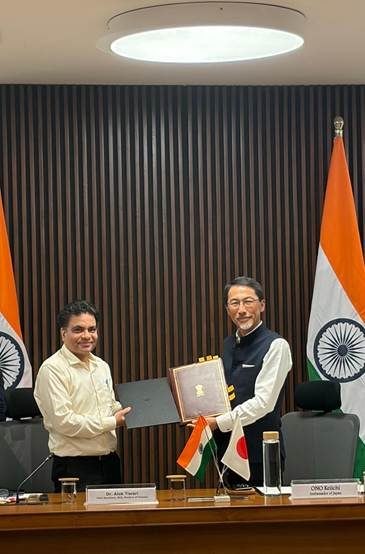
New Delhi, March 27 (IANS) The Japan government has committed an Official Development Assistance (ODA) loan of JPY 275.858 billion, which is around Rs 16,420 crore, to India for four major projects across urban transport, healthcare and agriculture sectors, Ministry of Finance said on Friday.
The funding will support key infrastructure and development projects in states like Karnataka, Maharashtra and Punjab.
A major portion of the loan will go towards expanding metro rail networks in big cities. The Bengaluru Metro Rail Project (Phase 3) will receive JPY 102.480 billion to improve urban transport in Bengaluru.
The project aims to ease rising traffic congestion, improve connectivity and reduce pollution by promoting the use of public transport.
“This shall promote regional economic development, improve urban environment and eventually will mitigate climate change, through relief of traffic congestion and decrease of pollution caused by increasing motor vehicles,” the ministry said.
Similarly, the Mumbai Metro Line 11 Project will get JPY 92.400 billion to expand the metro network in Mumbai.
The project is expected to help manage increasing traffic demand, improve urban mobility and support environmental sustainability by reducing vehicle emissions.
In the healthcare sector, JPY 62.294 billion has been allocated for strengthening tertiary healthcare and medical education systems in Maharashtra.
The project will focus on building hospitals, medical colleges and nursing schools to improve access to quality healthcare and support the goal of universal health coverage in India.
Another JPY 18.684 billion will be used for promoting sustainable horticulture in Punjab.
The project aims to help farmers shift towards high-value crops, improve infrastructure and strengthen the agricultural value chain, which is expected to boost farmers’ income and support environmentally sustainable development.
India and Japan share a long-standing partnership in development cooperation, which dates back to 1958.
Economic cooperation has remained a key pillar of their relationship, and this latest funding further strengthens their strategic and global partnership.
--IANS
pk
India’s regional startup ecosystems expand as funding matures: Report

New Delhi, March 27 (IANS) India’s startup landscape is expanding beyond its primary hubs, with over 68,000 startups now headquartered in emerging regional centres, a report said on Friday.
Further, a maturing funding ecosystem producing deeper, conviction‑led capital and occasional large outcomes is lending support to the country's startup landscape, Tracxn said in the report.
Cities such as Jaipur, Surat, Indore, Coimbatore, Kochi, and Lucknow account for a higher share of venture creation, indicating that ecosystem growth is being driven by the deepening of a few regional nodes, the research firm said.
Sectoral activity in these ecosystems remains largely demand-led, with strong representation in edtech, internet first media, fashion tech, and online grocery platforms. These sectors align closely with regional consumption patterns, industrial strengths, and relatively lower capital intensity compared with enterprise software and deep-technology ventures that typically dominate larger startup hubs.
Jaipur, Indore, Kochi, and Surat continue to evolve for an increasingly important role in shaping India’s broader innovation landscape, the firm predicted.
However, the report maintained that with funding and exits concentrated within a relatively small number of companies and cities, though startup formation has expanded geographically.
Funding participation has also matured over the past decade, even as capital deployment remains structurally concentrated. Startups outside urban hubs recorded around 2,200 funding rounds and attracted approximately $3.2 billion in investment from 2016-2025.
“Over time, median round sizes have increased significantly, signalling a transition toward conviction-led investment strategies. Investors are increasingly backing fewer startups with stronger execution visibility, resulting in a funding environment characterised by rising capital depth alongside narrowing participation,” the report said.
Seed funding expanded from $27 million in 2016 to $167 million in 2025, underscoring the role of emerging ecosystems as consistent startup formation engines, according to analysts.
Mega rounds exceeding $100 million remain rare and strategically important, proving that execution-ready platforms can operate at national or global scale.
In early 2026, two startups headquartered outside the primary clusters, achieved unicorn status demonstrating large-scale outcomes from regional ecosystems, often through longer and more capital-efficient growth trajectories. Exit activity has also progressed gradually, with 102 acquisitions and 33 IPOs recorded between 2016 and 2025.
“While startup formation remains robust and geographically diversified, the next stage of development will depend less on expanding company counts and more on strengthening mid-stage funding pathways, talent networks, and institutional support systems,” it noted.
—IANS
aar/rad
Jefferies rejigs key portfolios, removes HDFC Bank; bank shares slip 3 pc

New Delhi, March 27 (IANS) Major global leading brokerage Jefferies has exited its holdings in HDFC Bank and reduced its India exposure across key portfolios, following the resignation of the lender’s part-time chairman Atanu Chakraborty.
In its latest “Greed & Fear” report, Jefferies strategist Chris Woods said the firm has removed HDFC Bank from its Asia ex-Japan long-only equity portfolio, global long-only equity portfolio, and international long-only equity portfolio (ex-USA). No specific reason, however, was provided for the exit.
The brokerage has, instead, added HSBC with a 4 per cent weighting in these portfolios, replacing HDFC Bank. The move has also resulted in a marginal reduction in India’s overall weightage.
Jefferies further indicated changes in its Asia Pacific ex-Japan relative-return portfolio, reducing exposure to India and Australia by two percentage points each, while increasing Taiwan’s weight by four percentage points.
India’s weight in Jefferies’ Asia Pacific ex-Japan allocation currently stands at 13 per cent, slightly above the MSCI benchmark.
The developments come after HDFC Bank disclosed on March 18 that its part-time chairman Atanu Chakraborty had resigned, citing differences with the bank over “values and ethics”. The lender subsequently appointed Keki Mistry as interim part-time chairman.
Earlier, the bank has appointed law firms to review the exit of Chakraborty.
In his resignation letter, Chakraborty referred to certain practices within the bank that were “not in congruence” with his personal values, without elaborating further.
Analysts flagged potential sentiment concerns. Anuj Singla of JPMorgan said that while no specific misconduct has been alleged, the perception could weigh on investor sentiment and increase governance risk premium on the stock.
Reports also suggest that the Reserve Bank of India (RBI) may be examining the circumstances surrounding the resignation.
Shares of HDFC Bank declined as much as 3 per cent to Rs 758 on the BSE as of 12:30 am. The banking stock has declined about 14 per cent in the past one month.
--IANS
ag/na
Auto industry growth to moderate in FY27 after strong policy‑led momentum this fiscal
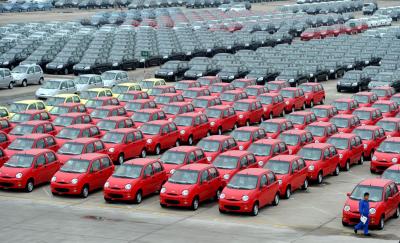
New Delhi, March 27 (IANS) India’s automobile sector growth is likely to moderate in FY27 after a strong, policy‑led expansion in FY26, with demand having benefited from GST cuts, improved affordability and resilient economic activity, a report said on Friday.
The report from ICRA said GST changes primarily drove the demand, by improving affordability in two‑wheelers and enhancing fleet economics in commercial vehicles.
The commercial vehicle segment led the upcycle aided by GST rate cuts, higher freight movement and infrastructure activity, it said.
The ratings agency noted commercial vehicle wholesale volumes rose 23.8 per cent year‑on‑year in February 2026, while domestic wholesale volumes grew 12.5 per cent in the first 11 months of FY26.
Retail volumes remained robust, increasing 28.9 per cent YoY in the previous month, with medium and heavy commercial vehicles seeing strong growth. Light commercial vehicles (LCVs) continued to benefit from improved last-mile freight activity and higher sensitivity to GST-led cost reductions.
It predicted the segment to exceed its earlier growth estimates of 7-9 per cent for FY26, before moderating to 4-6 per cent growth in FY2027.
“While demand momentum remains healthy, elevated funding costs and a preference for pre-owned vehicles, particularly in the LCV segment, could act as near-term constraints,” the report said.
The two-wheeler (2W) segment saw a broad-based recovery, with volumes likely to reach a multi-year high in FY26, driven by improving rural demand, better financing availability and GST-led affordability gains.
The ratings agency forecasted domestic wholesale volumes to grow by around 9 per cent in FY26, before moderating to 3-5 per cent in FY27, reflecting a higher base. Even so, underlying demand is expected to remain supported by replacement cycles and healthy rural incomes, the report maintained, stressing GST rate cuts increasing affordability for two-wheelers below 350 cc.
“Growth is expected to normalise in FY27, given the higher base and emerging challenges from global uncertainties and input cost pressures. But investments in electrification, steady replacement demand and improving rural incomes will support the sector over the medium term,” it forecasted.
—IANS
aar/rad
Gold, silver surge on safe-haven demand amid West Asia tensions

Mumbai, March 27 (IANS) Gold and silver prices surged on Friday, driven by safe-haven demand amid persistent uncertainty and fading hopes of de-escalation in the West Asia conflict.
Gold futures for April 2 delivery jumped as much as 2.27 per cent, or Rs 3,167, to hit an intraday high of Rs 1,42,660 per 10 grams on the Multi Commodity Exchange (MCX) around 11:20 AM. The yellow metal was later trading at Rs 1,42,500, up Rs 3,007 or 2 per cent.
During the session, gold touched an intraday low of Rs 1,40,287, still reflecting gains of 0.56 per cent or Rs 794.
Silver futures (May 5) also rallied sharply, rising up to 3.65 per cent to touch an intraday high of Rs 2,27,901 per kg on the MCX. The white metal hit a low of Rs 2,23,515 earlier in the session and was trading at Rs 2,27,799, up Rs 7,925 or around 3 per cent at the last count.
Analysts said the rise in precious metals was supported by geopolitical tensions, which have kept risk sentiment fragile and boosted demand for safe-haven assets.
In the international market, COMEX gold was trading in the $4,400–$4,500 range, holding above key short-term moving averages, though the broader trend remains volatile.
"A sustained move above $4,600 could push prices towards $4,750, while a break below $4,300 may trigger fresh weakness," according to them.
On the domestic front, MCX gold continues to hold above the Rs 1,40,000 support level, indicating underlying strength despite intraday volatility.
The analysts see immediate resistance at Rs 1,45,000, with a breakout potentially driving prices towards Rs 1,48,000–Rs 1,50,000.
Similarly, COMEX silver is holding above the $66–$68 support zone, with resistance seen around $72–$74. A sustained move above $75 could extend gains towards $79–$80, according to experts.
MCX silver remains firm above Rs 2,24,000, with immediate resistance at Rs 2,30,000. A breakout above this level could push prices towards Rs 2,37,000–Rs 2,40,000, while a fall below Rs 2,18,000 may trigger profit booking.
Analysts added that precious metals are likely to remain volatile in the near term, with global macroeconomic cues and geopolitical developments continuing to drive price movements.
Meanwhile, global oil prices declined more than 2 per cent, with Brent crude futures trading around $100 per barrel.
--IANS
ag/rad
Crude oil drops over 5 pc this week, hovers above $100 amid global uncertainty

Mumbai, March 27 (IANS) Global crude oil prices remained highly volatile this week, with both the key benchmarks trading in negative on Friday.
Brent crude futures fell as much as 2.29 per cent to $105.53 per barrel as of 9:40 am, while US WTI crude declined 2.54 per cent to $92.08.
So far this week, Brent crude has dropped over 5 per cent, hovering near the $100 mark, while WTI crude has also fallen nearly 5 per cent to trade around $90.
Meanwhile, the Indian rupee weakened by 28 paise to hit an all-time low of 94.24 against the US dollar in early trade.
Amid the uncertainty, safe-haven demand pushed precious metals higher. Gold contracts for April 2 were trading at Rs 1,40,979, up Rs 1,486 or 1.07 per cent as of 10 am. Silver futures (May 5) were at Rs 2,24,097, up Rs 4,223 or 1.92 per cent.
The decline across commodities and equities comes amid continued uncertainty over the West Asia conflict, with no clear signs of de-escalation.
Market sentiment remains fragile after US President Donald Trump said the pause on attacks on Iran’s energy infrastructure would be extended into April, adding that talks with Tehran were progressing “very well”. However, an Iranian official termed a US proposal to end the conflict as “one-sided and unfair”.
Iran has also not confirmed any ongoing talks with the US.
Global equity markets remained under pressure, with US indices ending lower. The S&P 500 fell 1.74 per cent, while the Nasdaq declined 2.38 per cent. Asian markets followed suit, with Japan’s Nikkei slipping over 1 per cent and South Korea’s Kospi dropping around 3 per cent.
Back home, domestic equity benchmarks also opened in the red. The Sensex declined over 400 points to 74,883.79 in early trade, while the Nifty opened at 23,173.55, down 132.90 points or 0.57 per cent.
--IANS
ag/na
Sensex, Nifty slip in early trade amid global sell-off and oil volatility

Mumbai, March 27 (IANS) Domestic equity benchmarks opened sharply lower on Friday, tracking weak global cues and elevated Brent crude prices amid fading hopes of a resolution to the Iran conflict.
Nifty opened at 23,173.55, down 132.90 points or 0.57 per cent, while the Sensex fell around 400 points to 74,883.79 in early trade.
Broader markets also remained under pressure, with midcap and smallcap indices traded lower.
Sectorally, most indices traded in the red, led by realty, metal, PSU banks and auto stocks, which fell up to 1 per cent. Financials and consumer durables also witnessed selling pressure.
However, IT and oil and gas stocks bucked the trend and posted modest gains.
Among heavyweights, stocks such as HDFC Bank and Bajaj Finance were among the top laggards.
Market sentiment remained cautious amid ongoing geopolitical tensions. US President Donald Trump said the pause on attacks on Iran’s energy infrastructure would be extended, though uncertainty persists after Iran termed a US proposal “one-sided”.
Global markets also reflected a risk-off mood. US indices ended sharply lower, with the S&P 500 down 1.74 per cent and Nasdaq falling 2.38 per cent. Asian markets followed suit, with Japan’s Nikkei declining over 1 per cent and South Korea’s Kospi dropping around 3 per cent.
Crude oil prices remained volatile, although they eased slightly, with Brent crude falling 2.29 per cent to $105.53 per barrel, while WTI crude declined 2.54 per cent to $92.08.
According to analysts, markets are likely to remain volatile amid global uncertainties. Immediate support for Nifty is seen in the 23,050–23,000 zone, while resistance is placed around 23,450–23,500.
Foreign institutional investors (FIIs) continued to remain net sellers, while domestic institutional investors (DIIs) provided support to the market.
Notably, Indian markets resumed trading on Friday after a holiday on Thursday on account of Ram Navami.
--IANS
ag/na
Apple adds new partners to its American Manufacturing Programme

New Delhi, March 26 (IANS) Apple on Thursday announced new members of its American Manufacturing Programme (AMP), expanding the company’s long-standing commitment to bring even more advanced manufacturing and critical component production to the United States.
Apple is working with Bosch, Cirrus Logic, TDK, and Qnity Electronics to manufacture essential materials and components in the U.S. for Apple products sold around the world, creating jobs and strengthening America’s manufacturing capabilities. Apple is planning to spend $400 million for these new programs through 2030.
“At Apple, we believe in the power of American innovation and manufacturing, and we’re proud to partner with even more companies to produce critical components and cutting-edge materials for our products right here in the U.S.,” said Tim Cook, Apple’s CEO.
“Today, we’re joining with world-class partners like Bosch, Cirrus Logic, TDK, and Qnity Electronics to further expand Apple’s U.S. supply chain through our American Manufacturing Program. This is another powerful example of what is possible when we invest in American ingenuity, and we’re excited to build the future together,” Cook added.
Today’s expansion accelerates the momentum of AMP, a key part of Apple’s $600 billion, four-year commitment to US manufacturing and innovation.
The programme’s initial partners, including Amkor, Applied Materials, Broadcom, Coherent, Corning, GlobalFoundries, GlobalWafers America, MP Materials, Samsung, and Texas Instruments, are already achieving major milestones to expand advanced manufacturing in America and strengthen Apple’s domestic supply chain.
Longtime Apple supplier TDK will manufacture sensors for Apple in the U.S. for the very first time.
The two companies have collaborated for over 30 years on various technologies, including advanced tunnel magnetoresistance (TMR) sensors that support key iPhone features like camera stabilisation.
TDK’s US facility will supply TMR sensors in devices shipped all over the world, and will increase the volume of chips that Apple will source from U.S. silicon supply chains.
Apple, Bosch, and TSMC will work together to produce integrated circuits (ICs) for Bosch’s new sensing hardware at TSMC Washington in Camas, Washington. These ICs are essential for features like Crash Detection, Activity tracking, and elevation in Apple products.
Apple is also working with Cirrus Logic and GlobalFoundries to establish new semiconductor process technologies at GlobalFoundries’ facility in Malta, New York. GlobalFoundries’ newest silicon process will be available in the U.S. for the first time to enable key technologies for Apple products. This collaboration enables Cirrus Logic to develop mixed-signal solutions for a number of Apple applications, including advanced ICs to power Face ID systems.
Qnity Electronics and HD MicroSystems will provide cutting-edge materials and technologies essential for semiconductor manufacturing and advanced electronics. This collaboration will pioneer innovations for high-performance computing and AI, bolstering the domestic production of critical components and strengthening America’s leadership in advanced technology.
Apple’s commitment to supporting American jobs and manufacturing includes the Apple Manufacturing Academy, launched last fall in Detroit to provide small- and medium-sized manufacturers hands-on training in AI, automation, and smart manufacturing. The academy has already supported nearly 150 businesses through dozens of free in-person training sessions and virtual programming.
--IANS
na/