
Sensex, Nifty extend gains on softer oil prices, global cues

Mumbai, March 25 (IANS) Indian stock markets ended higher for the second straight session on Wednesday, supported by easing oil prices and positive global cues.
Investor sentiment improved after US President Donald Trump reiterated that talks are ongoing to bring an end to the conflict in the Middle East.
The benchmark indices saw strong gains, with the Nifty rising 1.72 per cent, or 392.70 points, to close at 23,306.45.
The Sensex also advanced 1.63 per cent, or 1,205 points, to settle at 75,273.45.
“Going ahead, 23300–23350 remains a critical zone. Sustaining above this range could provide short-term stability, while failure to hold may invite renewed selling pressure,” a market expert stated.
“On the upside, 23500–23600 continues to act as a strong supply zone, followed by 23800. On the downside, 23000 remains a crucial support backed by strong demand and OI build-up, with 22900 as the next support in case of weakness,” an analyst added.
Tech Mahindra, Power Grid and TCS was major laggards on Sensex. On the upside, Bajaj Finance, Titan, IndiGo, Trent, Mahindra and Mahindra was among top gainers on the 30-share pack.
Broader markets performed even better than the main indices. The Nifty MidCap index gained 2.30 per cent, while the SmallCap index jumped 2.59 per cent.
Among sectors, consumer-focused stocks led the rally, with the Nifty Consumer Durables index emerging as the top gainer.
Real estate and public sector bank stocks also saw solid gains, outperforming most other sectors during the session.
However, the IT sector lagged behind the broader market, with the Nifty IT index ending lower compared to its peers.
Analysts said that the market rally was driven by hopes of easing geopolitical tensions and softer oil prices, which boosted investor confidence across sectors.
“The primary trigger for improved sentiment was emerging signals of a potential pause in the ongoing US-Iran conflict,” a market expert mentioned.
--IANS
pk
Founder Sunil Bharti Mittal to step down as Airtel Africa Chairman in July
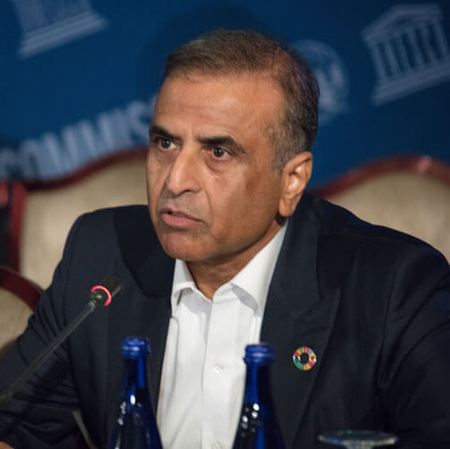
New Delhi, March 25 (IANS) Major telecom firm Bharti Airtel on Wednesday said that its founder and Chairman Sunil Bharti Mittal will step down as Chairman of Airtel Africa at the conclusion of the company’s annual general meeting (AGM) in July 2026.
The telecom company also announced that Gopal Vittal will be appointed as Non-Executive Chairman of Airtel Africa with effect from the same date.
Mittal has served as Chairman of Airtel Africa since its listing in 2019, and the Board acknowledged his leadership and contribution during the period, it said.
Gopal Vittal, currently a non-executive director of Airtel Africa and a seasoned telecom industry leader, has been nominated by the controlling shareholder in line with the company’s existing agreements.
In addition, Shravin Bharti Mittal will take over as Deputy Chairman, ensuring continuity with the promoter group and acting as a key link between the Board, Airtel Money operations, and the company’s headquarters in Dubai.
Separately, Annika Poutiainen will retire from the Board at the conclusion of the July AGM after serving for more than seven years.
Mittal said it had been an honour to lead Airtel Africa and expressed confidence in the company’s strategy and leadership team going forward.
"I want to extend my thanks to the Board of Airtel Africa for their support to me as Chairman. Airtel Africa has a solid strategy and an outstanding leadership team in place, the strength of which is evident in recent results, so I am confident that now is the time for me to step aside as Chair," the chairman said.
"It has been an honour to lead Airtel Africa in this capacity, and I know the company will continue to prosper and to advance the transformative power of connectivity to the millions of customers we serve across 14 African countries. I have offered my services and will be available to support the company as requested by the Chair," he added.
The company’s senior independent director Tsega Gebreyes also acknowledged Mittal’s role in shaping Airtel Africa’s growth journey, from its acquisition phase to its listing and current position in the FTSE 100 index.
--IANS
ag/pk
Rs 150 crore fraud detected at Kotak Mahindra Bank’s Panchkula branch, bank orders probe
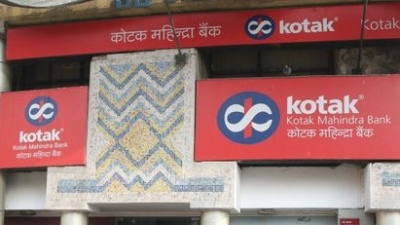
New Delhi, March 25 (IANS) A major financial irregularity has come to light in Haryana, where the Panchkula Municipal Corporation has found discrepancies of over Rs 150 crore in its fixed deposits with Kotak Mahindra Bank.
The development comes just a month after a Rs 590-crore fraud was reported at the Chandigarh branch of IDFC First Bank.
According to NDTV Profit report, the civic body had invested funds in fixed deposit receipts (FDRs) at the bank’s Sector 11 branch.
However, the issue surfaced when the corporation requested the maturity amount of a Rs 58-crore deposit to be transferred into its account.
While bank records initially showed that the transfer had been completed, the money never reached the corporation.
A closer investigation revealed that the bank statement itself was fake, and the funds had allegedly been diverted into fraudulent accounts.
Officials later found that all the fixed deposits linked to this case were forged and that no actual money was present in the accounts, as per the report.
Reacting to the development, Kotak Mahindra Bank said it is cooperating with authorities and has started a detailed reconciliation of the fixed deposits and related accounts after being approached by the municipal corporation.
Officials said the total discrepancy could be over Rs 150 crore, and further details are expected to emerge as the probe progresses, the report stated.
Meanwhile, last month, another private lender IDFC First Bank had disclosed a Rs 590 crore fraud at its Chandigarh branch.
In an exchange filing on February 22, the private lender said that it will pursue strict disciplinary, civil and criminal action against the employees and other external individuals responsible, in accordance with applicable law.
However, on the same day, the Haryana Government de-empanelled IDFC First Bank and AU Small Finance Bank from handling government business with immediate effect after an alleged fraud of around Rs 590 crore came to light.
--IANS
pk
Govt grants 3-year tax relief on cooperative dividend income
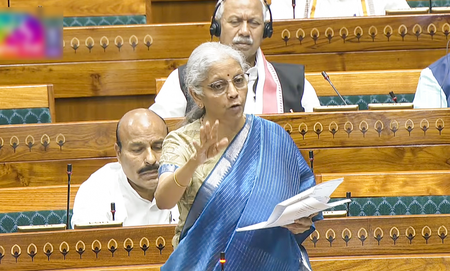
New Delhi, March 25 (IANS) The government on Wednesday announced a three-year tax exemption on dividend income for national cooperative federations, a move aimed at benefiting small members and strengthening the cooperative sector.
Finance Minister Nirmala Sitharaman said in the Lok Sabha that the tax relief will help boost incomes of small cooperative members and encourage greater participation in the sector.
FM Sitharaman stressed that cooperatives, along with micro, small and medium enterprises (MSMEs) and farmers, play a key role in creating jobs and supporting economic growth in the country.
Speaking during the discussion on the Finance Bill, FM Sitharaman said empowering MSMEs, farmers and cooperatives is essential for inclusive development.
“These sectors form the backbone of India’s economy, especially in rural areas, and help generate employment across industries and regions,” Finance Minister Sitharaman noted.
The finance minister also highlighted a new provision in the Finance Bill related to data centre services.
Under the safe harbour rule, resident Indian companies providing such services to related foreign entities will be allowed a 15 per cent margin on costs.
“This will ensure that operations in India remain genuine and profitable, while discouraging the creation of shell entities with no real business activity,” FM Sitharaman stated.
Addressing concerns over government finances, the finance minister said that in some cases, the Centre has spent more than it collected through cess and surcharges, indicating that funds are being directed towards public welfare.
FM Sitharaman further announced that penalties for technical defaults will now be converted into fixed fees.
“This step is expected to reduce uncertainty for businesses and make compliance simpler,” FM Sitharaman stated.
In another measure, the government has rationalised passenger allowances to reduce disputes at airports, making the process smoother for travellers.
The finance minister said the measures are aimed at strengthening key sectors, improving ease of doing business, and ensuring that economic growth benefits a wider section of society.
--IANS
pk
India’s smart TV shipments flat in 2025, larger screens and QLED gain share
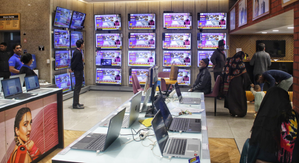
New Delhi, March 25 (IANS) India’s smart TV shipments remained broadly flat (year‑on‑year) in 2025 as a weak first half was offset by stronger GST‑led festive demand in the latter part of the year, with Q4 shipments growing 10 per cent on-year, a report said on Wednesday.
The report from Counterpoint Research said the television priced in Rs 40,000–Rs 50,000 band outperformed the broader market as consumers increasingly opted for better‑equipped televisions.
Larger screen sizes continued to gain share, with 43‑inch models recording the highest shipments and models with screen sizes 55‑inch and above driving growth.
Quantum Dot LED (QLED) shipments nearly doubled year‑on‑year in 2025 while MiniLED recorded the highest growth from a low base, the report further said.
QLED shipments expanded their presence across price tiers, driven by wider availability in key sizes such as 43” and 55” and stronger penetration in mid-range segments, the report noted. Meanwhile, MiniLED’s growth was partly due to its low base but it reflects brands efforts to scale up portfolios and position it as a more affordable alternative to OLED.
The research firm said that market’s H1 weakness stemmed from softened consumer sentiment leading to cautious discretionary spending, with consumers delaying upgrades due to the absence of strong promotional events.
"However, the market improved in H2, supported by festive offers, better financing schemes and improved affordability of larger-screen televisions, further aided by the GST rate cut on TVs with screen sizes 32‑inch and above," the report said.
“India’s smart TV market remained largely flat in 2025, but we expect steady growth in 2026 as replacement cycle kicks in for pandemic‑era purchases and affordability improves for larger screens,” said Principal Research Analyst Anshika Jain said.
A potential rise in DRAM (Dynamic Random-Access Memory) and NAND prices will increase the bill of materials for feature-rich TVs, putting pressure on margins and limiting aggressive pricing in the near term, Jain added.
—IANS
aar/na
STT hike may have limited impact on futures and options activity, say experts
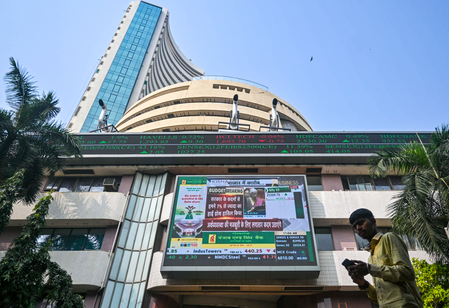
Mumbai, March 25 (IANS) The proposed hike in Securities Transaction Tax (STT) on derivatives, effective from April 1, is likely to have a limited short-term impact on trading activity, with long-term market behaviour expected to remain largely unchanged, experts said.
They noted that the increase in STT will raise trading costs, particularly for retail participants and high-frequency traders, potentially leading to a temporary decline in futures and options (F&O) volumes.
“Higher transaction costs could weigh on retail participation in the near term, though past trends suggest that activity typically stabilises after an initial dip,” market experts said.
At the same time, the overall derivatives segment is expected to remain resilient, with trading preferences likely to shift rather than volumes witnessing a sustained decline.
“Historical patterns indicate that regulatory changes have not materially impacted overall market turnover, although participants may adjust strategies to optimise costs,” they added.
So far in March, the total number of index options contracts stood at 234 crore, compared with 259 crore in November 2025, 299 crore in December 2025, and 356 crore in January 2026, before easing marginally to 355 crore in February.
Experts further said that higher costs in futures trading could push participants towards options-based strategies.
“Traders may increasingly use options structures, such as synthetic positions, to replicate futures exposure at a lower tax cost,” they noted.
Moreover, brokerages may witness short-term pressure on revenues due to softer volumes and compressed commissions, while foreign investor activity in derivatives could moderate slightly, favouring long-only strategies.
However, the government is expected to benefit from higher tax collections without disrupting the broader market structure.
The government has revised the STT on futures and options in the Union Budget 2026–27, which will come into effect from the new fiscal year, starting April 1, 2026.
The tax on futures contracts has been more than doubled to 0.05 per cent from 0.02 per cent, while STT on options premiums and exercise has been increased to 0.15 per cent and 0.125 per cent, respectively. The move is aimed at curbing excessive speculation in the derivatives segment, particularly among retail investors.
Notably, concerns have intensified in recent years, with regulatory findings indicating that over 90 per cent of retail participants incur losses in F&O trading.
--IANS
ag/na
Public capex, blended financing fuel huge transformation in India’s infra sector: Report
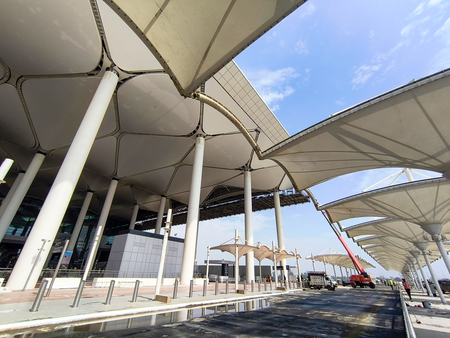
New Delhi, March 25 (IANS) A huge increase in public capital expenditure and a maturing financing ecosystem have fuelled India’s infrastructure transformation, with government investment rising from Rs 2 lakh crore in FY15 to a budgeted Rs 12.2 lakh crore for FY27, a new report has said.
The report from India Narrative said the six-fold surge in public spending has catalysed private investment and stimulated demand for core industries such as steel and cement.
Further, it generated employment, the report said, also lauding a shift to a blended ecosystem that combines public funds, institutional capital, and market-based instruments. Such a shift has positioned India as the largest recipient of private participation in infrastructure in South Asia, accounting for over 90 per cent of regional investment flows, it said.
"In a global context where growth uncertainties persist, India’s commitment to infrastructure-led expansion offers a stable and scalable growth model," the report said.
Further, the report noted that institutional platforms have been central to this shift as the National Investment and Infrastructure Fund, with approximately $4.9 billion in assets under management, has attracted sovereign wealth funds, pension funds and multilateral institutions.
NIIF's partnerships with entities like ADIA, Temasek, and CPPIB signal a deeper integration of India into global capital flows, it said.
Meanwhile, the National Bank for Financing Infrastructure and Development is addressing one of the most critical gaps in infrastructure financing namely, long-term, patient capital. by sanctioning around Rs 3.03 lakh crore and disbursing over Rs 1 lakh crore.
The report also credited Infrastructure Investment Trusts and Real Estate Investment Trusts for mobilising over Rs 1.5 lakh crore through asset monetisation, allowing capital rotation into new projects.
REITs and InvITs have democratised infrastructure investment, enabling retail and institutional investors to participate in income-generating assets.
National Highways Infra Trust also emerged as a notable success mobilising over Rs 46,000 crore, proving the financial innovation as a critical adjunct to infrastructure expansion, the report noted.
—IANS
aar/na
Global crude oil plunges up to 7 pc on ceasefire hopes

New Delhi, March 25 (IANS) International crude oil prices witnessed a sharp decline on Wednesday amid growing hopes of a ceasefire in the West Asia region.
Brent crude futures fell 7 per cent to an intraday low of $97.18 per barrel, while US WTI crude dropped over 6 per cent to $86.72 as of 10:40 AM.
Experts said the recent correction in crude prices could offer some relief to India’s macroeconomic indicators, including inflation and the Current Account Deficit (CAD), even as technical indicators suggest key support levels are being tested.
“Commodity markets corrected sharply last week, with oil retreating from recent highs. Brent crude, which had touched levels near $101 per barrel, fell more than 10 per cent to around $91 per barrel, easing immediate concerns over India’s oil import bill, Current Account Deficit, and rupee pressures,” according to them.
They added that for India, every $10 per barrel movement in crude typically impacts the CAD by 0.3–0.5 percentage points of the GDP and raises CPI inflation by 20–30 basis points, depending on pass-through.
The analysts said US oil is currently hovering near the crucial $85–$87 support band, indicating a cautious undertone in the near term. A sustained move above $92–$94 levels could revive bullish momentum and push prices towards $98–$100, while a break below $85 may drag prices towards the $81–$82 range.
Overall, analysts maintain a ‘buy-on-dips’ stance as long as key support levels hold, though volatility is expected to persist amid geopolitical and macroeconomic developments.
The recent moderation in crude prices is seen as providing temporary relief to the rupee and inflation outlook, although risks remain.
“With a wide trade gap and elevated gold imports, any renewed spike in crude or capital outflows could quickly reignite depreciation pressures,” they said.
Meanwhile, US stock markets ended lower overnight, with the S&P 500 and Nasdaq declining 0.84 per cent and 0.37 per cent, respectively.
In contrast, Asian markets traded sharply higher. Japan’s Nikkei surged 3.26 per cent, South Korea’s KOSPI rose 3.36 per cent, and Hong Kong’s Hang Seng gained 1.30 per cent.
--IANS
ag/rad
Gold, silver surge up to 6 pc amid fresh West Asia developments

Mumbai, March 25 (IANS) Gold and silver prices witnessed a strong surge on Wednesday amid easing tensions in the West Asia conflict.
On the Multi Commodity Exchange (MCX), gold futures (April 2) advanced as much as Rs 5,658 or about 4 per cent to an intraday high of Rs 1,44,570 per 10 grams by 10:26 am. The yellow metal was later trading at Rs 1,44,410, up Rs 5,498 or 3.96 per cent.
Similarly, silver futures (May 5) jumped around 6 per cent or Rs 13,228, hitting an intraday high of Rs 2,14,500 per kg during the session.
In the international market, COMEX gold was trading at $4,633.17, up 4.48 per cent, while COMEX silver rose 7.5 per cent to $74.8.
According to analysts, MCX gold is hovering in the Rs 1,43,000–Rs 1,45,000 band, indicating underlying strength. They see immediate resistance at Rs 1,48,000, with potential upside towards Rs 1,55,000–Rs 1,57,000, while support is placed at Rs 1,37,000–Rs 1,40,000.
Silver too, remains firm across markets. MCX silver faces resistance at Rs 2,40,000, while key support lies near Rs 2,27,000, they said.
Overall, analysts maintain a cautiously positive outlook on precious metals, suggesting a 'buy-on-dips' strategy as long as key support levels hold, with geopolitical developments expected to continue driving volatility.
Precious metals have witnessed such gains as several reports claimed that the US administration has offered a 15-point ceasefire plan to Iran, while the US military prepared to send at least 1,000 more troops to supplement some 50,000 troops already in the Middle East.
The reports also said that the plan was submitted to Iran by intermediaries from Pakistan, who have offered to host renewed negotiations between Washington and Tehran.
Earlier, the US President Donald Trump said Washington and Tehran had held “very good and productive conversations” in recent days, adding that any military action targeting Iran’s power plants and energy infrastructure would be deferred for five days, pending further discussions. However, Iran’s parliamentary speaker Mohammad-Bagher Ghalibaf dismissed reports of talks.
--IANS
ag/na
Sensex, Nifty climb one pc amid ceasefire hopes; oil price drops 7 pc

Mumbai, March 25 (IANS) Dalal Street opened on a bullish note for the second consecutive session on Wednesday, supported by easing geopolitical concerns amid hopes of de-escalation in the West Asia conflict. Additionally, reports suggesting that Donald Trump had proposed a 15-point plan to Iran via Pakistan further enhanced investor confidence.
Sensex opened around 600 points or 0.80 per cent higher at 74,652, while Nifty began trading at 23,064, up 150 points or 0.66 per cent.
In early trade, the 30-share index extended gains, rising as much as 771 points or 1.04 per cent to hit an intraday high of 74,840 as of 9.18 a.m. The Nifty also surged about 1 per cent or 260 points to 23,173.05.
Sectorally, most indices traded in the green, led by auto, realty and media stocks. Nifty Auto rose 1.47 per cent, followed by Nifty Realty (1.39 per cent), Nifty Media (1.30 per cent), and Nifty Metal (1.23 per cent). PSU banks and financial services indices also posted gains of over 1 per cent, while the IT sector remained under pressure.
Broader markets mirrored the positive sentiment, with the Nifty Midcap 100 and Nifty Smallcap 100 advancing around 1 per cent each.
Analysts said that apart from macroeconomic cues, stock-specific developments are expected to drive selective action in the near term. While global factors have supported a positive opening, they cautioned that the broader market structure remains fragile.
"Sustained upside will require a decisive breakout above key resistance levels, failing which the prevailing sell-on-rise approach is likely to dominate near-term sentiment," analysts noted.
They advised investors to adopt a disciplined and selective strategy amid ongoing global uncertainties and heightened volatility. Accumulating fundamentally strong stocks during corrections may be prudent, while fresh long positions should ideally be initiated only after Nifty decisively crosses and sustains above the 24,500 level.
On the global front, crude oil prices witnessed a sharp decline amid ceasefire hopes. Brent crude futures fell 7 per cent to an intraday low of $97.18 per barrel, while US WTI crude dropped over 6 per cent to $86.72.
Meanwhile, Wall Street indices ended lower, with the S&P 500 and Nasdaq declining 0.84 per cent and 0.37 per cent, respectively.
In contrast, Asian markets traded strongly higher. Japan’s Nikkei surged 3.26 per cent, South Korea’s KOSPI rose 3.36 per cent, and Hong Kong’s Hang Seng gained 1.30 per cent.
--IANS
ag/dpb