
27.08 lakh candidates trained under PMKVY 4.0 across 38 sectors: Govt
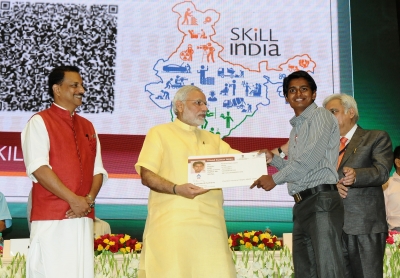
New Delhi, Jan 24 (IANS) At least 27.08 lakh candidates have been trained under Pradhan Mantri Kaushal Vikas Yojana (PMKVY) 4.0 across 38 sectors, covering 36 states and 732 districts (as on December 7, 2025), according to the government.
Between April 2024 and December 7, 2025, more than 7.5 lakh candidates have been trained in sectors such as IT-ITeS, aerospace and aviation, agriculture, rubber, leather, and tourism and hospitality across 34 states and 670 districts.
PMKVY is the flagship short-term skilling scheme of MSDE. Over its four phases, it has evolved from a pilot incentive-based certification programme to a large-scale, demand-driven, outcome-oriented skilling ecosystem, according to the Ministry of Skill Development and Entrepreneurship.
Moreover, 77 customised courses and 102 future-skill job roles have been introduced to improve employability in emerging domains including AI, Industry 4.0, green jobs and digital services.
“Over 15,500 institutions are implementing PMKVY 4.0, including more than 7,000 Skill Hubs in schools, higher educational institutions and ITIs. Institutes of national importance such as IITs, IIMs, IIITs, NITs, government institutions and PSUs are participating under PMKVY for the first time,” said the ministry.
Between April 2024 and September 2025, Rs 1,652.89 crore was utilised under the scheme.
Under PMKVY 4.0, a dedicated outlay of Rs 200 crore has been earmarked to create a National Pool of Trainers and Assessors, with standard operating procedures, curricula and certification frameworks issued by NCVET and hosted on the Skill India Digital Hub (SIDH).
From April 2024 to November 2025, 34,505 Trainers and 13,844 Assessors have been certified under PMKVY 4.0-linked ToT and ToA efforts, informed the ministry.
When it comes to Industrial Training Institutes (ITIs), these remain the backbone of long-term vocational education in India. Between 2014 and 2025, the number of ITIs increased from around 9,977 to over 14,682, with 4,605 new ITIs established.
“Enrolments have risen from about 9.5 lakh to over 14 lakh trainees, reflecting growing trust in vocational education. The number of National Skill Training Institutes (NSTIs) has increased from 25 to 33; Institutes for Training of Trainers (IToTs) from 11 to 120, with 17,475 sanctioned CITS seats across NSTIs and IToTs," according to the ministry.
—IANS
na/
RBI to inject over Rs 2 lakh crore in banking system to ease liquidity
Mumbai, Jan 23 (IANS) The Reserve Bank of India (RBI) on Friday announced a series of liquidity-enhancing measures that will pump in more than Rs 2 lakh crore into the banking system to ease liquidity pressure.
The RBI said it will use a combination of open market bond purchases, a foreign exchange swap, and a variable rate repo operation to ease liquidity conditions in the financial system. The steps are being undertaken following a review of current liquidity and financial conditions.
As part of the measures, the central bank will conduct a 90-day variable rate repo (VRR) operation for an amount of Rs 25,000 crore on January 30, allowing banks to borrow funds at market-determined rates against collateral assets to be provided by them. A VRR is a tool where banks borrow short-term funds through an auction, with the interest rate determined by market bids, not fixed in advance.
The central bank will also carry out a dollar-rupee buy/sell swap auction of $10 billion for a tenor of three years on February 4. Under this programme, the banks will sell dollars to the RBI for rupees and simultaneously agree to buy those dollars back later at a fixed forward rate. This effectively means the RBI borrows rupees for a period while managing exchange rate risk and boosting market liquidity without permanently altering forex reserves.
Besides, the Reserve Bank will purchase government securities for an aggregate amount of Rs 1 lakh crore via open market operations (OMO). This will be done in two tranches of Rs 50,000 crore each, which will be held on February 5 and February 12.
According to the RBI statement, detailed instructions for each operation that has been announced will be issued separately.
The apex bank further stated that it will continue to monitor the evolving liquidity and market situation and take measures as appropriate to ensure orderly liquidity conditions.
--IANS
sps/vd
PLI White Goods scheme: 5 selected firms to achieve Rs 8,337 crore in production, says govt
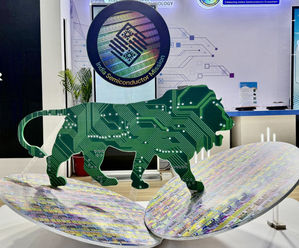
New Delhi, Jan 23 (IANS) The government on Friday said that five companies, selected in the fourth round under the PLI Scheme for White Goods, are expected to achieve a total production of Rs 8,337.24 crore and generate 1,799 additional direct jobs by FY 2027–28.
The evaluation of 13 applications received in the fourth round under the PLI Scheme for White Goods has resulted in the provisional selection of five applicants, with a committed investment of Rs 863 crore, all engaged in the manufacturing of air conditioner (AC) components, said Ministry of Commerce and Industry in a statement.
According to the statement, overall, a total of 85 companies selected under the PLI Scheme for White Goods (Air Conditioners and LED Lights) are expected to make investments of Rs 11,198 crore, leading to cumulative production of Rs 1,90,050 crore over the scheme period.
Eight applicants have been referred to the Committee of Experts (CoE) for detailed examination and recommendations.
The scheme offers incentives ranging from 6 per cent to 4 per cent on a reducing basis on incremental sales for a period of five years, following the base year and a one-year gestation period.
Domestic Value Addition is expected to increase from the current 20–25 per cent to 75–80 per cent.
The Cabinet approved the Production-Linked Incentive (PLI) Scheme for White Goods (Air Conditioners and LED Lights) on April 7, 2021, with a total outlay of Rs 6,238 crore, to be implemented from FY 2021–22 to FY 2028–29.
Under the scheme, manufacturers of air conditioners will produce components such as compressors, copper tubes (plain and/or grooved), control assemblies for IDUs and ODUs, heat exchangers, and BLDC motors, among others.
Similarly, for LED Lights, components including LED chip packaging, LED drivers, LED engines, LED light management systems, and metallized films for capacitors, among others, will be manufactured in India, according to the official statement.
The scheme aims to create a robust domestic component ecosystem for the air conditioners and LED Lights industry and position India as an integral part of the global supply chains.
--IANS
na/
India’s installed power capacity rises 36 pc in 5 years; renewables growth at record high
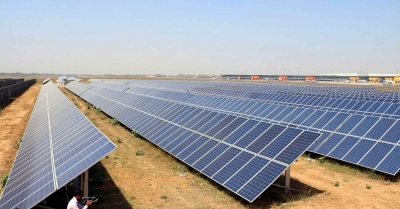
New Delhi, Jan 23 (IANS) India’s installed power capacity surged nearly 36 per cent over the past five years, driven largely by a surge in renewable energy, the Reserve Bank of India said in a new report.
The Central Bank said that India recorded the highest annual addition to renewable capacity on record in CY25.
Data from the Central Electricity Authority (CEA) showed that renewable additions rose from 5.6 GW in 2020 to 14.4 GW in 2021 and 16.4 GW in 2022, moderating to 13 GW in 2023 before accelerating to 28.6 GW in 2024 and a record 48.6 GW in 2025. Solar installations accounted for the bulk of the gains, according to the report.
By contrast, fossil‑fuel capacity additions remained modest at around 1–4 GW annually, while nuclear additions were small but steady from 2023 onward. The data suggested a gradual shift in India’s energy mix toward cleaner sources.
“Additionally, the introduction of the Sustainable Harnessing and Advancement of Nuclear Energy for Transforming India (SHANTI) Bill22, 2025 along with the Nuclear Energy Mission is expected to boost nuclear power capacity to 100 GW by 2047 while enabling limited private participation in the nuclear energy sector under regulatory oversight,” the report said.
Union Minister of New and Renewable Energy, Pralhad Joshi, had made a strong pitch for global investors towards opportunities in India's clean and green energy sector at the World Economic Forum (WEF) in Davos.
Prahlad Joshi highlighted India's proven ability to scale solar, wind, green hydrogen and energy storage in a focused discussion with global industry leaders on strengthening long-term climate and clean energy investments in India.
The minister encouraged investments in India through renewable-powered hydrogen hubs, integrated energy projects, and port-based export infrastructure.
—IANS
aar/na
GIFT City draws strong interest from global companies at Davos

Davos, Jan 23 (IANS) Gujarat International Finance Tec-City (GIFT City) has emerged as a key point of interest for global financial institutions, investors, and technology companies at the World Economic Forum (WEF) annual meeting here, with global companies seeking deeper engagement around India-linked financial services, innovation, and cross-border operations, it was announced on Friday.
The discussions in Davos reflect growing confidence in Gujarat International Finance Tec-City’s (GIFT City) regulatory framework and operating environment, and its ability to offer global firms a competitive, internationally aligned platform within India’s jurisdiction to participate in the country’s long-term growth, said Sanjay Kaul, GIFT City’s MD and Group CEO.
“India is at a defining stage in its economic journey, with global institutions increasingly viewing the country not just as a market, but as a base for sophisticated financial and technology operations,” he said in a statement.
GIFT City leveraged the four-day global forum to position India’s maiden International Financial Services Centre (IFSC) as a scalable, regulation-ready destination for banking, capital markets, insurance, fintech, and advanced digital operations.
The engagements reflected growing global recognition of India’s IFSC framework as a credible platform for international business expansion.
According to the statement, the GIFT City delegation held a series of structured discussions with senior leadership from leading global financial institutions.
Meetings with Euroclear, Marsh McLennan, Invesco, Visa, and Nasdaq centred on the evolution of India’s capital markets, cross-border fund flows, and the operational advantages of the IFSC ecosystem.
Discussions highlighted interest in GIFT City’s unified regulatory environment, ease of capital movement, and expanding financial market depth.
Strategic conversations were also held with global advisory and institutional stakeholders, underlining the growing global interest in GIFT City as a long-term institutional and innovation destination.
The delegation also joined exclusive sessions hosted by the Swiss Embassy, Swiss India Chamber of Commerce, and Confederation of Indian Industry (CII), the statement added.
--IANS
na/
Sensex, Nifty close sharply lower amid sustained FII outflows

Mumbai, Jan 23 (IANS) The Indian equity markets posted strong losses on Friday, flipping early gains amid continued selling by foreign institutional investors.
At the closing bell, the Sensex lost 769 points, or 0.94 per cent to settle at 81,537. The Nifty declined 241 points, or 0.95 per cent, to close at 25,048.
The broader markets posted stronger losses than the benchmark indices as Nifty Midcap 100 index lost 1.95 per cent, while the NSE Smallcap 100 declined 2.06 per cent.
Nifty 50 and Sensex began the final day of the trading week slightly up, tracking global cues as geopolitical tensions over Greenland eased.
But the indices dipped sharply due to strong foreign selling and mixed earnings reports leading to investors maintaining a cautious outlook.
On the sectoral front, all indices were in the red. Nifty Realty fell the most down 3.42 per cent. Nifty Media dropped 2.79 per cent while Nifty PSU Bank declined 2.43 per cent. Nifty Auto eased 1.25 per cent while Nifty Oil and Gas slipped 1.30 per cent.
Analysts said that Indian equity markets went on a sell-off mode despite an optimistic global market and supportive domestic PMI data. The sentiment was weighed down by an uptick in crude oil prices, a sharp depreciation of the rupee, FIIs selling and earnings delivery falling marginally short of expectations amid premium India valuations.
Looking ahead, market sentiment will likely remain cautious as investors keenly wait for the upcoming Union Budget and the US Fed’s interest rate decision, they added.
Market watchers predicted that if better-than-expected results for Q3 FY26 are reported for some companies, they could trigger only a stock-specific reaction because foreign institutional selling is expected to continue in the near term.
The rupee slumped 41 paise to touch 91.99 against the US dollar in intraday trade on Friday, amid persistent foreign fund outflows.
Analysts said that intervention from the central bank has kept the volatility in check to some extent, but could not reverse the overall negative trend for the domestic currency.
—IANS
aar/na
Budget 2026: India’s gross tax revenue to improve 9.6 pc, capex to grow 10 pc

New Delhi, Jan 23 (IANS) India's gross tax revenue is projected to improve in FY27, rising by 9.6 per cent, marginally lower than projected nominal GDP growth of 10.1 per cent, a report said on Friday.
The report from CareEdge Ratings said that direct tax collections are expected to see some improvement in FY27, aided by recovery in income and corporate tax collections.
The government's capex is projected to grow 10 per cent to Rs 12.3 trillion in FY27, while the fiscal deficit is expected to be budgeted at 4.2–4.3 per cent in FY27.
"We expect gross borrowing to be in the range of Rs 16-17 trillion in FY27; Net borrowing likely at Rs 11.5-12 trillion," the report said.
Though GST rate rationalisation is expected to weigh on collections, GST revenues are likely to show signs of improvement.
Non‑tax collections have been healthy this fiscal year aided by a higher Reserve Bank of India dividend, with non‑tax revenues up 20.9 per cent during the first eight months of FY26.
The RBI dividend transfer is likely to remain high at Rs 2–Rs 2.5 trillion in FY27 compared to Rs 2.7 trillion in FY26 and non‑debt capital receipts may fall short by Rs 0.2 trillion in FY26, the firm forecasted.
The ratings agency noted that excise duty on tobacco products, effective February 1, 2026, is expected to support union excise duty growth in FY27.
"With higher-than-expected dividend transfer by RBI, we expect the non-tax revenues to overshoot the budgeted amount of Rs 5.8 trillion, by Rs 0.3 trillion in FY26," the report said.
Another recent report said that Budget 2026 will maintain fiscal prudence and prioritise strategic, capex‑heavy sectors making defence sector the top beneficiary.
A pre‑budget survey of over 50 investment managers found that infrastructure ranked second at about 29 per cent, reflecting confidence in public capex and long‑term growth multipliers.
—IANS
aar/na
WEF 2026: India emerges as major AI force backed by reforms, digital infra, says IMF

New Delhi, Jan 23 (IANS) India is emerging as one of the world’s major forces in artificial intelligence (AI), supported by strong reforms, digital public infrastructure, and a skilled technology workforce, said Kristalina Georgieva, Managing Director of the International Monetary Fund, at the World Economic Forum in Davos.
The IMF MD pointed to India’s rapidly built digital public infrastructure and deep pool of IT‑skilled labour as major strengths, NDTV Profit reported.
Georgieva said the IMF holds India in high regard for the pace and quality of its recent economic reforms.
When asked about comments by Union Electronics and Information Technology minister Ashwini Vaishnaw, Georgieva said that the Fund believes India’s prospects in AI are “remarkable”.
Vaishnaw had recently pushed back strongly against remarks by Georgieva that India is in a "second grouping" of AI powers. Vaishnaw cited a Stanford assessment that showed India ranked third globally on AI preparedness.
Georgieva noted that the IMF’s assessment showed AI could boost global growth by up to 0.8 percentage points and that dynamic economies like India stand to gain even more.
"India is a very dynamic economy already, and with AI, it would be even more so," Georgieva said, praising India's approach to staying competitive while charting its own path on AI development.
She confirmed her travel plans to India next month for the AI summit, saying she was “very, very excited” about the visit and described India as “a bright spot on a somewhat cloudy global economic horizon”.
She cautioned that globally, expectations from AI are very high, which could cause downturns if they fail to materialise. Georgieva said that in such an environment, countries must focus on strong economic fundamentals, adding that India's policy focus in this regard is admirable.
--IANS
aar/rvt/
How realme is rethinking power for everyday smartphone use
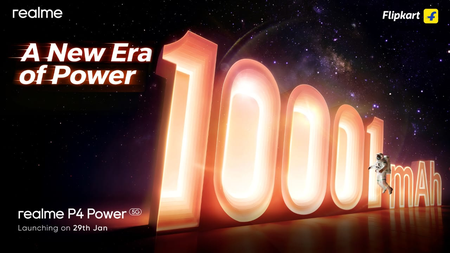
New Delhi, Jan 23 (IANS) In India’s fast-evolving smartphone market, battery performance has moved from a background specification to a core daily need.
As screens grow brighter and apps more demanding, users now expect their phones to last through long workdays, travel, entertainment, and late-night scrolling without interruption. This shift has made endurance one of the most fiercely contested spaces in the category.
Addressing this everyday battery anxiety head-on is India’s first and biggest 10,001mAh battery smartphone, built on silicon-carbon anode technology that delivers higher energy density without added bulk.
Despite housing a massive battery, it stands out as the world’s thinnest and lightest 10,001mAh smartphone at just 219g.
Backed by a five-layer battery safety architecture, it is also the world’s first 10,000mAh+ smartphone to pass military-grade shock tests, offering dependable performance in real-world conditions.
Designed for longevity, the device meets an eight-year battery health standard, is the world’s first and only 10,000mAh+ phone battery with TÜV Rheinland’s 5-star rating, and ensures safe, stable usage across extreme temperatures ranging from -30 degrees Celsius to 56 degrees Celsius.
In a world where this quiet worry shapes how people use their phones, endurance is no longer a feature; it is a necessity. And it is this shift that has begun to redefine how smartphones are being built.
realme has been at the centre of this shift. Over the past few years, the brand has steadily pushed the boundaries of smartphone power, from bringing 240W and even 320W ultra-fast charging to global markets to showcasing ambitious 10,000mAh and 15,000mAh concept devices that reimagined what long-lasting phones could look like.
These weren’t just experiments in capacity, but signals of where everyday smartphones were headed.
The centre of the upcoming realme device is a 10,001mAh battery, a capacity that feels less like a numerical milestone and more like a shift in how smartphones fit into daily life.
As the first smartphone in the industry to bring a battery of this scale into a commercially available device, it signals a move away from incremental upgrades toward a more fundamental rethinking of endurance. Rather than structuring routines around charging points, power banks, or spare cables, the phone is designed to support extended use without interruption.
Whether it’s long-distance travel, extended gaming sessions, back-to-back meetings, or days spent navigating unfamiliar cities, the battery is built to remain dependable in the background.
For a generation that lives on its smartphone, battery health is no longer a background specification. It shapes how freely people move, travel, and work through their day, influencing decisions both big and small.
And the upcoming realme P4 Power addresses this precisely, not by changing how people use their phones, but by quietly removing the need to think about usage at all.
The noteworthy approach here is not just the size of the battery, but how it has been integrated. Traditionally, larger batteries have meant heavier, bulkier phones, devices that solve one problem by creating another.
The P4 Power takes a different route, relying on advances in materials science rather than sheer physical expansion. By using a silicon-carbon anode structure with industry-leading silicon content, the Titan Battery is able to store significantly more power within the same physical footprint, enabling high capacity without sacrificing the feel of the device in hand.
Internally, structural redesigns play an equally important role. Space-saving battery architecture removes traditional connectors and inefficient layouts, freeing up valuable internal volume.
The result is a phone that carries a massive battery within a slim 9.08mm profile and a lightweight 219g body, making it one of the thinnest and lightest smartphones ever built in the 10,000mAh category. Days of standby, extended talk time, long hours of navigation, and sustained gaming sessions become normal rather than exceptional.
Longevity also plays a defining role in how this device has been shaped. Battery anxiety isn’t only about daily usage; it’s also about how phones age.
Over time, shrinking battery health often becomes the first reason people feel forced to upgrade.
With its Titan Long-Life algorithm, thousands of charging cycles, and a four-year battery health guarantee backed by eight-year performance standards, the P4 Power is designed to retain over 80 per cent health even after years of use, making endurance something users can rely on long-term.
Multi-layer protection systems, intelligent power-disconnect mechanisms, and reinforced internal materials ensure that the focus on capacity does not come at the cost of safety. The Titan Battery has earned TÜV Rheinland’s 5-Star battery certification and military-grade durability ratings, allowing the phone to operate reliably across extreme temperatures from sub-zero cold to intense heat, another nod to the unpredictability of everyday life.
Seen in a broader context, the P4 Power reflects a philosophy that realme has been steadily developing, pushing beyond accepted limits without turning innovation into a distraction.
The choice of a 10,001mAh battery instead of a round number quietly reinforces that mindset, an insistence on going just a little further, even when the difference seems symbolic, and it builds on a history of redefining what users can expect from charging speeds, battery size, and overall power performance.
As the device prepares for its launch on January 29 in India, the P4 Power enters a market where battery performance is no longer a luxury feature, but a baseline expectation.
What sets it apart is not loud claims, but a clear understanding of how people actually live with their phones. By addressing battery anxiety at its root through capacity, longevity, safety, and thoughtful design, the phone positions itself less as a technological statement and more as a practical companion.
With this, realme continues to shape its presence in the large-battery space. The P4 Power doesn’t ask users to change their habits.
It simply gives them the freedom to keep going, long after the battery icon would normally start demanding attention.
The realme P4 Power 5G will be available on realme.com & Flipkart.
--IANS
rvt/
AI can unleash $550 billion for 5 pivotal sectors in India by 2035: Report

Davos, Jan 23 (IANS) Artificial intelligence (AI) has the potential to contribute $550 billion to five priority sectors -- agriculture, education, energy, healthcare and manufacturing -- in India by 2035 at a nominal level, positioning the country as a potential global benchmark for how emerging economies can deploy AI in a manner that is both transformative and equitable, said a PwC India report released at the World Economic Forum's (WEF) annual meeting here on Friday.
The report showed that AI can be a driver of sectoral growth, from boosting crop productivity and reducing agri-waste to improving school governance, cutting power theft, accelerating disease detection, and enhancing manufacturing quality.
Real world pilots already demonstrate this potential: AI enabled crop advisories delivered double digit efficiency gains, smart metering flagged high accuracy theft cases, and AI driven TB detection improved notification rates dramatically. Scaling such applications, even to modest levels, could save hundreds of millions annually, said the report.
"Al is more than a technological leap; it's a nation building force. It gives us the power to reimagine growth not just in GDP terms, but through a people first lens. By investing in infrastructure, talent, and governance, we can ensure that innovation and equitable development move hand in hand. This is how we shape a Viksit Bharat that leads the world," explained Sanjeev Krishan, Chairperson, PwC in India
Maharashtra Chief Minister Devendra Fadnavis, while unveiling the report here, said, "AI is revolutionising all spheres of life, and we are embedding it in governance to democratise its impact”.
“We have done well in creating a strong digital infrastructure, and we are now in a position to leverage data to drive deeper digitisation. We have developed an AI‑based application for farmers, available in Marathi, which is being actively used to understand crop cycles and the appropriate understanding around pesticide usage. At the same time, we are building an innovative city that will help push the state’s larger AI agenda. EODB is another key focus area. In Maharashtra, we have recently cancelled 17 laws as part of our decriminalisation drive,” he noted.
In the report, PwC also introduced the AI Edge framework, defining the five tangible outcomes India should expect from AI deployed at scale: operational excellence, sustainability, good governance, resilience, and financial discipline.
These outcomes shift the global AI conversation from efficiency alone to a broader focus on transparency, environmental stewardship, system reliability and inclusive value creation across public and private ecosystems.
Speaking on India’s evolving business and policy environment, Nikhil Kamath, entrepreneur and investor, noted that “the business environment is getting better. We have seen strong policy stability in recent years, and India as a country is trying to do better.”
--IANS
na/