
GIFT City signs MoU with Vietnam’s Da Nang financial hub to boost investment
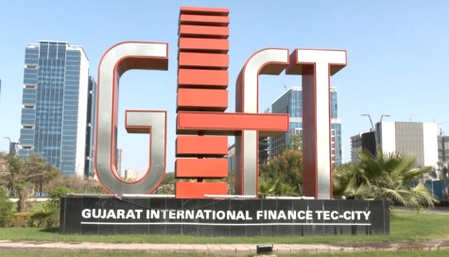
New Delhi, July 7 (IANS) India’s International Financial Services Centre (IFSC) Gujarat International Finance Tec-City (GIFT City) on Tuesday announced collaboration with Vietnam International Financial Center - Da Nang (VIFC-DN), a newly established financial hub, to share institutional knowledge and best practices.
The two institutions recently signed an MoU that aims to help Vietnam develop its international financial center and pave the way for cross-border investment across countries.
“Having built India’s only IFSC from the ground up, GIFT City will share lessons and institutional experience from its development journey as VIFC-DN takes shape,” the release said.
The partnership will cover financial services, fintech and digital innovation, capacity building and financial sector development, while exploring opportunities for cross-border investment and stronger business linkages between India and Vietnam.
The two institutions will also collaborate on joint research and publications, professional exchanges, conferences, seminars and outreach initiatives, and maintain institutional engagement on areas of mutual interest, the release added.
Sanjay Kaul, Managing Director and Group CEO, GIFT City, said the collaboration will explore new opportunities in financial services, fintech and investment, along with sharing institutional experience.
“International collaboration is essential to building globally competitive financial centres… We believe this collaboration can contribute to stronger financial and business linkages between India and Vietnam,” Kaul added.
GIFT City had recently signed two strategic MoUs aimed at strengthening its ecosystem across Global Capability Centres (GCCs), urban development, education and research.
An MoU with Tata Communications aims to jointly position GIFT City as a preferred destination for GCCs, treasury centres, technology enterprises and other service-oriented businesses. The partnership will also cover stakeholder engagement, market intelligence sharing and business development initiatives.
Another MoU with CEPT University enables collaboration on research, knowledge exchange, executive education, sustainability studies, urban planning and capacity building, drawing on the university’s expertise in architecture, planning, design and urban management.
GIFT City currently hosts more than 1,500 entities and holds banking assets worth $111 billion as of March 2026.
--IANS
aar/ag
Nearly 25 pc Indian firms feel workforce ready for AI as adoption accelerates

New Delhi, July 7 (IANS) Around 25 per cent of Indian companies said their workforce is adequately prepared to leverage artificial intelligence -- a 12‑point decline from 2025 -- even as AI deployment accelerates across businesses, a report said on Tuesday.
Nearly 56 per cent of Indian organisations reported AI is deployed broadly or embedded in core business processes, compared to 36 per cent respondents saying AI was fully integrated across their organisations in 2025, the report from Kyndryl said.
Hence, the gap between AI ambitions and workforce readiness is widening, with 81 per cent of Indian leaders concerned that AI advancement will outpace workforce capabilities, governance frameworks and operating models.
Nearly 84 per cent of Indian organisations expect autonomous AI agents to make material decisions within the next 12 months, while only 28 per cent fully trust autonomous AI systems operating without human oversight.
Meanwhile, enterprises are taking significant steps to prepare for this shift. 69 per cent of organisations surveyed in India have redesigned roles within or across functions to support AI adoption, while 33 per cent have implemented formal budgets and proactive upskilling strategies. However, the pace of organisational transformation appears to be outstripping the development of governance, trust, and oversight frameworks.
The report highlighted that AI success is not driven solely by different strategies, use cases or technologies – it’s driven by whether organisations redesign work and manage those changes throughout their organisations.
The data also showed that trust in AI can be built through deliberate operating model and governance changes.
“India has consistently demonstrated leadership in technology adoption, and enterprises are moving quickly to integrate AI into their operations,” said Lingraju Sawkar, Asia Pacific President, Kyndryl India.
“While organisations continue to invest in AI technologies and expand use cases, scaling impact will require businesses to rethink how work gets done, redesign roles, build new capabilities and establish governance frameworks that foster trust and responsible adoption,” Sawkar added.
The firm conducted a global study of 1,100 senior business and technology leaders across eight countries, including India.
—IANS
aar/ag
Delhi-NCR posts record quarterly flex space take-up in Q2 2026

New Delhi, July 7 (IANS) Delhi-NCR recorded its highest-ever quarterly take-up of flexible office space in Q2 2026 (April-June), with flex operators accounting for 45 per cent of the region’s total leasing of nearly 3.6 million square feet, according to a report released on Tuesday.
The report from CBRE South Asia Pvt. Ltd. cited research, consulting & analytics (17 per cent) and technology (12 per cent) as key demand drivers in the region, while new supply in Delhi-NCR stood at roughly 2 msf.
Delhi-NCR’s performance mirrors a broader national trend. Flexible space operators were the leading occupier segment in India’s office sector with a share of 27 per cent.
Flex, technology and BFSI firms together drove nearly 63 per cent of Q2 2026 leasing and 58 per cent of H1 2026 leasing in the country.
India’s office market recorded its highest-ever quarterly absorption of roughly 24.6 msf in Q2 2026, up 18 per cent sequentially and 14 per cent Y-o-Y, alongside record supply of roughly 21.0 msf, up 91 per cent sequentially.
Delhi-NCR was among the top three contributors, with Bengaluru and Pune, collectively accounting for a combined 58 per cent share of India’s Q2 2026 absorption.
Global capability centres (GCCs) also remained active in the region, contributing to Delhi-NCR’s 8 per cent share of pan-India GCC leasing in Q2 2026. GCCs accounted for 42 per cent of India’s total office absorption during the quarter - the highest-ever quarterly share on record.
"India's office market continues to demonstrate its structural depth and resilience, delivering back-to-back record quarters even as the world navigates a volatile geopolitical and economic backdrop," said Anshuman Magazine, Chairman & CEO - India, South-East Asia, Middle East & North Africa, CBRE.
"This strength is broad-based from GCCs deepening their presence to flexible space operators scaling rapidly across gateway and emerging cities alike. We expect this momentum, anchored by strong fundamentals and sustained occupier confidence, to continue through the rest of 2026," he added.
—IANS
aar/ag
S. Korea to reflect subscriptions, smartwatch costs in consumer price data

Seoul, July 7 (IANS) South Korea will revise items included in the consumer price index basket in a regular reshuffle, reflecting the latest trends by adding subscriptions and smartwatch-related costs, with details set to be announced in December, the statistics agency said on Tuesday.
The Ministry of Data and Statistics said it will carry out the restructuring of items included in the consumer price survey, with the latest round of adjustments focusing on reflecting consumers' spending patterns in the digital sector, reports Yonhap news agency.
In detail, the country will add subscription fees for software and cloud services, while excluding items that have become less popular recently, including bracken fern, an ingredient used in Korean side dishes.
Other categories to be added include meal kits, electric vehicle charging fees, online shopping subscriptions and malatang, a Chinese dish that has gained popularity in South Korea in recent years.
South Korea plans to gather public opinions through mid-July before finalizing the reshuffle.
Meanwhile, excess funds held by South Korean businesses hit an all-time high in the first quarter as strong semiconductor exports boosted corporate earnings, central bank data showed on Tuesday.
Net financial funds -- the value of financial assets minus financial liabilities -- held by non-financial corporations totalled 20.8 trillion won (US$13.6 billion) at the end of March, up from 100 billion won three months earlier, according to data from the Bank of Korea (BOK).
It marked the highest quarterly figure since the BOK began compiling the data in 2009.
"Companies are mainly debtors as they usually borrow more money for investment and other business purposes than they earn," a BOK official said. "In the first quarter, however, their net profits surged due to semiconductor exports, resulting in excess funds."
Households' net financial funds rose to 79.2 trillion won in the first quarter from 67 trillion won three months earlier, partly due to year-end bonuses and a decrease in the supply of new apartments.
Financial assets held by the country's household and non-profit organisations totalled 6,417.1 trillion won at the end of March, up 209.4 trillion won from three months earlier.
Their debts rose by 26 trillion won from three months earlier to 2,466.8 trillion won. The ratio of financial assets to liabilities owned by households stood at 2.6.
—IANS
na/
GalaxEye plans two new OptoSAR satellites after Mission Drishti

New Delhi, July 7 (IANS) Bengaluru-based space technology startup GalaxEye on Tuesday said its maiden Mission Drishti has successfully validated key technologies and mission capabilities, paving the way for the launch of two next-generation OptoSAR satellites over the next 24 months despite an anomaly that affected the spacecraft after launch.
The company said Mission Drishti -- launched aboard a SpaceX mission on May 3 as the world's first OptoSAR satellite -- successfully established communication and completed a major portion of its Launch and Early Orbit Phase (LEOP) and validated critical spacecraft systems, deployment mechanisms, attitude control, onboard computing and communications.
It demonstrated GalaxEye's full in-house mission operations capability through its Mission Control Centre in Bengaluru, strengthening the company's technological capabilities and market confidence, according to the company.
During its operational phase, the satellite successfully validated critical technologies, operational processes and infrastructure required to design, build, launch and operate advanced Earth observation systems.
The successful launch of Mission Drishti also received recognition from Prime Minister Narendra Modi and industry leaders, highlighting the mission's significance for India's private space ecosystem and global Earth observation capabilities.
However, GalaxEye said the spacecraft encountered an anomaly during the final stage of LEOP following a geomagnetic solar storm. Preliminary analysis indicates that radiation associated with the extreme space weather event likely affected a critical onboard system.
Communication with the satellite subsequently became intermittent and was eventually lost. While recovery efforts are continuing, the likelihood of restoring contact currently appears low, the company said.
"Mission Drishti marks the culmination of years of innovation, engineering and execution by our team. While the satellite experienced an anomaly following an extreme space weather event, the mission has provided invaluable engineering insights that will directly strengthen our future missions," said Suyash Singh, Founder and CEO of GalaxEye.
He said the company is accelerating the transition towards bringing a significant portion of its supply chain, manufacturing and satellite development processes in-house to gain greater visibility and control over the entire value chain.
Building on the lessons from Mission Drishti, GalaxEye said it is incorporating the learnings into its next-generation spacecraft architecture and plans to launch two new OptoSAR satellites within the next 24 months while significantly expanding its in-house capabilities to strengthen quality, reliability and execution.
--IANS
ag/
BSE-listed firms’ market capitalisation hits record Rs 482.31 lakh crore

Mumbai, July 7 (IANS) The market capitalisation (mcap) of all listed companies on the BSE has hit a record high in rupee terms, driven by the sustained rally in stock markets, strong gains in broader markets, easing geopolitical tensions, softer crude oil prices and renewed foreign institutional investor (FII) buying.
As of Monday's close, the combined market capitalisation of all BSE-listed companies stood at a record Rs 482.31 lakh crore, up 17 per cent since the beginning of April.
The previous record was set on January 2.
BSE 250 Microcap Index has emerged as the strongest performer, hitting a record high on July 2 after surging more than 32 per cent since the start of April.
According to analysts, the performance suggests the rally since April has been broad-based rather than concentrated in a handful of large-cap stocks.
Investor sentiment also received a boost from measures taken by the government and the Reserve Bank of India (RBI) to encourage foreign investment, including initiatives to exempt capital gains tax on foreign investments in government securities and allow direct participation by the global Indian diaspora.
According to market experts, there are clear signs of an uptrend in the market as two major headwinds -- elevated crude oil prices and sustained foreign portfolio investor (FPI) selling -- have reversed.
They noted that crude prices have retreated to pre-conflict levels, while FPIs have turned net buyers, marking a significant shift in market sentiment that is likely to continue, supported by strong fundamentals.
Robust auto retail sales in June reflected the economy's growth momentum, while lower crude prices are expected to keep inflation under control and enable the RBI to maintain a low interest rate environment, the experts said.
Despite the record mcap, the benchmarks and broader indices are yet to reclaim their respective record highs in rupee terms.
Since the beginning of April, Sensex and Nifty have gained nearly 8 per cent, but remain 8.8 per cent and 7.2 per cent, respectively, below their record highs touched on January 2.
--IANS
ag/
Sensex, Nifty trade higher in early deals amid positive global cues

Mumbai, July 7 (IANS) Indian equity benchmark indices traded higher on Tuesday amid positive global cues and crude oil prices hovering around the $70-a-barrel mark.
Sensex jumped as much as 0.27 per cent or over 200 points to hit an intraday high of 78,504 in early trade, while Nifty was trading around 60 points or 0.23 per cent higher at 24,488.
Sectorally, IT, banking and financial stocks led the gains. Nifty IT rose 1.28 per cent, followed by Nifty PSU Bank which gained 0.45 per cent.
In contrast, Nifty Metal was the worst performer, falling 0.86 per cent, followed by Nifty Media, which declined 0.38 per cent. Nifty Chemicals and Nifty FMCG slipped up to 0.30 per cent.
Among the Nifty stocks, Trent was the biggest loser, plunging 8.81 per cent, followed by Bharat Electronics (BEL) and Larsen & Toubro (L&T), which declined about 1 per cent each. Meanwhile, InterGlobe Aviation (IndiGo) fell 0.88 per cent, while Coal India slipped 0.84 per cent.
According to market experts, there are distinct signs of an uptrend in the market.
They noted that two factors weighing on Indian markets -- the crude price hike and sustained FPI selling -- are now behind us and have reversed. Crude prices are back to their pre-war levels, while FPIs have turned buyers. Although FPI buying is not yet a strong trend, the fact that foreign investors have stopped selling and turned buyers marks a significant shift that is likely to be sustained, supported by strong fundamentals.
Technically, the Nifty's breakout above its 200-day exponential moving average (EMA) for the first time since February has strengthened the market's bullish structure, according to analysts.
They expect the 24,600 level to act as the immediate resistance, with a sustained move above it potentially paving the way towards 24,800, while the 24,400-24,300 zone is likely to provide near-term support.
International benchmark Brent crude rose about 1 per cent to $72.77 a barrel. Similarly, US West Texas Intermediate (WTI) crude gained 1.12 per cent to $69.32 a barrel.
--IANS
ag/
South Korea activates KOSPI sell-side sidecar as stocks tumble
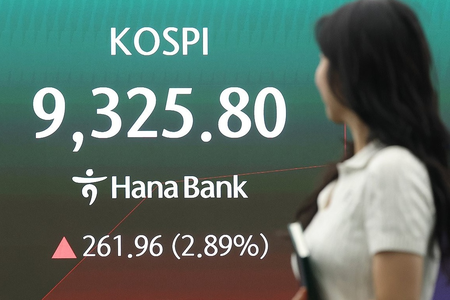
Seoul, July 7 (IANS) South Korea's bourse operator on Tuesday activated a sell-side sidecar for the benchmark Korea Composite Stock Price Index (KOSPI) after the index tumbled sharply.
Program trading for the KOSPI was suspended for five minutes at around 10:23 am, according to the Korea Exchange (KRX), reports Yonhap News Agency.
The KOSPI came under heavy selling pressure as investors locked in profits after Samsung Electronics Co. released its preliminary second-quarter earnings estimate.
Local technology stocks plunged on profit-taking after the chipmaker estimated its operating profit for the April-June period at 89.4 trillion won (US$58.4 billion), beating market forecasts. The estimate exceeded the average market forecast by 6.2 percent, according to Yonhap Infomax.
The earnings outlook reflects provisions for employee bonuses. Excluding those provisions, quarterly operating profit is estimated to have reached around 100 trillion won.
After opening down 1.6 percent at 7,920.48, the KOSPI fell as low as 7,568.59 during the session.
The local market bucked overnight gains on Wall Street, where the Dow Jones Industrial Average rose 0.29 percent and the tech-heavy Nasdaq advanced 1.12 percent.
Institutions and foreigners sold a net 97.3 billion won (US$64 million) and 1.74 trillion won, respectively, while individuals bought a net 1.81 trillion won.
Market bellwether Samsung Electronics fell 7.4 percent, while chip giant SK hynix declined 6.4 percent ahead of its planned $29 billion U.S. listing later this week.
Top carmaker Hyundai Motor dropped 5.9 percent, and defense company Hanwha Aerospace shed 4 percent.
Hanwha Ocean plunged 23 percent after a South Korean consortium that includes the shipbuilder failed to win Canada's multibillion-dollar submarine procurement project.
Among gainers, cosmetics maker Amorepacific rose 2.9 percent, and leading refiner SK Innovation climbed 3.9 percent.
The Korean won was trading at 1,527.40 won per U.S. dollar as of 11:20 a.m., up 2.6 won from the previous session.
--IANS
ag/
Samsung forecasts record Q2 profit on robust AI chip demand

Seoul, July 7 (IANS) South Korea-based Samsung Electronics Co. on Tuesday estimated its second-quarter operating profit at nearly 90 trillion won (US$58.8 billion), marking another quarterly record as strong demand for artificial intelligence (AI)-related semiconductors boosted earnings.
The South Korean technology giant said operating profit for the April-June period is expected to total 89.4 trillion won, up 1,181 percent from a year earlier, according to its earnings guidance, reports Yonhap News Agency.
The estimate exceeded the average market forecast by 6.2 percent, according to Yonhap Infomax, the financial data arm of Yonhap News Agency.
The earnings outlook reflects provisions for employee bonuses. Excluding those provisions, quarterly operating profit is estimated to have reached around 100 trillion won.
Under a high-profile wage agreement reached in May, Samsung will grant a special semiconductor performance bonus equivalent to 10.5 percent of business performance earnings. The bonuses will be paid in company stock over at least 10 years and will be tied to performance targets for the company's lucrative semiconductor business.
The provision for the bonuses is estimated at around 20 trillion won.
Samsung Electronics posted an operating profit of 43.6 trillion won for all of 2025. The estimated second-quarter profit alone is more than double the company's full-year operating profit last year.
Second-quarter revenue is estimated to have risen 129.3 percent from a year earlier to 171 trillion won. Net profit was not included in the earnings guidance.
If confirmed, Samsung Electronics will have posted record quarterly revenue and operating profit for a third consecutive quarter since the fourth quarter of last year.
Samsung Electronics did not provide a detailed breakdown of earnings by business division, although its device solutions unit, which includes the semiconductor segment, is believed to have accounted for a dominant share.
The strong performance is widely attributed to continued growth in global investment in AI infrastructure, which has intensified the supply shortage of semiconductors and kept memory chip prices elevated.
Industry observers expect the favorable market conditions to continue at least through next year.
Samsung Electronics has been among the biggest beneficiaries of the AI supercyle, backed by the world's largest memory chip production capacity.
Although some have recently raised concerns that the semiconductor industry's rapid growth could peak in the near future, Samsung has continued to sign long-term supply agreements with major technology companies, while expanding production capacity to meet expected demand over the medium to long term.
The company has also expanded sales of higher-value products by becoming the first in the industry to begin mass production and shipments of sixth-generation high-bandwidth memory (HBM4) chips.
Memory chipmakers are prioritizing the development of high-end products to meet surging demand from AI data centers, resulting in tighter supplies of conventional dynamic random-access memory (DRAM) and NAND flash products as well.
Analysts expect the supply shortage to persist at least through 2027, strengthening the pricing power of Samsung and its rivals, SK Hynix Inc. and Micron Technology Inc.
In contrast, the device experience unit, which oversees Samsung's consumer electronics and mobile businesses, is expected to have posted relatively weak results.
Reflecting the improving outlook for Samsung's semiconductor business, the consensus forecast for the company's full-year operating profit has risen to 37.4 trillion won from 36.6 trillion won, according to Yonhap Infomax.
The company will release its final earnings report later this month.
--IANS
ag/
AI, digital technologies can empower MSMEs, startups and exporters: Piyush Goyal
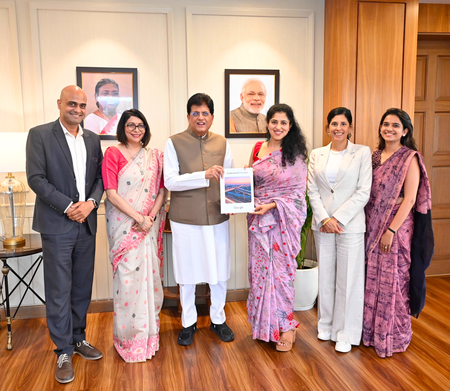
New Delhi, July 6 (IANS) Union Commerce and Industry Minister Piyush Goyal on Monday said that artificial intelligence (AI) and digital technologies can play a transformative role in empowering MSMEs, startups, exporters and local businesses, while highlighting the need for stronger collaboration to drive innovation-led and technology-driven growth.
The minister shared that he met a delegation from Google led by Vidhya Srinivasan, Vice President, Ads & Commerce, and Preeti Lobana, Vice President and Country Manager, Google India, to discuss opportunities for expanding the use of AI and digital technologies across key sectors of the economy.
During the meeting, the discussions focused on leveraging AI-driven solutions to empower small businesses, startups and exporters while supporting their growth in an increasingly digital marketplace.
Goyal said both sides explored opportunities to strengthen collaboration in areas such as accelerating AI adoption, advancing digital skilling initiatives, improving market access and fostering innovation-led, technology-driven growth.
"Met with a delegation led by Vidhya Srinivasan, Vice President, Ads & Commerce, Google, and Preeti Lobana, VP and Country Manager, Google India," Goyal said in a post on social media platform X.
"The discussion focused on leveraging AI and digital technologies for empowering MSMEs, startups, exporters, and local businesses," he added.
He emphasised that closer cooperation between the government and technology companies can help build a stronger digital ecosystem, enabling businesses to enhance competitiveness and unlock new growth opportunities through emerging technologies.
"Explored opportunities to strengthen collaboration to accelerate AI adoption, advance digital skilling, enhance market access, and foster innovation-led, technology-driven growth," Goyal mentioned.
Meanwhile, earlier in the day, Goyal said that India's new free trade agreements (FTAs) are creating fresh opportunities for manufacturing and innovation, opening doors for the country's youth to compete globally.
He urged students to equip themselves with practical skills and embrace technology-driven learning to make the most of the emerging opportunities.
Virtually addressing the inauguration of the online bilingual Bachelor of Business Administration (BBA) programme at the Indian Institute of Management (IIM) Udaipur from New Delhi, Goyal said the country's youth should prepare themselves to take advantage of the opportunities emerging from these trade agreements.
--IANS
pk