
Air India appoints Skytech-AIC to sell six Airbus A319 aircraft amid fleet modernisation

New Delhi, July 6 (IANS) Air India on Monday appointed UK-based aircraft marketing and asset management firm Skytech-AIC to oversee the sale of six Airbus A319 aircraft as the Tata Group-owned airline continues to streamline and modernise its fleet.
According to a statement issued by Skytech-AIC, the six narrowbody aircraft, manufactured between 2003 and 2006, are available for immediate sale. The aircraft will be offered without their CFM56-5 engines.
While the company confirmed that the aircraft are being actively marketed, it did not disclose the expected timeline for the sale, the value of the transaction, or the identities of any prospective buyers.
This is the second major assignment Skytech-AIC has undertaken for Air India. The firm had previously managed the sale of the airline's Boeing 747-400 fleet, a process that was completed in 2025.
Commenting on the development, Skytech-AIC Managing Director Julian Balaam said the company was pleased to have once again been selected by India's flag carrier. He noted that the latest mandate follows the successful completion of the Boeing 747-400 fleet sale last year.
"We are delighted to have again been selected by India's flag-carrier, Air India, for this important assignment which follows the successful conclusion of the sale of the airline's 747-400 fleet which completed in 2025," Balaam stated.
The sale of the Airbus A319 aircraft is part of Air India's broader fleet transformation programme under the Tata Group. The airline has been retiring older aircraft and inducting new-generation jets as it pursues a long-term strategy to modernise its operations and improve efficiency.
Air India's Airbus A319 fleet has primarily served domestic and short-haul international routes. These aircraft are expected to be phased out gradually as the airline continues to induct newer Airbus A320neo-family aircraft into its fleet over the coming years.
--IANS
pk
India can emerge as the world’s ‘connector economy’: Anand Mahindra

New Delhi, July 6 (IANS) India is uniquely positioned to emerge as a trusted connector economy that links global markets, supply chains and geopolitical blocs in an increasingly fragmented world, Mahindra Group Chairman Anand Mahindra said in his letter to shareholders on Monday.
He said the country's strengths place it at the centre of the evolving global economic order, while outlining the Group's vision for long-term growth amid rising global uncertainty.
"India's economic strengths, strategic position and growing global credibility place it at the centre of the emerging world order," Mahindra stated.
The annual report comes after what the Group described as its strongest financial performance to date. Mahindra reported its highest-ever consolidated revenue and profit in FY26, while further strengthening its leadership across key businesses, including sport utility vehicles (SUVs), tractors, electric mobility and several emerging growth segments.
The Group attributed the record performance to the strength of its diversified business portfolio and disciplined execution across its operations.
In his letter, Group CEO and Managing Director Dr. Anish Shah highlighted artificial intelligence (AI) as a key pillar of Mahindra's future growth strategy.
He said the company is integrating AI across multiple businesses, using the technology to improve operations, support decision-making and enhance customer experience.
According to Shah, Mahindra is among the few Indian enterprises that are scaling AI adoption across the organisation rather than limiting it to individual functions or business units.
The Group also highlighted its growing international recognition during the year. Mahindra said it was ranked among TIME's World's Best Companies and was recognised as Outstanding Company of the Year at the India Business Leadership Awards.
It also noted that its innovation portfolio has expanded to more than 1,300 patents, reflecting its continued focus on research, technology and product development as it seeks to strengthen its position as a globally recognised, innovation-led enterprise.
--IANS
pk
High-resolution radio study reveals faint black hole activity in nearby galaxies

New Delhi, July 6 (IANS) An international team containing an Indian astronomer used the e‑MERLIN radio array to detect compact radio emission from the centres of nearly one‑quarter of 280 nearby galaxies, and revealed a hidden population of weakly accreting supermassive black holes, an official statement said on Monday.
Dr. Aru Beri from the Indian Institute of Astrophysics (IIA), an autonomous institution under the Department of Science and Technology (DST), used the e-MERLIN radio array, and observed nearby galaxies selected from the Palomar sample and probed their central regions on parsec scales.
These newly discovered weakly accreting supermassive black holes are often missed in conventional observations, the statement from the Ministry of Science & Technology said.
The researchers detected compact radio emission from the centres of nearly one-quarter of the galaxies, revealing the presence of weakly accreting supermassive black holes that are often missed in conventional observations.
Most detected sources appear extremely compact, while a smaller fraction shows jet-like radio structures extending over several parsecs.
Hunting these black holes is essential as they can inject energy into their surroundings through jets and outflows, influencing star formation rates and the long-term evolution of galaxies.
Astronomers believe that almost every galaxy harbours a massive black hole at its centre. However, many of these black holes remain extremely faint and spotting them was a challenge, the statement noted.
The study represents one of the first statistically complete high-resolution radio surveys capable of isolating faint black hole activity in nearby galaxies.
Earlier studies either lacked the sensitivity and angular resolution needed to separate weak nuclear emission from surrounding stellar activity or focused on smaller and potentially biased galaxy samples, the ministry said.
To strengthen these findings, the radio observations were complemented with X-ray data from NASA’s Chandra X-ray Observatory.
The results suggest that faint, low-level black hole activity may represent the dominant mode of black hole growth in the present-day Universe.
The study also highlighted the importance of high-resolution radio observations in revealing a population of weakly active black holes that often remain hidden in conventional galaxy surveys.
—IANS
aar/pk
India’s office demand, supply touch new records in Q2 2026 led by flex operators, GCC

New Delhi, July 6 (IANS) India's office market recorded its strongest quarter on record in Q2 2026 (April–June), with gross leasing touching an all-time high of around 24.6 million square feet, a report said on Monday.
The report from real estate consulting firm CBRE South Asia Pvt. Ltd said developers matched leasing demand with a record 21 million sq. ft. of new completions.
The total absorption increased 18 per cent quarter-on-quarter and 14 per cent year-on-year in Q2 2026, while the supply rose by a sharper 91 per cent QoQ and 18 per cent YoY.
In the first half of 2026, the sector recorded a historic absorption of roughly 45.5 million sq. ft., the highest ever registered in any half-year period, while supply touched a new record at roughly 32 million sq. ft.
On a sectoral basis, flexible space operators were the leading occupier segment at 27 per cent. Flex, technology and BFSI firms together drove nearly 62 per cent of Q2 2026 leasing and 58 per cent of H1 2026 leasing.
Global capability centres (GCCs) continued to anchor demand, accounting for 42 per cent of total office space take-up in Q2 2026 and 43 per cent in H1 2026.
GCC leasing touched an all-time high of roughly 10.3 million sq. ft. during the quarter, marking a 10 per cent increase from roughly 9.3 million sq. ft. in Q1 2026.
The firm forecasted GCCs to drive over 40 per cent of total space absorption in 2026, with flexible workspaces, technology-led demand and flight-to-quality preferences continuing to shape occupier strategy across India’s office markets.
Transactions above 2 lakh sq. ft. increased by 57 per cent QoQ, led by flexible space operators and technology firms.
Bengaluru, Hyderabad and Pune together accounted for 68 per cent of all large-format transactions during the quarter.
"India's office market continues to demonstrate its structural depth and resilience, delivering back-to-back record quarters even as the world navigates a volatile geopolitical and economic backdrop," said Anshuman Magazine, Chairman & CEO - India, South-East Asia, Middle East & North Africa, CBRE.
"This strength is broad-based - GCCs are deepening their footprint while flexible space operators scale rapidly across gateway and emerging cities alike. We expect this momentum, anchored by strong fundamentals and sustained occupier confidence, to continue through the rest of 2026," he added.
Bengaluru led the city-wise leasing with a share of 27 per cent in Q2 2026. Bengaluru, Pune and Delhi-NCR accounted for a combined share of roughly 58 per cent.
—IANS
aar/pk
Why is NSE’s IPO being delayed?

Mumbai, July 6 (IANS) The National Stock Exchange's (NSE) long-awaited initial public offering (IPO) is now likely to be launched in September, with pending regulatory and legal issues continuing to delay the process.
While earlier reports had suggested the exchange could hit the market sooner, unresolved matters -- including the long-running co-location case and other disclosures in its draft red herring prospectus (DRHP) -- have kept the listing on hold.
One of the key issues has been the long-running co-location and dark fibre cases. In its draft red herring prospectus (DRHP), NSE disclosed that it has proposed to pay Rs 1,491.21 crore to settle the regulatory proceedings with the Securities and Exchange Board of India (SEBI).
The exchange said the matters remain pending before the Supreme Court, SEBI and other judicial forums and have been disclosed under the material litigation section of the IPO documents.
Last week, SEBI Chairman Tuhin Kanta Pandey said the regulator has internally approved the proposed settlement in the co-location case, indicating that the matter is moving towards closure. However, the settlement process is yet to be formally completed.
The DRHP also disclosed another legal matter involving the alleged wrongful retention and sale of NSE shares that were mistakenly credited to an individual's demat account.
According to the exchange, it filed a police complaint against Kashmiri Lal Rana under provisions of the Bharatiya Nyaya Sanhita (BNS), alleging criminal breach of trust and cheating.
NSE alleged that 5,000 equity shares of the exchange were erroneously credited to Rana's demat account and were knowingly retained despite not belonging to him.
Apart from litigation, the exchange has highlighted several operational and business risks in its IPO documents.
NSE cautioned that regulatory changes, technology failures, cybersecurity incidents and emerging risks associated with artificial intelligence (AI) could materially affect its business operations and financial performance.
The exchange also flagged its heavy reliance on trading income, particularly from the derivatives segment, noting that any regulatory or market changes affecting derivatives trading could have an impact on its revenues.
If launched as planned, the IPO is expected to value the country's largest stock exchange at more than Rs 5 lakh crore.
The exchange is also expected to begin investor roadshows ahead of the public issue. The offering would surpass Hyundai Motor India's Rs 27,870-crore IPO launched in October 2024.
--IANS
pk
Govt amends legal metrology rules for high‑capacity scales to ease compliance burden
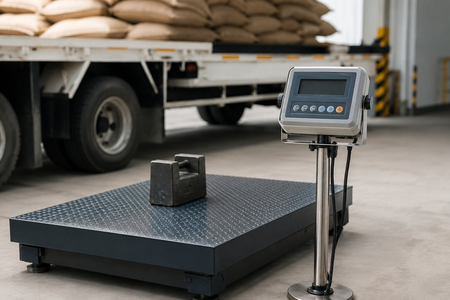
New Delhi, July 6 (IANS) The Department of Consumer Affairs has amended the Legal Metrology (General) Rules, 2011 to reduce the mandatory standard‑weight requirement for verification of high-capacity weighing instruments by introducing a scientific, repeatability-based verification approach, an official statement said on Monday.
The move will cut compliance burden for industries, warehouses, logistics operators and weighbridge owners as well as lower transportation and handling costs to move large quantities of standard weights, the statement from Ministry of Consumer Affairs, Food & Public Distribution said.
The amendment replaced the earlier rule that required standard weights of at least one tonne or 50 per cent of an instrument’s maximum capacity — whichever was greater — with a scientific, repeatability‑based approach.
The new approach reduces the mandatory quantity to one‑fifth (20 per cent) of maximum capacity after a successful repeatability test, while maintaining the prescribed standards of verification accuracy and reliability.
Other benefits of the reform include improved efficiency of Legal Metrology verification activities without compromising accuracy or consumer protection, better utilisation of verification resources by government authorities.
The ministry said that the reform is based on internationally accepted metrological principles, wherein the repeatability test establishes the consistency and stability of the weighing instrument, thereby enabling reliable verification with a reduced quantity of standard weights.
“The amendment reflects the Department's continued commitment to modernising the Legal Metrology framework through evidence-based regulatory reforms that balance facilitation of trade with robust consumer protection,” the statement said.
The Department has been undertaking a series of reforms to simplify compliance, reduce regulatory burden, strengthen the verification ecosystem and promote the use of technology in Legal Metrology, the statement noted.
This latest amendment marks another important step towards creating a more efficient, transparent and industry-friendly regulatory environment while ensuring accuracy, fairness and confidence in commercial transactions.
—IANS
aar/pk
Gold down 30 pc, silver slides 54 pc from peaks, still modest by historical standards: Report
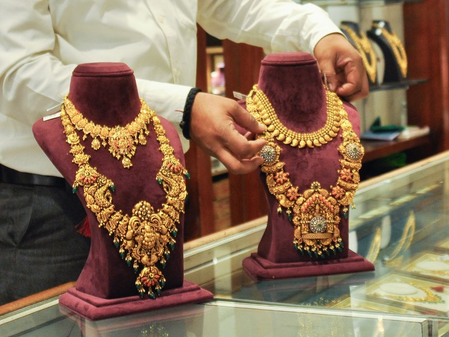
New Delhi, July 6 (IANS) Gold and silver have retreated sharply from their record highs in recent months, but the ongoing correction remains less severe than several historical bear markets in precious metals, according to the July 2026 edition of DSP Netra.
The report analysed every major drawdown in gold and silver prices since the 1970s, comparing the magnitude of each correction, the time taken to reach a durable bottom and the period required to reclaim previous record highs.
According to the report, gold touched an all-time high of $5,602 per ounce in January 2026 before falling to a low of $3,942 per ounce, translating into a drawdown of nearly 30 per cent.
While the decline has been significant, it remains smaller than several historical corrections. The sharpest fall came after gold's January 1980 peak, when prices plunged 71 per cent. It took nearly 19 years and seven months for gold to establish a durable bottom, while regaining its previous record high required another 28 years.
Other major downturns were also steeper than the current cycle. Gold corrected 49 per cent after its December 1974 peak, reaching a durable bottom in around one year and eight months, while the correction following the September 2011 high reached 46 per cent. The March 2008 cycle saw prices decline 34 per cent.
The report noted that the current cycle crossed the 25 per cent drawdown threshold within two months of the January 2026 peak. However, as the correction is still unfolding, it is too early to determine when prices will establish a durable bottom or recover to fresh record highs.
Silver has witnessed a steeper correction than gold during the current cycle. After climbing to an all-time high of $121.6 per ounce in January 2026, the metal dropped to $55.6 per ounce, marking an overall decline of about 54 per cent.
Despite the sharp fall, DSP Netra said the correction remains less severe than some of silver's biggest historical bear markets. Following its January 1980 peak, silver crashed 93 per cent, taking more than 11 years to reach a durable bottom and over 31 years to recover its previous all-time high.
The report also highlighted that silver declined 77 per cent after the April 2011 peak, while the August 1975 cycle recorded a comparatively milder correction of 27 per cent.
Like gold, silver breached the 25 per cent drawdown mark within a month of its January 2026 peak. Since the ongoing correction has not yet run its course, the report said it remains too early to identify a durable bottom or estimate the time needed for prices to reclaim previous highs.
Looking at long-term trends, DSP Netra observed that precious metals have historically taken anywhere from a few months to several years to reach durable bottoms following major peaks. Recovering previous record highs has often taken much longer, in some cases stretching over decades.
--IANS
pk
India Inc likely to post 15 pc earnings CAGR over FY26-FY28: Report

New Delhi, July 6 (IANS) India Inc's corporate earnings are pegged at a compound annual growth rate (CAGR) of around 15 per cent during FY26-FY28, supported by improving macroeconomic conditions, easing geopolitical concerns and stronger earnings visibility, a report showed on Monday.
The report by Motilal Oswal Financial Services Ltd. (MOFSL) said India is entering a more favourable phase after nearly two years of market consolidation, with attractive valuations positioning domestic equities to benefit from a potential rotation of global capital beyond artificial intelligence (AI)-focused sectors.
Easing energy prices, improving macroeconomic stability and strengthening corporate fundamentals are creating a constructive environment for Indian equities over the medium term, it added.
For the June quarter (Q1FY27), the domestic brokerage has expected that earnings across its coverage universe will decline 3 per cent year-on-year, largely due to weakness in oil marketing companies (OMCs).
However, excluding OMCs, profit after tax (PAT) is projected to grow 14 per cent year-on-year, indicating healthy earnings momentum across several sectors.
Sector-wise, the report said financials and metals would lead earnings growth during the quarter.
Lending non-banking financial companies (NBFCs), private and public sector banks, metals, technology, capital goods, retail, consumer durables and building materials are also expected to post healthy performances.
In contrast, the oil and gas, automobile, healthcare and cement sectors are likely to weigh on overall earnings growth.
Investors should closely track two key factors in the coming months -- the direction of foreign institutional investor (FII) flows and the market's ability to absorb a robust pipeline of initial public offerings (IPOs) and capital raising without affecting liquidity, the brokerage said.
The report said that India's long-term growth fundamentals remain intact, with the next phase of the market expected to be driven increasingly by company-specific earnings performance and execution rather than broad market trends.
--IANS
ag/
FIIs sold $3 billion in June, DIIs bought $9 billion in Indian equity market

New Delhi, July 6 (IANS) Foreign institutional investors (FIIs) were net sellers ($3 billion) in June while domestic institutional investors (DIIs) were net buyers ($9 billion) in the Indian equity market, a report showed on Monday.
Over the last 12 months, Indian primary markets recorded FII net inflows of $8.1 billion while secondary markets suffered FII net outflows of $49.3 billion, said the report by JM Financial Institutional.
In June, BFSI, Capital Goods, Pharma, Auto and Oil and Gas were the top 5 sectors in terms of FII shareholding.
These five sectors make up 60 per cent of FII assets in India, wherein FII shareholding increased sequentially in BFSI and Pharma and decreased in Capital Goods, Auto and Oil & Gas.
As a percentage of FII AUC (assets under custody) in India, BFSI continues to be the biggest at 30.8 per cent, up from 29.5 per cent in May. Capital Goods is the second highest at 7.5 per cent, down from 7.6 per cent in May. Pharma stood third at 7.4 per cent, rising from 7.1 per cent in May.
BFSI registered inflows of $357 million in June, followed by durables at $204 million, services at $130 million and realty at $85 million, said the report.
Looking ahead, institutional flows are likely to remain sensitive to a range of key domestic and global developments. Investors will closely track the progress of the monsoon season, given its implications for rural demand, agricultural output, and inflation trends, said analysts.
Additionally, the upcoming Q1FY27 corporate earnings season will provide crucial insights into the health of corporate India and the sustainability of earnings growth.
Global factors such as movements in crude oil prices and developments in the ongoing US-Iran peace talks will also remain important, as they could influence inflation expectations, energy costs, and overall risk sentiment.
While risks persist amid downward revisions to earnings growth estimates, monsoon-related inflation concerns, and continued FII caution, much of the visible uncertainty appears to be priced in, leaving room for a constructive read on incremental positives, said market watchers.
--IANS
na/
Indiahandmade brings over 64 lakh artisans into digital commerce

New Delhi, July 6 (IANS) Indiahandmade -- a dedicated digital marketplace under the Digital India initiative -- is bringing over 64 lakh handloom and handicraft artisans into the digital economy by connecting them directly with buyers and expanding market access, an official fact sheet said on Monday.
The platform -- developed by the Digital India Corporation under the Ministry of Textiles and launched in 2023 -- is helping artisans and weavers connect directly with buyers, expanding market access while supporting livelihoods and preserving the country's rich handloom and handicraft heritage, it added.
It enables artisans and weavers to sell handmade products online while reducing dependence on intermediaries and improving income opportunities, it added.
Indiahandmade is part of efforts to integrate traditional craft communities into the digital economy and strengthen the visibility of handmade products across the country and beyond, according to the government.
"India has an estimated 64.66 lakh handloom and handicraft artisans," the document said.
In addition, women account for over 70 per cent of handloom weavers and 64 per cent of the overall artisan workforce, highlighting the sector's role in generating rural employment and promoting women's economic empowerment, according to the fact sheet.
The platform offers a wide range of handmade products, including apparel, home décor, furnishings, paintings, furniture, jewellery, bags, footwear, religious items, stationery and musical instruments.
It also showcases Geographical Indication (GI)-tagged products and One District One Product (ODOP) items, giving region-specific crafts greater visibility and helping preserve traditional skills.
The portal has been designed to provide a trusted digital marketplace with secure payments, purchase protection, free shipping and buyer support, while offering artisans a simple onboarding process.
To make digital commerce more inclusive, sellers without Goods and Services Tax (GST) registration can also join the platform using an Enrolment ID, provided they sell products within their respective states, according to the government.
While the platform not only improves market access but also contributes to the financial and social empowerment of artisans by enabling them to participate directly in online commerce.
Several artisan enterprises, including Santarms, Dastkar Craft and Villages Craft are already using the platform to market handmade products ranging from wooden décor, terracotta items and handloom sarees to cane, bamboo and cotton products.
Looking ahead, the government aims to onboard more than 60 lakh artisans onto the platform as part of its vision to strengthen self-reliance under Atmanirbhar Bharat while ensuring India's traditional crafts continue to thrive in the digital economy.
--IANS
ag/