
National Jute Board-developed apparel to be worn by Indian athletes at Commonwealth Games 2026

New Delhi, July 7 (IANS) The National Jute Board (NJB), under the Ministry of Textiles, has developed jute-viscose blended apparel that will be worn by the Indian athletes and team members participating in the Commonwealth Games 2026, to be held in Glasgow, Scotland, from July 23-August 2, it was announced on Tuesday.
The official kit unveiling and send-off ceremony for the Commonwealth Games 2026 was held here, attended by Union Minister of Youth Affairs and Sports Dr Mansukh Mandaviya; Union Textiles Minister Giriraj Singh; Minister of State for Youth Affairs and Sports Raksha Khadse; President of the Indian Olympic Association, PT Usha, and others.
This marks the first occasion on which jute-based apparel will be showcased at an international multi-sport event.
The initiative is expected to provide global visibility to India's jute industry while highlighting the craftsmanship of Indian manufacturers and the contribution of jute farmers, said the ministry in a statement.
The National Jute Board facilitated the development of the jute-viscose blended fabric with the support of Gloster Jute Mills, Kolkata.
These innovative apparel products were first showcased during the National Jute Board Foundation Day celebrations held in Patna on April 1, 2026, where representatives of the Indian Olympic Association appreciated the initiative, according to the ministry.
In a boost to ‘Make in India’ products, the ministry has been actively promoting value-added applications of jute through the National Jute Board under the leadership of Union Textiles Minister Giriraj Singh.
The initiative highlights the potential of 100 per cent biodegradable jute-viscose blended fabric as a sustainable and innovative textile solution.
Subsequently, the National Jute Board worked closely with the Indian Olympic Association to promote the use of jute-based apparel for the Indian contingent. The apparel was designed by the National Institute of Fashion Technology (NIFT), New Delhi, using the specially developed jute-viscose blended fabric.
This is a landmark initiative to promote sustainable textiles and showcase India's innovation in natural fibres, said the ministry. The initiative is expected to strengthen the Jute Diversification Programme of the National Jute Board by creating new market opportunities for sustainable jute products in India and abroad.
--IANS
na/
Cult.fit IPO: From audit flags to city concentration, DRHP highlights key risks for investors

New Delhi, July 7 (IANS) Cult.fit, the fitness and wellness platform backed by prominent investors including Temasek, Tata Digital, Accel and Kalaari Capital, has filed its Draft Red Herring Prospectus (DRHP) for an initial public offering (IPO), but the filing also lays out several business and operational risks that prospective investors will need to weigh.
The proposed IPO comprises a fresh issue of shares worth up to Rs 950 crore and an offer for sale (OFS) of up to 17.86 crore equity shares by existing shareholders, including Temasek's MacRitchie Investments, Tata Digital, Accel and Kalaari Capital.
While the company has significantly reduced its losses over the past three financial years, it has yet to achieve net profitability. Its loss narrowed to Rs 251.9 crore in FY26 from Rs 480.8 crore in FY25 and Rs 888.5 crore in FY24. Although adjusted EBITDA turned positive at Rs 144.8 crore in FY26, the company cautioned in the DRHP that its historical financial performance may not be indicative of future growth or results.
The filing also highlights recurring observations by the statutory auditors regarding data controls at the company's premium fitness centres and wellness studios.
For FY24, FY25 and FY26, auditors noted that backups of books of account relating to sales at these centres were not maintained on a daily basis. They also said they were unable to verify whether audit trails in third-party point-of-sale software had been enabled and operated throughout the year. Cult.fit said it expects this dependency on third-party systems to end by FY27.
Another key risk is the company's heavy dependence on four metropolitan markets. Delhi-NCR, Mumbai, Bengaluru and Hyderabad together contributed 90.44 per cent of services revenue in FY26, up from 85.5 per cent in FY24, indicating increasing geographic concentration.
The DRHP further shows that franchised and marketplace gyms accounted for 69.21 per cent of the company's total fitness centres in FY26. Cult.fit acknowledged that it exercises limited operational and financial control over these franchise and marketplace partners, making service quality and operational consistency dependent on third parties.
The filing also disclosed delays in payment of statutory dues, including provident fund (PF), employees' state insurance (ESI), tax deducted at source (TDS) and goods and services tax (GST), across FY24 to FY26. In addition, litigation involving around Rs 55 crore is pending against the company's subsidiaries, while cases involving approximately Rs 488 crore are pending against its directors, according to the litigation disclosures in the DRHP.
--IANS
pk
Nifty, Sensex snap 4-day winning streak as metal, realty stocks drag markets

Mumbai, July 7 (IANS) Indian benchmark equity indices ended lower on Tuesday, snapping a four-session winning streak, as weakness in metal and realty stocks offset gains in information technology and consumer-focused sectors.
The Sensex declined 104.35 points, or 0.13 per cent, to close at 78,180.72. The Nifty slipped 31.65 points, or 0.13 per cent, to settle at 24,398.70.
Commenting on Nifty technical outlook, experts said that the 24,500–24,600 region remains the immediate and crucial resistance zone for the upcoming sessions.
"On the downside, the 24,300 level is expected to provide immediate support, followed by the 24,200 zone, which remains a key demand area," as per the analyst.
"Holding above these levels will be essential to preserve the prevailing bullish structure," the expert stated.
Among the Nifty constituents, Titan Company, Tech Mahindra and HCLTech emerged as the top gainers, supported by strength in the IT and consumer durables segments.
The broader market also ended in the red, with the Nifty MidCap index falling 0.3 per cent and the Nifty SmallCap index declining 0.55 per cent.
On the sectoral front, the Nifty IT index outperformed the broader market, while the Nifty Consumer Durables and Nifty FMCG indices also ended with relative strength. In contrast, the Nifty Metal and Nifty Realty indices were the biggest laggards, dragging the benchmarks lower.
Experts said that the decline in metal and realty shares weighed on overall market sentiment, bringing an end to the benchmarks' four-day gaining streak despite resilience in select technology and consumer stocks.
"With concerns around the US–Iran conflict and trade tariffs easing, market focus is shifting towards Q1FY27 earnings and the progress of the monsoon. Meanwhile, improving FII inflows and a stable rupee are expected to provide near-term support to overall market sentiment," market expert mentioned.
--IANS
pk
Centre dismisses reports of E-25 petrol rollout: Report

New Delhi, July 7 (IANS) The Centre has dismissed reports of an imminent rollout of E-25 petrol, clarifying that no decision has been taken to increase ethanol blending beyond the current E-20 level and that any future move will be based on scientific testing and technical validation, according to a report.
Citing government sources, NDTV reported that there is absolutely no need to worry about E-20 petrol, which has been in use for more than two-and-a-half years following extensive testing and evaluation.
The clarification comes amid growing public discussion over the impact of higher ethanol blending on vehicle performance and fuel efficiency.
The report further said the transition to ethanol-blended petrol has been carried out in a phased manner.
Nearly 20 crore petrol-powered two-wheelers and around 20 lakh petrol-powered four-wheelers are already running on ethanol-blended fuel, according to the report.
Earlier in July, the government issued a 10-point clarification on ethanol blending, stating that petrol containing up to 20 per cent ethanol is supported by scientific studies, international experience and regulatory safeguards.
Rejecting claims that producing one litre of ethanol requires 10,000 litres of water, the ministry said only surplus rice, cleared after meeting national food security requirements, is diverted for ethanol production.
It added that ethanol distilleries typically use around 3-5 litres of processed water to produce one litre of ethanol and are increasingly adopting Zero Liquid Discharge systems to recycle water.
The ministry also said maize, which now accounts for more than 40 per cent of ethanol supplied under the programme, requires significantly less irrigation than paddy and is being promoted through higher minimum support prices.
Dismissing claims that E-20 is an untested fuel, the government said ethanol-blended fuels have been used globally for decades.
--IANS
ag/
Amrapali mangoes from Jharkhand’s tribal belt exported to Dubai
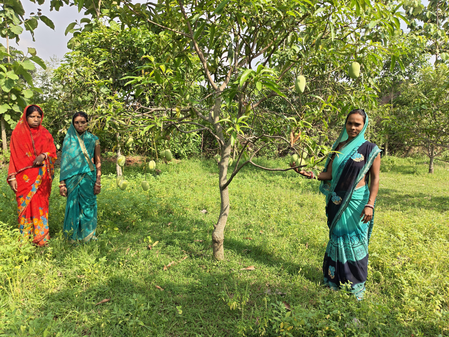
New Delhi, July 7 (IANS) The Agricultural and Processed Food Products Export Development Authority (APEDA has facilitated the export of two metric tonnes (MT) of Amrapali mangoes, sourced from women-led farmer producer companies in Jharkhand's tribal areas, to Dubai, according to an official statement issued on Tuesday.
The consignment was exported by M/s Fair Exports (India) Pvt. Ltd. for retail distribution across Lulu stores in Dubai, marking another milestone in promoting exports from tribal and women-led farmer collectives.
The export consignment comprising premium-quality Amrapali mangoes sourced from three women-led Farmer Producer Companies (FPCs) promoted by Palash – Jharkhand State Livelihood Promotion Society (JSLPS) was flagged off on July 3. One metric tonne was sourced from APEDA-registered MVM Baghima Palkot Producer Company Limited and Raidih Agri Producer Company Limited in Gumla district, while the remaining one metric tonne was sourced from Mohanpur Ajeevika Mahila Kisan Producer Society in Deoghar district. The orchards have been developed by tribal women farmers under the Birsa Harit Gram Yojana, implemented in convergence with MGNREGA and supported by the Jharkhand government.
The export has delivered significant economic benefits to the participating farmers, with members of the women-led FPCs realising nearly 180 per cent higher returns than prevailing local market prices. The initiative demonstrates the potential of export market access in enhancing farmers' incomes while encouraging greater participation of women producers in export-oriented agriculture. Each of the participating FPCs has more than 1,500 shareholders and collectively represents over 50,000 member farmers, extending the benefits of the initiative to a large farming community, the statement said.
The export reflects the APEDA's sustained efforts to develop export-ready farmer collectives through capacity building, quality enhancement and market facilitation. In May, it organised a dedicated capacity-building programme in the Palkot area of Gumla district to sensitise members and Board of Directors of eight Farmer Producer Companies on international quality standards, post-harvest handling practices, and export procedures, enabling them to meet the requirements of premium overseas markets. Representatives from the district offices of Agriculture, Horticulture, JSLPS, District Industries Centre (DIC) and other line departments also participated in the programme, the statement said.
Further strengthening its outreach among women entrepreneurs, APEDA's Regional Office, Kolkata, organised an export-oriented capacity development programme for women entrepreneurs and self-help groups on September 19, 2025, at Baswariya village in Devipur block of Deoghar district. The session focused on creating awareness about APEDA's mandate, Financial Assistance Scheme, export opportunities, key export procedures, and institutional support available for women entrepreneurs to participate in global agricultural trade.
--IANS
sps/vd
India expands critical minerals push, partners with 35 countries to secure supply chains

New Delhi, July 7 (IANS) India has significantly expanded its global outreach to secure supplies of critical minerals and strengthen semiconductor supply chains, signing partnerships with 24 countries while holding negotiations with 11 others over the past two years.
The initiative forms part of the government's broader strategy to reduce dependence on concentrated supply sources and ensure long-term access to minerals essential for clean energy, electric vehicles (EVs), advanced manufacturing, defence, and semiconductor production.
According to the Ministry of Mines, India has developed a strategic network spanning North America, Europe, Africa, West Asia, Central Asia, Southeast Asia, and Australia.
The approach extends beyond sourcing raw materials and includes cooperation in mineral exploration, mining, processing, technology transfer, investment, and resilient supply chains.
India has already established cooperation frameworks with countries including the United States, Canada, the United Kingdom, Germany, France, Italy, the Netherlands, Japan, Australia, Brazil, Argentina, the Democratic Republic of Congo, Ghana, Namibia, Saudi Arabia, the United Arab Emirates, Israel, Vietnam, Mozambique, Zimbabwe, Malawi, and Russia.
These partnerships cover a wide range of strategic resources such as lithium, cobalt, copper, rare earth elements, and other critical minerals, alongside collaboration in semiconductor technologies, energy security, and investment.
At the same time, India is in discussions with countries including Chile, Peru, Zambia, Bolivia, Kazakhstan, Mongolia, Uzbekistan, Kyrgyzstan, Turkmenistan, Tajikistan, Myanmar, and Indonesia to expand cooperation in lithium, copper, rare earths, and other strategic mineral resources.
A key pillar of the strategy is strengthening India's semiconductor ecosystem. Collaborations with technology leaders such as Japan, the Netherlands, Germany, and the United States are expected to support domestic chip manufacturing capabilities and improve India's integration into global semiconductor supply chains.
Critical minerals -- including lithium, cobalt, nickel, copper, and rare earth elements -- are indispensable for EV batteries, renewable energy storage, wind turbines, solar infrastructure, defence systems, aerospace applications, and high-end electronics. Securing reliable access to these materials has become a strategic priority for countries seeking to accelerate clean energy transitions while reducing exposure to geopolitical supply disruptions.
--IANS
pk
Nepal PM meets ADB President in first one-on-one meeting with foreign dignitary

Kathmandu, July 7 (IANS) Nepal's Prime Minister Balendra Shah, who had avoided one-on-one meetings with foreign officials since taking office, held his first such meeting on Tuesday with visiting Asian Development Bank (ADB) President Masato Kanda.
Instead of meeting foreign diplomats individually, Shah has so far preferred collective interactions with Ambassadors, seeking to maintain a strict protocol governing such engagements.
Three and a half months after assuming office on March 27, Shah met Kanda, who heads one of Nepal's largest multilateral development partners, the Prime Minister’s Secretariat confirmed. Kanda is a former Japanese Vice Minister of Finance for International Affairs and was recently reappointed as ADB President.
During the meeting, held in the context of further strengthening the six-decade-long development partnership between the Government of Nepal and the ADB, both sides reaffirmed their commitment to enhancing cooperation, Prime Minister Shah’s Secretariat said in a statement.
According to Deepa Dahal, Press and Research Advisor to Prime Minister Shah, the half-hour meeting saw the Prime Minister express confidence that Nepal would achieve a new phase of development in the coming years through good governance and transparency.
“The two sides also held positive discussions on promoting hydropower and tourism as the backbone of Nepal's economy, as well as expanding cooperation in digitalization and tourism road infrastructure,” the Secretariat stated.
During the meeting, ADB President Kanda reaffirmed the ADB's commitment to expanding its development assistance to Nepal, stating that the bank would continue to serve as a long-term development partner in supporting the country's economic growth and prosperity.
He also praised Nepal's significant economic potential, strong public mandate, and young leadership, reiterating that the ADB would continue to stand by Nepal in its development journey.
Kanda said Nepal's young leadership and commitment to reform are inspiring.
Earlier, Prime Minister Shah had declined requests to meet Paul Kapur, Assistant Secretary for South and Central Asian Affairs at the US State Department, and Sergio Gor, US President Donald Trump's Special Envoy for South and Central Asian Affairs and the US Ambassador to India. Indian Foreign Secretary Vikram Misri's planned visit to Nepal was also reportedly postponed a few weeks ago.
Breaking with the long-standing practice of holding informal meetings with foreign envoys, Shah has been enforcing a stricter protocol on whom he meets, prompting debate in some quarters over whether the approach will strengthen or undermine Nepal's national interests.
On April 8, Shah held a collective interaction with Kathmandu-based diplomats. Later, on May 26, he met jointly with 23 European Union Ambassadors and deputy heads of mission, as well as envoys based in Kathmandu and New Delhi representing Thailand, Russia, Australia, Myanmar, the United Arab Emirates, Norway, Finland, Malaysia, and Brazil.
It remains unclear whether Shah's meeting with ADB President Kanda signals a broader shift toward holding individual meetings with foreign dignitaries.
Foreign policy experts say the Prime Minister's decision on whom to meet should be guided by Nepal's national interests rather than by a rigid protocol.
Arun Subedi, a former foreign policy adviser to then Prime Minister Sher Bahadur Deuba, told IANS that Shah's decision to meet the ADB President was appropriate given that the ADB is one of Nepal's most important development partners and lenders.
"Our relations with institutions such as the ADB and the World Bank are also lender-borrower relationships, and meeting their top officials serves Nepal's national interest," he said.
Subedi added that the protocol should not become a barrier to meeting representatives of countries or institutions that are strategically important to Nepal.
"Even though Nepal officially follows a policy of non-alignment, that should not prevent it from giving special priority to certain countries or institutions because of their importance to Nepal," he said.
After arriving in Nepal on Monday, Kanda earlier met Finance Minister Swarnim Wagle the same day. According to the Finance Minister's Secretariat, Wagle thanked Kanda for the ADB's continued support and investment in Nepal's development and requested the Bank's continued cooperation in the years ahead.
The Government of Nepal and the ADB also signed financing agreements for two projects supported by concessional loans totaling US$165 million.
"A US$115 million project will improve water supply and sanitation services for more than 850,000 people across municipalities," Kanda said in a social media post. "Another US$50 million loan will modernize the systems that move goods across Nepal's borders, helping Nepali businesses compete more effectively."
On the same day, Kanda, together with Minister for Energy, Water Resources and Irrigation Biraj Bhakta Shrestha and Norway's Ambassador to Nepal Dagny Mjøs, virtually inaugurated two electricity transmission substations.
The substations are expected to strengthen the electricity supply in Kathmandu and other major demand centres.
Kanda also visited the Distribution Command and Control Center and the ADB-financed Data Center, where real-time monitoring and improved data management are helping strengthen Nepal's power system.
"These investments are helping lay the foundations for cross-border power trade. ADB will continue supporting Nepal in harnessing clean energy as a driver of growth and deeper regional integration across South Asia," Kanda said.
The ADB currently has an active portfolio of US$3.94 billion in Nepal, the multilateral development bank said.
--IANS
scor/as
ChatGPT outage disrupts Codex, Custom GPTs and workspace analytics

New Delhi, July 7 (IANS) US-based artificial intelligence giant OpenAI's ChatGPT experienced service disruptions on Tuesday, with users reporting issues across several features, including Codex, Custom GPTs and workspace analytics, while the company said it is working to resolve the remaining problems.
According to outage tracking platform Downdetector, user complaints increased between 1 pm and 2 pm.
Around 75 per cent of the reported issues were related to ChatGPT, while 12 per cent were linked to DALL-E and 8 per cent to the app.
According to OpenAI, the disruption affected FedRAMP workspaces, including Codex, workspace analytics, conversation search, Custom GPT search, ChatGPT user invites and the Compliance Logs Platform download endpoint.
NDTV Profit reported that the company said, "We're currently experiencing issues with FedRAMP Codex, workspace analytics, conversation search, searching for custom GPTs, ChatGPT user invites, and Compliance Log Platform download endpoint not working in FedRAMP workspaces."
OpenAI later said it had restored core functionality but acknowledged that some issues continue to affect FedRAMP workspaces, according to the report.
"Core functionality has been restored, but we are aware of known and ongoing issues in FedRAMP workspaces with Codex, workspace analytics, conversation search, searching for custom GPTs, ChatGPT user invites, and the Compliance Logs Platform download endpoint. We are working to resolve these issues and will share further updates when more information is available," the company said.
The outage comes after Elon Musk-backed social media platform X (formerly Twitter) experienced a service disruption in June. Nearly 40 per cent of users had reported issues with the app, while 29 per cent flagged problems with feeds and timelines. Another 18 per cent reported disruptions on the website.
--IANS
ag/
Resilient manufacturing sector cushions ease in economic momentum: Report
New Delhi, July 7 (IANS) The manufacturing sector has helped curb a broader slowdown in economic momentum even as indicators weakened in April‑May, a report said on Tuesday.
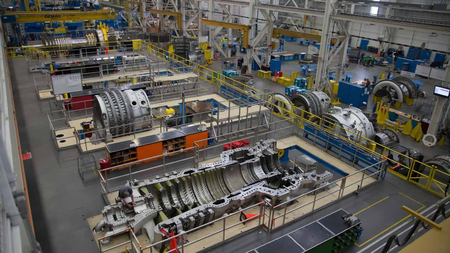
Manufacturing makes up nearly 20 per cent of GDP and has been remarkably resilient, led by exports and inventory build-up, the report from HSBC Global Investment Research said.
This is because energy-market uncertainty prompted precautionary inventory build-up – a trend most visible in consumer goods. Meanwhile, lower US tariffs created a window to accelerate non-oil exports ahead of potential Section 301 tariffs.
However, the report said its database of 100 growth indicators points to weakening momentum in April‑May, along with chances of very strong El Niño and weak monsoon pose risks to agriculture and rural demand.
The bank noted that lower US tariffs created a window to accelerate non‑oil exports ahead of potential Section 301 measures, supporting factory activity.
However, the report highlighted two positive drivers for growth outside agriculture, particularly in services comprising 55 per cent of GDP.
A pullback in oil prices toward pre‑war levels should help lift the trade and transport sector, which accounts for about 15 per cent of GDP and easier financial conditions, on the back of the FX package, could help lubricate the financial sector, which makes up roughly 25 per cent of GDP.
Even before the package-induced capital inflows started in earnest, yields across a variety of instruments have been falling, the report noted.
By contrast, agriculture, which makes up nearly 20 per cent of GDP, faces headwinds as temperatures are trending above normal, rainfall is about 30 per cent below normal and reservoir levels stay below last year's.
"Rural demand is already showing early signs of strain. Youth unemployment has risen more quickly in rural areas compared to urban areas. Two-wheeler sales and growth in rural bank balances have slowed and domestic GST collections softened in June," the report noted.
—IANS
aar/ag
Trent shares sink 12 pc as Q1 revenue growth disappoints Street

Mumbai, July 7 (IANS) Shares of Trent Limited, the Tata Group's retail arm, plunged nearly 12 per cent on Tuesday after the company's June quarter (Q1 FY27) standalone revenue growth fell short of market expectations, triggering sharp selling in the stock.
The stock declined as much as 11.93 per cent during the session to an intra-day low of Rs 2,944.60 on the NSE.
Trent reported standalone revenue from operations, excluding GST, of Rs 5,666 crore for the June quarter, marking a 19 per cent year-on-year increase from Rs 4,781 crore in the corresponding period last year.
Revenue from the sale of merchandise, excluding other operating income, also rose 19 per cent compared with a year ago.
Despite the healthy growth, investors were disappointed as analysts had expected revenue expansion in the low-to-mid 20 per cent range. The weaker-than-anticipated performance weighed heavily on market sentiment, leading to a sharp decline in the company's share price.
The retailer continued to expand its store network during the quarter, taking its total portfolio to 1,312 stores as of June 30, 2026. The network includes 301 Westside outlets, 982 Zudio stores—including seven in the UAE—and 29 stores across its other lifestyle concepts. During the quarter, Trent added a net 20 stores, comprising one Westside outlet and 19 Zudio stores, reflecting its continued focus on strengthening its value fashion business.
Brokerage Citi said Trent's standalone revenue growth of 19 per cent was below its estimate of 23 per cent. The firm noted that while the growth rate was marginally better than the previous three quarters -- 20 per cent in Q4, 16 per cent in Q3 and 17 percent in Q2 -- it still failed to meet market expectations.
According to Citi, concerns persist over declining store productivity, intensifying competition in the value fashion segment, the impact of cannibalisation as the retailer expands its footprint, and the company's growing presence in Tier II and Tier III markets.
Separately, the company is also set to witness a leadership transition. At Trent's 74th annual general meeting held in late June, Chairman Noel Tata announced that it would be his final AGM at the helm of the company.
--IANS
pk