
Sensex rebounds 238 points, Nifty closes above 23,960 led by realty and PSU bank stocks

Mumbai, July 9 (IANS) Benchmark equity indices rebounded on Thursday, with the Sensex gaining over 238 points and the Nifty closing above the 23,960 mark as buying in realty, consumer durables and PSU bank stocks lifted investor sentiment.
The Sensex rose 238.22 points, or 0.31 per cent, to settle at 76,741.82, while the Nifty advanced 80.75 points, or 0.34 per cent, to close at 23,962.80.
Commenting on Nifty technical outlook, experts said that the 24,100–24,200 range remains an immediate resistance zone.
"A decisive close above this band is essential to confirm a bullish breakout and pave the way for a potential recovery towards the 24,400 level," an analyst said.
"On the downside, 23,900 continues to act as a crucial near-term support. A sustained break below this level could intensify selling pressure, exposing the index to further downside towards the 23,800–23,600 zone," a market expert mentioned.
Among the Nifty constituents, Sun Pharmaceutical Industries, Bajaj Finserv and Bharti Airtel emerged as the top gainers, supporting the market's recovery.
The broader market outperformed the benchmark indices, with the Nifty MidCap index ending 1.38 per cent higher and the Nifty SmallCap index rising 1.80 per cent.
On the sectoral front, the Nifty Realty index led the gains, followed by the Nifty Media, Nifty Consumer Durables and Nifty PSU Bank indices, which also ended the session in positive territory. In contrast, the Nifty IT index was the biggest laggard, limiting the overall gains in the market.
Experts said that the day's performance reflected renewed investor interest in domestic-facing sectors, while broader market strength outweighed weakness in information technology stocks.
"Domestically, sentiment remains relatively resilient, underpinned by an improved outlook for H2, a recovery in rainfall conditions, and better valuation levels. That said, the latest US Fed minutes flagged renewed inflation concerns, which could weigh on the performance of the global market," a market expert noted.
--IANS
pk
Govt to decide next course after reviewing Meta’s response on Instagram CSEAM notice: IT Secretary
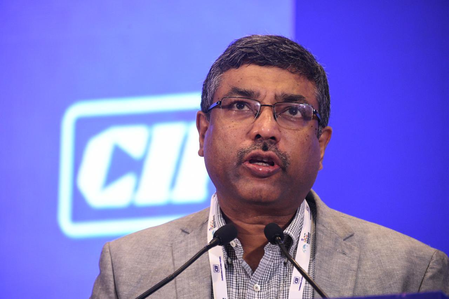
New Delhi, July 9 (IANS) The government will take a view on further action against Meta after examining the company's formal response to a notice issued over Child Sexual Exploitative and Abuse Material (CSEAM) allegedly promoted through paid advertisements on Instagram, IT Secretary S. Krishnan said on Thursday.
Speaking on the sidelines of the CII GCC Business Summit here, Krishnan said the Ministry of Electronics and Information Technology (MeitY) is awaiting Meta's formal reply before deciding its next course of action.
"We will await the formal response to the notice that we have issued, and thereafter we will take a view based on what the response is," Krishnan said.
The government had issued a notice to Meta on Saturday after concerns emerged over paid advertisements on Instagram allegedly promoting and facilitating access to Child Sexual Exploitative and Abuse Material (CSEAM).
MeitY directed Instagram to disable all advertisements and content linked to such material.
Earlier, IT Minister Ashwini Vaishnaw had instructed ministry officials to summon Meta and seek an explanation regarding the alleged presence of child sexual abuse material in advertisements on Instagram. The ministry also sought details of the action taken by the social media company to address the issue.
Within days of receiving the notice, Meta published a blog detailing its efforts to combat child sexual abuse material across its platforms. The company described child exploitation as a "horrific crime" and said it deploys artificial intelligence-powered detection systems alongside large-scale enforcement measures to identify and remove abusive content.
Meta also said it would continue investing in technology, strengthen its advertisement review processes and enhance safeguards to protect young users.
The government's scrutiny follows reports that alleged Meta's recommendation algorithm had been promoting videos containing child sexual abuse material, raising concerns over the effectiveness of the platform's safety mechanisms and content moderation systems.
Speaking on India's progress in infrastructure, he said that the country has the distinct potential to become the 'office space of the world'—managing not just back-offices, but front-end global operations.
"This is an extraordinary opportunity we cannot afford to miss, and AI will be the ultimate catalyst in this endeavour," Krishnan said.
--IANS
pk
GCCs have evolved into high-value innovation hubs, will play key role in Viksit Bharat: Labour Ministry official

New Delhi, July 9 (IANS) Global capability centres (GCCs) have transformed from back-office support units into hubs for research, design and innovation, making them a key pillar of India's economy and an important contributor to the vision of Viksit Bharat, Ajoy Sharma, Additional Secretary and Director General (Employment), Ministry of Labour and Employment said on Thursday.
Speaking in the national capital, Sharma said GCCs have witnessed tremendous growth over the years and are now undertaking high-value activities such as research and design, moving significantly up the value chain.
"The GCC is a very important pillar of our economy, and as we have seen, GCCs have grown tremendously. This is a time when a great transformation is taking place. Earlier, GCCs were thought of as entities doing back-office work cost-effectively, but that has changed significantly. They are now undertaking research and design work, which is much higher up the value chain," Sharma told.
He said the sector has become an important pillar of the Indian economy at a time when the country is undergoing a major economic transformation.
Referring to Prime Minister Narendra Modi's vision of Viksit Bharat, Sharma said the government, industry and other stakeholders are collectively working towards achieving the goal of making India a developed nation.
"If I look at the GCC sector, Prime Minister Modi's vision of Viksit Bharat is something that not only the government but also the industry and everyone else is working towards. It is something that everyone is focusing on," he stated.
He added that achieving the Viksit Bharat objective requires a whole-of-government approach, with every ministry working together in coordination.
Sharma said the responsibility does not rest with the government alone, but also requires active participation from industry and all stakeholders to drive India's long-term development agenda.
"Everyone has to work. As I said clearly, it's not only the government. In achieving the vision of Viksit Bharat, every ministry is working hand in hand, and it is a whole-of-government approach, whatever project we take up," he mentioned.
--IANS
pk
India is well-positioned to withstand global uncertainty despite rising crude oil prices: WTC Chairman Vijay Kalantri
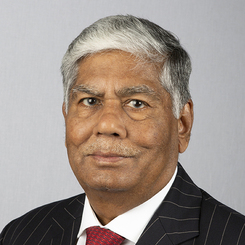
New Delhi, July 9 (IANS) India has the resilience to deal with the economic impact of rising crude oil prices and ongoing geopolitical tensions in the Middle East, and there is no need for panic despite the prevailing global uncertainty, Vijay Kalantri, World Trade Center Chairman said on Thursday.
Speaking to IANS, Kalantri said the escalation in tensions following fresh US military action against Iran has led to volatility in global markets, with crude oil prices rising above $78 per barrel and the Indian rupee coming under pressure.
He noted that the uncertainty has also affected investor sentiment, resulting in weakness in stock markets.
"Higher crude oil prices could increase India's import bill and exert upward pressure on inflation, as the country imports a significant portion of its energy requirements," he mentioned.
However, he stressed that the current situation does not warrant panic.
"India has successfully managed periods of much higher crude oil prices in the past, including when oil traded above $100 per barrel. The economy has demonstrated resilience during previous global crises and is capable of handling the present situation as well," Kalantri pointed.
He added that while the geopolitical situation remains uncertain and its future course will depend on developments involving the US, Iran and other global stakeholders, India should remain focused on maintaining economic stability rather than reacting with alarm.
"The situation is evolving, and we need to closely monitor developments over the coming days. But India has handled similar challenges before, and I believe the country is in a strong position to deal with the current uncertainty," Kalantri said.
"We should not panic. There is uncertainty at the moment, but India has handled higher oil prices in the past. We need to closely watch how the situation develops over the coming days," Kalantri mentioned.
--IANS
pk
Minister Hardeep Puri rejects claims against E20 fuel, calls it scientifically tested
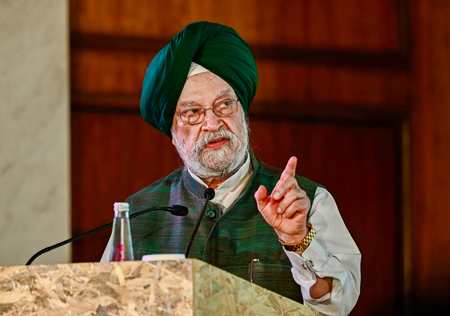
New Delhi, July 9 (IANS) Union Petroleum and Natural Gas Minister Hardeep Singh Puri has rejected criticism of ethanol-blended fuel, asserting that E20 petrol is scientifically tested, safe for vehicles and central to India's push for energy self-reliance, while alleging that a misinformation campaign had intensified after the rollout of E85-compatible vehicles.
In a post on X, the minister said India has been using E15 fuel since April 2023, E19 since April 2024 and E20 since April 2025, with no major issues reported despite widespread adoption.
"More than 20 crore two-wheelers and over 20 lakh four-wheelers have been running successfully on E20 fuel for years, yet suddenly a campaign against ethanol blending has gathered pace," Puri said.
He claimed the criticism intensified after India launched E85 fuel for flex-fuel vehicles on June 5, describing it as a major step towards reducing the country's dependence on imported crude oil.
"Look closely at the timeline and the pattern becomes difficult to ignore," the minister said, alleging that fearmongering around ethanol-blended fuels began soon after the launch of E85-compatible vehicles.
Puri said India imports more than 85 per cent of its crude oil and accounts for around 30 per cent of global oil demand growth, making the expansion of domestic alternative fuels critical for the country's energy security.
"Every litre of ethanol blended into petrol helps reduce crude oil imports, strengthens India's energy security, reduces air pollution, supports domestic farmers and saves valuable foreign exchange," he said.
Describing E20 as a widely tested, verified, scientific, internationally proven and completely safe fuel, the minister said the ethanol blending programme had transformed the country's 'Annadatas' (food providers) into 'Urjadatas' (energy provider) by creating an additional source of income for farmers.
Moreover, he noted that the ethanol blending programme was initiated during the previous Congress-led government, adding that opposition to its accelerated implementation now appeared to be politically motivated.
According to the minister, the programme not only reduces India's dependence on imported crude oil but also makes the country less vulnerable to geopolitical disruptions and global oil price volatility.
--IANS
ag/
India to remain among fastest-growing major economies with 6.6 pc FY27 growth: Report

New Delhi, July 9 (IANS) India's economy is projected to grow 6.6 per cent in FY27, with the country expected to remain among the world's fastest-growing major economies despite global headwinds, supported by policy measures and strong services exports, a report has said.
The report by the Asian Development Bank (ADB) said its revised FY27 growth projection remains higher than the International Monetary Fund's (IMF) latest FY27 growth estimate of 6.4 per cent.
"Growth will be supported by policy interventions to attract more foreign capital, as well as fuel tax cuts, targeted credit support, strong services exports, and public capital expenditure," the ADB said.
The lender also retained its FY28 growth forecast for India at 7.3 per cent, unchanged from its April outlook.
It said the medium-term outlook is supported by improving global conditions and export competitiveness gained through trade agreements with various partners.
According to the report, elevated energy prices prompted the downward revision in the FY27 growth forecast as they erode real incomes and dampen consumer spending.
It cautioned that risks to the outlook remain tilted to the downside due to heightened geopolitical tensions and weather-related weakness in agriculture.
The ADB also revised India's inflation forecast for FY27 to 5.2 per cent, while retaining its FY28 inflation forecast at 4 per cent.
For the broader region, the ADB lowered its growth forecast for South Asia to 6.0 per cent in 2026 from 6.3 per cent projected earlier, citing higher oil prices, rising freight costs and uncertainty over remittance flows.
Across developing Asia and the Pacific, the lender trimmed its 2026 growth forecast to 4.9 per cent from 5.1 per cent, saying the prolonged conflict in West Asia has disrupted energy supplies and supply chains, raising production costs and slowing economic activity.
Despite the near-term challenges, the ADB said India's growth outlook remains among the strongest globally, supported by ongoing reforms, public investment and resilient services exports.
--IANS
ag/
Indian markets trade higher in early deals despite renewed geopolitical tensions

Mumbai, July 9 (IANS) Indian equity benchmarks advanced in early trade on Thursday despite renewed geopolitical tensions and a rebound in crude oil prices to the $80-a-barrel mark.
Sensex surged as much as 0.32 per cent or about 250 points to hit an intraday high of 76,752 in morning trade, while Nifty climbed 0.20 per cent or 46.90 points to 23,928.95.
Sectorally, Nifty Consumer Durables led the gains, rising 1.39 per cent, followed by Nifty Mid-Small Financial Services (0.95 per cent), Nifty Cement (0.69 per cent), Nifty Private Bank (0.66 per cent), Nifty PSU Bank (0.64 per cent) and Nifty Auto (0.62 per cent).
In contrast, Nifty IT emerged as the top sectoral loser, declining more than 1 per cent.
Among Nifty constituents, Infosys, HCLTech, Tech Mahindra, TCS, Dr Reddy's Laboratories and Hindalco Industries fell between 1 and 2 per cent.
According to market experts, geopolitical tensions have once again weighed on investor sentiment, with US President Donald Trump's remarks on Iran triggering selling pressure in the market.
However, they noted that Brent crude at around $80 a barrel was not yet a major concern for India, adding that continued foreign institutional investor (FII) buying and stable oil prices could help large-cap stocks, especially financials and automobiles, remain resilient.
Moreover, the American President Trump has said that the US had carried out fresh strikes against Iran overnight in response to what he described as Iranian attacks on commercial vessels transiting the Strait of Hormuz.
He said, "To me, I think it's over. I don't want to deal with them anymore. They're scum...They are sick people. They're led by sick people. They are vicious, violent people and if they had a nuclear weapon, they would use it. As far as I am concerned, it's over. I'll speak to our negotiators. They want to negotiate. As far as I'm concerned, it's just a waste of time dealing with them. They're liars. We make a deal...Everyone's agreed. No nuclear weapon. We make a deal. They go outside and talk to the press. They say we never even talked about it. There's something wrong with them. They're cuckoo. As far as I'm concerned, it's over."
International benchmark Brent crude rose 1.49 per cent to around $80 a barrel, while US West Texas Intermediate (WTI) crude gained more than 2 per cent to $75 a barrel.
Asian markets were mixed. Japan's Nikkei rose nearly 2 per cent, while South Korea's Kospi edged higher. Hong Kong's Hang Seng, however, declined about 1 per cent.
--IANS
ag/
Tech overhaul to speed up post-mortem reports: Maha CM

Mumbai, July 8 (IANS) In a major move to modernise the state's post-mortem process, Maharashtra is set to introduce high-tech advancements, including 'non-invasive post-mortem' (virtual autopsy) technology, in Mumbai, Chief Minister Devendra Fadnavis informed the Legislative Council during Question Hour.
He said the government has launched comprehensive measures to ensure post-mortem reports are delivered on time, successfully slashing the backlog of pending reports over the last two to three years. The issue was raised by member Chitra Wagh, with follow-up questions from members Satej Patil, Ambadas Danve, Pragnya Satav, and Neelam Gorhe.
Highlighting the benefits of non-invasive technology, Fadnavis explained that it enables body examinations without traditional dissection. This approach saves time, requires less manpower, minimises human error, and ensures highly accurate detection of microscopic changes.
The tendering and procurement process for the required machinery at Mumbai's J J and KEM hospitals has already been completed.
Currently, 533 post-mortem centres are operational across Maharashtra, having completed 10,905 autopsies up to May this year. Acknowledging the heavy workload on these centres, the chief minister promised a time-bound review to address shortages in staff, infrastructure, and other resources.
Fadnavis stated that previously, it took anywhere from six months to a year to get a post-mortem report. However, by speeding up operations at forensic science laboratories over the last two to three years, they have brought the number of pending reports down from nearly 300,000 to 75,000.
He added that the government aims to bring this backlog down to normal levels within the next three to four months, giving top priority to medico-legal cases and those involving preserved viscera. While some rural centres receive bodies less frequently, those in accident-prone areas face immense pressure.
The chief minister assured that cold storage facilities are available where needed and a comprehensive audit will be conducted to upgrade facilities across all centres. Fadnavis also issued a stern warning regarding privacy, emphasising that maintaining confidentiality during the post-mortem process is legally binding.
He cautioned that leaking any information before the official report is submitted to the police is illegal and that strict action will be taken against anyone who violates these rules.
Meanwhile, Medical Education Minister Hasan Mushrif informed the Legislative Assembly that action has been taken against erring staff members of the Social Work Department at Sir J J Group of Hospitals. He stated that all concerned hospital authorities have been strictly instructed to treat patients and their relatives with empathy and courtesy.
Responding to a question raised by MLA Vilas Bhumre during Question Hour, Mushrif confirmed that a committee was set up to investigate complaints against superintendents in J J Hospital's Social Work Department.
Based on the inquiry report, the Dean of Sir J J Group of Hospitals has issued strict warnings to the accused staff members to ensure there is no future dereliction of duty.
Furthermore, employees absent without official permission have faced salary cuts ('no work, no pay'). Following an order on June 26, 2026, by the Directorate of Medical Education, two guilty social work superintendents have been transferred to other locations, said the minister.
He added that biometric attendance has been made mandatory for all staff, and the Secretary and the Commissioner have been directed to strictly monitor the system's functioning and the performance of its officers.
--IANS
sj/dan
Govt invites applications for coal gasification projects under Rs 37,500 crore scheme

New Delhi, July 8 (IANS) The Ministry of Coal has invited applications under the Scheme for Promotion of Surface Coal/Lignite Gasification Projects, approved by the government in May this year with a total financial outlay of Rs 37,500 crore, according to an official statement issued on Wednesday.
The scheme is a major initiative aimed at promoting surface coal and lignite gasification projects, thereby enhancing value addition, reducing import dependence, and supporting India's vision of achieving greater self-reliance in the energy and chemical sectors.
After the approval of the scheme, the guidelines were issued on June 25, followed by the publication of the Request for Proposal (RFP) on July 7, inviting eligible applicants to submit proposals.
To facilitate stakeholder participation and provide clarity on the Scheme provisions and the application process, the Ministry will hold a pre-application conference on July 20. Prospective applicants and other stakeholders are encouraged to participate in the conference and submit their queries for clarification, the statement said.
The last date for submission of applications is September 7.
The Scheme Guidelines, Request for Proposal (RFP), and the detailed application timeline are available on the Ministry of Coal website. Interested entities are encouraged to review the documents.
Coal gasification is a transformative technology that converts coal into synthesis gas (syngas), which can be further utilised for the production of value-added products such as methanol, ammonium nitrate, synthetic natural gas, and a range of industrial chemicals. Recognising its strategic importance, the government has undertaken several policy initiatives and incentive measures to promote coal gasification as a means to enhance energy security, reduce import dependence, and diversify the utilisation of domestic coal resources.
The government conducted roadshows on coal gasification in June in Delhi and Hyderabad, during which discussions were held with stakeholders on policy support, technological innovations, investment opportunities, and project implementation strategies. The platform brought together policymakers, industry leaders, technology providers, and investors to explore collaborative pathways for accelerating the development of coal and lignite gasification projects across the country.
--IANS
sps/vd
Apple unveils $30 billion broadcom pact to boost US chip production
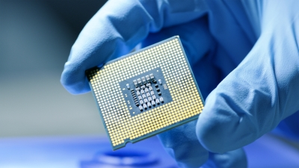
New Delhi, July 8 (IANS) Apple has significantly expanded its partnership with Broadcom through a new multi-year agreement worth more than $30 billion, marking the company's largest manufacturing commitment in the United States and reinforcing its broader strategy to strengthen domestic semiconductor production.
The agreement, which extends through 2031, is expected to support the production of more than 15 billion chips in the US.
As part of the deal, Broadcom will invest $1.5 billion to expand its manufacturing facility in Fort Collins, Colorado, although neither company disclosed when the additional production capacity would become operational.
The expanded partnership builds on Broadcom's long-standing role as a supplier of wireless connectivity components for Apple.
Under the new agreement, Broadcom will manufacture custom silicon in the United States, including wireless connectivity components that power Bluetooth, Wi-Fi and cellular connectivity across multiple generations of Apple devices.
Earlier this week, Broadcom disclosed in a filing with the US Securities and Exchange Commission that it had signed new long-term agreements with Apple to develop and supply custom application-specific integrated circuit (ASIC) silicon products through 2031.
These custom chips will support future generations of Apple products and are expected to play an increasingly important role as ASICs become more widely used for artificial intelligence workloads.
Apple Chief Executive Officer Tim Cook described the agreement as the company's largest commitment under its American Manufacturing Program (AMP), highlighting its significance in expanding domestic manufacturing capabilities.
The announcement also represents the largest component of Apple's $600 billion, four-year US investment plan unveiled in 2025, which aims to strengthen the country's end-to-end silicon supply chain.
In a statement, Apple said it has been working with the US administration and businesses across the country to help build a comprehensive domestic silicon ecosystem, adding that the latest agreement advances those efforts.
Cook also praised President Donald Trump and his administration for supporting American manufacturing initiatives, saying the components to be produced at Broadcom's Fort Collins facility are essential to delivering the performance and connectivity that Apple customers expect across its devices.
--IANS
pk