
Govt invites applications for coal gasification projects under Rs 37,500 crore scheme

New Delhi, July 8 (IANS) The Ministry of Coal has invited applications under the Scheme for Promotion of Surface Coal/Lignite Gasification Projects, approved by the government in May this year with a total financial outlay of Rs 37,500 crore, according to an official statement issued on Wednesday.
The scheme is a major initiative aimed at promoting surface coal and lignite gasification projects, thereby enhancing value addition, reducing import dependence, and supporting India's vision of achieving greater self-reliance in the energy and chemical sectors.
After the approval of the scheme, the guidelines were issued on June 25, followed by the publication of the Request for Proposal (RFP) on July 7, inviting eligible applicants to submit proposals.
To facilitate stakeholder participation and provide clarity on the Scheme provisions and the application process, the Ministry will hold a pre-application conference on July 20. Prospective applicants and other stakeholders are encouraged to participate in the conference and submit their queries for clarification, the statement said.
The last date for submission of applications is September 7.
The Scheme Guidelines, Request for Proposal (RFP), and the detailed application timeline are available on the Ministry of Coal website. Interested entities are encouraged to review the documents.
Coal gasification is a transformative technology that converts coal into synthesis gas (syngas), which can be further utilised for the production of value-added products such as methanol, ammonium nitrate, synthetic natural gas, and a range of industrial chemicals. Recognising its strategic importance, the government has undertaken several policy initiatives and incentive measures to promote coal gasification as a means to enhance energy security, reduce import dependence, and diversify the utilisation of domestic coal resources.
The government conducted roadshows on coal gasification in June in Delhi and Hyderabad, during which discussions were held with stakeholders on policy support, technological innovations, investment opportunities, and project implementation strategies. The platform brought together policymakers, industry leaders, technology providers, and investors to explore collaborative pathways for accelerating the development of coal and lignite gasification projects across the country.
--IANS
sps/vd
Apple unveils $30 billion broadcom pact to boost US chip production
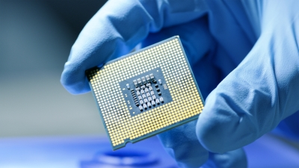
New Delhi, July 8 (IANS) Apple has significantly expanded its partnership with Broadcom through a new multi-year agreement worth more than $30 billion, marking the company's largest manufacturing commitment in the United States and reinforcing its broader strategy to strengthen domestic semiconductor production.
The agreement, which extends through 2031, is expected to support the production of more than 15 billion chips in the US.
As part of the deal, Broadcom will invest $1.5 billion to expand its manufacturing facility in Fort Collins, Colorado, although neither company disclosed when the additional production capacity would become operational.
The expanded partnership builds on Broadcom's long-standing role as a supplier of wireless connectivity components for Apple.
Under the new agreement, Broadcom will manufacture custom silicon in the United States, including wireless connectivity components that power Bluetooth, Wi-Fi and cellular connectivity across multiple generations of Apple devices.
Earlier this week, Broadcom disclosed in a filing with the US Securities and Exchange Commission that it had signed new long-term agreements with Apple to develop and supply custom application-specific integrated circuit (ASIC) silicon products through 2031.
These custom chips will support future generations of Apple products and are expected to play an increasingly important role as ASICs become more widely used for artificial intelligence workloads.
Apple Chief Executive Officer Tim Cook described the agreement as the company's largest commitment under its American Manufacturing Program (AMP), highlighting its significance in expanding domestic manufacturing capabilities.
The announcement also represents the largest component of Apple's $600 billion, four-year US investment plan unveiled in 2025, which aims to strengthen the country's end-to-end silicon supply chain.
In a statement, Apple said it has been working with the US administration and businesses across the country to help build a comprehensive domestic silicon ecosystem, adding that the latest agreement advances those efforts.
Cook also praised President Donald Trump and his administration for supporting American manufacturing initiatives, saying the components to be produced at Broadcom's Fort Collins facility are essential to delivering the performance and connectivity that Apple customers expect across its devices.
--IANS
pk
TEC, BECIL sign MoU to boost broadcasting, convergence technology standards
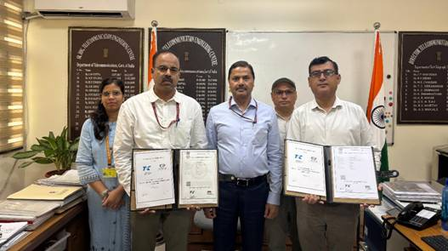
New Delhi, July 8 (IANS) The Telecommunication Engineering Centre (TEC), the technical arm of the Department of Telecommunications (DoT), on Wednesday signed a Memorandum of Understanding (MoU) with Broadcast Engineering Consultants India Limited (BECIL) to jointly undertake studies, technical contributions and standardisation activities in convergence and broadcasting technologies.
The collaboration is aimed at strengthening India's capabilities in developing standards and driving innovation in converged and broadcasting technologies, while supporting the government's flagship initiatives such as Digital India and Aatmanirbhar Bharat.
Under the agreement, TEC and BECIL will work together on developing India-specific standards and testing frameworks, studying international standards, contributing to global standardisation bodies and exploring emerging technologies in the broadcasting and convergence ecosystem.
The MoU was signed in New Delhi by Devendra Singh, Deputy Director General, TEC, and Ramit Lala, Deputy General Manager (Projects), BECIL, in the presence of Syed Tausif Abbas, Senior Deputy Director General and Head of TEC.
The partnership establishes a formal framework for collaboration between the two organisations on research, technical studies and standards development in advanced broadcasting and convergence technologies.
As part of the collaboration, the organisations will jointly study and contribute to technologies such as Direct-to-Mobile (D2M) broadcasting and 5G Broadcast, which are expected to enhance the delivery of multimedia content directly to mobile devices. They will also work on Digital Rights Management (DRM) systems for IPTV and other content distribution platforms, Digital Sound Broadcasting (DSB), and Conditional Access Systems (CAS) along with Subscriber Management Systems (SMS) used by television service providers.
The MoU also covers research on future broadcast and network technologies, including Further evolved Multimedia Broadcast Multicast Service (FeMBMS), application accessibility to promote digital inclusion, intelligent user interfaces for broadcasting services, and artificial intelligence-enabled capabilities over integrated broadband cable networks.
In addition, TEC and BECIL will hold need-based technical consultations on issues referred by the Ministry of Information and Broadcasting, the Department of Telecommunications and the Telecom Regulatory Authority of India (TRAI), providing expert recommendations on emerging technologies and policy-related matters.
The collaboration is also expected to strengthen India's participation in international standardisation efforts through joint technical contributions to global organisations such as the International Telecommunication Union's Telecommunication Standardization Sector (ITU-T), Radiocommunication Sector (ITU-R) and the 3rd Generation Partnership Project (3GPP).
--IANS
pk
AI intervention can transform India’s agriculture economy; agri-startups key to future of farming: MoS
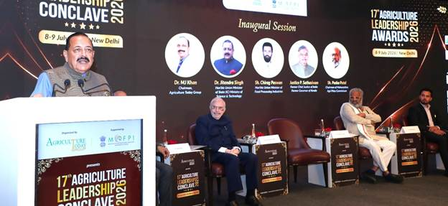
New Delhi, July 8 (IANS) Artificial Intelligence (AI)-driven interventions and science-led agri-startups have the potential to significantly boost India's agricultural economy by improving farm productivity, increasing farmers' incomes and creating large-scale rural employment, Union Minister Dr. Jitendra Singh said on Wednesday.
He stressed that integrating technology, innovation and entrepreneurship into agriculture will be crucial for achieving the vision of a developed India by 2047.
Addressing a gathering, the Minister said India has witnessed an extraordinary expansion of its startup ecosystem over the past decade, growing from nearly 350 registered startups in 2015 to more than 2.3 lakh today, making the country the world's third-largest startup ecosystem.
However, he said the next phase of this startup revolution must be driven by agriculture, where innovation can directly improve farmers' incomes while creating employment opportunities for rural youth.
Dr. Singh said the perception that startups are limited to the information technology sector or metropolitan cities needs to change, as agriculture presents one of the country's biggest entrepreneurial opportunities.
He noted that practical knowledge, innovation and a willingness to learn are often more important than formal academic qualifications, adding that government support, scientific institutions and digital learning platforms have made advanced technologies increasingly accessible to rural communities.
Emphasising the growing role of AI in agriculture, the Minister said artificial intelligence is becoming an indispensable tool for predictive crop management, precision irrigation, weather-based advisories and efficient utilisation of agricultural resources. Citing estimates, he said AI-driven optimisation alone could help every farmer save nearly Rs 5,000 annually, resulting in an estimated Rs 70,000 crore value addition to the country's agricultural economy.
He said scientific advancements such as satellite technology, weather forecasting systems, drone-based surveys, resource mapping and real-time advisory services are enabling farmers to make better decisions on sowing, irrigation and crop management. Improved weather forecasting, he added, can help farmers prepare for changing monsoon patterns and choose suitable crops, reducing climate-related losses.
Describing climate change as one of the biggest challenges facing global agriculture, Dr. Singh said the Ministry of Science and Technology is supporting extensive research on climate-resilient crops, genomics, crop improvement, pest-resistant varieties, precision farming and resource optimisation to make Indian agriculture more resilient and productive.
--IANS
pk
ISMA urges fact-based debate on E20 petrol, rejects misleading claims

New Delhi, July 8 (IANS) Amid growing misinformation about ethanol-blended petrol, the Indian Sugar & Bio-Energy Manufacturers Association (ISMA) -- the apex industry body representing sugar and bio-energy producers -- on Wednesday urged that public discussions on E20 fuel be guided by scientific evidence, verified data and official clarifications rather than unverified claims circulating on social media.
The industry body said recent claims suggesting that E20 petrol causes vehicle damage, attracts insects, invalidates insurance policies or involves the direct mixing of sugarcane juice with petrol are misleading and factually incorrect.
Citing clarifications issued by the Ministry of Petroleum and Natural Gas, ISMA said India's Ethanol Blending Programme has been scientifically validated, rigorously tested and continuously monitored in consultation with oil marketing companies, automobile manufacturers, fuel-testing agencies and other stakeholders.
According to the association, the government has stated that no incidents of engine failure or vehicle breakdown linked to E20 petrol have been reported since the fuel was introduced.
In addition, ISMA noted that fuel-grade ethanol is produced through industrial processes such as fermentation and distillation from feedstocks including sugarcane juice, molasses, broken rice and maize, and complies with stringent fuel-quality standards before being blended with petrol.
Addressing concerns over vehicle performance, the industry said automobile manufacturers, the Society of Indian Automobile Manufacturers (SIAM), the Federation of Indian Petroleum Industry (FIPI), oil marketing companies and the Automotive Research Association of India (ARAI) have maintained that apprehensions regarding E20 are based on misinformation and misunderstanding.
"India's ethanol programme is one of the country's most successful examples of aligning energy security, farmer welfare and cleaner mobility. It is therefore important that public debate is anchored in facts and not fear," said ISMA Director General Deepak Ballani.
The association highlighted that the ethanol blending programme has helped reduce India's dependence on imported crude oil, improve energy security and create additional income opportunities for farmers. It added that, according to official estimates, ethanol blending has enabled the country to save more than Rs 1.4 lakh crore in foreign exchange by reducing crude oil imports.
ISMA also pointed out that ethanol-blended fuel is widely used globally, including in countries such as the United States, Brazil and Japan, with Brazil adopting E27 as its standard petrol blend.
--IANS
ag/
South Indian households top multi-service digital financial services adoption: Report

New Delhi, July 8 (IANS) Households in India’s South region showed the highest multi‑service digital financial services adoption at over 70 per cent, while stark regional differences in access, trust and usage metrics pointed to a need for products that match irregular incomes, a report said on Wednesday.
The report from PwC India and Dvara Research Foundation found that combining digital channels with physical touchpoints — a “phygital” model — produces the strongest enrolment and sustained engagement.
Digital‑only approaches drove enrolments but struggled to convert access into meaningful outcomes, while human touchpoints sustained engagement and trust.
"Informal finance complements formal finance sources as households using both formal and informal sources often show deeper formal engagement," the report said.
The report was prepared from a survey of 4,000 households across 18 districts in seven states.
On regional trends, the report said that in the East, 37 per cent of households never sought financial advice and 23 per cent sought but did not receive it, while 78 per cent of informal loans came from a single source, creating high concentration risk.
The West showed a sharp activation gap — digital financial services acceptance exceeds 95 per cent but 65 per cent of formal credit users reported having faced denial.
Newer customers have the highest access scores but the lowest usage scores, the report added.
The South is network‑driven, where 44 per cent of advice came from third‑party providers and 40 per cent from social networks; formal providers provided only 13 per cent of the financial advice.
The North faces self-exclusion and rural infrastructure gaps as 40 per cent lacked physical access within walking distance, and newer customers showed low trust and conversion was poor from access to engagement.
DFS acceptance in the North is the lowest of all regions at 75.67 per cent, the report said.
The findings suggested that account openings and digital onboarding are necessary but no longer sufficient.
“FSPs must redesign credit, savings, and insurance products around irregular cash flows, pair digital channels with trusted human touchpoints, and measure success through resilience and lived outcomes,” the report said.
"India's financial services ecosystem has made remarkable progress in expanding access. The next frontier is financial health. That means designing products around real household cash flows, combining digital scale with human support, and measuring success through resilience, meaningful usage, and long-term customer outcomes," said Vivek Belgavi, Partner and Leader, Financial Services Advisory, PwC India.
—IANS
aar/ag
Maruti Suzuki commissions 1 MWh battery energy storage system at Kharkhoda plant
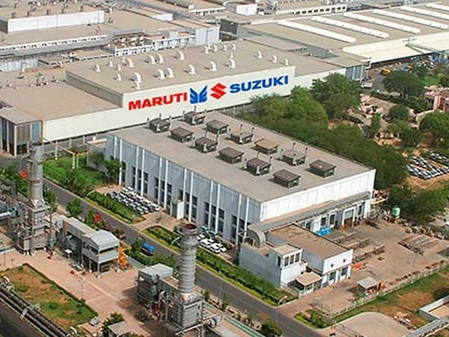
New Delhi, July 8 (IANS) Leading automobile firm Maruti Suzuki India on Wednesday said it has commissioned a 1 MWh Battery Energy Storage System (BESS) at its Kharkhoda manufacturing facility in Haryana as part of its efforts to strengthen renewable energy usage and reduce carbon emissions.
The company said the battery storage system has been integrated into the facility's internal electricity distribution network on a pilot basis to optimise the utilisation of solar power generated at the plant.
It had commissioned a 20 MWp solar power project at the Kharkhoda facility in 2025.
However, during plant holidays and other low-demand periods, the electricity generated by the solar installation could not be fully utilised due to the absence of demand.
The newly commissioned BESS will store surplus electricity generated during such periods and make it available for use when required.
The system is also expected to improve grid stability, the company said.
Announcing the initiative, Hisashi Takeuchi, Managing Director and CEO, Maruti Suzuki India, said the company remains committed to supporting India's efforts to build a self-reliant green energy ecosystem.
"The introduction of Battery Energy Storage System (BESS) at our Kharkhoda facility is part of these continued efforts. With a lifecycle of about 15 years, BESS will help to reduce nearly 54 tonnes of CO2 emissions annually," he said.
Takeuchi added that while the company's production volumes are expected to increase in the coming years, it remains committed to reducing Scope 1 and Scope 2 emissions, both in terms of carbon intensity as well as absolute emissions from manufacturing operations.
He said the company's approach is aligned with parent Suzuki Motor Corporation's environmental vision, which targets a 42 per cent reduction in Scope 1 and Scope 2 carbon emissions by FY31 compared with FY23 levels.
Earlier in July, the company inaugurated its most advanced vehicle manufacturing facility at IMT Kharkhoda in Haryana, with Prime Minister Narendra Modi and Japanese Prime Minister Sanae Takaichi jointly dedicating the plant through video conferencing during the India-Japan Joint Economic Forum here.
Spread across 800 acres, the integrated manufacturing complex has been developed with an adjoining supplier park and is designed to become one of the world's largest vehicle manufacturing facilities when fully operational.
--IANS
ag/
Stock market witness sharpest fall in over 3 months as Sensex crashes 1,677 points

Mumbai, July 8 (IANS) Indian benchmark equity indices witnessed their sharpest single-day decline in more than three months on Wednesday as escalating tensions in West Asia dampened investor sentiment and sparked a broad-based selloff across sectors.
The Sensex plunged 1,677.12 points, or 2.15 per cent, to close at 76,503.60, while the Nifty dropped 516.65 points, or 2.12 per cent, to settle at 23,882.05.
Commenting on Nifty technical outlook, experts said that the 24,000 region is now expected to act as the immediate resistance zone, followed by the 24,200 level.
"A sustained move above these levels will be required to improve the near-term technical structure," a market expert stated.
"On the downside, the 23,800 zone remains a crucial support level. A decisive break below this region could intensify selling pressure and drag the index towards the 23,600–23,500 zone," as per the market analyst.
The sharp fall came as risk appetite weakened after renewed geopolitical uncertainty in West Asia rattled global financial markets.
Investor concerns intensified after US President Donald Trump said the ceasefire with Iran was over, although negotiations could continue following an exchange of strikes by both sides in the Strait of Hormuz.
The heightened tensions prompted investors to reduce exposure to equities, resulting in widespread losses across the market.
Among the Nifty constituents, Jio Financial Services, InterGlobe Aviation and Shriram Finance emerged as the biggest laggards. Only four stocks in the benchmark index managed to end the session in positive territory, while the remaining constituents closed lower.
The decline was broad-based across sectors, with banking stocks bearing the brunt of the selling pressure. The Nifty PSU Bank and the Nifty Bank indices were the worst-performing sectoral gauges during the session.
Meanwhile, the Nifty Metal and Nifty Pharma indices outperformed other sectors despite ending lower, limiting their losses compared to the broader market.
--IANS
pk
Google selects 20 AI-first Indian startups for Accelerator India 2026 cohort
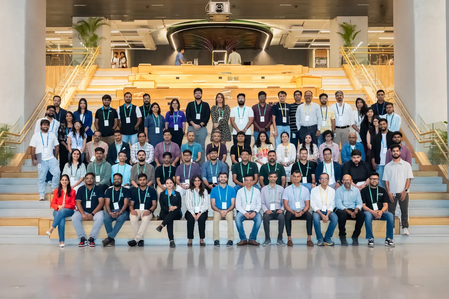
New Delhi, July 8 (IANS) Google on Wednesday unveiled the 2026 cohort of its Google for Startups Accelerator: India programme, selecting 20 AI-first startups from nearly 2,500 applications as it marks the 10th anniversary of its accelerator initiatives in the country.
The new cohort reflects the rapid evolution of India's startup ecosystem from traditional large language model (LLM)-based applications to agentic and multimodal AI systems, with startups developing solutions across sectors including healthcare, climate technology, finance, legal services, manufacturing, cybersecurity and developer tools.
According to Google, the selected startups are building next-generation AI products designed to solve complex real-world problems while bringing artificial intelligence into physical environments and enterprise workflows.
As part of the accelerator programme, the startups will receive access to Google's AI technology stack, along with technical guidance, product development support and go-to-market mentorship aimed at helping them scale their businesses globally.
Commenting on the announcement, Preeti Lobana, Vice President and Country Manager, Google India, said the country's startup ecosystem is entering a new phase driven by agentic workflows and physical AI systems capable of addressing high-impact challenges.
"India’s startup ecosystem is moving into a new frontier of agentic workflows and physical AI systems engineered to solve high-stakes, real-world challenges. As we mark a decade of Google Accelerator programs, the 2026 Indian cohort represents the vanguard of this technological shift," Lobana mentioned.
The 2026 cohort includes startups working across a wide range of sectors. Legal technology startup Adalat AI is developing an end-to-end AI-powered justice platform to automate clerical processes and accelerate court case resolution.
Healthcare startups Aikenist and FlexifyMe are using AI to improve radiology workflows and chronic pain recovery, respectively.
Climate-focused startups Aurassure and Fitsol are building AI-driven solutions for hyperlocal climate monitoring, carbon tracking and enterprise sustainability.
Fashion technology startup Ayna is helping brands create AI-powered product catalogues, while finance-focused companies Binocs, Dodo Payments and OnFinanceAI are leveraging AI to automate due diligence, merchant services, compliance and risk management.
Developer-focused startups such as CraftifAI, H2Loop AI, CreateOS by NodeOps, Pipeshift and TartanHQ are building AI infrastructure, coding models, software development platforms and enterprise integration tools.
Manufacturing startup Jidoka is developing AI-powered computer vision systems for automated inspection, while wearable technology company Proxgy combines AI, IoT and SaaS to digitise enterprise operations.
The cohort also includes Soundverse AI, which is building AI tools for music creation, SuperBryn, which focuses on improving the reliability of voice AI systems, and cybersecurity startup Zeron, which develops AI-powered security agents for identifying and addressing software and cloud vulnerabilities.
--IANS
pk
SAIL, PT Krakatau Steel to explore possibility of setting up JV in Indonesia
New Delhi, July 8 (IANS) Public sector giant Steel Authority of India Limited (SAIL) has signed a Memorandum of Understanding (MoU) with Indonesia's PT Krakatau Steel (Persero) Tbk to explore the possibility of setting up a joint venture for manufacturing stainless steel slabs in Indonesia during the high-level engagements between the Indian and Indonesian governments, as part of Prime Minister Narendra Modi's visit to Jakarta, a SAIL statement said on Wednesday.
The proposed collaboration brings together the complementary strengths of the two companies. Indonesia offers access to one of the world's richest reserves of nickel - an essential raw material for stainless steel and SAIL brings over five decades of experience in steelmaking, project execution and operating large integrated steel plants.
This MoU marks an important step in the growing industrial partnership between India and Indonesia, reflecting the shared vision of both countries to build stronger and more resilient manufacturing value chains, the statement said.
The proposed joint venture is expected to support the increasing demand for stainless steel in India and the ASEAN region while promoting value addition to Indonesia's mineral resources. It also opens new avenues for technology exchange, industrial collaboration, skill development and sustainable economic growth for both countries.
Further details regarding the proposed joint venture, including project capacity, investment structure, implementation schedule and technology configuration, will be finalised following completion of the feasibility studies and receipt of the necessary approvals from both organisations and the respective governments.
This collaboration is another milestone in SAIL's journey towards becoming a globally competitive steel company with a diversified product portfolio and a stronger international presence, the statement said.
SAIL Chairman & Managing Director Ashok Kumar Panda said: "This partnership reflects SAIL's commitment to looking beyond conventional boundaries and building capabilities for the future. As demand for stainless steel continues to grow across sectors such as infrastructure, mobility, renewable energy and manufacturing, access to reliable raw materials and strategic partnerships becomes increasingly important."
"We believe this collaboration with PT Krakatau Steel has the potential to create long-term value for both companies while strengthening the economic partnership between India and Indonesia," he added.
--IANS
sps/vd