
Zerodha CEO slams Groww’s pivot to regular mutual funds

New Delhi, July 9 (IANS) Zerodha founder and CEO Nithin Kamath on Thursday took a swipe at rival platforms on X after Groww, one of India’s largest retail brokers by active users, began offering regular mutual funds through its subscription service Groww Prime.
In a social media post, Kamath said many platforms that launched direct mutual fund offerings around the time Zerodha introduced its Coin platform have since “disappeared or pivoted to something else.”
Remaining competitors are “rethinking their choice of offering direct plans,” he said, adding that "Zerodha will continue to offer direct mutual funds for free."
His remarks followed Bengaluru-based Groww expanding its product mix to include regular mutual funds on its subscription-based Groww Prime platform. The product, initially launched for a select set of users earlier this year, has now been rolled out to the company's two-crore customer base.
Groww had previously offered only direct mutual funds, claiming them to be a low-cost investment option that can generate better long-term returns by eliminating distributor commissions.
Kamath said that Zerodha's pricing philosophy has remained unchanged since it pioneered the discount brokerage model in 2010.
"When we started the discount brokerage model in India in 2010, we decided to charge the same fee regardless of trade size. The logic was simple: if the effort to execute a trade is the same, why should customers pay differently?" he said.
Kamath added that Zerodha's philosophy remained the same even after the launch of Coin, choosing to offer only direct mutual funds instead of charging commissions through regular plans.
"You can't call yourself a discount or a low-cost broker if you charge a percentage fee on transactions, because there's no incremental effort in executing a larger order," he said.
Kamath also urged investors to check if they are holding regular mutual funds, adding that Zerodha would help customers switch regular funds to direct plans if they opted so.
—IANS
aar/pk
Quality Council of India, NSIC join hands to boost market access for MSMEs

New Delhi, July 9 (IANS) The Quality Council of India and the National Small Industries Corporation Limited signed a five-year memorandum of understanding (MoU) to establish a collaborative ecosystem aimed at strengthening quality, competitiveness and market access for micro, small and medium enterprises (MSMEs) across the country, an official statement said on Thursday.
The partnership will combine QCI’s expertise in accreditation and certification with NSIC’s extensive MSME support network to accelerate adoption of globally recognised quality standards and enhance the growth of Indian enterprises, the statement from Ministry of Commerce & Industry said.
It will integrate initiatives including the MSME Sustainable (ZED) Certification Scheme, MSME Global Mart, the TEAM Initiative and the Single Point Registration Scheme to enable firms to leverage the strengths of both organisations through a unified support framework, the statement added.
It will facilitate wider adoption of Zero Defect Zero Effect (ZED) Certification, improve digital market access, strengthen testing and accreditation infrastructure, and expand capacity-building opportunities for MSMEs and training institutions.
Under the partnership, ZED-certified MSMEs will receive enhanced opportunities for digital commerce through MSME Global Mart, onboarding on the Open Network for Digital Commerce (ONDC) under the TEAM Initiative, AI-enabled product cataloguing, and export promotion through dedicated digital platforms.
The collaboration will also strengthen convergence between ZED Certification and NSIC's Single Point Registration Scheme, support NABL accreditation for NSIC testing facilities, and enable NABET-led assessment, accreditation and customised capacity-building programmes for NSIC training centres and laboratories.
“To ensure effective implementation of the partnership, QCI and NSIC will constitute a Joint Coordination Committee (JCC) comprising representatives from both organisations,” the statement noted.
The committee will meet every quarter to identify new areas of collaboration, monitor progress and guide the implementation of joint initiatives during the partnership.
Chairman-cum-Managing Director, NSIC, Dr. Subhransu Sekhar Acharya said the partnership with QCI brings together quality, market access and institutional support to create greater opportunities for MSMEs to enhance their competitiveness, expand into new markets and achieve sustainable growth.
Senior Director and Head, National Division for Industry Excellence (NDIE), and Chief Executive Officer, National Board for Quality Promotion (NBQP), QCI, Dr. A. Raj said the partnership would enhance MSME competitiveness, strengthen quality consciousness and further advance QCI's National Quality Campaign.
—IANS
aar/pk
Ecosystem, AI to shape next phase of India’s GCC growth: GIFT City CEO

New Delhi, July 9 (IANS) The next generation of global capability centres (GCCs) will be driven by the strength of the ecosystem they operate in rather than location or incentives alone, Sanjay Kaul, Group CEO and Managing Director of GIFT City, said on Thursday.
Speaking at the session on "The Evolving GCC Ecosystem: Key Insights" during the second edition of the National CII GCC Business Summit organised by the Confederation of Indian Industry (CII) in New Delhi, Kaul said the rapid adoption of artificial intelligence (AI) across industries has made the need for robust digital infrastructure and innovation-friendly regulatory frameworks more critical than ever.
"With AI entering all spheres of industry, we need a robust ecosystem supported by strong connectivity and digital infrastructure. We also need an ecosystem where innovation can thrive, backed by a regulatory framework that facilitates it. We have it in GIFT City," he said.
Kaul said similar ecosystems across the country would enable GCCs to flourish, adding that future GCCs would increasingly choose destinations offering integrated capabilities rather than isolated fiscal incentives.
"The next generation of GCCs would not be driven purely by locational factors or by incentives but by an ecosystem. They will look for a strong ecosystem where one system feeds another; it is a whole continuum," he said.
He noted that while GCCs initially established operations in India because of the country's large talent pool, they are now being attracted by India's expanding capabilities and the broader ecosystem supporting innovation, making the country an even more compelling destination for global enterprises.
According to Kaul, companies are increasingly prioritising locations that offer quality infrastructure, digital connectivity, predictable regulations, high standards of living and opportunities for innovation instead of standalone incentives.
The session also examined India's emergence as the world's leading GCC destination, with speakers observing that the country has moved beyond cost arbitrage to capability arbitrage and is now entering an era of "control arbitrage", where global companies are entrusting Indian GCCs with strategic decision-making and enterprise-wide transformation.
--IANS
pk
NASSCOM bats for AI-driven transformation of education system
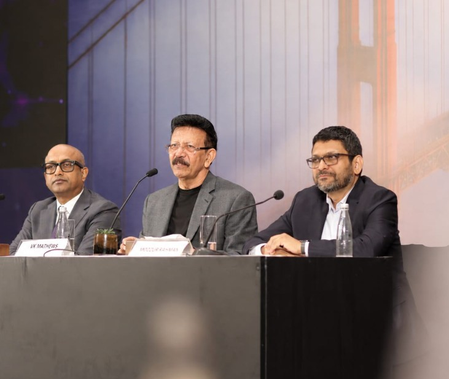
Thiruvananthapuram, July 9 (IANS) Artificial Intelligence (AI) must become an integral part of India’s education system and find applications across sectors beyond information technology if the country is to emerge as a global leader in the field, NASSCOM President Rajesh Nambiar said here on Thursday.
Highlighting NASSCOM's role in shaping India's AI ecosystem, Nambiar said the industry body is working closely with the University Grants Commission (UGC) and other national education agencies to transform academic curricula by integrating AI.
"We are working with several agencies to ensure that the latest developments in AI are incorporated into the curriculum across levels," he said, stressing that preparing students for an AI-driven future has become a priority.
Nambiar revealed that he had recently met Kerala Chief Minister V.D. Satheesan to discuss a wide range of issues related to information technology and artificial intelligence.
Describing Kerala as a state with abundant talent, he said both the state and the Centre have distinct yet complementary roles in advancing India's AI ambitions.
"Policies have to be in place, and it is encouraging that Kerala has made AI a separate cabinet portfolio," he said, adding that governments, academia and industry must work together to build a strong AI ecosystem.
Observing that AI is reshaping economies and societies across the world, Nambiar said the technology presents both uncertainty and unprecedented opportunities.
At the same time, he noted, AI has increasingly become a strategic tool capable of influencing geopolitical power and global competitiveness.
"AI should not be limited to the IT sector alone," he said, arguing that the technology must be adopted across industries, governance, healthcare, education and manufacturing to unlock its full potential.
One of the speakers at the event said successive governments in Kerala have consistently introduced progressive IT policies that have strengthened the state's technology ecosystem. They said that internships should be made mandatory for students as stronger industry-academia linkages are essential to create a workforce equipped for the rapidly evolving AI era.
--IANS
sg/skp
Innovation, global collaboration, climate-resilient tech key to strengthening India’s seed ecosystem: Industry

New Delhi, July 9 (IANS) Innovation-led research, science-based regulatory frameworks, climate-resilient technologies and deeper global collaboration will be central to strengthening India's seed ecosystem and enhancing agricultural productivity, experts said on Thursday.
Policymakers, scientists, industry leaders and international experts at ASSOCHAM's India Seed Trade & Innovation Summit 2026 discussed strategies to strengthen India's competitiveness in the global seed value chain through innovation, sustainability and international cooperation, a release from the industry chamber ASSOCHAM said.
"While we have made significant progress, critical challenges around subsidies, access, and licensing continue to limit the pace and scale of impact. The next phase of agricultural transformation will depend on strong partnerships that move us beyond self-sufficiency towards climate resilience, improved nutrition, and sustainable livelihoods," said Dr. Himanshu Pathak, Director General, ICRISAT.
The deliberations highlighted that strengthening India's seed ecosystem will require sustained investments in research and development, accelerated adoption of biotechnology and next-generation breeding technologies, stronger public-private partnerships, and harmonised global regulatory frameworks.
Further, an enabling policy environment that promotes innovation while ensuring quality, sustainability and farmer welfare is also central to position the country as a preferred global hub for seed trade.
The two-day summit drew delegates from 24 countries, along with senior government representatives, researchers, seed companies, agri-biotechnology firms, international organisations, academia and startups.
Dr. Venkatram Vasantavada, Chair – Agriculture & Allied Sectors Council (AP & Telangana), ASSOCHAM and Managing Director & CEO, Seedworks International Limited, said that India has emerged as one of the world's leading seed markets, supported by a strong scientific community, progressive entrepreneurs, and robust public and private research institutions.
Sunil Sharma, Former Special Chief Secretary, Telangana, said that agricultural innovation requires a shared commitment from farmers, researchers, policymakers, and the private sector.
"By combining traditional agriculture with modern science such as AI, we can build more resilient food systems, enhance productivity, and create a sustainable and prosperous future for everyone,” Sharma added.
The technical deliberations centred on strengthening international seed trade and market access, enhancing India's export competitiveness, accelerating the adoption of biotechnology, digital agriculture and precision breeding technologies as well as safeguarding intellectual property.
—IANS
aar/pk
Private credit to emerge as key growth engine for India’s economy: Industry leaders

Mumbai, July 9 (IANS) India's private credit market is set for sustained expansion over the coming years, driven by growing awareness, regulatory support, digital innovation and rising demand for alternative financing, industry leaders said on Thursday.
Speaking to IANS on the sidelines of IVCA Private Credit Summit 2026 here, they said private credit is emerging as a mainstream asset class that complements traditional bank lending, particularly for startups, MSMEs and mid-market businesses seeking flexible funding solutions.
Monu Jain, Partner at Aavishkaar Capital and Co-Chair of the Private Credit Council at IVCA, said one of the summit's primary objectives is to increase awareness about private credit, which remains a relatively small segment despite its strong growth trajectory.
"The summit brings together funds, investors and other ecosystem participants to understand the different forms of private credit, who it serves, how borrowers can prepare for it and the various facilitators that support the ecosystem," she said.
IVCA President Rajat Tandon said private credit has become an important financing option as startups and growth-stage companies increasingly seek debt financing instead of diluting equity.
He explained that while banks traditionally rely on collateral-based lending, venture debt and private credit provide flexible funding alternatives for businesses at different stages of growth.
"Right up to, you know, where investments you saw in real estate, nearly about 40 per cent of the investments today in the country are through private credit. Coming to my very next question, as we know that RBI has a tweak to certain norms in terms of private lending," he told IANS.
Discussing digitalisation, he said improved access to information through digital platforms is making financing more efficient, especially for MSMEs. However, he emphasised that stronger cybersecurity measures, data protection and responsible use of digital information will remain critical as the ecosystem evolves.
Karthik Athreya, Managing Director at Sundaram Alternates, described private credit as an emerging asset class that is gradually becoming part of mainstream investment portfolios.
"I think private credit is more of an emerging asset class, which is slowly becoming part of mainstream investment for investors, particularly in the country," Athreya told IANS.
Unlike conventional fixed-income products such as bank fixed deposits or debt mutual funds, he said private credit has the potential to generate double-digit returns.
--IANS
pk
Residential sales in 8 key Indian cities cross 1.71 lakh units in H1 2026

New Delhi, July 9 (IANS) India’s residential market saw its strongest first‑half sales performances during the first half this year, as residential sales across eight major cities stood at 171,471 units, a marginal 1 per cent increase from the same period in previous year, a report said on Thursday.
The report from Knight Frank India said the real estate activity settled into a phase of consolidation, while developers launched 1,87,350 units, up 4 per cent year‑on‑year. The near‑flat sales trajectory after four years of recovery indicated stabilisation rather than renewed growth, the report added.
Stable economic fundamentals, infrastructure-led urban development, steady employment conditions have kept end-user demand buoyant supporting residential activity across India's leading markets. Meanwhile, developers maintained a disciplined approach to new supply, enabling the market to remain fundamentally balanced despite evolving buyer preferences and a higher pricing environment.
The report said that H1 2026 marked a shift toward premium housing as homes priced above Rs 10 million accounted for 54 per cent of total sales, up from 49 per cent a year earlier.
It reflected a genuine premium demand from higher-income households, it also showcases the progressive erosion of the affordable segment, as several years of sustained price appreciation have repriced mid-tier inventory into higher brackets.
New supply at lower price points have remained constrained, the report said, adding that the market therefore remains historically active in absolute terms even as the breadth of its buyer base narrows.
"While growth has reduced following a steep recovery from pandemic lows, the market’s underlying fundamentals remain firmly intact. Premium homes now account for more than half of all residential sales, reflecting rising household incomes, evolving buyer aspirations and growing confidence in long-term homeownership,” said Shishir Baijal, International Partner, Chairman and Managing Director, Knight Frank India.
New supply has exceeded sales in most markets across successive periods, a trend in place since 2022, with the launches-to-sales gap at around 15,879 units during the half-year.
Residential prices rose across markets, though at a more measured pace than in 2023–24. Mumbai remained the most expensive residential market with average prices at Rs 36,881 per sq. ft., followed by Delhi at Rs 26,027 and Gurugram at Rs 18,354 per sq. ft.
--IANS
aar/na
RFCL shuts down again due to ammonia leak, urea production comes to a halt
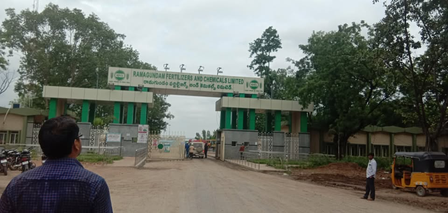
Hyderabad, July 9 (IANS) Ramagundam Fertilisers and Chemicals Limited (RFCL) in Telangana’s Peddapalli district has been shut down due to a leakage in its ammonia pipeline.
Urea production at the public sector company has come to a halt following the shutdown of all units in the plant due to the leakage.
According to sources, technical problems led to the leakage. As the problem could not be rectified, the plant was shut down. It may take at least one week to resume production after rectifying the problem.
With the urea production coming to a halt, the fertiliser supply to Telangana, Andhra Pradesh and five other states is likely to be affected, raising concern over supply to farmers during the ongoing Kharif crop season.
This is the second time this year that an ammonia leak has forced the RFCL plant's shutdown. The plant was closed for a week in March.
The plant has a capacity of 3,850 tonnes per day, but it had been operating at 50 per cent capacity for some time due to gas shortages due to the ongoing conflict in the Middle East.
As RFCL is the only source for Telangana, the state government has been demanding that the Centre allocate the entire urea output from the plant to Telangana.
Meanwhile, the Telangana government has taken an innovative step to make subsidised urea more easily accessible to farmers across the state. To enhance transparency and ensure timely distribution, the state Agriculture Department has introduced urea booking services at all MeeSeva centres across the state.
Farmers who are unable to book urea through the fertiliser booking app can visit their nearest MeeSeva centre and book urea with the help of an operator. MeeSeva, functioning under the leadership of IT and Industries Minister Duddilla Sridhar Babu, is launching this new initiative in collaboration with the Agriculture Department.
According to an official release, the farmer must visit the nearest MeeSeva centre with their Pattadar Passbook (PPB) number. The MeeSeva operator collects the farmer's details and records information regarding the cultivated area and crops.
The required quantity of urea is booked with the fertiliser dealer selected by the farmer. A booking ID is issued immediately after verifying the OTP sent to the farmer's registered mobile number.
The booking ID obtained through MeeSeva is valid for 48 hours, excluding the date of booking. Farmers must contact their chosen fertiliser dealer and purchase urea before the booking deadline expires.
The Agriculture Department advises that subsidised urea booking should be done only through the official fertiliser booking app or MeeSeva centres.
--IANS
ms/vd
TCS Q1 net profit slips 3 pc sequentially; declares Rs 12 interim dividend
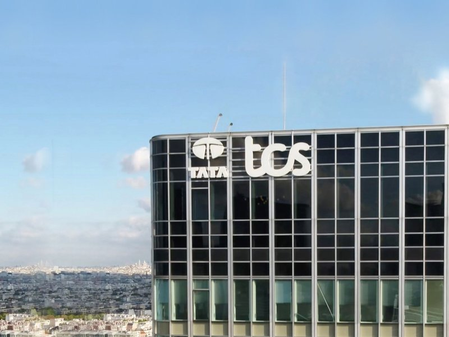
Mumbai, July 9 (IANS) Tata Consultancy Services (TCS), India's largest software services exporter, on Thursday reported a consolidated net profit of Rs 13,349 crore for the first quarter of FY27, down 3 per cent from Rs 13,718 crore recorded in the January-March quarter of the previous financial year (Q4 FY26).
On a year-on-year basis, however, net profit rose 5 per cent from Rs 12,760 crore reported in the corresponding quarter last year (Q1 FY26).
Revenue from operations increased 14 per cent year-on-year to Rs 72,275 crore during the April-June quarter, compared with Rs 63,437 crore a year earlier.
Sequentially, revenue rose 2 per cent from Rs 70,698 crore in the previous quarter.
The company's board declared an interim dividend of Rs 12 per equity share. TCS has fixed July 15, 2026 as the record date to determine eligible shareholders, while the dividend will be paid on July 31, 2026.
Commenting on the results, Chief Executive Officer and Managing Director K. Krithivasan said the company maintained its growth momentum despite a challenging global business environment.
"Q1 FY27 reflects continued growth momentum and the strength of our strategic positioning, despite geopolitical and macro-economic headwinds. We delivered a strong order book of $9.5 billion, including a marquee AI-led transformation deal with SKF, while continuing to add clients across key revenue bands and scaling our AI business to a $2.6 billion annualized revenue run rate," he said.
For the quarter, TCS reported an operating margin of 24.0 per cent and a net margin of 19.2 per cent. Net cash generated from operations stood at Rs 12,412 crore, equivalent to 93 per cent of net income.
The company's total workforce stood at 593,798 employees at the end of the June quarter, while the last twelve months (LTM) attrition rate in its IT Services business was 13.6 per cent.
--IANS
pk
Centre rolls out customs duty relief on inputs to boost electronic goods production

New Delhi, July 9 (IANS) The government has rolled out more customs duty relief to lower the cost of importing a wide range of components and capital goods used to produce electronic goods such as smartphones and lithium-ion battery manufacturing, in order to promote domestic production of finished products.
The Central Board of Indirect Taxes and Customs (CBIC) has issued three separate notifications to roll out the customs duty waiver and expand the list of goods eligible for concessional duty.
The government’s has issued a notification exempting five components used in manufacturing display assemblies for automotive, medical and industrial applications from basic customs duty until March 31, 2029. These include cells, flexible printed circuit assemblies (FPCAs), backlight units, frames and anisotropic conductive film (ACF).
The exemption, however, does not cover display assemblies for mobile phones, smartwatches, smart meters, television panels and interactive flat-panel displays.
A separate notification has been issued to extended zero customs duty until March 31, 2029, on six components used in manufacturing inductor coil modules for wireless charging in cellular mobile phones. These include nano-crystalline assemblies, E-shields, PET liners, PC shims, stranded and NFC coils, and neodymium-iron-boron (NdFeB) magnets.
The third CBIC notification has been issued for replacing the existing list of machinery eligible for concessional customs duty for lithium-ion cell manufacturing with an expanded list of 85 capital goods.
The revised list includes coating machines, winding machines, welding systems, testing equipment, formation machines, drying systems and other specialised manufacturing equipment used across the lithium-ion cell production process. The move aims to improve cost competitiveness and support domestic value addition in electronics and electric vehicles.
The duty waivers and concessions, which are valid until March 31, 2029, aim to reduce the import cost of critical components and capital goods, which will improve cost competitiveness, encourage greater domestic value addition. This reinforces the government’s broader strategy of building domestic capabilities in advanced electronics, battery manufacturing and electric mobility supply chains.
--IANS
sps/na