
SEBI shifts FPI registration fees from US dollar to rupee denomination

Mumbai, July 8 (IANS) The Securities and Exchange Board of India (SEBI) has notified amendments to the Foreign Portfolio Investors (FPI) Regulations, replacing the US dollar-denominated fee structure with a rupee-denominated payment mechanism for foreign investors and foreign venture capital investors (FVCIs).
The changes will come into effect after six months, giving foreign investors and intermediaries adequate time to transition to the new system.
According to a notification issued by SEBI, the existing fee of $1,000 has been replaced with Rs 90,000 in eligible foreign exchange equivalent.
The registration fee for Category-I FPIs and FVCIs has also been revised from $2,500 to Rs 2.3 lakh. The market watchdog has similarly revised the late fee and continuance fee.
Under the amended rules, designated depository participants (DDPs) will be required to remit the fees collected from FPIs and FVCIs to Sebi within five working days of granting registration.
In addition, the regulator has simplified the registration process by including the date of birth or date of incorporation in the common application form for FPI registration.
The change is aimed at facilitating Permanent Account Number (PAN) applications in line with the notification issued by the Central Board of Direct Taxes (CBDT) in March.
Sebi collected $12.98 million, including GST, during the financial year 2025-26 from registration, continuation and other fees paid by FPIs and FVCIs.
The regulator said the move to a rupee-denominated fee structure addresses operational challenges arising from the existing dollar-based system, including manual accounting and invoicing, the lack of real-time accounting visibility, and delays in financial reporting.
Moreover, the regulator has revised the fee payment mechanism for custodians, replacing the annual payment of Rs 10 lakh with a monthly payment of Rs 85,000.
--IANS
ag/
Sensex, Nifty open lower amid renewed Middle East tensions

Mumbai, July 8 (IANS) Domestic equity markets opened lower on Wednesday, tracking weak global cues amid renewed geopolitical tensions in the Middle East.
Sensex opened 364.27 points or 0.46 per cent lower at 77,816.45, while Nifty slipped 139.15 points or 0.57 per cent to 24,259.55.
Among sectoral indices, Nifty Oil & Gas led the losses, declining more than 1 per cent.
Nifty Media, Nifty PSU Bank, Nifty Realty, Nifty Cement, Nifty Metal, Nifty Auto and Nifty FMCG also declined by up to almost 1 per cent.
On the gaining side, pharma stocks outperformed, with Nifty Pharma rising 0.73 per cent. Nifty IT also traded in the green, up 0.25 per cent.
Among the Nifty 50 stocks, Shriram Finance, InterGlobe Aviation, Asian Paints, Bajaj Finance, Eicher Motors, Larsen & Toubro and JSW Steel were among the top losers.
According to market experts, the weak opening was largely driven by negative global cues after a sell-off in US technology stocks and subdued sentiment across Asian markets.
Additionally, rising geopolitical tensions in the Middle East pushed crude oil prices above $75 a barrel.
The near-term outlook remains cautious, with the Nifty facing resistance around the 24,450 level and immediate support at 24,200, analysts said, adding that a sustained breach below this support could drag the index towards the key 24,000 mark.
The US military has launched a series of strikes against Iran, saying the action was in response to alleged Iranian attacks on three commercial vessels transiting the Strait of Hormuz.
In a statement, the US Central Command (CENTCOM) said its forces had begun a series of powerful strikes to impose high costs on Iran for targeting and attacking commercial shipping.
On the commodities front, international benchmark Brent crude surged nearly 3 per cent to $76.39 a barrel, while US West Texas Intermediate (WTI) crude gained more than 3 per cent to $72.72 a barrel.
Asian markets traded mixed, with Japan's Nikkei edging lower, while Hong Kong's Hang Seng rose more than 2 per cent. South Korea's KOSPI was trading over 1 per cent lower.
--IANS
ag/
S. Korea posts record-high current account surplus in May: BOK
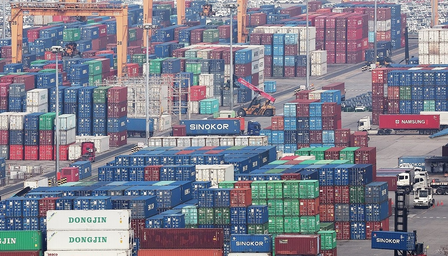
Seoul, July 8 (IANS) South Korea posted an all-time high current account surplus in May on robust exports of semiconductors, central bank data showed on Wednesday.
The current account surplus totalled $38.61 billion in May, up from $28.29 billion the previous month, according to the data from the Bank of Korea (BOK).
It marked the largest monthly current account surplus ever, renewing the previous record of $37.93 billion set in March, reports Yonhap news agency.
Compared with the same month a year earlier, the figure surged from $9.91 billion.
South Korea has reported a current account surplus every month since May 2023, extending its winning streak to 37 consecutive months, marking the second longest in history.
In the first five months of the year, the country recorded a cumulative current account surplus of $141.28 billion, sharply higher than the $33.9 billion surplus posted during the same period last year.
"We expected a current account surplus of $151.5 billion for the first half, and that figure will likely be exceeded in June," a BOK official said. "For 2026 as a whole, the annual current account surplus will likely surpass our earlier forecast of $250 billion."
The goods account posted a surplus of $37.86 billion in May, marking the largest, as exports surged 62.9 percent on-year to $94.34 billion, while imports went up 22.2 percent to about $56.48 billion.
Exports of information technology products soared 128.9 percent from a year earlier, including a 167.7 percent surge in chip shipments and a 249.4 percent rise in computer peripherals.
The services account recorded a deficit of $1.09 billion in May, narrowing the loss from the previous month's $2.42 billion on decreasing travel deficit and intellectual property-related payments.
The primary income account, which includes wages of foreign workers, as well as dividend and interest income from abroad, posted a surplus of $2.17 billion on increased dividend income.
The secondary income account recorded a $330 million deficit.
—IANS
na/
NFRA begins probe into Rajesh Exports financial misstatement case
Mumbai, July 7 (IANS) The National Financial Reporting Authority (NFRA) has initiated its investigation into the alleged financial misstatement case involving Rajesh Exports, with Chairman Nitin Gupta confirming that the audit regulator has begun its process following a referral from the Securities and Exchange Board of India (SEBI).
Speaking on the sidelines of a conference organised by the Federation of Indian Chambers of Commerce and Industry (FICCI) in Mumbai on Tuesday, Gupta said the regulator had already started examining the matter but declined to specify a timeline for its completion.
"We are working on it. We have started our process," Gupta said.
The case relates to Sebi's action against the gold refiner over alleged discrepancies in its financial statements amounting to Rs 15.15 trillion over an extended period. In June, the market regulator referred the matter to the NFRA for appropriate action against the company's statutory auditors.
Gupta also provided an update on the NFRA's ongoing investigation into accounting irregularities in the derivatives portfolio of IndusInd Bank, indicating that the exercise could take considerable time because of its complexity.
"The investigation may take longer also. It has multiple years involved, multiple auditors are involved. So, it is not a thing which you put an axe and it is done. It has to be in a systemic manner and we are doing that," he said.
He added that the NFRA's role extends beyond investigations and includes putting in place guardrails to curb accounting and auditing malpractices. Gupta said the authority has already approached the Ministry of Corporate Affairs (MCA) seeking changes to auditing standards, adding that the proposals are currently under the ministry's consideration.
Addressing the conference on "Agile Governance: Navigating Artificial Intelligence (AI) & Regulatory Landscape", Gupta cautioned that while AI has the potential to significantly strengthen governance and compliance, it also introduces new risks that organisations must address carefully.
He said AI systems often produce fast, fluent and confident responses that can easily be mistaken for accurate information.
"The same system that can flag an anomaly can also manufacture a plausible sounding but entirely hallucinated explanation for it," Gupta said.
He also warned against the tendency to deploy AI rapidly with the assumption that governance and oversight mechanisms can be added later.
"The board and audit committees must build the internal courage and internal mechanism to challenge the management, including challenging the deployment of AI, its data, the assumptions, the control systems, the failure modes etc and not simply accept the outputs as presented. The chief financial officers (CFOs) and financial functions must resist the temptation to let efficiency substitute for ownership of professional judgment," he said.
--IANS
pk
India should target 25 pc share of $179 billion global toy market: FM Sitharaman
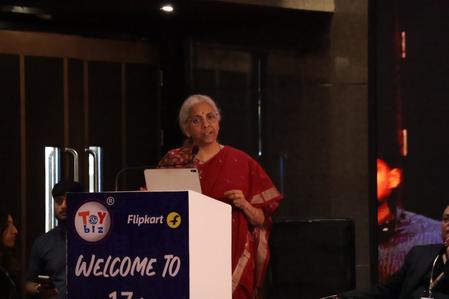
New Delhi, July 7 (IANS) Finance Minister Nirmala Sitharaman on Tuesday called on India's toy industry to aim for a significantly larger share of the global market, urging the sector to target one-fourth of the worldwide toy business, which is projected to reach $179 billion by 2032.
Addressing the 17th Toy Biz International B2B Expo 2026 organised by the Toy Association of India in New Delhi, the Finance Minister said the country's current market projections should be viewed in the context of the rapidly expanding global opportunity.
"India's toy market is projected to reach $5 billion by 2034, but I want to have a reality check. The global growth is such that the number for 2032 is $179 billion," FM Sitharaman said, encouraging the industry to set more ambitious goals.
Highlighting the government's efforts to strengthen the domestic toy ecosystem, FM Sitharaman said stricter quality standards and regulatory measures have helped transform the sector.
FM Sitharaman noted that the Bureau of Indian Standards (BIS) stepped up enforcement to ensure that only safe and quality-compliant toys enter the Indian market.
"The Bureau of Indian Standards intensified its enforcement so that we bring in only genuine, safe toys if at all we want imports. They didn't allow unsafe toys to come into our airports and shopping centres," the minister mentioned said.
FM Sitharaman also highlighted the government's National Action Plan for Toys, announced in the FY26 Budget, which aims to position India as a global hub for toy manufacturing.
The initiative focuses on developing manufacturing clusters, enhancing skills and building a robust ecosystem capable of producing high-quality, innovative, sustainable and uniquely Indian toys under the 'Made in India' brand.
"We are not just talking about manufacturing more toys, but all departments are coming together to help and create a framework so that every aspect of toy-making is facilitated," the Finance Minister said.
--IANS
pk
Quality power supply must be the next phase of power reforms: Experts
New Delhi, July 7 (IANS) Reliable electricity supply is not merely about powering lights and fans but is closely linked to dignity, livelihoods and equitable development, former Uttar Pradesh Electricity Regulatory Commission (UPERC) Chairman Suresh Kumar Agarwal said on Tuesday, while stressing the need for structural reforms to improve the quality of power supply in rural areas.
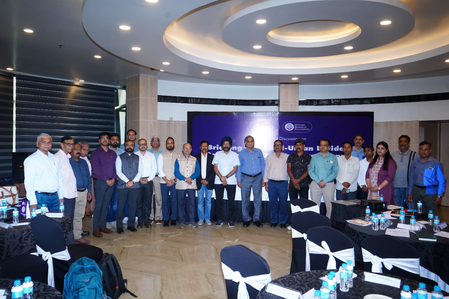
Delivering the keynote address at a roundtable on "Bridging the Rural-Urban Divide in Reliable and Quality Power Supply: A Path to Equitable Development with focus on Uttar Pradesh", organised by APCO in collaboration with Chintan Research Foundation (CRF), Agarwal said that while India has made remarkable progress in expanding electricity access through increased generation capacity and nationwide electrification, ensuring reliable and quality power supply, particularly in rural areas, remains a significant challenge.
"Electricity supply is not just for light and fan it is a matter of dignity, honour and livelihood”, Kumar said.
"Past reforms successfully expanded electricity access through generation capacity and nationwide electrification, but reliability and service quality, particularly in rural areas, continue to remain major challenges," he mentioned.
He said addressing network constraints, staffing shortages, distribution planning and effective monitoring of rural feeders would be critical to improving service quality and ensuring equitable access to electricity.
Welcoming participants, APCO Associate Director Vipin Chanddra highlighted the importance of discussions aimed at strengthening the power distribution system.
In his opening remarks, Dr Debajit Palit, Centre Head of the Centre for Climate Change and Energy Transition at CRF, said India's electricity sector has reached a critical stage where future reforms must shift focus from access to reliability, quality and consumer-centric services.
He noted that with renewable energy playing an increasingly important role in meeting electricity demand, the distribution segment has become the crucial link between policy and consumers. Uttar Pradesh, with its rapidly rising power demand, expanding industrialisation, implementation of the PM Surya Ghar initiative and persistent rural-urban disparities, presents an important opportunity for advancing equitable and reliable electricity supply through structural reforms, he added.
During the inaugural session, the keynote speaker and panellists unveiled a policy brief titled "Bridging the Rural-Urban Divide in Reliable and Quality Power Supply: A Path to Equitable Development", prepared jointly by researchers from APCO and CRF.
--IANS
pk
Mercedes‑Benz India posts record H1 sales led by BEVs, top‑end models

New Delhi, July 7 (IANS) Mercedes‑Benz India on Tuesday reported its strongest first half sales on record in a calendar year, with 9,768 units retailed from January–June 2026, up 9 per cent over H1 2025, and a best‑ever second quarter sales of 4,637 units, up 10 per cent.
The company said that top‑end Luxury vehicles sales reached an all‑time high share of 28 per cent of sales and grew more than 20 per cent in H1, led by the S‑Class, Mercedes‑Maybach, Mercedes‑AMG and the new V‑Class.
Mercedes‑AMG sales surged 50 per cent in H1 2026, the release added.
Battery‑electric vehicle (BEV) penetration doubled to 14 per cent of the total sales mix in Q2, driven by the new CLA BEV and the EQS SUV.
The EQS SUV was cited as the highest‑selling luxury BEV and "top‑end BEVs contributed 25 per cent of top‑end sales in H1."
The long‑wheelbase E‑Class remained the highest‑selling luxury car, with strong demand for the top‑end E450 variant, the company said.
Mercedes-Benz will inaugurate five new luxury outlets in key emerging markets, including Varanasi, in Q3 2026, it added.
"The new V-Class and CLA BEV drove our best-ever H1 and Q2 sales, underpinning superior product substance, reconfirming Mercedes customers’ preference for value over entry price points,” said Santosh Iyer, Managing Director & CEO, Mercedes‑Benz India.
He added that the CLA BEV’s rapid sell‑out and customers’ willingness to wait nearly six months underscored their preference for owning the latest technology.
“H1 2026 has shown increased preference for our top-end Vehicles, with the share of TEVs now reaching an all-time high of 28 per cent, fuelled by the introduction and growing demand for the New V-Class and the 50 per cent growth trajectory achieved by the AMG portfolio,” he added.
Mercedes-Benz’s Entry Luxury segment delivered a strong 29 per cent growth in Q2 2026, driven by the successful market introduction of the all-new CLA BEV and robust customer demand for feature-rich products like the GLA SUV, the release said.
—IANS
aar/pk
Toy exports from India grow nearly 152 pc since FY18: Govt

New Delhi, July 7 (IANS) India has transformed its toy industry into a fast-growing manufacturing and export sector, with toy exports rising from $152.7 million in 2017-18 to $384.7 million in 2025-26, marking a growth of more than 151.9 per cent, according to the government on Tuesday.
The government said the sector is benefiting from a combination of strong domestic demand, policy support, traditional craftsmanship and increasing global acceptance of Indian-made toys.
The biggest jump was recorded in electronic and non-electronic toys (HSN 9503), whose exports climbed nearly 160 per cent from $77.35 million in 2017-18 to $200.89 million in 2025-26. The US remained the largest market, with exports increasing more than fourfold to around $111.9 million. Other key destinations included the UK, Poland, the Netherlands and Germany.
Exports of video game consoles and related products (HSN 9504) nearly tripled to $46.75 million during the period, while exports of festive and entertainment articles (HSN 9505) rose nearly 130 per cent to $137.03 million.
The government said India's competitiveness has also improved on the import front. Imports of traditional and educational toys declined by 66 per cent over the same period, strengthening domestic manufacturing and reducing dependence on overseas supplies.
As a result, India posted a trade surplus of $152 million across major toy categories in 2025-26, compared with a trade deficit of $213 million in 2017-18.
According to the government, the sector is emerging as an important contributor to manufacturing, employment and entrepreneurship, while generating livelihoods for artisans, manufacturers, traders and small businesses across the country.
Employment in the games and toys sector (NIC Code 324) more than doubled from 8,685 in 2018-19 to 17,693 in 2023-24, reflecting the industry's growing economic contribution.
The government attributed the sector's growth to a series of policy initiatives, including the National Action Plan for Toys (NAPT), launched in 2020, which promotes toys based on Indian culture and values, encourages local manufacturing and strengthens quality standards.
A key reform under the plan was the implementation of the Quality Control Order (QCO), making Bureau of Indian Standards (BIS) certification mandatory for both domestic and foreign toy manufacturers. As of May 2026, BIS had granted 1,786 licences to domestic manufacturers and 56 licences to foreign manufacturers for toy safety compliance.
--IANS
pk
National Jute Board-developed apparel to be worn by Indian athletes at Commonwealth Games 2026

New Delhi, July 7 (IANS) The National Jute Board (NJB), under the Ministry of Textiles, has developed jute-viscose blended apparel that will be worn by the Indian athletes and team members participating in the Commonwealth Games 2026, to be held in Glasgow, Scotland, from July 23-August 2, it was announced on Tuesday.
The official kit unveiling and send-off ceremony for the Commonwealth Games 2026 was held here, attended by Union Minister of Youth Affairs and Sports Dr Mansukh Mandaviya; Union Textiles Minister Giriraj Singh; Minister of State for Youth Affairs and Sports Raksha Khadse; President of the Indian Olympic Association, PT Usha, and others.
This marks the first occasion on which jute-based apparel will be showcased at an international multi-sport event.
The initiative is expected to provide global visibility to India's jute industry while highlighting the craftsmanship of Indian manufacturers and the contribution of jute farmers, said the ministry in a statement.
The National Jute Board facilitated the development of the jute-viscose blended fabric with the support of Gloster Jute Mills, Kolkata.
These innovative apparel products were first showcased during the National Jute Board Foundation Day celebrations held in Patna on April 1, 2026, where representatives of the Indian Olympic Association appreciated the initiative, according to the ministry.
In a boost to ‘Make in India’ products, the ministry has been actively promoting value-added applications of jute through the National Jute Board under the leadership of Union Textiles Minister Giriraj Singh.
The initiative highlights the potential of 100 per cent biodegradable jute-viscose blended fabric as a sustainable and innovative textile solution.
Subsequently, the National Jute Board worked closely with the Indian Olympic Association to promote the use of jute-based apparel for the Indian contingent. The apparel was designed by the National Institute of Fashion Technology (NIFT), New Delhi, using the specially developed jute-viscose blended fabric.
This is a landmark initiative to promote sustainable textiles and showcase India's innovation in natural fibres, said the ministry. The initiative is expected to strengthen the Jute Diversification Programme of the National Jute Board by creating new market opportunities for sustainable jute products in India and abroad.
--IANS
na/
Cult.fit IPO: From audit flags to city concentration, DRHP highlights key risks for investors

New Delhi, July 7 (IANS) Cult.fit, the fitness and wellness platform backed by prominent investors including Temasek, Tata Digital, Accel and Kalaari Capital, has filed its Draft Red Herring Prospectus (DRHP) for an initial public offering (IPO), but the filing also lays out several business and operational risks that prospective investors will need to weigh.
The proposed IPO comprises a fresh issue of shares worth up to Rs 950 crore and an offer for sale (OFS) of up to 17.86 crore equity shares by existing shareholders, including Temasek's MacRitchie Investments, Tata Digital, Accel and Kalaari Capital.
While the company has significantly reduced its losses over the past three financial years, it has yet to achieve net profitability. Its loss narrowed to Rs 251.9 crore in FY26 from Rs 480.8 crore in FY25 and Rs 888.5 crore in FY24. Although adjusted EBITDA turned positive at Rs 144.8 crore in FY26, the company cautioned in the DRHP that its historical financial performance may not be indicative of future growth or results.
The filing also highlights recurring observations by the statutory auditors regarding data controls at the company's premium fitness centres and wellness studios.
For FY24, FY25 and FY26, auditors noted that backups of books of account relating to sales at these centres were not maintained on a daily basis. They also said they were unable to verify whether audit trails in third-party point-of-sale software had been enabled and operated throughout the year. Cult.fit said it expects this dependency on third-party systems to end by FY27.
Another key risk is the company's heavy dependence on four metropolitan markets. Delhi-NCR, Mumbai, Bengaluru and Hyderabad together contributed 90.44 per cent of services revenue in FY26, up from 85.5 per cent in FY24, indicating increasing geographic concentration.
The DRHP further shows that franchised and marketplace gyms accounted for 69.21 per cent of the company's total fitness centres in FY26. Cult.fit acknowledged that it exercises limited operational and financial control over these franchise and marketplace partners, making service quality and operational consistency dependent on third parties.
The filing also disclosed delays in payment of statutory dues, including provident fund (PF), employees' state insurance (ESI), tax deducted at source (TDS) and goods and services tax (GST), across FY24 to FY26. In addition, litigation involving around Rs 55 crore is pending against the company's subsidiaries, while cases involving approximately Rs 488 crore are pending against its directors, according to the litigation disclosures in the DRHP.
--IANS
pk