
Sensex crashes 1,600 points after Trump says Iran ceasefire is ‘over’
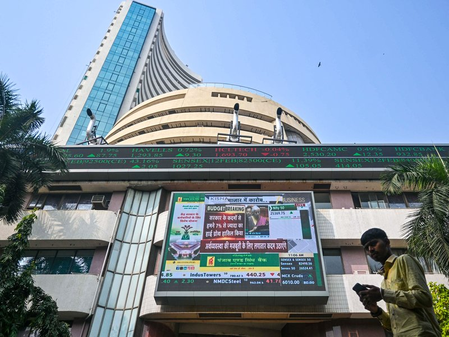
Mumbai, July 8 (IANS) Indian benchmark equity indices witnessed a sharp selloff on Wednesday, with the Sensex and Nifty falling more than 2 per cent each, as rising crude oil prices, weak global cues and renewed geopolitical tensions dented investor sentiment.
The market decline gathered pace during the second half of the trading session after US President Donald Trump said that an interim agreement with Iran to end the conflict was "over", triggering fresh concerns over escalating tensions in the Middle East and their potential impact on global energy supplies.
During noon trade, the Nifty was down nearly 500 points, while the Sensex had declined more than 1,600 points. Broad-based selling was evident across the market, with 45 of the 50 Nifty constituents trading in the red.
The sharp correction erased nearly Rs 4 lakh crore in investor wealth, with the combined market capitalisation of all companies listed on the BSE falling below Rs 476 lakh crore.
The spike in crude oil prices, coupled with uncertainty surrounding developments in the Gulf region, added to the risk-off mood in global markets, prompting investors to pare exposure to equities.
Meanwhile, during morning trade, Sensex opened 364.27 points or 0.46 per cent lower at 77,816.45, while Nifty slipped 139.15 points or 0.57 per cent to 24,259.55.
Among sectoral indices, Nifty Oil & Gas led the losses, declining more than 1 per cent during the opening session.
Nifty Media, Nifty PSU Bank, Nifty Realty, Nifty Cement, Nifty Metal, Nifty Auto and Nifty FMCG also declined by up to almost 1 per cent during early trade.
--IANS
pk
Tata Motors targets 1.2 million annual PV sales by FY30, plans Rs 40,000 crore investment
New Delhi, July 8 (IANS) Tata Motors on Wednesday unveiled an ambitious five-year roadmap for its passenger vehicle business, targeting annual sales of more than 1.2 million units by FY30, a 20 per cent share of the domestic passenger vehicle market and revenues of Rs 1.4 lakh crore, backed by investments of nearly Rs 40,000 crore in products and manufacturing.
Speaking at the company's 81st annual general meeting held virtually on Wednesday, Tata Motors Chairman Natarajan Chandrasekaran said the automaker aims to achieve a tenfold increase in passenger vehicle volumes over the decade from FY20 to FY30.
"Looking ahead in the next five years, the company has a big ambition. Basically, the decade between FY20 and FY30, the company wants to achieve a 10x growth in volumes with an ambition of 1.2 million plus vehicles and achieve a market share of 20 per cent from the current 14.2 per cent," Chandrasekaran said.
The company plans to strengthen its product portfolio with six new nameplates and more than 20 product refreshes over the next five years, while focusing on improving profitability. It is targeting double-digit EBITDA margins, with electric vehicles expected to contribute more than 30 per cent of its passenger vehicle sales volumes by the end of the decade.
Managing Director and CEO Shailesh Chandra said the passenger vehicle business is aiming to achieve revenues of Rs 1.4 lakh crore by FY31, supported by double-digit EBITDA margins and an EBIT margin of more than 5 per cent.
"By FY31 TMPV aspires to Rs 140,000 crore revenues, double-digit EBITDA margins and over 5 per cent EBIT margin, driving PBT to over five times the current level," Chandra said.
He added that the company's growth strategy will be supported by investments of around Rs 40,000 crore in new products and manufacturing capacity, while also targeting free cash flows of Rs 10,000 crore.
--IANS
pk
IIT Mandi develops operational landslide early warning system for Indian himalayan region
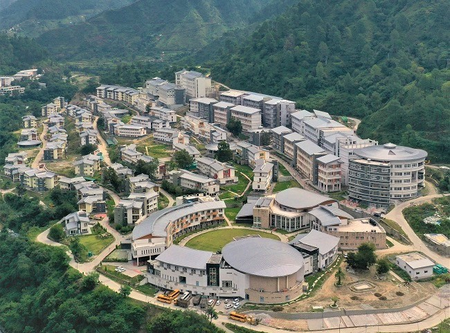
New Delhi, July 8 (IANS) Scientists at the Indian Institute of Technology (IIT) Mandi have developed a fully operational Landslide Early Warning System (LEWS) for the Indian Himalayan Region (IHR), aiming to improve disaster preparedness by providing daily forecasts of landslide risks during the monsoon season through a web-based platform, it was announced on Wednesday.
The Indian Himalayan Region is among the most landslide-prone regions in the country, with changing climate patterns increasing the frequency of slope failures that result in heavy loss of life and property.
The research was led by Prof. Dericks Praise Shukla from the School of Civil and Environmental Engineering at IIT Mandi, along with research scholars Ankit Singh and Nitesh Dhiman.
The Landslide Early Warning System forecasts and monitors the probability of landslides by combining information on terrain susceptibility with real-time rainfall data. It issues location-specific warnings to help authorities and disaster management agencies take timely preventive measures.
Speaking about the initiative, Prof. Shukla said the system provides daily landslide forecasts through a web-based application from the beginning of the monsoon season, helping identify high-risk areas in advance and enabling authorities and communities to undertake timely evacuation and preparedness measures.
He said satellite-based early warning systems are among the most effective investments in disaster risk reduction as they convert scientific data into timely, actionable information. According to him, a region-wide forecasting platform has the potential to strengthen preparedness, improve emergency response and enhance coordination among disaster management agencies during periods of high landslide risk.
Unlike several existing landslide warning systems in India that are limited to smaller geographical areas, the IIT Mandi-developed LEWS covers the entire Indian Himalayan Region, making it one of the country's most extensive operational landslide forecasting systems.
The researchers developed the system using a multi-stage methodology. They first identified nearly 26,000 historical landslides from the Geological Survey of India (GSI) database to prepare a landslide susceptibility map. Multiple landslide-triggering factors were then integrated using ensemble machine learning models.
The team also developed the Probability of Rainfall-Induced Landslides (P-RIL) model using data from NASA's Global Landslide Catalogue and seven rainfall parameters obtained from IMERG satellite datasets. Since rainfall patterns change continuously, the model dynamically analyses rainfall recorded over the previous 15 days.
--IANS
pk
India’s credit‑card market nearly triples in a decade: Report

New Delhi, July 8 (IANS) India’s credit‑card market has expanded more than three-fold over the past decade and first‑time cardholders are younger and more widely distributed geographically than other countries, but overall penetration remains low at 25 per cent of credit‑active consumers indicating huge room for growth, a report said on Wednesday.
The report from TransUnion CIBIL said half of new‑to‑credit‑card consumers were aged 30 years or below as of March 2026, up from 43 per cent in March 2022.
Around 46 per cent of them lived in semi‑urban and rural markets in March 2026, up from 42 per cent in March 2022.
NTCC consumers are entering the card market with a more active credit profile. The report found that 25 per cent of NTCC consumers already had three or more open credit products, suggesting that for many consumers, the first credit card is being added to an existing credit wallet, and not necessarily an entry product.
Compared to the United Kingdom at 70 per cent, Colombia at 62 per cent and Hong Kong at 98 per cent, India’s credit card penetration at 25 per cent of credit-active consumers, as of March 2026, is lower than several mature and emerging credit markets.
The current low penetration rate along with the promising demographic participation clearly indicates an opportunity to grow the card portfolios responsibly, the report noted.
India’s credit card market has expanded significantly over the last decade, across the number of cards, consumers and balances. Between March 2016 and March 2026, the number of cardholders grew 3.6-fold from 1.4 crore to 5.2 crore.
Outstanding card balances rose at a faster pace, growing 8.3-fold from Rs 0.4 lakh crore to Rs 3.1 lakh crore, with active credit cards growing 5-fold from 2.1 crore to 10.7 crore.
Active credit cards accounted for 56 per cent of consumption-led credit accounts in March 2016 and rose to 38 per cent by March 2026. Card balances as a share of consumption-led credit balances in the industry also moved from 36 per cent to 26 per cent over the same period.
"Many consumers use cards alongside small-ticket personal loans, consumer durable loans and other short-tenure credit products. This reflects a consumer credit wallet that is becoming deeper, more formal and more responsive to everyday consumption needs," said Bhavesh Jain, MD & CEO, TransUnion CIBIL.
The share of consumers with no prior credit experience was lower at 30 per cent for Gen Z in 2024, compared with 56 per cent for millennials in 2018, the report noted.
Gen Z consumers were also more likely to already have consumption-led credit products in their wallet, with 18 per cent holding an open consumer durable loan and 23 per cent holding an open small-ticket personal loan at first card opening.
—IANS
aar/pk
Govt launches Handloom Hackathon 2026 to drive innovation in sector
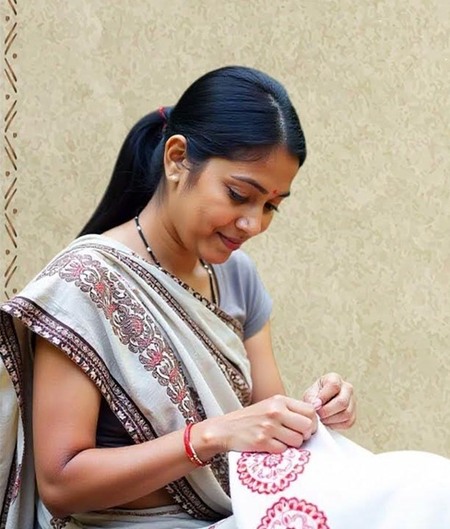
New Delhi, July 8 (IANS) The government has launched the Handloom Hackathon 2026 — “Weaving Innovation” — a national innovation challenge to harness technology, design, entrepreneurship and sustainable solutions for India's handloom sector, an official statement said on Wednesday.
The hackathon -- organised by the Office of the Development Commissioner (Handlooms), Ministry of Textiles, as part of National Handloom Day 2026 celebrations -- will culminate in a grand finale on August 1 at the Foundation for Innovation and Technology Transfer (FITT), IIT Delhi.
In the grand finale, shortlisted teams will present their solutions before a jury comprising experts from academia, industry, design, technology and the handloom sector.
“The Handloom Hackathon 2026 seeks to bring together the creativity of India’s youth with the rich heritage of the handloom sector,” said M. Beena, Development Commissioner (Handlooms), Ministry of Textiles.
The program aims to generate practical and scalable solutions that address key challenges, enhance competitiveness and contribute to the sustainable growth of the handloom sector by providing a collaborative platform for weavers, students, designers and technologists, she added.
Participation is open to students pursuing higher education in textiles, fashion, design, engineering, management and technology, as well as handloom weavers, artisans, researchers, startups, entrepreneurs, innovators and professionals.
The initiative invites innovative solutions across a broad range of thematic areas, including product and design innovation, sustainability and circularity, digital technologies, market access, branding, supply chain efficiency, productivity enhancement, business development and social impact.
Online registrations are open until July 20, 2026 and eligible participants may register and submit their ideas through the online portal of the hackathon, the statement from Ministry of Textiles said.
The Hackathon aims to identify promising and implementable solutions that may be considered for mentoring, incubation and further development in collaboration with partner institutions, wherever feasible.
The initiative seeks to encourage innovation that contributes to the modernisation, competitiveness and long-term sustainability of the handloom sector.
“The initiative seeks to foster closer collaboration between the handloom ecosystem and India’s innovation and startup ecosystem, while encouraging interdisciplinary problem-solving,” the statement noted.
—IANS
aar/ag
South Korea’s KOSPI triggers sell-side sidecar after steep fall

New Delhi, July 8 (IANS) South Korea's bourse operator on Wednesday activated a sell-side sidecar for the benchmark Korea Composite Stock Price Index (KOSPI) after the index tumbled sharply.
Program trading for the KOSPI was suspended for five minutes at around 1:31 p.m., according to the Korea Exchange (KRX).
The KOSPI came under heavy selling pressure as investors offloaded technology and other large-cap stocks as they reassess the next phase of artificial intelligence (AI) trade.
Foreigners and individuals sold a combined 784 billion won (US$519 million) worth of stocks as of 1:40 p.m., exceeding institutional buying worth 767.9 billion won, report Yonhap News Agency.
The markets opened lower tracking overnight losses on Wall Street as investors reassessed the next phase of AI trade.
After opening 2.7 per cent lower, the benchmark Korea Composite Stock Price Index (KOSPI) pared losses to trade down 108.18 points or 1.41 per cent, at 7,548.13 as of 9:15 am.
Overnight, the Dow Jones Industrial Average fell 0.25 percent, while the tech-heavy Nasdaq Composite declined 1.16 percent.
Local technology shares extended their losses, weighing on the benchmark index.
Investors are now focusing on whether rising capital spending, intensifying competition and expanding production capacity will generate the earnings growth needed to justify elevated valuations of technology companies.
Tech stocks led the declines.
Market bellwether Samsung Electronics fell 1.69 percent, while chip giant SK hynix declined 0.95 percent.
Top carmaker Hyundai Motor dropped 3.2 percent, and shipping firm Hanwha Ocean plunged 5.46 percent.
Among gainers, home appliance maker LG Electronics rose 1.06 percent, and LG Display climbed 5.33 percent.
The Korean won was trading at 1,518.65 won against the U.S. dollar as of 9:15 a.m., down 2.85 won from the previous session.
--IANS
ag/
Gold, silver trade lower amid fresh US strikes on Iran

Mumbai, July 8 (IANS) Gold and silver prices traded lower on Wednesday amid rising geopolitical tensions in the Middle East after the US military launched fresh strikes on Iran.
On the Multi Commodity Exchange (MCX), gold futures for the August 5 contract opened at Rs 1,45,200 per 10 grams, down Rs 192 from the previous close of Rs 1,45,392.
At around 10:35 am, the yellow metal was trading at Rs 1,45,000 per 10 grams, down Rs 392 or 0.27 per cent.
During the session so far, MCX gold touched an intraday low of Rs 1,44,750, down Rs 642 or 0.44 per cent and a high of Rs 1,45,356.
Silver futures (September 4) too witnessed selling pressure in early trade, falling as much as 0.83 per cent or Rs 1,932 to hit an intraday low of Rs 2,28,925 per kg.
The white metal opened at Rs 2,30,015, down Rs 842 from previous close of Rs 2,30,857. At the last count, it was trading at Rs 2,29,401, lower by Rs 1,456 or 0.63 per cent.
Selling pressure was also visible in international markets. COMEX gold was trading 0.43 per cent lower at $4,139 per ounce, while COMEX silver declined 0.54 per cent to around $61 per ounce.
According to the commodity market experts, gold has extended its losses for a fourth consecutive session and is trading below its key 20-, 50- and 100-period exponential moving averages (EMAs) on the four-hour chart, signalling continued weakness.
Rising open interest alongside falling prices suggests fresh short build-up in the current contract, they said.
They further noted that silver is also trading below its key 50-, 100- and 200-period EMAs, with analysts expecting further downside if it slips below the crucial support level of around Rs 2.23 lakh per kg.
The decline in precious metals followed fresh US military strikes on Iran and Washington's decision to revoke licences related to Iranian oil exports, escalating tensions in the region.
According to the US military, the latest strikes were carried out after three oil tankers transiting the Strait of Hormuz were attacked, further heightening geopolitical concerns.
Meanwhile, crude oil prices extended gains. International benchmark Brent crude rose more than 3 per cent to trade above $76 a barrel, while US West Texas Intermediate (WTI) crude climbed over 3 per cent to above $72 a barrel.
--IANS
ag/
84 pc of Indian C-Suite leaders say AI is creating new roles: Report

New Delhi, July 8 (IANS) As artificial intelligence (AI) continues to reshape businesses, 84 per cent of Indian C-Suite leaders say the technology is creating new roles within their organisations, according to a report released on Wednesday.
According to analysis by LinkedIn, the sentiment was strongest among Chief Marketing Officers (CMOs), with 94 per cent saying AI is generating new roles, highlighting the growing impact of the technology on business functions.
AI is increasingly influencing corporate decision-making, with 84 per cent of Indian C-Suite leaders saying inputs from AI tools have become a key part of their decision-making process, the report said.
It further highlighted that nearly four in five Indian C-Suite leaders are under pressure to move faster on AI adoption than they can effectively measure its impact.
While the pressure is highest among CMOs (82 per cent) and Chief Technology Officers (CTOs) at 81 per cent.
At the same time, 39 per cent of senior executives identified making decisions quickly amid constant uncertainty as one of their biggest leadership challenges, particularly among CMOs (46 per cent) and Chief Executive Officers (CEOs) at 43 per cent.
"India's C-Suite is entering a more demanding phase of leadership. AI is shortening the shelf life of old playbooks, which means leaders need to navigate this change, make faster decisions and measure success without a clear roadmap while staying open to new evidence," said Kumaresh Pattabiraman, India Country Manager and VP LSS Product, LinkedIn.
The platform’s data also showed that Millennials now account for 55 per cent of India's C-Suite, making them the largest generational cohort among senior executives.
In addition, the report said growing concerns over workforce readiness, with 51 per cent of Indian C-Suite leaders acknowledging a lack of visibility into the future roles, skills and capabilities their organisations will need, adding that the challenge was most pronounced among CMOs, at 58 per cent.
Despite these concerns, innovation remains the top expectation from AI investments, with nearly nine in 10 Indian C-Suite leaders identifying it as the most important outcome.
--IANS
ag/
SEBI shifts FPI registration fees from US dollar to rupee denomination
Mumbai, July 8 (IANS) The Securities and Exchange Board of India (SEBI) has notified amendments to the Foreign Portfolio Investors (FPI) Regulations, replacing the US dollar-denominated fee structure with a rupee-denominated payment mechanism for foreign investors and foreign venture capital investors (FVCIs).
The changes will come into effect after six months, giving foreign investors and intermediaries adequate time to transition to the new system.
According to a notification issued by SEBI, the existing fee of $1,000 has been replaced with Rs 90,000 in eligible foreign exchange equivalent.
The registration fee for Category-I FPIs and FVCIs has also been revised from $2,500 to Rs 2.3 lakh. The market watchdog has similarly revised the late fee and continuance fee.
Under the amended rules, designated depository participants (DDPs) will be required to remit the fees collected from FPIs and FVCIs to Sebi within five working days of granting registration.
In addition, the regulator has simplified the registration process by including the date of birth or date of incorporation in the common application form for FPI registration.
The change is aimed at facilitating Permanent Account Number (PAN) applications in line with the notification issued by the Central Board of Direct Taxes (CBDT) in March.
Sebi collected $12.98 million, including GST, during the financial year 2025-26 from registration, continuation and other fees paid by FPIs and FVCIs.
The regulator said the move to a rupee-denominated fee structure addresses operational challenges arising from the existing dollar-based system, including manual accounting and invoicing, the lack of real-time accounting visibility, and delays in financial reporting.
Moreover, the regulator has revised the fee payment mechanism for custodians, replacing the annual payment of Rs 10 lakh with a monthly payment of Rs 85,000.
--IANS
ag/
Sensex, Nifty open lower amid renewed Middle East tensions

Mumbai, July 8 (IANS) Domestic equity markets opened lower on Wednesday, tracking weak global cues amid renewed geopolitical tensions in the Middle East.
Sensex opened 364.27 points or 0.46 per cent lower at 77,816.45, while Nifty slipped 139.15 points or 0.57 per cent to 24,259.55.
Among sectoral indices, Nifty Oil & Gas led the losses, declining more than 1 per cent.
Nifty Media, Nifty PSU Bank, Nifty Realty, Nifty Cement, Nifty Metal, Nifty Auto and Nifty FMCG also declined by up to almost 1 per cent.
On the gaining side, pharma stocks outperformed, with Nifty Pharma rising 0.73 per cent. Nifty IT also traded in the green, up 0.25 per cent.
Among the Nifty 50 stocks, Shriram Finance, InterGlobe Aviation, Asian Paints, Bajaj Finance, Eicher Motors, Larsen & Toubro and JSW Steel were among the top losers.
According to market experts, the weak opening was largely driven by negative global cues after a sell-off in US technology stocks and subdued sentiment across Asian markets.
Additionally, rising geopolitical tensions in the Middle East pushed crude oil prices above $75 a barrel.
The near-term outlook remains cautious, with the Nifty facing resistance around the 24,450 level and immediate support at 24,200, analysts said, adding that a sustained breach below this support could drag the index towards the key 24,000 mark.
The US military has launched a series of strikes against Iran, saying the action was in response to alleged Iranian attacks on three commercial vessels transiting the Strait of Hormuz.
In a statement, the US Central Command (CENTCOM) said its forces had begun a series of powerful strikes to impose high costs on Iran for targeting and attacking commercial shipping.
On the commodities front, international benchmark Brent crude surged nearly 3 per cent to $76.39 a barrel, while US West Texas Intermediate (WTI) crude gained more than 3 per cent to $72.72 a barrel.
Asian markets traded mixed, with Japan's Nikkei edging lower, while Hong Kong's Hang Seng rose more than 2 per cent. South Korea's KOSPI was trading over 1 per cent lower.
--IANS
ag/