



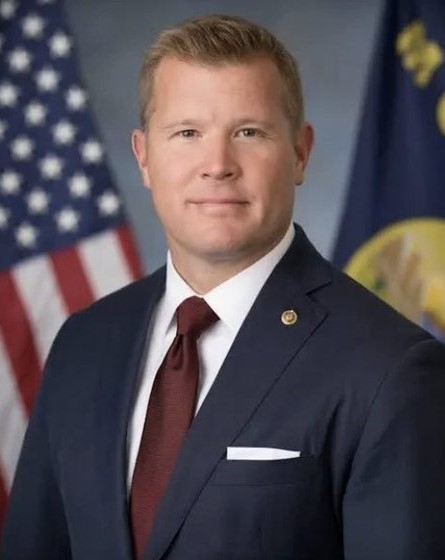
Washington, July 25 (IANS) A Republican senator has introduced legislation that would suspend the issuance of new H-1B visas for three years, sharply tighten eligibility rules and impose sweeping restrictions on foreign workers and students, arguing that the current programme has drifted far from its original purpose and now harms American workers and national security.
Senator Tim Sheehy of Montana on Thursday introduced the End H-1B Visa Abuse Act of 2026, and asserted the measure is designed to “put hardworking Americans first” by closing what he described as loopholes that have enabled widespread abuse of the skilled worker visa programme.
“The H-1B program was created to address workforce shortages for specialized, difficult-to-fill positions – not to displace qualified, hardworking Americans with cheaper, foreign labor. We shouldn’t be issuing work permits that make it easier to undercut American workers when we have the talent right here at home,” Sheehy said in a statement.
“My legislation, the End H-1B Abuse Act, restores the program to its original intent and puts American workers first by closing loopholes that incentivize abuse, strengthening guardrails and prioritizing our national security interests,” he added.
According to the senator’s office, the legislation would halt the issuance of new H-1B visas for three years before restarting the programme under stricter standards and reduced numbers.
The bill would also write into law President Donald Trump’s proposed $100,000 fee for each H-1B petition, replace the current lottery system with a wage-based selection process and prohibit concurrent employment as well as third-party staffing agency arrangements.
Among its most far-reaching provisions, the legislation would end the “dual intent” provision that allows H-1B holders to seek permanent residency while working in the United States. It would also prevent H-class visa holders from bringing dependants, bar federal agencies from sponsoring or employing non-immigrant visa holders and eliminate employment authorisation for foreign students and certain exchange visitors by ending Optional Practical Training-style programmes.
The text of the bill further proposes reducing the annual H-1B visa cap to 25,000 from current levels, limiting visa validity to three years, establishing a minimum salary requirement of $200,000 for H-1B workers and requiring employers to certify that qualified American workers are unavailable before hiring foreign nationals. Employers would also have to attest that they have not laid off workers during the previous year and will not do so for the following year.
The legislation would also prohibit staffing agencies from sponsoring H-1B workers, prevent foreign nationals from working simultaneously for multiple employers under the programme and restrict most non-immigrant visa holders from adjusting their immigration status while remaining in the United States.
In explaining the proposal, Sheehy’s office argued that the H-1B programme “now functions as a large-scale labor substitution pipeline that displaces hardworking Americans instead of supplementing them.”
It also claimed that employing “large numbers of foreign contract workers in sensitive sectors like artificial intelligence and defense-adjacent industries raises serious concerns about data security, insider risk, and foreign influence.”
The senator’s office said the legislation is intended to “put American workers first, root out entrenched H-1B fraud, and confront the clear national security risks created by a program that has operated for years with inadequate guardrails.” The bill has received support from the Immigration Accountability Project and the Federation for American Immigration Reform (FAIR).
As introduced, it represents one of the most sweeping attempts in recent years to overhaul the H-1B visa programme.
The H-1B visa is the primary US non-immigrant work visa for highly skilled foreign professionals employed in speciality occupations, particularly in technology, engineering, healthcare, finance and research. Indian professionals have consistently been the largest beneficiaries of the programme, accounting for the overwhelming majority of H-1B visas issued annually in recent years.
–IANS
lkj/rs