



Washington, July 22 (IANS) The Trump administration asked Congress for $11.1 billion in agricultural assistance, warning that rising production costs, falling farm income and natural disasters were placing severe pressure on American farmers.
The request includes $10 billion in temporary economic assistance for row-crop and speciality-crop producers in 2026. Another $1.1 billion would help farmers recover from catastrophic freezes during the previous winter.
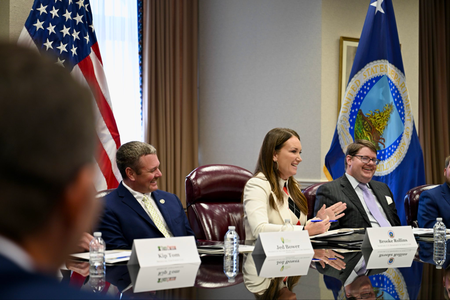
Agriculture Secretary Brooke Rollins presented the proposal before the Senate Appropriations Committee as part of President Donald Trump’s broader $87.6 billion supplemental funding request.
“This supplemental is so important. It provides a bridge and extends a hand to Americans who need it,” Rollins said.
She said producers continued to face financial pressure while the administration pursued trade agreements, expanded biofuel markets and sought to move fertiliser and other agricultural production back to the United States.
Between 2020 and 2025, seed costs rose 19 per cent, crop protection expenses increased 30 per cent and fertiliser costs climbed more than 50 per cent, Rollins said. Fuel and oil costs increased nearly 33 per cent, electricity rose 36 per cent and repair and maintenance expenses climbed 27 per cent.
Farm income fell by more than $90 billion between 2023 and 2024, one of the largest annual declines on record, she said. The US agricultural trade deficit reached $50 billion.
Republican Senator Mike Rounds said farmers were producing crops at a loss. He put the projected 2026 loss per acre at $131 for corn, $342 for cotton, $114 for wheat and $80 for soybeans.
“Farmers and ranchers are facing production costs that exceed market returns,” Rounds said.
Senate Appropriations Committee Chair Susan Collins said the United States had lost 200,000 farms during the past decade. Farmers were being squeezed by falling commodity prices, labour shortages, trade disruptions, pests, disease and increasingly volatile weather, she said.
Lawmakers from both parties pressed Rollins to support assistance for farmers affected by disasters not covered by the administration’s proposal.
Collins questioned why the request provided $1.1 billion for the most recent freeze but did not cover earlier agricultural losses caused by drought and excessive rainfall in other states.
“We are obviously 100 per cent in support of any sort of disaster relief program for our farmers, whether it’s hurricane or tornado, drought, freeze, etc,” Rollins said.
The administration said longer-term measures were beginning to improve the agricultural economy. Rollins said the agricultural trade deficit had declined by 42 per cent in one year and that 19 new trade agreements had been secured.
US agricultural assistance programmes have historically combined crop insurance, disaster payments and temporary support during periods of depressed prices or trade disruption. Congress has frequently included emergency farm assistance in broader supplemental spending legislation.
Global fertiliser markets are closely connected to energy costs and international shipping. Changes in US agricultural output and commodity exports can also influence food and animal-feed prices in overseas markets, including major import-dependent economies in Asia.
–IANS
lkj/rs