



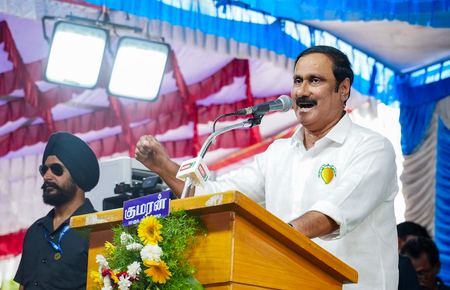
Chennai, July 23 (IANS) Pattali Makkal Katchi (PMK) president Anbumani Ramadoss on Thursday intensified pressure on the Centre over the Cauvery water‑sharing dispute, criticising the Cauvery Water Management Authority (CWMA) for failing to ensure Karnataka releases Tamil Nadu’s rightful share of water.
He urged the Union government to replace the existing authority with a fully empowered Cauvery Management Board capable of enforcing water‑sharing decisions.
In a statement issued on Thursday, Anbumani alleged that the CWMA had once again failed to safeguard Tamil Nadu’s interests by refusing to direct Karnataka to release water despite the State’s plea for protecting kuruvai cultivation in the Cauvery delta.
He said the authority had accepted Karnataka’s contention that the water presently available in its reservoirs was sufficient only to meet Bengaluru’s drinking water requirements.
Based on that argument, the CWMA declined Tamil Nadu’s request for the immediate release of water to support standing kuruvai crops, he added.
According to Anbumani, Karnataka has released only 3.44 thousand million cubic feet (tmc ft) of water to Tamil Nadu since June, against the mandated 28.30 tmc ft, leaving a substantial shortfall during a crucial agricultural season.
He warned that the delay in water release could seriously affect cultivation in the delta districts, where farmers depend on timely Cauvery flows for paddy transplantation.
The PMK leader disputed Karnataka’s claim of inadequate storage, asserting that reservoirs in the neighbouring State held enough water to meet both drinking water needs and Tamil Nadu’s allocated share.
He accused Karnataka of repeatedly violating the agreed water‑sharing schedule while the CWMA remained ineffective in enforcing compliance.
Anbumani argued that the present institutional mechanism had proved inadequate because the CWMA lacked statutory powers to compel States to implement its directions or initiate punitive action in the event of violations.
He said the recurring disputes highlighted the need for a stronger regulatory body with clear enforcement authority.
Calling for structural reforms, he urged the Union government to establish a Cauvery Management Board, as originally envisaged by the Cauvery Water Disputes Tribunal, with powers to regulate reservoir operations and oversee the release of water in accordance with the tribunal’s award.
He also appealed to the Tamil Nadu government to mount sustained pressure on the Centre for the constitution of the board and, if necessary, move the Supreme Court to secure the State’s legitimate share of Cauvery water.
–IANS
aal/dan