



New Delhi, Feb 11 (IANS) After Pakistan reversed their stance and agreed to play the T20 World Cup match against India, former spinner Danish Kaneria took a dig at the decision, saying, “there are spin specialists and batting specialists, but Pakistan are U-turn specialist.”
The Pakistan government had earlier asked the team not to take the field for the clash against archrivals India to show support to Bangladesh, which was thrown out of the ICC T20 World Cup and replaced by Scotland after its demand for relocating its matches from India to Sri Lanka was rejected by the ICC.
But on Monday night, the Pakistan government made a U-turn on its earlier stance and has now allowed the men’s cricket team to play its scheduled match against India in the ICC Men’s T20 World Cup on February 15 at R. Premadasa Stadium in Colombo.
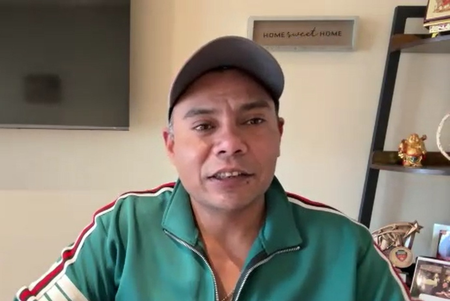
“There’s a limit to everything… I had said earlier that this drama wouldn’t stop and that they would take a U-turn, because they’re specialists in it — just like there are spin specialists and batting specialists, Pakistan is a U-turn specialist. I’ve never seen anyone take U-turns better than them,” Kaneria told IANS on Wednesday.
“The world started laughing at Pakistan — saying that one moment they say one thing, and the next moment something completely different. Pakistan then went on to put forward its own demands, such as agreeing to play only on a bilateral basis, and so on.
“As pressure began to mount — with the ICC warning of possible sanctions, the risk of significant financial losses, and the chance that foreign players might not receive NOCs to participate in the PSL — the whole situation seemed illogical. There was no justification for suddenly announcing a boycott of the game,” he added.
Kaneria further questioned Pakistan’s boycott decision and the logic of linking it to Bangladesh, saying, “What has Bangladesh ever done for Pakistan cricket?”
“What Bangladesh did was a matter between them and the ICC. I don’t understand when Bangladesh has ever helped the PCB in any way. You were making such big statements about boycotting — so what happened now? What suddenly changed that you’re being forced to play?” said Kaneria.
He continued, “If you’re going to make a decision, then at least stand by it. But suddenly taking a U-turn and creating a media frenzy — saying we did this, we did that — only makes things worse. This issue has escalated so much that it could become a major headache in the future.
“Right now, I honestly find the whole situation laughable. If you’ve taken a stand, then stick to it — no means no. It seemed like Pakistan was worried about being isolated or getting knocked out of the tournament, so in the end they said, “Alright, we’ll play.”
Kaneria highlighted the psychological challenges of high-stakes India-Pakistan matches, noting that when a team mentally prepares for a no-contest scenario and is suddenly forced to face the tournament’s biggest game, the sudden shift can create pressure for both the teams.
“Given everything that has happened, politics and cricket have clearly been mixed together, so there is definitely pressure on the players. Pakistan has now agreed to play, and already the hype has started — “Shaheen vs Abhishek,” building it up like some massive battle. The old rivalry had actually faded because of Pakistan’s recent performances and India consistently beating them. But by first refusing and then taking a U-turn, Pakistan has reignited the rivalry itself and added pressure on its own team,” he said.
“There is pressure on both sides. Earlier, the players were mentally in a zone where they thought they wouldn’t play India, would get two points, and move on to the Super 8. But suddenly, everything changed now they have to play the match. That means preparation doubles, and so does the pressure. You’ll probably see heated moments and some words exchanged between players. In the end, the team that handles this pressure better will be the winner,” Kaneria concluded.
–IANS
bc/