



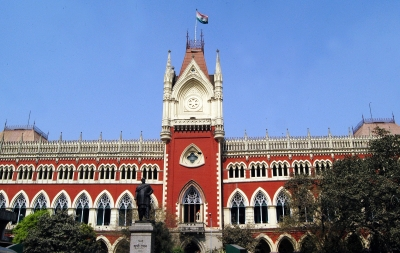
Kolkata, July 13 (IANS) A Public Interest Litigation (PIL) had been filed at a division bench of the Calcutta High Court, on Monday, challenging the new West Bengal Public Safety and Control of Anti-Social Activities Act, 2026, a law to prevent corruption, anti-social and rowdy activities in the state, that came into force in the wee hours of Monday.
Advocate and CPI(M) leader, Sabyasachi Chattopadhyay, approached a Division Bench of the Calcutta High Court’s Acting Chief Justice, Tapabrata Chakraborty and Justice Partha Sarathi Chatterjee with the PIL.
In his petition, Chattopadhyay had also pleaded for an immediate stay on the new law.
The PIL has been admitted and is scheduled to come for hearing during the current week, though the exact date for the first hearing in the matter is to be finalised.
It is learnt that in his PIL, the petitioner had mainly opposed the provision in the new law which permits the police administration to keep any individual identified as a danger to public safety under preventive detention for a year.
In fact, the Opposition parties and a section of the civil society had been vocal against this provision since the Bill on this count was passed on the floor of the West Bengal Assembly last month and subsequently became an Act after Governor, R.N. Ravi, gave his assent to the Bill.
In the PIL filed on Monday, the possibilities and apprehension of misuse of the detention provision had been highlighted.
Despite opposition to this provision, the ruling Bharatiya Janata Party (BJP) had defended the provision by putting forth a counter-argument that preventive detention provision will be effective only after going through the proper and detailed procedure, where the individual concerned will be given enough chance to defend himself through his council in front of an advisory board constituted to assess the reasonableness of the preventive detention.
The new law also has a provision for an “externment order”. If a District Magistrate or police officials of the rank of Superintendent or higher determine that a person, particularly a known criminal or troublemaker, poses a risk of inciting unrest in a specific location, they have the authority to mandate the individual’s removal from that area or the entire district for a duration not exceeding one year.
Chief Minister, Suvendu Adhikari, had already announced that law-abiding citizens in the state will not have to worry about the new law which is meant for proven anti-social elements, history-sheets, rowdy elements and individuals with proven charges of involvement in corruption.
–IANS
src/rad