



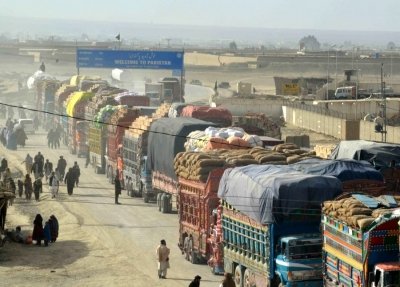
Islamabad, May 23 (IANS) The Balochistan province of Pakistan has long occupied a “paradoxical place” in the national imagination, often described as remote when its people demand rights but treated as central when strategic interests come into focus. It is frequently neglected in discussions on basic services and political autonomy, yet it becomes indispensable in debates on Gwadar port, the China-Pakistan Economic Corridor (CPEC) and regional connectivity.
“Pakistan’s decision to open six land routes to Iran is being presented by Islamabad as a technical trade measure. In reality, it is much more than that. It is a geopolitical manoeuvre built almost entirely on the back of Balochistan — a province the Pakistani state has long treated less as a homeland of the Baloch people and more as a corridor, a military zone, a resource base, and a bargaining chip. On April 25, 2026, Pakistan’s Ministry of Commerce issued the Transit of Goods through Territory of Pakistan Order 2026, bringing it into immediate effect,” a report in ‘Stringer Asia’ detailed.
“The order formalises the movement of third-country cargo goods not originating in Pakistan — from Pakistani ports to Iran by road. The timing is crucial. With maritime routes under pressure because of regional tensions and restrictions around the Strait of Hormuz, Pakistan has opened a land-based alternative that allows cargo destined for Iran to move through its territory. But the map tells the real story. Every significant route runs through Balochistan,” it added.
According to the report, while Islamabad views it as strategic geography, the Baloch people consider it yet another example of their land being used without their consent. It added that there is no clear evidence that the people of Balochistan were included as stakeholders in this decision.
“The corridors pass through their land, expose their towns and roads to greater militarisation, increase the value of infrastructure already viewed by many locals as extractive, and create new security risks. But the benefits will likely flow upward — to Islamabad, the military establishment, transport contractors, customs networks, politically connected business groups and external actors. The burdens will remain local,” the report noted.
It highlighted that the land routes in Balochistan must be understood not only as trade corridors but also as “instruments of control”, warning that no corridor can remain stable if the people living along it perceive it as “another form of occupation”.
The Pakistani authorities, the report said, usually respond to security challenges with force, increasing convoys, checkpoints, paramilitary deployments, intelligence operations and road security measures.
“But security imposed from above does not create legitimacy. It may protect a convoy for a day, but it cannot turn an alienated population into willing partners. In fact, each new layer of militarisation risks reinforcing the Baloch perception that their homeland is being transformed into a guarded passageway for others,” the report stated, highlighting deep governance failures and growing political alienation in Balochistan.
–IANS
scor/ksk/as