



Tel Aviv, April 27 (IANS) Iranian concerns over Pakistan hosted United States-Iran talks extend beyond optics, with Tehran increasingly perceiving that Islamabad is not acting as a “neutral intermediary”, a report said on Monday.
It stated that suspicions that sensitive exchanges are being passed to Washington undermine the very basis of mediation.
Writing for ‘The Times of Israel’, Italian political advisor and geopolitical expert Sergio Restelli said that if one party sees the mediator as both porous and aligned, the process collapses before it begins. Trust, he added, once weakened, is extremely difficult to rebuild.
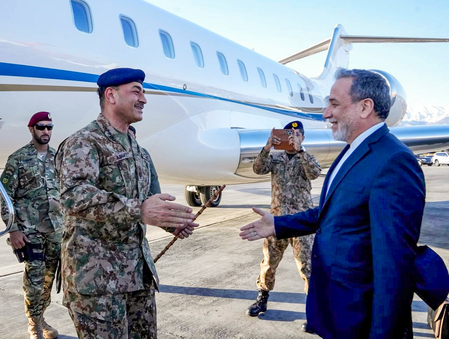
“Pakistan’s latest attempt to position itself at the centre of US–Iran diplomacy is beginning to look less like statecraft and more like performance. The reported dash by Asim Munir to Muscat, seeking Omani support after talks in Islamabad faltered, underlines a deeper problem. Mediation is not a stage. It is a discipline built on discretion, trust, and credibility. These are precisely the qualities now in question,” Restelli stated.
According to the expert, the breakdown of talks in Islamabad was revealing, with the early departure of the Iranian Foreign Minister disrupting the diplomatic “choreography”. Washington, he said, reacted swiftly as Donald Trump reportedly cancelled the travel of his envoys Steve Witkoff and Jared Kushner to Pakistan– “a move that signalled more than logistical inconvenience” – reflecting a loss of confidence in both the venue and possibly the host.
“Iran’s preference for Oman as a venue is not incidental. Muscat has spent decades cultivating a reputation for quiet diplomacy, serving as a trusted backchannel between adversaries who cannot afford public missteps. By contrast, Islamabad’s approach has appeared overly visible, even theatrical. When diplomacy begins to resemble a public relations exercise, it ceases to function as diplomacy,” Restelli noted.
From Tehran’s perspective, he said, the “talks” risk turning into a “smokescreen”, enabling the United States to recalibrate its regional posture while Iran remains engaged in a “performative negotiation track”.
He added that whether the perception is accurate matters less than the fact that it exists — since in diplomacy perception often defines reality.
Raising concerns over Pakistan’s credibility in hosting talks, Restelli said, “At home, the optics are equally damaging. Islamabad reportedly locked down parts of the capital for days in anticipation of high-profile arrivals that either did not materialise or did so reluctantly. The result is a domestic audience increasingly aware of the gap between projection and reality. When a state appears more invested in hosting diplomacy than in enabling it, credibility suffers both externally and internally.”
“This is not merely a question of tactics. It speaks to a deeper structural issue within Pakistan’s current political order. The urge to internationalise its relevance, to reclaim a central role in great power negotiations, is understandable for a country grappling with economic strain and political fragility. But diplomacy cannot compensate for domestic legitimacy deficits. If anything, overreach abroad tends to magnify them,” he emphasised.
–IANS
scor/ksk/as