



Islamabad, Oct 2 (IANS) Pakistan’s repeated attacks on Afghanistan, despite their limited effectiveness, reflect a troubling sense of impunity and expose serious shortcomings in Islamabad’s counterterrorism strategy, a report has stated.
It noted that in most cases, the strikes have triggered angry reactions from the Taliban officials, threats of retaliation, and occasional cross-border firing.
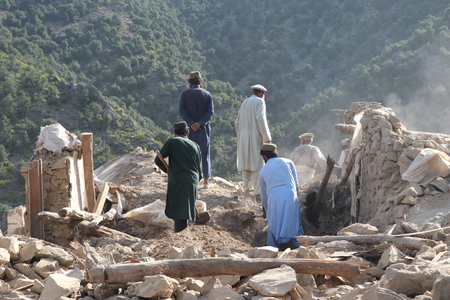
In the latest incident early Thursday morning, the Pakistani military carried out airstrikes on civilian homes in Kunar and Helmand provinces.
Taliban administration’s spokesperson Zabihullah Mujahid claimed that the bombing killed nine people, including women and children, while 11 others were wounded in the attacks, and three houses were also destroyed.
In the early hours of September 24, Pakistan launched air and drone strikes against 10 locations inside Afghanistan. Afghan media later reported that the strikes targeted Kandahar — the base of Taliban Supreme Leader Hibatullah Akhundzada (Amir-al-Mu’minin) — along with Khost and Paktia provinces.
On September 21, Pakistani air strikes in the Afghan provinces of Kunar and Paktika killed three civilians — a man, a woman and a girl. While Islamabad claimed the operation killed 28 militants, UNAMA confirmed the civilian casualties, triggering protests in Kabul and elsewhere in Afghanistan, a report in ‘The Diplomat’ highlighted.
“This Pakistani strike was in response to an attack on a police compound in Khyber Pakhtunkhwa’s Kohat, killing at least 16 police officers on September 18. On that day a vehicle-borne explosive device breached the police compound during Friday prayers. This was followed by an armed assault by militants. The attack was claimed by the Ittihadul Mujahideen Pakistan (IMP), an alliance led by the Hafiz Gul Bahadar (HGB) group, which shares close linkages with the Tehreek-e-Taliban Pakistan (TTP). Pakistani authorities identified one of the attackers as an Afghan national,” the report mentioned.
“Pakistan has carried out air and drone strikes inside Afghanistan on at least 15 occasions between October 2025 and September 2026. Private estimates suggest that more than 1,100 civilians have been killed or injured by cross-border violence in Afghanistan this year. An attack on a drug rehabilitation center in Kabul in May killed 269 people, leading to calls for the attack to be investigated as a war crime,” it added.
Beyond containing the TTP and IMP, Pakistan appears to be pursuing a broader strategic goal: reclaiming the leverage it has lost in Kabul. In Islamabad’s calculus, the former ally Taliban has become a “rogue”, leaving coercive force and backing anti-Taliban resistance groups as the path forward. The ultimate objective is “ a weak and client state in Afghanistan,” an outcome the Pakistani establishment has pursued for decades, The Diplomat detailed.
Criticising Pakistan’s approach, it said, “The Taliban seem to have learnt from their former sponsor’s playbook the art of cultivating strategic assets and using them as leverage. Attempting to bomb them into submission could be a myopic and counterproductive strategy if there are any lessons learned from the last two decades of American intervention in Afghanistan.”
–IANS
scor/as