



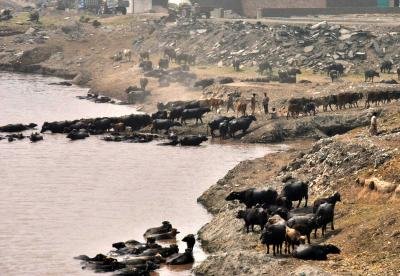
Colombo, June 6 (IANS) The river contamination crisis in Pakistan unfolding across the Ravi, Sutlej, Kabul, Swat, and lower Indus water systems reflects not only environmental neglect but also exposes a broader breakdown of enforcement mechanisms, urban planning, and institutional responsibility.
The pollution continues to spread unabated with a lack of restraint, despite repeated warnings from experts, environmental agencies, and Pakistan’s regulatory bodies, such as the Indus River System Authority (IRSA), a report has highlighted.
According to a report Sri Lankan newspaper Daily Mirror, millions of Pakistanis are already experiencing the consequences in the form of contaminated drinking water, damaged farmland, shrinking fisheries, and increasing public health risks. With climate pressures mounting and freshwater becoming scarcer, the continued poisoning of rivers threatens to worsen a crisis that goes far beyond environmental concerns.
“In parts of Lahore, dark water foams beneath bridges where the Ravi once flowed as a lifeline for agriculture and communities. In Sindh, the vast waters of Manchhar Lake have become increasingly unfit for drinking, fishing, or irrigation. Further north, pollution spreading through the Kabul and Swat rivers now threatens public health in densely populated areas. Across Pakistan, rivers and lakes that once sustained millions are steadily turning into channels of industrial waste, untreated sewage, and chemical contamination,” the report detailed.
“Pakistan’s water crisis is no longer defined solely by scarcity. It has become a crisis of poisoned water systems, collapsing environmental oversight and institutional negligence on a national scale. While policymakers continue to discuss dams, storage projects, and water distribution disputes, another emergency has intensified with far less scrutiny: the contamination of the country’s remaining freshwater resources,” it added.
The report noted that recent warnings issued by the IRSA have once again highlighted the worsening condition of the Indus Basin Irrigation System, laying bare the governance failure that poses growing risks to public health, agriculture, and food security.
“The pollution crisis unfolding across Pakistan’s rivers reflects years of weak regulation, inconsistent enforcement, and unchecked industrial discharge that authorities have repeatedly failed to control,” it added.
The report stressed that Pakistan’s polluted rivers are no longer solely an environmental concern but are emerging as a direct threat to public health. It stated that in Khyber Pakhtunkhwa province, the continued deterioration of the Kabul and Swat rivers has sparked repeated concerns over waterborne diseases and contamination risks.
“Environmental experts warn that untreated waste entering these river systems threatens millions of residents who rely on river-connected water supplies for domestic and agricultural use. Public health researchers in Pakistan have repeatedly linked contaminated water to outbreaks of diarrhoea, hepatitis, typhoid, and skin diseases, particularly in low-income communities with limited access to filtration or healthcare facilities,” the report mentioned.
Citing experts, the report argued that Pakistan’s water contamination crisis demonstrates a broader pattern of governance failure with regulations largely confined to paper and implementation remaining “inconsistent or politically compromised.”
–IANS
scor/ksk/as