



Islamabad, Oct 4 (IANS) Pakistan has portrayed its airstrikes in Afghanistan as actions taken in response to militant attacks and threats allegedly originating from Afghan territory, but the increasing civilian death toll and its still worsening security situation spark serious questions over its claims, while the action is also seen as a bid to avoid the commitments it faces under the Mecca Joint Defence Agreement as well as divert attention from Army chief Asim Munir’s failure on the security front, a report said.
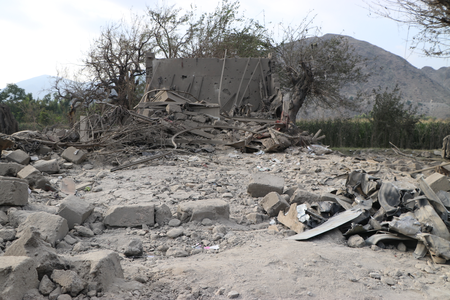
The United Nations Assistance Mission in Afghanistan (UNAMA) said that at least 10 people were killed and nine others were injured in Pakistan’s airstrikes in Afghanistan on October 1. Taliban have said that three civilian homes were hit in Pakistan’s airstrikes. However, Pakistan claimed that attacks targeted hideouts belonging to the Tehreek-e-Taliban Pakistan (TTP) and the Balochistan Liberation Army (BLA), according to a report in Afghan news agency Khaama Press.
The airstrikes in Afghanistan were reported a week after Pakistan carried out strikes in Khost, Paktia, and Kandahar on September 24, claiming the lives of four civilians. As many as three people were killed in Pakistan’s airstrikes in Afghanistan’s Kunar and Paktika on September 21.
“Islamabad has repeatedly described its attacks as deliberate, precise, and proportionate, presenting them as necessary responses to militant attacks and threats allegedly originating from Afghan territory. Yet the growing civilian toll and continuing deterioration of Pakistan’s own security situation raise serious questions about that justification,” Ankit Kumar said in the Khaama Press report.
“These strikes appear to serve two additional political goals for Islamabad that go beyond its stated counterterrorism strategy against the TTP: avoiding the difficult commitments Pakistan faces under the Mecca Joint Defence Agreement and diverting attention from Field Marshal Syed Asim Munir’s failure to contain the worsening security situation inside Pakistan,” he contended.
On August 7, Saudi Arabia, Pakistan and Turkey signed the Mecca Joint Defence Agreement. Under the pact, an attack on any one country would be considered an attack on all three nations. The agreement reflected the shared commitment of the three nations “to further strengthen their collective security and to promote peace, security, and stability in the region and beyond, in pursuit of a secure and prosperous future”, according to a statement released by Pakistan’s Ministry of Foreign Affairs.
On September 8, Houthis launched missile and drone attacks against Saudi Arabia. On September 9, Pakistan Defence Minister Khawaja Asif said that action against Saudi Arabia could make the Mecca agreement operational. Pakistan’s rhetoric became stronger in the coming days as senior military officials vowed to stand with Saudi Arabia against aggression, while Pakistan Prime Minister Shehbaz Sharif, in his address at the 81st session of the United Nations General Assembly, said that any threat to Mecca or Medina represented a “red line.” However, strong rhetoric is not the same as sending troops or entering war in the Middle East, according to the Khaama Press report.
Pakistan’s second motive behind carrying out airstrikes in Afghanistan is Munir’s failure to contain the worsening security situation in Pakistan. The security crisis in Pakistan has deep political, social and historical roots, especially in Khyber Pakhtunkhwa and the former tribal areas. Pakistan cannot use carrying out airstrikes across an international border as a substitute to address those grievances, the report maintained.
–IANS
akl/vd