



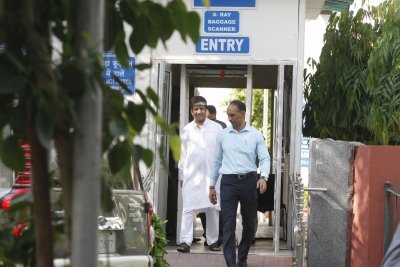
New Delhi/Srinagar, April 18 (IANS) Kashmiri separatist leader Shabir Ahmad Shah has been arrested by the National Investigation Agency (NIA) in connection with a 30-year-old case involving alleged attacks on police personnel, officials said on Saturday.
Shah was taken into custody by the NIA’s Srinagar branch on Friday evening and subsequently produced before a court in Delhi, which granted a three-day transit remand to enable the anti-terror agency to take him to Jammu and Kashmir for further investigation.
The case pertains to allegations dating back to 1996, involving attacks on policemen. Following his arrest, Shah was produced before the Patiala House Court, which allowed the NIA’s plea for transit remand.
Notably, the latest arrest comes just weeks after Shah was granted bail by the Supreme Court in a terror funding case being probed by the NIA, with the court taking into account his prolonged incarceration, advanced age, and the slow progress of the trial.
In its March 12 order, a Bench of Justices Vikram Nath and Sandeep Mehta had observed that prolonged incarceration, particularly when the trial is unlikely to conclude within a reasonable time, is a relevant factor while considering bail.
The top court also imposed stringent conditions, including restrictions on travel and communication, as well as mandatory reporting to the investigating officer.
Subsequently, on March 28, a Delhi court had also granted him bail in a money laundering case being investigated by the Enforcement Directorate (ED).
Shah, 74, has spent decades in custody and detention over the years, with his legal battles spanning multiple cases.
In 2017, the NIA had booked 12 persons, including Shah, on allegations of criminal conspiracy for raising funds to disrupt peace in Jammu and Kashmir by pelting stones, damaging public property, and conspiring to wage war against the Union government.
The anti-terror agency has accused Shah of playing a “substantial role” in facilitating separatist activities in the Union Territory by allegedly inciting the public, raising slogans supporting secession, paying tributes to families of slain militants by referring to them as “martyrs”, and receiving funds through hawala channels and cross-Line of Control (LoC) trade.
According to the NIA, these funds were allegedly used to fuel subversive and militant activities in the region.
–IANS
pds/dan