



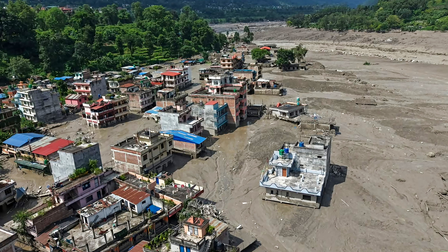
Kathmandu, Aug 27 (IANS) The devastating flash floods that swept through Nepal’s Bhote Koshi and Trishuli river systems have affected several districts, damaged critical infrastructure and left more than 300 tourists impacted, according to environmentalist and Nepal’s “River Man” Megh Ale.
Speaking to IANS on Thursday, Ale said districts along the Trishuli river system in Nepal, including Rasuwa, Nuwakot, Dhading, Gorkha, Nawalpur and Chitwan, had suffered extensive damage following the floods. He said the scale of destruction was still being assessed, with authorities yet to arrive at a final estimate of the losses.
Ale attributed the immediate trigger for the disaster in the Bhote Koshi area to a massive ice and rock fall that entered the river in Tibet, causing a sudden surge of water and debris downstream.
“According to the information, the big ice-rock fall got into the river in China, in Tibet. So this caused the whole situation,” Ale said, adding that there appeared to have been little opportunity for authorities to understand what had happened or issue an early warning.
“Even the Chinese authorities did not have a chance to understand how it happened,” Ale said.
“There was no early warning, and a lot of infrastructure in China was gone in a few hours. The Bhote Koshi comes from Tibet, joins the Gosaikunda stream, and forms the Trishuli system, impacting the entire river basin down to Chitwan, where it becomes the Narayani,” he added.
He said the destruction was severe on both sides of the border, with infrastructure in the affected Chinese area also reportedly swept away within a short period.
The flooding has also raised concerns over the safety of tourists travelling through the region. Ale said more than 300 tourists had been affected, while 105 Indian tourists were still missing, according to information available to him.
“Lots of people are still, you know, the government is counting on it. We haven’t got the final figure yet, but it’s a huge loss,” he said.
The latest official update said the bodies of 162 people swept away by the massive flash flood in the Bhote Koshi River had been recovered as of Thursday morning. The police said the remains were recovered from riverbanks across several downstream districts along the Bhote Koshi and Trishuli river systems, including Rasuwa, Nuwakot, Dhading, Chitwan, Gorkha, Tanahu, Nawalparasi East and Nawalparasi West.
Heavy monsoon rains have caused widespread flooding across Nepal, damaging homes, roads, bridges, agricultural land and other infrastructure while displacing thousands of families.
Asked whether the disaster was purely natural or linked to human activity, Ale described it as a combination of natural and human factors. He pointed to climate change and global warming, while also highlighting construction activity along the Bhote Koshi-Trishuli corridor.
“I can say it’s a man-made and natural disaster altogether. It caused a bigger disaster,” he said.
Ale said Nepal contributes relatively little to global climate change and greenhouse gas emissions but remains highly vulnerable to its effects. He argued that changing climatic conditions, combined with development along river corridors, could amplify the impact of extreme events.
He specifically referred to a series of hydropower projects and dams under construction along the Trishuli and Bhote Koshi corridors. However, he stressed that he was not blaming the projects themselves for triggering the floods.
“I don’t say it’s a project. I would say it’s a natural disaster also caused by climate change and global warming,” he said.
At the same time, Ale warned that infrastructure along rivers could worsen the consequences of flash floods. He said bridges and construction debris were swept into the floodwaters, with one bridge reportedly hitting another bridge and its pillars after being carried downstream.
According to Ale, the accumulation of debris created blockages and intensified destruction along the river system. He said the overall damage could run into millions of dollars, with the full economic impact yet to be calculated.
The disaster has renewed concerns over early-warning systems, river management and infrastructure planning in Nepal’s vulnerable mountain and river corridors, as rescue teams continue searching for missing people and authorities assess the extensive damage.
–IANS
akl/snj/mr