



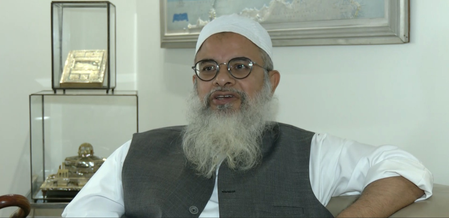
New Delhi, March 26 (IANS) Jamiat Ulama-e-Hind President Maulana Mahmood Asad Madani on Thursday said that a growing sense of insecurity prevails among many Muslims in India, with feelings of being “cornered, unsafe, and humiliated” arising from what he described as a pattern of developments and a perceived bias in governance and law enforcement rather than any single incident.
Speaking to IANS, Madani stressed that while isolated incidents are not uncommon in a country as large and diverse as India, concerns deepen when the response of authorities appears inconsistent. “Those whose duty is to stop injustice and ensure justice seem to have turned a blind eye,” he said, suggesting that the approach of sections of the administration, police, and governments contributes to this sense of unease.
On the question of whether Muslims are being targeted globally, Madani said such perceptions are gaining ground, though he refrained from citing specific incidents and instead pointed to what he termed a broader trend.
Addressing the issue of deportation of alleged illegal immigrants in Assam, he asserted that the matter should not be viewed through a religious lens. “They even call us Bangladeshis. Our view is that any person — regardless of religion — who is a foreign national and does not have valid documents should not be allowed to stay in India. The NRC process has already taken place in Assam. The Chief Minister there even talks about sending me to Bangladesh.”
On the Special Intensive Revision (SIR) of electoral rolls, Madani said dissatisfaction is not confined to Muslims alone. “There are many complaints regarding this, and dissatisfaction is present among other communities as well,” he noted.
On the Gujarat Uniform Civil Code (UCC) Bill, he said the organisation would respond only after a detailed examination of it. “Senior members of our organisation are currently procuring and studying the bill, after which we will issue our response,” he said.
Referring to restrictions on offering Eid prayers on roads, particularly in Uttar Pradesh, Madani emphasised the need for uniform application of rules. “If the government has decided that no religious activity should take place on roads—since roads are meant for movement—then this rule should be applied equally to everyone. It should not be one-sided,” he said.
About AIMIM chief Asaduddin Owaisi, he said: “Owaisi is a capable individual and actively participates in politics. In his own way, he is doing his job well.”
–IANS
sn/vd