
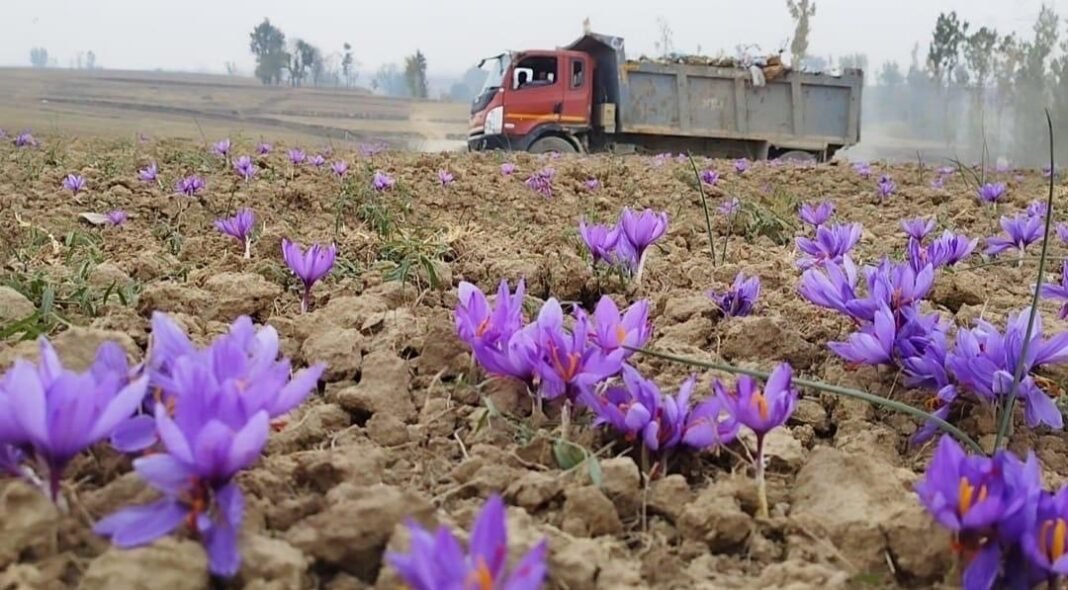

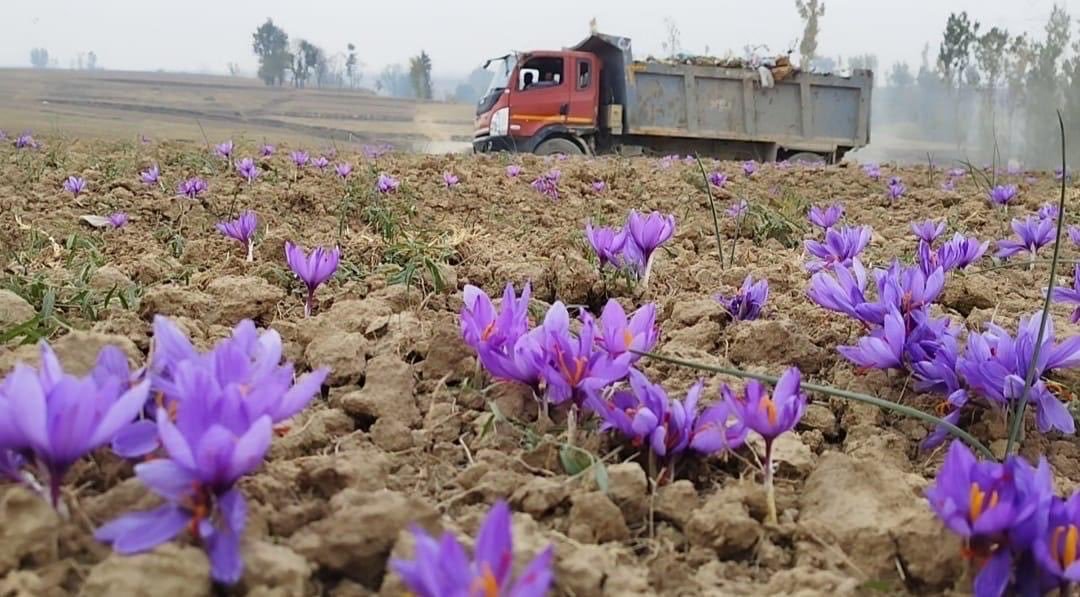
Srinagar, Nov 21 (IANS) Former Jammu and Kashmir Chief Minister and Peoples Democratic Party (PDP) president Mehbooba Mufti on Saturday accused the authorities of damaging Pampore’s prized saffron fields by using agricultural land as a municipal dumping ground, claiming that nearly 2,000 kanals had been affected and the livelihoods of 150 families threatened.
In a post on X, Mufti said, “For three years, Pampore’s priceless saffron fields are being used as a municipal dumping ground. Nearly 2,000 kanals are damaged, 150 families’ livelihoods are threatened, and rats and rodents are destroying crops.”
“This is an outrageous assault on Kashmir’s saffron heritage. Such administrative negligence is indefensible. Our saffron fields are not dumping sites. They must be protected, not poisoned,” she said.
The Srinagar Municipal Corporation (SMC) has reportedly been using the Galandhar area of Pampore to dump waste collected from different parts of the city. The continued dumping has raised concerns over the degradation of fertile agricultural land and the impact on saffron growers who depend on the crop for their livelihood.
Saffron cultivation in Pampore and other parts of Kashmir has been declining for decades. The area under cultivation has fallen from 5,707 hectares in the 1990s to around 3,200-3,715 hectares in recent years, accompanied by a significant decline in production.
Climate change, erratic rainfall, warmer winters, and reduced snowfall have affected flowering and the growth of saffron corms. Several fields continue to depend on rainfall, while irrigation facilities developed under the National Saffron Mission have faced maintenance and operational problems.
Encroachment, construction, waste dumping and conversion of agricultural land have further compounded the crisis. Growers have also reported shortages of quality planting corms and crop damage caused by porcupines.
Kashmir produced around 16 metric tonnes of saffron in the late 1990s, but output has since become increasingly erratic. Severe dry spells in 2024 and 2025 reportedly resulted in harvests falling to 10-30 per cent of normal levels in some areas.
The number of families dependent on saffron cultivation in Pampore has also declined from over 22,000 to around 16,000, as younger generations increasingly seek alternative livelihoods.
–IANS
sq/srk/skp