

United Nations, Oct 9 (IANS) The linguistic and cultural heritages from India that landed with their forebears on the shores of countries with diasporas grew in their diversities to enrich the mosaic of their societies, representatives of those nations recalled.
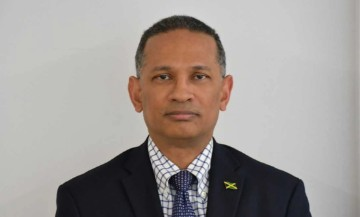
“They helped shape the multicultural identity that Jamaicans proudly embrace today, and which is reflected in our national motto, ‘Out of Many, One People’, Jamaica’s Permanent Representative Brian Christopher Manley Wallace said on Thursday at the Hindi Divas observance here.
“For Jamaica, Hindi carries a special resonance: Our connection to India is not abstract; it is woven into the fabric of our society”, he said.
“Over generations, these influences enriched Jamaican music, cuisine, religious life, and many elements of our own vocabulary”, he added.
Trishala Persaud, the deputy permanent representative of Guyana, said when the first Indians arrived in her country in 1938, “they brought very little in the way of physical possessions, but they carried with them the invaluable legacy of their languages, their culture, their music, their faith, and their stories”.
“Nearly two centuries later, that inheritance is woven into who we are as a Guyanese nation”, she said.
“For us, Hindi is not just a language, but it has a deep connection with our history”, she said.
Representatives of some countries spoke of how some of the languages that Indian immigrants brought with them evolved from the interactions with their new homeland.
Suriname’s Permanent Representative Michel Orlando Kerpens recalled how a language, Sarnami Hindustani, emerged from the Bhojpuri and Awadi spoken by the early Indian immigrants and “became an important expression of the identity of the Indo-Surinamese community”.
“At the same time, standard Hindi, [and] Sanskrit, continued to play an important role through religious ceremonies, music, literature, and cultural traditions”, he said, and “language became much more than a means of communication”.
Mauritius Permanent Representative Milan JN Meetarbhan said the mid-19th century migrants largely spoke Bhojpuri, “a language close to Hindi, but many Bhojpuri-speakers migrated over the years to Shubhad Hindi”.
“Our ancestors, the early migrants, set up ‘Baithkas’, or evening schools, which became centres for learning for the children of laborers” and these “have played a significant role in maintaining Hindi as a language studied and spoken by several generations of Mauritians”, he said.
Rhoda Banner, a first secretary in Fiji’s UN Mission, said the 463 people from British India who arrived in her country on 14 May 1879, brought “very little. Among the little, language was carried”.
Awadi and Bhojpuri were “carried across the water and held together in household after household by the Ramcharitmanas of Tulsidas, recited in the ‘mandalis’, week after week, by people who had lost nearly everything else” , she said.
“To that were added, over generations, iTaukei words and English words, until what emerged was a language that exists nowhere else on Earth: We call it Fiji Hindi”, she said.
“Fiji Hindi is not a lesser Hindi; it is not Hindi that went wrong on a long voyage”, she said.
“It was a daughter of Hindi with its own grammar, its own broadcast voice, its own literature, including novels written and published in it, in what Hindi did when it was given 147 years and an ocean”, she said.
“And my country has chosen to protect it”, she said. The constitution mandates that iTaukei and Fiji Hindi be taught as compulsory subjects in every primary school.
Trinidad Deputy Permanent Representative Venessa Ramhit-Ramroop said, “In Trinidad and Tobago, Hindi lives in our prayers, it lives in our rituals, it lives in our music, our ceremonies, and our celebrations”.
“Our elders told us that a man who could read the Ramcharitmanas was the most respected man in the village”, she said.
“Hindi and related languages travelled across oceans, were preserved and adapted by successive generations, and left an enduring imprint on our cultural landscape”, she said.
“Words of Hindi, Bhojpuri, and related origins have become so deeply embedded in Trinidad and Tobago that we often use them without thinking about where they came from”, she added.
–IANS
al/rs