



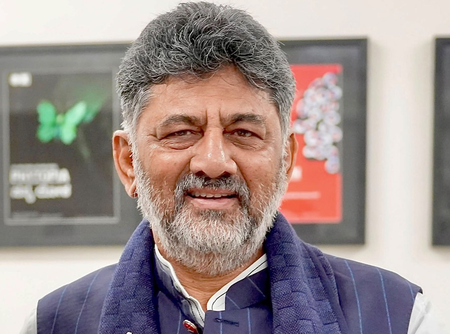
Bengaluru, Aug 13 (IANS) Karnataka Chief Minister D.K. Shivakumar has ordered the formation of a special commission for the development of tribal and nomadic communities in the state, the official statement by the Chief Minister’s Office said on Thursday.
The Government said the move comes shortly after a demand was raised for the establishment of such a commission during the World Tribal Day celebrations. On the occasion, Shivakumar had promised to constitute the commission within a month.
The Government said the Chief Minister has fulfilled his promise by issuing the order within two days of making the announcement.
Tribal and nomadic communities living in Karnataka continue to face several social, educational and economic challenges. Against this backdrop, the Government has decided to constitute a special commission to work towards their development, protection of their rights and ensuring social justice.
The commission will focus on addressing the basic needs of these communities, including quality education, nutritious food, healthcare, housing, drinking water, roads and electricity.
The Government also aims to provide skill development opportunities and employment prospects for young people from tribal and nomadic communities.
The initiative is intended to create new opportunities and hope for these communities and ensure that they have equal access to development and welfare programmes, the Government said.
The Government reiterated its commitment to improving the socio‑economic conditions of tribal and nomadic communities and ensuring their overall development.
Earlier, S. Mohandass Hegde, Member, Karnataka State Policy and Planning Commission, stated that the Karnataka Tribal Development Framework 2026–2035 proposes a long‑term shift from fragmented welfare schemes to a rights‑based, community‑led and outcome‑oriented model for tribal development.
He said it seeks to recognise tribal communities as rights‑holders, decision‑makers, producers, entrepreneurs and custodians of traditional culture.
The framework gives special priority to the Jenu Kuruba and Koraga communities, classified as Particularly Vulnerable Tribal Groups (PVTGs), with a proposed 100 per cent coverage of essential services including housing, drinking water, healthcare, education, nutrition and livelihoods.
“It proposes tribal habitations as the basic planning unit, six Tribal Development Zones, and 12 key pillars covering land and forest rights, self‑governance, education, healthcare, livelihoods, women’s and youth empowerment, infrastructure, culture, environment, digital governance and accountability.
The framework aims to improve services, incomes, education, health, employment and protection of tribal rights by 2030 and 2035 through integrated planning, GIS mapping, departmental convergence and measurable outcomes,” Hegde stated.
–IANS
mka/dan