



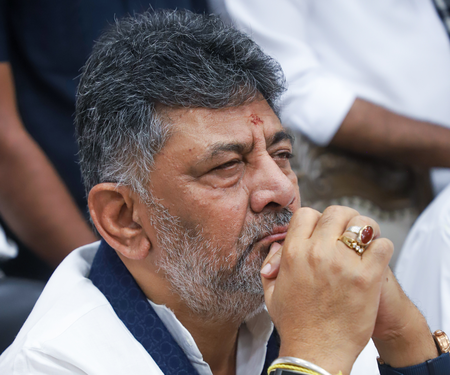
Bengaluru, June 1 (IANS) Winning and retaining the confidence of Karnataka’s AHINDA communities in the post-Siddaramaiah era is likely to be one of the biggest political challenges facing Chief Minister-designate and Karnataka Congress President D.K. Shivakumar, according to political observers and party insiders.
The issue has gained significance after the Congress Legislature Party (CLP) elected Shivakumar as its leader, paving the way for a leadership transition in the state. Announcing the change, AICC General Secretary (Organisation) K.C. Venugopal expressed confidence that the Congress would return to power in the 2028 Assembly elections.
However, political analysts argue that the party’s electoral success will depend largely on whether Shivakumar can consolidate support among the AHINDA communities, considered the Congress party’s core support base in Karnataka.
AHINDA is a Kannada political acronym that stands for Alpasankhyataru (Minorities), Hindulidavaru (Backward Classes or Other Backward Classes), and Dalitaru (Scheduled Castes and Scheduled Tribes). The term refers to a social and political coalition of minorities, backward classes, and Dalits, and has been a defining political platform associated with former Chief Minister Siddaramaiah.
Analysts note that Shivakumar, despite his organisational and political strengths, is not widely perceived to have achieved the same level of influence among AHINDA communities as Siddaramaiah. His approach to key issues such as the caste census report and reservation for Muslims under Category 2B will be closely watched, particularly as both issues continue to generate political debate and opposition criticism.
At the same time, Shivakumar faces the challenge of balancing the interests of AHINDA communities with those of other influential social groups, including Vokkaligas and Lingayats, which play a significant role in Karnataka’s electoral landscape.
Political observers note that Siddaramaiah consistently projected himself as a champion of AHINDA communities while retaining support from sections of the Vokkaliga and Lingayat communities. This broad social coalition was widely credited with helping the Congress secure a landslide victory in the 2023 Assembly elections.
The consolidation of AHINDA votes behind the Congress in 2023 was often described as a “rainbow coalition.” The party secured overwhelming support from minority communities, particularly Muslims, as well as significant backing from Dalits, backward classes, and tribal communities.
The Kuruba community, to which Siddaramaiah belongs, the Dalit community represented by Congress President Mallikarjun Kharge, and tribal groups all voted in substantial numbers for the Congress. Political observers believe retaining this support without Siddaramaiah as Chief Minister could prove challenging for the party.
Shivakumar, on the other hand, is credited with consolidating Vokkaliga support in southern Karnataka and helping the Congress make inroads into the Janata Dal (Secular) ‘s traditional support base. The Congress also benefited from a split in the Lingayat vote during the 2023 elections.
The political landscape has since changed, with the BJP and JD(S) now aligned. Former Prime Minister H.D. Deve Gowda and Union Minister H.D. Kumaraswamy have intensified efforts to strengthen support among Vokkaligas, while the BJP is working to consolidate its traditional Lingayat base and expand its reach among backward and marginalised communities.
With less than two years remaining before the next Assembly election cycle begins in earnest, political analysts view this united BJP–JD(S) strategy as a significant challenge for the Congress leadership.
Karnataka has 51 reserved Assembly constituencies out of its 224 seats, including 36 seats reserved for Scheduled Castes and 15 for Scheduled Tribes. In the 2023 elections, the Congress won 35 of these reserved seats, underscoring the importance of AHINDA support to the party’s electoral success.
Political columnist Dharaneesh Bookanakere, speaking to IANS, said Shivakumar faces an uphill task in winning the confidence of AHINDA communities.
He remarked that it would be difficult for Shivakumar to secure the same level of support from the AHINDA vote bank, as over the years, he has not actively cultivated these communities or built the kind of connection that Siddaramaiah enjoys.
Bookanakere noted that while Siddaramaiah has stepped down as Chief Minister, he remains the undisputed leader of the AHINDA movement. He added that Siddaramaiah has left the Chief Minister’s post, not politics, and continues to be the AHINDA leader. It will be difficult for Shivakumar to emerge as a similar figure. Siddaramaiah ensured a smooth transition of power and made it clear that he would not engage in any anti-party activities. How Shivakumar handles his relationship with Siddaramaiah will be important.
According to Bookanakere, the Congress government’s approach to issues such as the caste census, Muslim reservation, allocation of Scheduled Caste Sub-Plan (SCSP) and Tribal Sub-Plan (TSP) funds, and representation of Dalits and backward classes in the cabinet will significantly influence the party’s support among AHINDA communities in the coming years.
As the Congress prepares for a new phase under Shivakumar’s leadership, retaining the broad social coalition that powered its 2023 victory may prove crucial to its prospects in the next Assembly election.
–IANS
mka/dan