



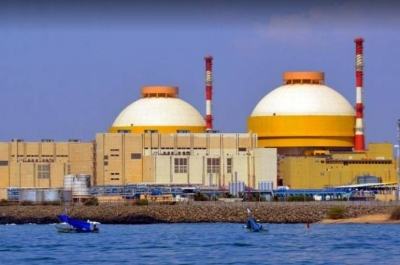
New Delhi, May 29 (IANS) India’s growing civilian nuclear energy programme offers an opportunity for establishing a strategic link between India and Central Asia for long-term cooperation in the supply of uranium, strengthening energy security, economic ties and geopolitical diversification, according to an article in Geopolitical Monitor.
The 2026 contract, signed between Kazatomprom and India’s Department of Atomic Energy for the supply of uranium valued at over $4 billion, shows that the India-Central Asia cooperation in this domain is shifting from commodity trade toward a strategic axis.
The article highlights that as India seeks to scale up civilian nuclear energy generation and diversify fuel supplies, Kazakhstan and Uzbekistan are becoming important partners within a broader Eurasian resource architecture. For Astana and Tashkent, India represents not a transactional buyer, but a long-term partnership anchored in multi-year contracts and shared interest in continental connectivity.
India has set a target of 100 GW of civilian nuclear capacity by 2047, with an interim goal of 22,480 MW by 2031-32. Small modular reactors are receiving separate attention. The 2025/26 budget has reserved more than $2 billion for this direction, and a Rs 200 billion Nuclear Energy Mission targets at least five indigenously designed small modular reactors by 2033.
Against this backdrop, Kazakhstan looks like a near-ideal partner for India. The republic holds approximately 14 per cent of global uranium reserves and remains the world’s largest uranium producer. In 2025, Kazakhstan’s total uranium production reached 25,800 tonnes, including 13,500 tonnes attributable to Kazatomprom, supplying approximately 20 per cent of global primary uranium output.
For India, which plans to scale up civilian nuclear energy generation rapidly, such a partner carries strategic significance, said the report.
The Kazakh-Indian uranium partnership already has considerable institutional depth. Kazakhstan had previously been one of India’s important uranium suppliers alongside Canada. The 2026 agreement moves this relationship from a category of regular commodity cooperation into a longer-term strategic connection.
For New Delhi, Kazakhstani uranium strengthens the fuel base and reduces dependence on a single supplier at a moment when the country plans to scale up civilian nuclear energy generation rapidly. For Astana, the Indian market expands room for maneuver against the backdrop of a strong Chinese presence in Central Asian extraction, logistics, and raw material processing.
Chinese companies are already strengthening their positions in large Kazakhstani uranium projects, acquiring assets from Russia’s Rosatom. In this situation, India becomes another stable partner in the uranium market. For Kazakhstan, this format is particularly valuable. It allows the substance of multi-vector policy to be filled with concrete long-term contracts. In this sense, the uranium deal with India fits within Astana’s foreign policy doctrine of combining the protection of national interests with openness toward different centers of power, said the report.
However, the main constraint remains geography. Without reliable routes through the Caspian, Iran, or Afghanistan, uranium diplomacy will face the same connectivity problems that have limited India’s presence in the region for decades. The core question is whether nuclear fuel can become the domain, through which India establishes a durable foothold in Central Asia, the article observes.
Transport risks do not cancel the prospect of India-Kazakhstan-Uzbekistan cooperation. They make it more political. The issue extends beyond the sale of raw materials into the creation of reliable routes, supply insurance, and long-term arrangements. These constraints align the foreign policy interests of the parties. New Delhi needs reliable access to resources and continental corridors, while Central Asian states need additional outlets to southern markets and ocean ports, the article states.
–IANS
sps/na