



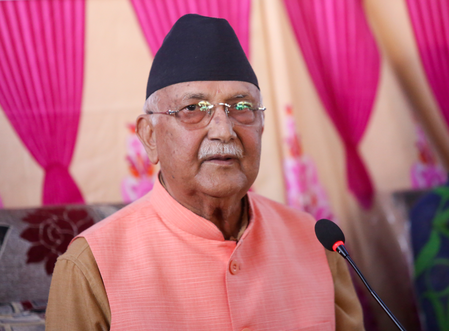
Kathmandu, April 9 (IANS) Nepal’s former Prime Minister KP Sharma Oli and former Home Minister Ramesh Lekhak, on Thursday, were released from judicial custody following an order from the Supreme Court, after spending 13 days in jail.
The two were arrested on March 28 in connection with a culpable homicide-related case linked to the suppression of Gen Z protests in September last year that left several protesters dead.
Hearing the habeas corpus petition filed by the families of Oli and Lekhak, the apex court on Monday ordered their release by Thursday after the additional five-day remand granted by the Kathmandu District Court expired.
“Complete the investigation and take necessary legal action, or release Oli and Lekhak from custody in accordance with the National Criminal Procedure Code,” the court order issued on Monday said.
Following his release from police custody, former Prime Minister Oli claimed that he had been detained illegally.
“Although the government filed criminal charges against me in a biased and vindictive manner and kept me in illegal detention for 13 days, I have finally been released after it failed to present sufficient grounds and evidence to prosecute me in the case,” Oli wrote on Facebook.
The former Nepal Prime Minister, however, said that he would remain in the hospital for a few more days for treatment due to his poor health condition.
The arrests of Oli and Lekhak followed the recommendation of a commission led by former Special Court Chairperson Gauri Bahadur Karki, which was formed to investigate the incidents during the Gen Z movement in Nepal on September 8 and 9 last year.
The commission had recommended that Oli, Lekhak, and former Police Chief Chandra Kuber Khapung be charged under Sections 181 and 182 of the National Penal Code for criminal negligence, which could lead to a sentence of up to 10 years’ imprisonment if convicted.
The report also recommended action against the then Home Secretary Gokarna Mani Dawadi, current Armed Police Force Chief Raju Aryal, former head of the National Investigation Department Hutaraj Thapa, and the then Chief District Officer of Kathmandu Chhabi Rijal, suggesting prosecution under Section 182 of the code, which carries a penalty of up to three years’ imprisonment.
During the Gen Z movement, 77 people lost their lives, and public and private properties worth more than NPR 84 billion were damaged, according to the government’s report.
–IANS
int/scor/khz