



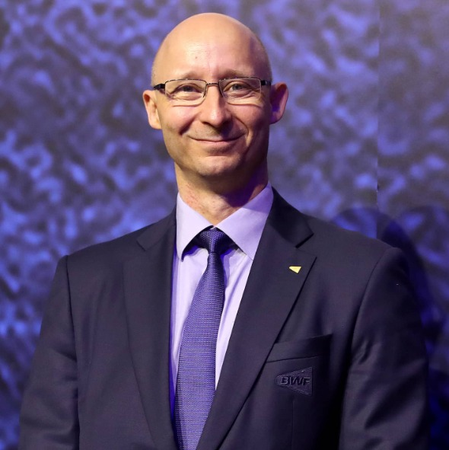
New Delhi, Aug 20 (IANS) Badminton World Federation (BWF) secretary Thomas Lund brushed aside the plans to introduce a prize money system for the BWF World Championships, stating that the focus instead lies on “broadcast, broader aspects and helping players generate investment on their own”.
While the BWF offers cash prizes to players in the BWF World Tour, across the tier levels from Super 100 to the World Tour Finals, cash incentives in the BWF World Championship remain absent. The players, instead, earn ranking points based on their finish in the annual prestigious tournament, which is being held in New Delhi this time around.
Speaking on the pressing issue, secretary Lund emphasised that the focus lies on the broadcasting and the prize money takes a backseat for now.
“We’ve just been discussing all the things we’re doing. We have been revamping a little bit and have new concepts coming in,” Lund told reporters on the sidelines of the BWF Worlds here.
The secretary stated that they are working on technology and broadcast for the tournaments, admitting that the world body does not want to stay behind other sports in the race for technology.
“We have slightly longer tournaments to preserve health, safeguarding athletes for Super 1000, major championships. There’s technology that will cost us a little bit to implement as well. Right now, that’s not on the charts (prize money) because we are obviously focusing on the fact that there’s a long-term plan here. We don’t want to be left behind all the other sports with technology because we want to focus on one tournament, prize money and so on. “
Lund detailed that the focus is on broadcast, helping fans to watch matches of the players from their country and giving them more games to tune in to. “A lot of what we have been focused on is the broadcast. That is one of the biggest focuses in our commercial setup. (We have to) Broadcast more matches, showing all matches for the Super 1000s with more players. So, you’ll get more Indian matches on TV, you’ll get more matches of German, Malaysian players on TV…” he added.
He further highlighted that this can enable players to get more camera time, which will ultimately help them build their own brand value and make a more sustainable life through the sport. “Right now, that has been our focus. More players will get more exposure; they have their own advertising. So we have a slightly different way of thinking in terms of how helping players. We would like to make something that’s more sustainable by giving players sustainable livelihoods by actually supporting their own revenue generation as well.
“At the same time as also establishing the framework for them to actually become successful on court with their sport but also commercially with whatever they need to do to live, a happy life in badminton, and some of them actually do live pretty well.”
Lund further widened the ambit to include the national federations, sponsors and other stakeholders to gain from the framework. “I think we can show growth and that’s our objective, we’ll push for more, but we don’t necessarily think the solution is just here’s a hundred dollars (for prize money), we’d rather create investment into frameworks that can help them generate, including our member federations and they play team tournaments of course they come as a team, they come with team sponsors and so on. So we want to have all stakeholders,” he said.
The secretary also highlighted that they have prize money in BWF tours and the cash incentive is not completely out of their mind for the Worlds, but the focus lies on “broader things” currently.
“Some players need to pay for the practice. All of this is an ecosystem philosophy where prize money is not always the right solution to actually support players. We don’t think that’s the right time. By the way, we have pushed up prize money considerably on the tour (BWF tours), so instead of having one tournament three out of four years having prize money, we have actually pushed up World Tour prize money every week. It’s not like we’re not thinking about it, but focussing on this one tournament every year of three out of four years, I think, is maybe a little bit narrow-minded,” he said.
–IANS
vm/bc