



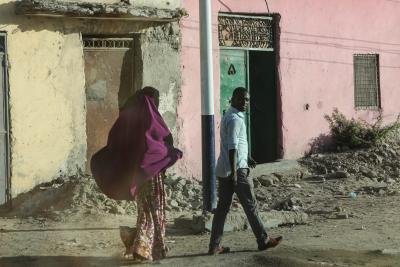
Mogadishu, June 8 (IANS) Somalia’s humanitarian crisis is rapidly escalating due to a devastating combination of prolonged drought, potential El Nino-related flooding, and severe economic shocks stemming from the conflict in the Middle East, the Food and Agriculture Organisation of the United Nations (FAO) warned on Monday.
FAO said the economic disruption has fueled inflation, making necessities increasingly unaffordable for vulnerable families and undermining local market stability.
Government figures show that fuel prices in Mogadishu, the Somali capital, have risen from about 0.60 US dollars to 1.50 dollars per litre, Xinhua news agency reported.
“The sharp rise in fuel prices is driving inflation in food, transport, utilities, and services, significantly increasing logistics costs,” FAO Food Security Cluster Coordinator Gordon Dudi said in a statement.
He added that a constrained global funding environment, coupled with shifting donor priorities, has reduced operational efficiency and heightened the risk of scaled-back humanitarian assistance.
The statement comes as the latest data released by FAO’s Somalia Water and Land Information Management (SWALIM) show that recent rainfall has brought some relief to parts of the country, while the Shabelle River remains dangerously high at Jowhar.
Meanwhile, the report noted that parts of southern and central coastal Somalia continue to face severe water shortages, with drought conditions particularly acute in Southwest State.
Bethwell Mutai, SWALIM’s lead meteorologist, said that while rainfall in the Ethiopian highlands and resulting surface runoff are expected to remain manageable through May, an El Nino phenomenon is forecast to develop in mid-2026 and intensify toward the end of the year.
“From that point onward, we are likely to see a shift from drought concerns to flood risks. The main threat is expected to be flooding, particularly along the Juba and Shabelle rivers, the country’s two major waterways,” he added.
Mutai said it remains imperative to continue supporting drought-affected communities while simultaneously preparing for possible floods and fuel shortages.
FAO Somalia Representative Etienne Peterschmitt said that humanitarian assistance must be sustained throughout 2026 and into 2027 to prevent further suffering, help affected populations recover from drought, and prepare for the impacts of El Nino.
–IANS
ksk/as