



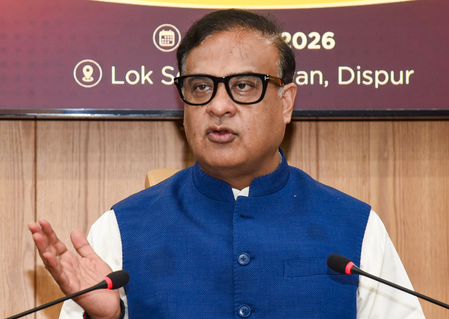
Guwahati, July 6 (IANS) Assam Chief Minister Himanta Biswa Sarma on Monday announced a major ease-of-doing-business initiative aimed at promoting rural entrepreneurship by allowing eligible youths to establish small business and Khadi units on agricultural land without obtaining prior land conversion approval.
Making the announcement through a social media post, CM Sarma said the move was intended to simplify the process of setting up micro-enterprises in rural areas and encourage self-employment.
“Our vision of #EaseOfDoingBusiness is to make it simpler for people to pursue their entrepreneurial dreams,” the Chief Minister said.
According to the new provision, eligible rural entrepreneurs can now establish small industrial or Khadi units on their agricultural land without approaching the District Commissioner for land conversion permission.
The Chief Minister said automatic land conversion for such eligible small and Khadi units has now come into force, removing a key procedural hurdle that often delayed the establishment of rural enterprises.
Officials said the decision is expected to reduce bureaucratic processes, improve the ease of doing business in rural Assam and encourage more young people to take up entrepreneurship instead of depending solely on traditional agriculture.
The initiative is also expected to benefit beneficiaries of various state government entrepreneurship and self-employment schemes by enabling them to quickly establish production units on land already owned by them.
The government believes the reform will help generate employment opportunities, strengthen village-based industries and promote value addition to agricultural produce through small-scale processing and manufacturing units.
The latest announcement forms part of the Assam government’s broader push to improve the state’s investment climate through administrative reforms and simplified approval mechanisms.
In recent years, the state has introduced several measures to digitise government services, streamline permissions for businesses and promote industrial growth under its ease-of-doing-business agenda.
The government has consistently maintained that reducing regulatory bottlenecks is essential for attracting investments while simultaneously creating opportunities for rural youth through micro and small enterprises.
The latest reform is expected to particularly benefit first-generation entrepreneurs looking to establish enterprises in their own villages without facing lengthy administrative procedures.
–IANS
tdr/dpb