



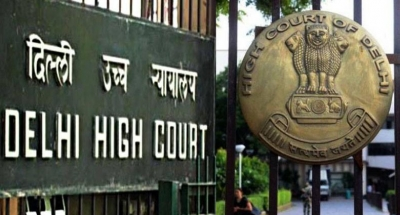
New Delhi, May 5 (IANS) The Delhi High Court on Wednesday said it will appoint three senior advocates as amici curiae to represent AAP leaders Arvind Kejriwal, Manish Sisodia, and Durgesh Pathak, who have chosen to abstain from participating in proceedings linked to the alleged Delhi excise policy case.
A single-judge Bench of Justice Swarana Kanta Sharma flagged the absence of representation for the three leaders during the hearing of a Central Bureau of Investigation (CBI) petition challenging their discharge in a corruption case.
Observing that the respondents were neither present in person nor represented through counsel, the judge said it would appoint three senior advocates to assist the court as amici curiae.
“I will appoint some senior as amicus for respondents… It will be appropriate if I hear arguments of CBI once I appoint an amicus,” Justice Sharma said, posting the matter for further hearing on May 8.
The Delhi High Court is dealing with a criminal revision petition filed by the CBI challenging the trial court’s order discharging Kejriwal, Sisodia and other accused in the alleged Delhi excise policy scam.
The development comes against the backdrop of the AAP leaders’ decision to opt out of the proceedings after Justice Sharma declined to recuse herself from hearing the case.
In his letter, Kejriwal invoked the path of “Satyagraha”, stating that his “hope of getting justice” from Justice Sharma stood “shattered”, while asserting his right to challenge any adverse decision before the Supreme Court. Sisodia also conveyed a similar stance, stating that his decision to abstain was not driven by hostility towards the judiciary but by personal conviction.
Earlier, the Delhi High Court had issued notice on the CBI’s revision plea and stayed certain adverse remarks made by the trial court against the investigating agency and its officers. The Central agency has alleged that the now-scrapped excise policy introduced by the then AAP-led Delhi government was manipulated to favour select liquor traders in exchange for kickbacks. The trial court, in a detailed judgment running into more than 1,100 paragraphs on February 27, had discharged all the accused, rejecting the prosecution’s allegation of an overarching conspiracy and observing that the record suggested the excise policy was the outcome of a consultative and deliberative process.
–IANS
pds/vd