


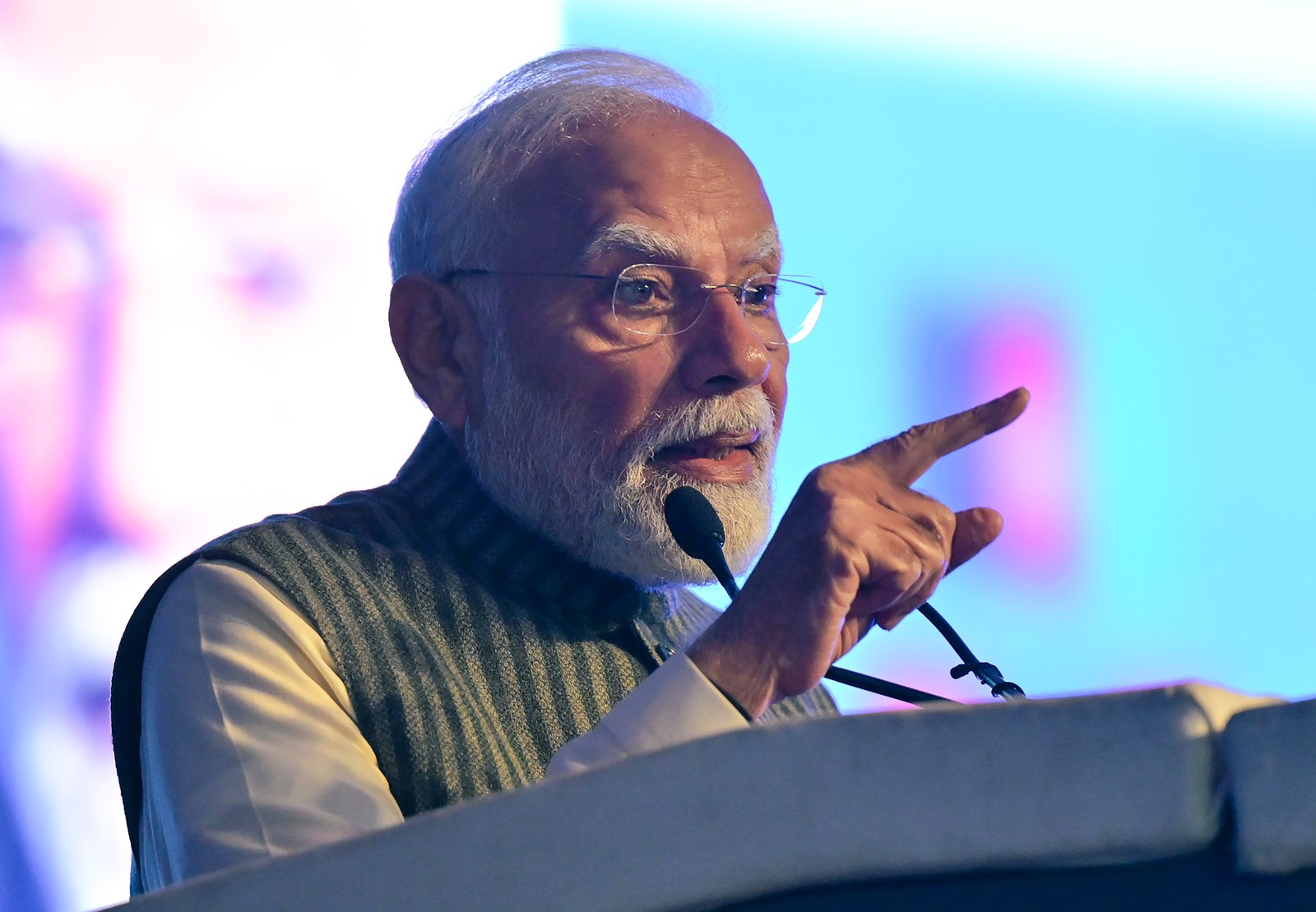
New Delhi, Nov 20 (IANS) Prime Minister Narendra Modi on Thursday inaugurated the first Shanghai Cooperation Organisation Civilisational Dialogue Forum at the historic Purana Qila, stressing that while empires may redraw maps, civilisational dialogues have the power to transform and enrich global thought.
He described the summit as far more than a ceremonial platform, saying it can help give direction to the world at a time when global discourse is dominated by conflict and unrest.
Addressing ministers, ambassadors, scholars, artists and guests from SCO member states, the Prime Minister highlighted the significance of cultural connections as the strongest guarantee of world peace.
He noted that the forum builds on the SCO’s 25 years of cooperation in security, economy and connectivity, asserting that shared civilisational experiences will play a vital role in uniting the world.
Reflecting on the ancient setting of Purana Qila, whose history scholars link to the Mahabharata era, PM Modi said cultural performances, Vedic recitations and presentations of Buddhist philosophy at the venue conveyed universal messages of love, unity and human welfare that transcend borders.
He traced centuries of exchanges, from trade links between the Indus Valley Civilisation and Mesopotamia five thousand years ago to the Silk Route networks that connected India, China, Central Asia and Eurasia.
Scholars and travellers such as Faxian, Xuanzang, Yijing and Kumarajiva, along with centres like Nalanda, Kucha and Dunhuang, enriched civilisations through the free flow of ideas, languages and Buddhist texts.
The Prime Minister cited lasting examples of knowledge transfer: India’s Panchatantra travelled to Persian and Arabic as “Kalila wa Dimna”; the Ramayana shaped literature and arts across Southeast Asia; mathematical ideas of Brahmagupta reached Baghdad and were advanced by scholars like Al-Khwarizmi; and Central Asian Maqam traditions intertwined with Indian Ragas, while garden designs from Samarkand and Herat influenced the Charbagh style.
Emphasising modern possibilities, PM Modi observed that 21st-century technology has created unprecedented opportunities for cultural connectivity. Routes that once took months to travel can now connect people within seconds through digital platforms.
He urged SCO countries to fully harness these tools for knowledge sharing, cultural exchange and collaboration.
He proposed joint efforts to digitise and translate ancient manuscripts, rare texts and artefacts preserved in museums, libraries and archives, along with collaborative research projects that would allow youth anywhere in the world to engage more deeply with another nation’s heritage.
Artificial intelligence, he said, can accelerate the translation of literary and intellectual works still available in limited languages.
The Prime Minister also called for joint museum exhibitions, university exchanges, heritage circuits linking Silk Route and Buddhist sites, cultural festivals and artist collaborations.
He stressed the role of younger generations—tech-savvy and curious—in carrying the dialogue forward through digital media and creative platforms, while involving local artists and artisans.
Rooting his vision in the Indian philosophy of Vasudhaiva Kutumbakam, the idea that the entire world is one family, PM Modi said the aspiration for national welfare is inseparable from global wellbeing. Mutual harmony and trust, built on shared commonalities and respect for diversity, form the foundation of lasting peace.
Concluding with the Vedic invocation to walk together, speak together and achieve harmony of thought, he congratulated participants and wished them productive deliberations.
–IANS
sktr/dan