



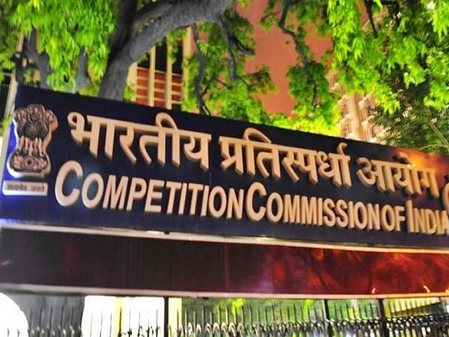
New Delhi, April 16 (IANS) The Competition Commission of India (CCI) has given a clean chit to Adani Enterprises and Adani Green Energy in a SECI tender case, finding no prima facie case of contravention of fair market competition norms warranting an investigation.
“Upon consideration of the facts and circumstances of the present case, the Commission is of the view that there is no prima facie case of contravention of provisions of Sections 3 and 4 of the Competition Act warranting an investigation into the matter. Therefore, the matter is directed to be closed forthwith under Section 26(2) of the Act,” the CCI ruling stated.
Regarding the allegation of abuse of dominant position by the Adani Group, the Commission noted that power in India is generated through various sources such as coal, solar, wind, hydro and nuclear.
It added that both private and public sector companies operate in the power generation market.
The Commission observed that the Informant had not placed on record any evidence to establish why solar power, or public and private power generation companies, should be treated as distinct markets.
It further noted that the power generation market in India comprises several significant players, including National Thermal Power Corporation, Power Grid Corporation of India Ltd., Tata Power Co. Ltd., Torrent Power and Reliance Power. The Adani Group, therefore, prima facie, does not appear to be a dominant player in the market.
Even in the renewable energy segment, other prominent players such as Tata Power, JSW Energy and Suzlon Energy are present, the Commission noted.
The Commission also observed that the allegation of deriving benefits such as cross-subsidisation and economies of scale from other Adani Group entities does not establish dominance under Section 4 of the Act.
Regarding other allegations — including leveraging, exclusion, creation of entry barriers, bid rigging and discrimination — the Commission said no cogent evidence had been produced by the Informant.
With regard to clause-specific allegations, the Commission observed that no evidence was provided to show that the Request for Selection (RfS) documents were designed to favour only large players.
It noted that tender design is based on the specific requirements of the procurer.
The Commission further observed that stipulating capacity generation and financial eligibility criteria in tenders is a standard practice and cannot be faulted merely because the market includes a large number of smaller players.
Therefore, under the purview of the Act, the clauses in the RfS cannot be said to have been inserted with the intent of excluding competition.
–IANS
sps/pgh