
Guidelines for locating Anganwadis close to schools to be released tomorrow
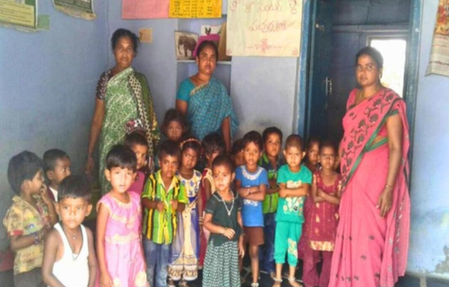
New Delhi, Sep 2 (IANS) The Union government will on Wednesday issue guidelines on co-location of anganwadi centres with schools, an effort aimed at building robust foundation for the human capital of 'Viksit Bharat' (developed India), an official said on Tuesday.
The guidelines will be issued by the Ministry of Women and Child Development in collaboration with the Department of School Education and Literacy under the Ministry of Education.
Union Women and Child Development Minister, Annpurna Devi, and Union Education Minister Dharmendra Pradhan will be present on the occasion.
This initiative will mark a significant step towards implementing the vision of the Prime Minister Narendra Modi of building robust foundation for the human capital of 'Viksit Bharat', an official statement said.
The guidelines emphasise the importance of early childhood care and education through integrated models, including co-located anganwadis and schools.
With more than 2.9 lakh anganwadi centres already co-located with schools, these guidelines will provide much-needed operational clarity and enable states and Union Territories (UTs) to scale up the model effectively, the statement added.
The event will also be attended by senior officers from Ministry of Women and Child Development, Department of School Education and Literacy, representatives of both Departments from States/UTs, including anganwadi workers.
As per government data on Poshan Tracker Data till June 2025, West Bengal (1,18,680) and Uttar Pradesh (1,17,788) top the list of anganwadis which operated for at least 80 per cent of working days.
Various rounds of the National Family Health Survey (NFHS) conducted by the Ministry of Health and Family Welfare since 1992-93 have shown improvement in malnutrition indicators in children across India.
The NFHS-5, conducted between 2019-21, showed that 35.5 per cent children showed signs of stunting, 32.1 per cent were underweight and 19.3 per cent suffering from wasting.
The projected population of all children up to five years in India for the year 2021 is around 13.75 crore (Source: population projections for India and states 2011-2036, National Commission on Population, Ministry of Health and Family Welfare).
However, only 7.36 crore children up to five years were enrolled in anganwadis and registered on Poshan Tracker of the Ministry of Women and Child Development as per the June 2025 data.
Nearly seven crore of these children were measured on growth parameters of height and weight.
Around 37.07 per cent of them have been found to be stunted, 15.93 have been found to be underweight and 5.46 per cent wasted.
--IANS
rch/khz
India’s long-term energy demand is expected to grow at 6 pc; EVs, Data Centres to drive growth
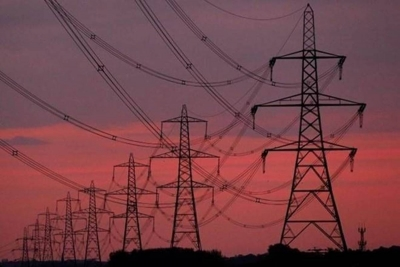
New Delhi, Sep 2 (IANS) The long-term energy demand in India is projected to rise by around 6 per cent per annum till 2030, aided by sustained economic expansion and emerging demand drivers such as electric vehicles, data centres, and green hydrogen, a report said on Tuesday.
"The power sector has witnessed strong demand momentum, with growth between 7.7 per cent and 9.4 per cent during FY22–FY24, supported by a healthy rebound in GDP post-COVID," CareEdge Ratings said in a report.
The Government of India has targeted 100 GW of new thermal capacity by FY32, with 33.2 GW currently under construction.
According to the report, further capacity addition is expected to accelerate with the commissioning of under-construction projects and placement of fresh orders.
“India’s power sector is at an inflexion point—renewable energy and storage will drive future capacity growth, even as the thermal segment provides critical stability to meet rising demand," said Sabyasachi Majumdar, Senior Director, CareEdge Ratings.
With reforms strengthening discom finances, coal supply ensuring fuel security, and storage costs rapidly declining, the sector is positioned for sustainable, reliable, and green growth in the coming decade, Majumdar added.
The power sector is undergoing a significant transformation, with renewable energy poised to drive future capacity additions.
As per the rating agency, while thermal capacity additions will remain critical to support base load requirements until renewable energy with storage solutions scales up, the generation mix is set to evolve rapidly.
"The share of non-fossil sources in total energy generation is expected to rise to over 35 per cent by FY30, compared to 25 per cent in FY25, with new capacity additions led by solar, followed by wind," the report highlighted.
Also, a positive point to note is that domestic coal supply has grown at a 9 per cent CAGR over the last five years, reducing reliance on imports and mitigating fuel cost and forex risks.
Thermal power, however, continues to play a critical role in meeting India’s base-load requirements.
Plant Load Factors (PLFs) have improved from 56 per cent in FY20 to 70 per cent in FY25, backed by robust power demand and healthy domestic coal supply, the report stated.
Nearly 33 GW of thermal capacity is currently under construction, with private players expected to contribute about one-third of future additions.
The report noted that the Aggregate Technical and Commercial (AT&C) losses have declined to 15–16 per cent in FY22–24, compared to 22 per cent during FY19–21.
--IANS
aps/dan
India’s long-term energy demand is expected to grow at 6 pc; EVs, Data Centres to drive growth
New Delhi, Sep 2 (IANS) The long-term energy demand in India is projected to rise by around 6 per cent per annum till 2030, aided by sustained economic expansion and emerging demand drivers such as electric vehicles, data centres, and green hydrogen, a report said on Tuesday.
"The power sector has witnessed strong demand momentum, with growth between 7.7 per cent and 9.4 per cent during FY22–FY24, supported by a healthy rebound in GDP post-COVID," CareEdge Ratings said in a report.
The Government of India has targeted 100 GW of new thermal capacity by FY32, with 33.2 GW currently under construction.
According to the report, further capacity addition is expected to accelerate with the commissioning of under-construction projects and placement of fresh orders.
“India’s power sector is at an inflexion point—renewable energy and storage will drive future capacity growth, even as the thermal segment provides critical stability to meet rising demand," said Sabyasachi Majumdar, Senior Director, CareEdge Ratings.
With reforms strengthening discom finances, coal supply ensuring fuel security, and storage costs rapidly declining, the sector is positioned for sustainable, reliable, and green growth in the coming decade, Majumdar added.
The power sector is undergoing a significant transformation, with renewable energy poised to drive future capacity additions.
As per the rating agency, while thermal capacity additions will remain critical to support base load requirements until renewable energy with storage solutions scales up, the generation mix is set to evolve rapidly.
"The share of non-fossil sources in total energy generation is expected to rise to over 35 per cent by FY30, compared to 25 per cent in FY25, with new capacity additions led by solar, followed by wind," the report highlighted.
Also, a positive point to note is that domestic coal supply has grown at a 9 per cent CAGR over the last five years, reducing reliance on imports and mitigating fuel cost and forex risks.
Thermal power, however, continues to play a critical role in meeting India’s base-load requirements.
Plant Load Factors (PLFs) have improved from 56 per cent in FY20 to 70 per cent in FY25, backed by robust power demand and healthy domestic coal supply, the report stated.
Nearly 33 GW of thermal capacity is currently under construction, with private players expected to contribute about one-third of future additions.
The report noted that the Aggregate Technical and Commercial (AT&C) losses have declined to 15–16 per cent in FY22–24, compared to 22 per cent during FY19–21.
--IANS
aps/dan
Tesla’s India sales fall short of expectations with around 600 orders
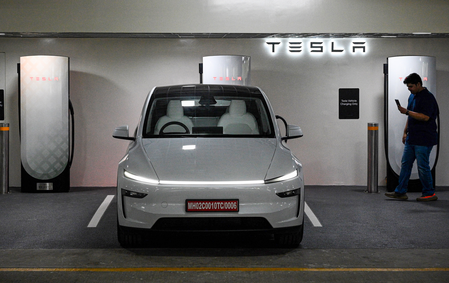
New Delhi, Sep 2 (IANS) US auto giant Tesla's entry into the Indian market fell short of expectations, as the company received just over 600 orders since opening bookings in mid-July.
This figure is significantly lower compared to Tesla's global sales where it delivers the same number of vehicles every four hours, according to multiple reports.
The company now plans to ship 350 to 500 cars to India this year, with the first shipment from its Shanghai factory expected in early September, the report said.
Tesla owner Elon Musk's fallout with US President Donald Trump and changing geopolitical realities, along with Tesla cars' higher prices, weighed down on its sales numbers, according to analysts.
The trade negotiations did not reduce import tariffs, defying expectations. Prospects for a deal have significantly decreased after Trump imposed a 50 per cent duty on Indian exports citing the country's oil trade with Moscow.
The global sales of Tesla also dropped 13 per cent last quarter, raising concerns about a second consecutive year of decline.
Import duties in India raise the cost of Tesla’s entry-level Model Y to over Rs 60 lakh, nearly three times the average price of Rs 22 lakh at which most EVs are sold in the country.
Electric vehicles make up only over 5 per cent of total car sales in India. Within the high-end bracket, just 2,800 EVs priced between Rs 45 lakh and Rs 70 lakh were sold in the first half of 2025.
Tesla is now competing in a narrow slice of market, where Chinese competitor BYD has performed better. BYD sold over 1,200 units of its Sealion 7 SUV in the first half of this year despite facing tariff barriers. The ex-showroom price of the Sealion 7 starts at Rs 49 lakh, providing it a competitive advantage over its rival.
--IANS
aar/
Tesla’s India sales fall short of expectations with around 600 orders
New Delhi, Sep 2 (IANS) US auto giant Tesla's entry into the Indian market fell short of expectations, as the company received just over 600 orders since opening bookings in mid-July.
This figure is significantly lower compared to Tesla's global sales where it delivers the same number of vehicles every four hours, according to multiple reports.
The company now plans to ship 350 to 500 cars to India this year, with the first shipment from its Shanghai factory expected in early September, the report said.
Tesla owner Elon Musk's fallout with US President Donald Trump and changing geopolitical realities, along with Tesla cars' higher prices, weighed down on its sales numbers, according to analysts.
The trade negotiations did not reduce import tariffs, defying expectations. Prospects for a deal have significantly decreased after Trump imposed a 50 per cent duty on Indian exports citing the country's oil trade with Moscow.
The global sales of Tesla also dropped 13 per cent last quarter, raising concerns about a second consecutive year of decline.
Import duties in India raise the cost of Tesla’s entry-level Model Y to over Rs 60 lakh, nearly three times the average price of Rs 22 lakh at which most EVs are sold in the country.
Electric vehicles make up only over 5 per cent of total car sales in India. Within the high-end bracket, just 2,800 EVs priced between Rs 45 lakh and Rs 70 lakh were sold in the first half of 2025.
Tesla is now competing in a narrow slice of market, where Chinese competitor BYD has performed better. BYD sold over 1,200 units of its Sealion 7 SUV in the first half of this year despite facing tariff barriers. The ex-showroom price of the Sealion 7 starts at Rs 49 lakh, providing it a competitive advantage over its rival.
--IANS
aar/
ANRF to catalyse India’s rise as research, innovation powerhouse: CEO
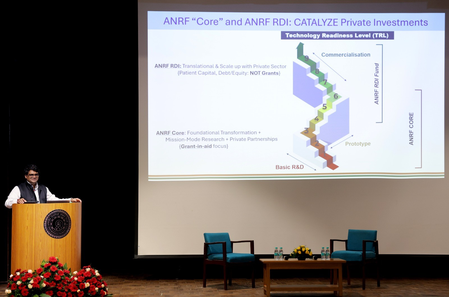
New Delhi, Sep 2 (IANS) The Anusandhan National Research Foundation (ANRF) will provide a conducive ecosystem to catalyse India's rise as a global research and innovation hub, said CEO Dr. Shivkumar Kalyanaraman.
He said this while delivering a lecture at the Indian Institute of Technology (IIT) Delhi.
Sharing the vision of ANRF, Kalyanaraman detailed “how the organisation is working towards establishing the best research environment for scientists and faculty members”.
He also highlighted the ongoing efforts made by ANRF “for ease of doing science, where they are working towards improving procurement models”.
The ANRF CEO also sought innovative ideas from IIT Delhi researchers to “create mission mode programmes”.
“Establish a Principal Investigator (PI)-friendly research environment so that they can work more efficiently towards doing big things for the country and big things for the world and not get caught up in the administrative side of things,” Kalyanaraman said.
In addition, to provide high-level strategic direction for research, innovation, and entrepreneurship in the country,
The government established the ANRF in 2024, through the ANRF Act of 2023, to enable the country to become a global science player. The total estimated cost of ANRF for five years is Rs 50,000 crores.
ANRF aims to forge collaborations among the industry, academia, and government departments and research institutions, and create an interface mechanism for participation and contribution of industries and State governments in addition to the scientific and line ministries.
Meanwhile, Kalyanaraman also visited the Central Research Facility (CRF) at IIT Delhi. He also engaged in a brainstorming session with IIT Delhi’s senior functionaries, discussing the roadmap for IIT Delhi to contribute to nation building.
He also met the young faculty members of IIT Delhi in a special session for an engaging discussion with them, learning about their ideas and suggestions on how to improve the research ecosystem across Indian institutions, while keeping them abreast of the vision of ANRF and its modality.
--IANS
rvt/
ANRF to catalyse India’s rise as research, innovation powerhouse: CEO
New Delhi, Sep 2 (IANS) The Anusandhan National Research Foundation (ANRF) will provide a conducive ecosystem to catalyse India's rise as a global research and innovation hub, said CEO Dr. Shivkumar Kalyanaraman.
He said this while delivering a lecture at the Indian Institute of Technology (IIT) Delhi.
Sharing the vision of ANRF, Kalyanaraman detailed “how the organisation is working towards establishing the best research environment for scientists and faculty members”.
He also highlighted the ongoing efforts made by ANRF “for ease of doing science, where they are working towards improving procurement models”.
The ANRF CEO also sought innovative ideas from IIT Delhi researchers to “create mission mode programmes”.
“Establish a Principal Investigator (PI)-friendly research environment so that they can work more efficiently towards doing big things for the country and big things for the world and not get caught up in the administrative side of things,” Kalyanaraman said.
In addition, to provide high-level strategic direction for research, innovation, and entrepreneurship in the country,
The government established the ANRF in 2024, through the ANRF Act of 2023, to enable the country to become a global science player. The total estimated cost of ANRF for five years is Rs 50,000 crores.
ANRF aims to forge collaborations among the industry, academia, and government departments and research institutions, and create an interface mechanism for participation and contribution of industries and State governments in addition to the scientific and line ministries.
Meanwhile, Kalyanaraman also visited the Central Research Facility (CRF) at IIT Delhi. He also engaged in a brainstorming session with IIT Delhi’s senior functionaries, discussing the roadmap for IIT Delhi to contribute to nation building.
He also met the young faculty members of IIT Delhi in a special session for an engaging discussion with them, learning about their ideas and suggestions on how to improve the research ecosystem across Indian institutions, while keeping them abreast of the vision of ANRF and its modality.
--IANS
rvt/
India seen as reliable partner of African states in push for economic growth
New Delhi, Sep 2 (IANS) India’s engagement with African countries focusses on quiet, government-to-government cooperation in building hospitals, training naval crews, financing small and medium enterprises, and supplying affordable vaccines, according to an article in Kenya’s Capital News.
The article terms India a reliable partner of African countries with its emphasis on co-operation with the Global South. It highlights the example of West Africa’s EBID securing a $40 million line of credit from India’s Exim Bank to fund infrastructure, energy, agriculture, and health projects in August this year.
Crucially, the capital flows through African institutions instead of tying a single government to a single foreign contractor. This is South–South cooperation at its best: African priorities, African intermediaries, Indian financing and know-how, the article states.
It also highlights that security ties follow the same principle. India focusses on training, equipping and exercising with African navies from the Gulf of Aden to the Mozambique Channel.
In June, India and South Africa signed submarine cooperation agreements, while Tanzania hosted a DefExpo 2025 featuring two dozen Indian firms offering technology suited to local needs.
In health, India’s role as a “textbook partner” is even clearer. In June, the African Union and India mapped out new initiatives in affordable medicines, digital health, and telemedicine.
Uganda’s nationwide rollout of the R21/Matrix-M malaria vaccine this year is powered by doses manufactured at India’s Serum Institute, moving Africa from pilots to population-level protection. Here, India delivers technology transfer, price-sensitive solutions, and systems support — the opposite of extractive practice, the article points out.
In the critical minerals sector, India is forging transparent Rare-Earth partnerships with Zambia, Zimbabwe, Mozambique, Malawi, and Côte d’Ivoire, pairing deals with research, skills transfer, and downstream industrial ambitions at home. African business media have taken note: This is economic statecraft through contracts and classrooms, not coercion.
The article also highlights that as G20 president in 2024, India championed Africa’s permanent membership, answering long standing calls for global inclusion. During the COVID-19 pandemic, it supplied vaccines and medical goods to dozens of African countries in acts of solidarity.
--IANS
sps/rad
North Korea’s Kim arrives in Beijing ahead of military parade
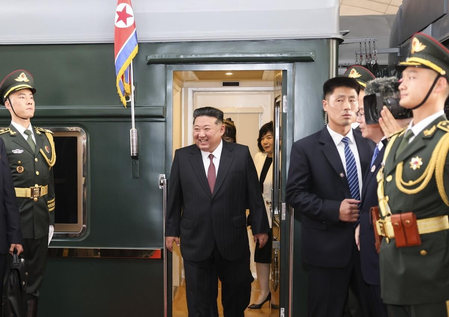
Beijing, Sep 2 (IANS) A special armoured train carrying North Korean leader Kim Jong-un arrived in Beijing on Tuesday as he is set to appear at China's upcoming military parade, which will be attended by dozens of state leaders, setting the stage for his multilateral diplomatic debut.
The train arrived at Beijing Railway Station at around 4 p.m. (local time), nearly a day after departing Pyongyang, with Kim accompanied by Foreign Minister Choe Son-hui and other officials.
A train carrying a North Korean flag was seen in Beijing before a motorcade with the flag departed the station.
North Korea's state media said, later confirmed by Seoul's National Intelligence Service (NIS), that Kim departed Pyongyang the previous day aboard his private train en route to Beijing and crossed into China at dawn.
Kim and Russian President Vladimir Putin will be among dozens of foreign leaders attending Wednesday's military parade presided over by Chinese President Xi Jinping at Tiananmen Square to celebrate the 80th anniversary of "victory" over Japan's surrender and the end of World War II.
Kim will stand "side by side" with Xi and Putin at Wednesday's military parade, the NIS said. It also predicted that Kim may hold separate summits with both leaders on the sidelines.
Russian reports have said Kim will be seated to Xi's left, with Putin on his right. The three leaders, appearing shoulder to shoulder, would send a strong signal to the world about their strengthening trilateral solidarity.
"Kim will demonstrate trilateral solidarity by standing side by side with Chinese President Xi Jinping and Russian President Vladimir Putin during Wednesday's military parade at Tiananmen Square," the NIS assessed earlier in the day.
Russia's Tass news agency also reported Tuesday that Kim and Putin could hold a summit in China, citing the Kremlin.
Russia may discuss the possibility of a Kim-Putin summit once Kim arrives in Beijing, a Kremlin spokesperson said.
Kim has not yet appeared at a multilateral diplomatic event since taking power from his late father, Kim Jong-il, although he has participated in bilateral summits.
His rare decision to attend the Chinese military parade is widely seen as an effort to restore traditionally close ties with China and shed his long-standing pariah image.
With bilateral summits and the signing of a mutual defence treaty last year, Kim and Putin have rapidly deepened military ties, prompting Pyongyang to deploy troops and weapons to support Moscow's war against Ukraine and straining its ties with Beijing.
Kim's trip also comes amid growing prospects of the end of the Russia-Ukraine war, which could shift Moscow's focus westward, away from Pyongyang, along with its economic assistance, Yonhap news agency reported.
The NIS assessed that Kim's trip is aimed at "expanding his room to manoeuvre by restoring North Korea-China relations and securing China's economic assistance to buoy his regime."
Some also suggest that Kim may be seeking to recover relations with China in a bid to leverage them to strengthen his bargaining position ahead of a potential resumption of negotiations with the United States.
--IANS
int/jk/vd
India can become a semiconductor powerhouse before 2047: Industry leaders

New Delhi, Sep 2 (IANS) India’s semiconductor journey is gaining rapid momentum as experts on Tuesday believe the country could emerge as a global powerhouse in the sector much before 2047.
Speaking exclusive to IANS on the sideline of SEMICON India 2025, industry leaders highlighted India’s strong talent pool, supportive policies, and international partnerships as key factors driving this transformation.
Ajit Manocha, President and CEO of SEMI (Semiconductor Equipment and Materials International), said India is on an exponential growth path in the semiconductor ecosystem.
“If the current momentum continues, India could become a semiconductor powerhouse well before 2047,” he told IANS.
Stressing the importance of global interdependence in chip manufacturing, Manocha noted that India must find its “sweet spot” in the value chain, starting with assembly and testing, while larger wafer fabs are expected in the coming years.
He also endorsed Prime Minister Narendra Modi’s vision that “India’s smallest chip will bring the biggest change,” pointing out that semiconductors are now the foundation of modern life.
Anku Jain, Managing Director of MediaTek India, described SEMICON India 2025 as a “pivotal milestone” in the country’s journey towards building indigenous capabilities while fostering global collaborations.
“With India’s first domestically produced chips reportedly set to reach markets by the end of 2025 and 10 approved fabrication projects worth Rs 1.60 lakh crore, India is not just building an industry; it is democratising technology access for billions,” he said.
Jain added that India’s growing market, large R&D talent pool, and supportive ecosystem make the country an important market for MediaTek.
Dr. Manoj Choudhary, Vice-Chancellor of Gati Shakti University, said India is still at an early stage in semiconductor manufacturing but progress is happening quickly.
“In the next 10-20 years, India will make a strong mark globally. With 20 per cent of the world’s design talent already here and support from schemes like DLI, indigenous chip design and manufacturing will get a major boost,” he said.
Dr. Choudhary expressed confidence that India’s manpower, talent, and policy support will help the country emerge as a global semiconductor hub.
Together, these voices reflect a shared belief that India’s semiconductor industry is on a historic trajectory -- one that could position the nation as a key global player much sooner than expected.
--IANS
pk