
IIT Guwahati develops method to monitor glacial hazards in Eastern Himalayas
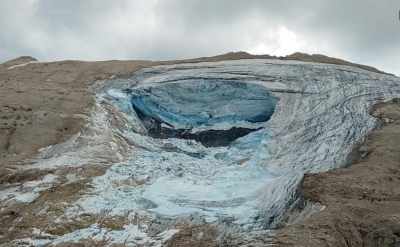
Guwahati, Jan 27 (IANS) Researchers from the Indian Institute of Technology (IIT) Guwahati have developed a predictive framework that has identified 492 locations where glacial lakes are likely to form in the Eastern Himalayan mountains.
The research conducted using high-resolution Google Earth images and digital elevation models also provides crucial insights for hazard management and water-resource planning in high-mountain regions.
The models helped capture complex landscape features and estimate uncertainty in the predictions, making the forecasts more realistic and reliable.
With the developed framework, the research team identified 492 locations in the Eastern Himalaya where new glacial lakes are likely to form, thereby indicating areas that require careful monitoring and preventive measures.
“By pinpointing high-risk areas, the framework can guide early-warning systems for Glacial Lake Outburst Floods (GLOFs), help plan safer locations for roads, hydropower projects, and settlements, and support long-term water-resource management. It offers a practical tool for reducing risks to communities and infrastructure in the Himalayas,” said Prof. Ajay Dashora, Assistant Professor, Department of Civil Engineering, IIT Guwahati.
“Beyond hazard management, the method can help understand how water systems may change as glaciers continue to retreat. Importantly, the framework is adaptable to other glaciated mountain regions around the world, making it a valuable tool for climate-resilient planning and disaster-risk reduction globally,” Dashora added.
The findings, published in Nature’s Scientific Reports journal, confirm that the shape and structure of the land, often overlooked in previous studies, can play a central role in where and how a glacial lake may appear.
In the development process, the research team tested three predictive methods, including Logistic Regression (LR), Artificial Neural Network (ANN), and Bayesian Neural Network (BNN)
Among these, the research team found the Bayesian Neural Network (BNN) to be the most accurate and showed that certain earth features, such as neighbouring lakes, cirques, gentle slopes, and retreating glaciers, are the strongest predictors of glacial lake formation.
The team now plans to integrate moraine development histories, automate data preparation, and add field-based validation to the developed framework.
These improvements will enhance the model’s accuracy and broaden its use for large-scale monitoring of glacial hazards.
--IANS
rvt/
Humbled and honoured to be conferred the Padma Bhushan: Uday Kotak
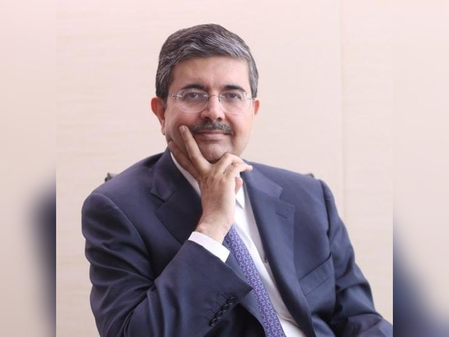
New Delhi, Jan 26 (IANS) Veteran banker and industrialist Uday Kotak on Monday said he was “humbled and honoured” to be conferred the Padma Bhushan.
The government on Sunday announced the Padma Awards on the eve of Republic Day, with Kotak being conferred the Padma Bhushan for his exceptional contribution to the financial sector.
“The India of today is unrecognisable from the one I was born in. The journey has been exhilarating. On this Republic Day, we stand at the fork of many roads,” Kotak posted on X.
He further stated that “I choose the path of karma with a sense of paranoia, with aspiration but conscious of ground realities. I have deep conviction that we, the people will make India even greater. We have miles to go before we sleep”.
The Padma Bhushan recognised Kotak’s lasting impact on India’s banking and financial landscape and his role in shaping a strong and credible private financial institution in the post-liberalisation era.
Kotak’s journey is seen as one of the most remarkable success stories in India’s financial sector. In the early 1990s, Kotak Finance expanded into areas such as auto loans, investment banking and stockbroking at a time when India was opening up its economy.
The timing proved crucial, as economic liberalisation in 1991 created new opportunities for private financial institutions. When Kotak started out, he did not come from a well-known business family and did not have the backing of large investors.
Many potential clients were hesitant to trust a new company with their money. Despite these challenges, Kotak focused on building his business on principles of honesty, transparency and low-risk lending.
His decisions were measured and driven by logic rather than aggressive expansion. The company’s early growth was powered by a modest loan of Rs 30 lakh borrowed from family and friends, which was used to start a bill discounting business.
Over time, this small beginning laid the foundation for what would become one of India’s largest private banking groups.
--IANS
na/
OpenAI adding advertisements in ChatGPT in US sparks privacy concerns

New Delhi, Jan 24 (IANS) Tech giant OpenAI has reportedly announced plans to introduce advertising in ChatGPT in the United States, placing ads on the free version and the low‑cost Go subscription while exempting Pro, Business and Enterprise users.
OpenAI said that advertisements will be clearly separated from chatbot responses, will not influence outputs, and that it will not sell user conversations, according to multiple reports.
The company also pledged to let users turn off personalised ads and to avoid showing ads to users under 18 or around “sensitive” topics such as health and politics. The move has drawn criticism and unease from some users and experts who question whether voluntary safeguards will hold once advertising becomes central to the business model.
Analysts said that social media platforms also followed the same trend, where targeted advertising reshaped services to maximise engagement which later eroded user privacy.
Though the AI company proposed not to show ads “near sensitive or regulated topics like health, mental health or politics”, observers noted that the company is vague about what counts as “sensitive,” or how and by whom terms like “health” will be defined.
While large‑scale AI has proved to be costly to develop and run, and OpenAI looks likely to burn $115 billion over the next five years, industry analysts said advertising is the most scalable revenue model. They noted that ad models reward user engagement, and content that sustains attention could turn out to be misleading or harmful.
A reliable alternative to such private AI firms would be a publicly funded AI system, such as Apertus in Switzerland developed through its universities and national supercomputing centre. It is open source, compliant with European AI law, and free from advertising.
If OpenAI, which is flouted as a “super assistant” placed messages under personalised guidance tags about products, lifestyle choices, finances or politics they could be more impactful than the same ads seen while browsing. Such practices will blur the line between advice and persuasion, according to industry experts.
—IANS
aar/na
JNCASR partners with industry to develop advanced thermal materials for aviation batteries
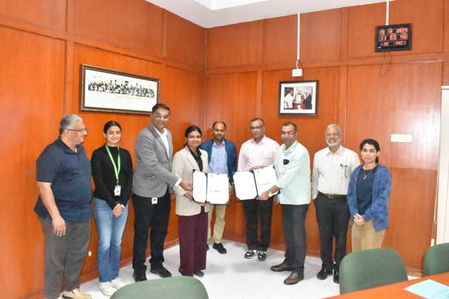
New Delhi, Jan 24 (IANS) The Jawaharlal Nehru Centre for Advanced Scientific Research (JNCASR), an autonomous institute of the Department of Science and Technology (DST), has signed a Memorandum of Understanding (MoU) with Bengaluru-based Dreamfly Innovations to develop advanced thermal materials for aviation batteries.
Under the collaboration, advanced thermal materials and thermoelectric devices will be developed for improving thermal management (storage and conversion) in aviation batteries.
The partnership will address current challenges through materials-level innovation and help translate fundamental materials research into robust, deployable thermal technologies for real-world aviation platforms.
“The joint effort combines JNCASR’s strengths in materials design, synthesis, advanced characterisation, and thermal transport measurements with Dreamfly Innovations’ expertise in aviation battery engineering and system-level integration,” the Ministry of Science and Technology said.
Effective heat management remains a major bottleneck for high-energy-density lithium-based batteries used in the aviation industry.
Excessive heat generation during high-power operation can compromise efficiency, reduce battery lifespan, and pose serious safety risks.
While passive thermal management strategies such as Phase Change Materials (PCMs) are attractive due to their low weight and zero power consumption, their widespread adoption has been limited by the inherently poor thermal conductivity of conventional PCMs.
As a result, heat generated by the battery is not absorbed rapidly enough, leading to temperature rise and accelerated degradation of battery components.
A common approach to overcome this limitation involves incorporating high-thermal-conductivity additives to form composite PCMs.
However, such composites often suffer from long-term stability issues, including additive agglomeration during repeated thermal cycling, which ultimately degrades performance and reliability.
“The advanced thermal materials will be engineered for high thermal conductivity to rapidly absorb excess heat during high-load operation, maintain battery temperatures within optimal operating windows, and enable lightweight, thermal regulation without compromising long-term stability,” the Ministry said.
The collaboration brings together academic research expertise from Prof. Kanishka Biswas' lab in JNCASR and industrial innovation in Dreamfly to address critical challenges in drone performance, safety, and operational endurance, it added.
--IANS
rvt/
Govt releases 3rd discussion paper ahead of new GDP series from Feb 27
New Delhi, Jan 23 (IANS) Ahead of the launch of new GDP series with FY 2022-23 as base year, the government on Friday launched a third discussion paper which focuses on changes in methodology of quarterly GDP series and Sub-national Accounts.
The Ministry of Statistics & Programme Implementation released the discussion paper, titled on “Changes in Methodology of Quarterly GDP series and Sub-national Accounts”.
The ministry has invited comments and feedback from experts, academicians, government bodies, state governments, financial institutions, users of national accounts data and other stakeholders on the discussion paper by February 5.
MoSPI is in the process of revising the base year of national accounts from February 27.
An Advisory Committee on National Account Statistics (ACNAS), under the chairmanship of professor B.N. Goldar, has been constituted to advise MoSPI, among other things, on inclusion of new data sources for improving the estimates of National Accounts and the methodology for compilation and presentation of National Accounts Statistics for purposes of economic analysis and policy formulation.
The Committee has representation from various Central Ministries and Departments, State Governments, Academia and Research Institutions.
According to the ministry, FY 2022-23 has been chosen as the base year of new series and the estimates of new series are scheduled to be released on February 27, 2026.
“With a view to apprise the users of national accounts data about the proposed changes being in the new series, Ministry has planned to release discussion papers on compilation of National Accounts Statistics,” it added.
The first discussion paper on changes in compilation of aggregates based on production/income approach was released on November 21, 2025 and the second discussion paper on the proposed improvements in compilation of GDP from expenditure approach was released on December 16, 2025 to seek feedback/suggestions from users.
--IANS
na/
India shows strong macroeconomic stability, capital-raising activity remains robust: SEBI Chairman
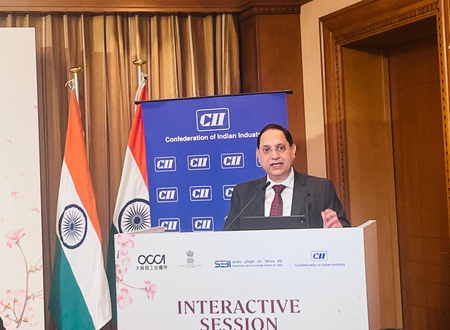
New Delhi, Jan 22 (IANS) SEBI Chairman Tuhin Kanta Pandey said on Thursday that India continues to demonstrate strong macroeconomic stability amid ongoing global volatility in trade and geopolitics, as capital-raising activity remains robust, with the country ranking first globally in the number of IPOs and third in terms of capital raised in 2025.
Outlining the resilience of the Indian economy, Pandey observed that moderate inflation, robust foreign exchange buffers, and stable external accounts place India among the world’s strongest economies, with growth continuing to rank among the highest globally.
During his address to an investors' meeting curated by the Confederation of Indian Industry (CII) in Osaka, Japan, he noted that India’s digital public infrastructure has set new global standards, while recent reforms in income taxation, labour regulations, and the GST framework are expected to stimulate consumption and reinvigorate the investment cycle.
Pandey described the rise of domestic investors as one of India’s most significant developments.
India today ranks as the world’s fifth-largest equity market by market capitalisation share, with the United States leading globally at 48.2 per cent, followed by China, Japan, and Hong Kong.
Mutual funds have deep penetration with strong monthly equity inflows, while the AIF industry has emerged as a key driver of private capital formation.
He further mentioned that debt markets continue to expand, private equity and AIF inflows are rising, and REITs and InvITs are increasingly channelising long-term capital into infrastructure and real estate. The municipal bond market is also gaining momentum.
Pandey stressed that investor education remains central to SEBI’s agenda, with intensified efforts to combat digital fraud and promote responsible investing. For Foreign Portfolio Investors (FPIs), SEBI has focused on simplifying market access through regulatory reforms, easier registration, and improved settlement mechanisms, alongside continued engagement with global investors.
India and Japan share a long-standing and symbiotic relationship anchored in their Special Strategic and Global Partnership, with bilateral trade exceeding $25 billion, underscoring the depth of economic cooperation.
Japanese investors have consistently found strong value and returns in India, which has produced a remarkable number of wealth-compounding companies, said Pandey.
Chandru Appar, Consul General of India, Osaka–Kobe, highlighted that India is currently in a high-growth phase, driven by its demographic dividend, rapid infrastructure development, and expanding consumption base, supported by landmark economic reforms over the past decade.
India’s capital markets are built on trust, transparency, and robust regulation, with SEBI playing a pivotal role in protecting investors and maintaining market integrity, Appar noted.
Setsuo Iuchi, President of the Osaka Chamber of Commerce and Industry, emphasized that India is a key partner for Japanese businesses, especially as companies seek opportunities in the Global South.
R Mukundan, President Designate, CII, said that India–Japan ties are built on shared values and institutional trust, with Japanese companies playing a vital role in India’s manufacturing, technology, and employment growth.
--IANS
na/
India’s growth story wins global trust at Davos: Ashwini Vaishnaw
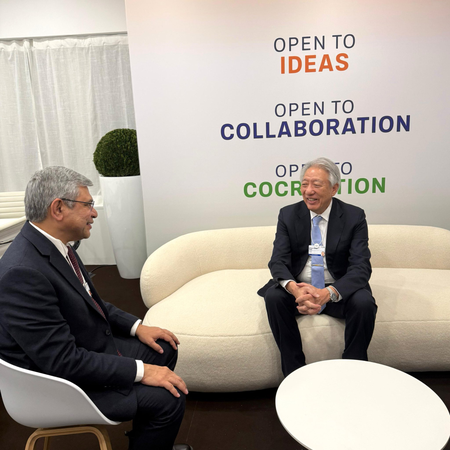
Davos, Jan 22 (IANS) Union Minister Ashwini Vaishnaw on Thursday said that global confidence in Bharat is growing stronger, as leading international companies and investors showed keen interest in expanding their engagement with India at the World Economic Forum (WEF).
Speaking about key meetings on the sidelines of WEF, Vaishnaw highlighted that India’s development journey, reform-driven growth and focus on future-ready infrastructure are drawing attention from global industry leaders.
He said the discussions at Davos clearly reflected that India is being seen as a trusted and reliable partner in global value chains.
The minister said global logistics major Maersk is actively engaging with India to strengthen logistics infrastructure across shipping, ports and railways.
He added that discussions also covered cooperation in semiconductor-related materials, an area critical to India’s long-term manufacturing and technology goals.
“Maersk is actively engaging with India in enhancing logistics infrastructure across shipping, ports, & railways, and semiconductor materials,” Vaishnaw stated.
“Honeywell is partnering with India in railway modernisation. It is keen to expand manufacturing operations in India,” the Union Minister added.
He further said that US-based technology firm Honeywell is partnering with India in railway modernisation and has shown strong interest in expanding its manufacturing footprint in the country.
“Such partnerships support India’s push for advanced manufacturing and improved public infrastructure under the Make in India initiative,” Vaishnaw noted.
Highlighting investor interest, the minister said Temasek Chairman Mr. Teo Chee Hean expressed a clear desire to expand Temasek’s presence in India.
He added that Singapore remains committed to investing in India’s physical and digital infrastructure, as well as in deep-tech startups, reflecting long-term confidence in India’s economic fundamentals.
Vaishnaw also said that discussions with global leaders in artificial intelligence, robotics and cybersecurity underlined India’s rising role as a dependable technology and innovation partner.
He noted that India’s skilled talent pool, strong digital backbone and policy stability are key reasons behind this growing trust.
“Discussions held with leading minds in AI, robotics, and cybersecurity reflect India’s rise as a trusted value-chain partner,” Vaishnaw mentioned.
--IANS
pk
WEF 2026: Accessibility, affordability, and personalisation key to boost women’s health, say experts
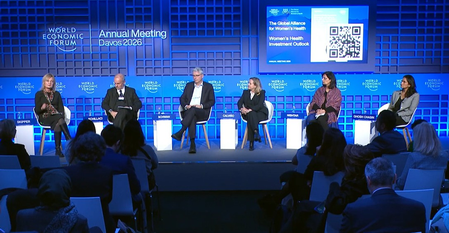
New Delhi, Jan 22 (IANS) Improving accessibility, affordability, and tailoring treatment and diagnostics to women's needs are some of the crucial measures to closing the health gap for the fairer sex by 2030, said experts at the ongoing World Economic Forum 2026 in Davos.
Women spend 25 per cent more of their lives in poorer health than men due to delayed diagnoses and limited access to appropriate care.
At a session titled " Breakthroughs in women's health, the experts highlighted how insufficient investment in sex-specific research and innovation for women results in preventable mortality, morbidity, and loss of economic potential -- estimated to be $1 trillion globally.
The panel unanimously pointed out that the focus needs to be on the human side of implementation.
“The greatest innovations are the ones that will end up being accessible, affordable, and used by women around the world,” said Gargee Ghosh Chasin, President, Global Policy and Advocacy, Gates Foundation.
“While invention is critical, access and use are equally critical. And that's what makes the difference between product and impact,” she added, while mentioning incredible innovations specific to women’s health, such as the HPV vaccine for cervical cancer, an AI-based ultrasound that will bring early diagnosis of high-risk pregnancy, and a microarray patch for contraception.
Sania Nishtar, Chief Executive Officer, Gavi-The Vaccine Alliance, stated that more than just innovation, it is important to translate science and evidence into policy, and then policy into pilots, and then pilots into scalable delivery.
“Innovation has to be matched with delivery capability. And the challenge is that if you do not have that delivery capability, if you do not have sustainable financing, you're unable to use innovations for the impact that they're intended to have,” she added.
Nadia Calviño, President, European Investment Bank, stressed the importance of primary health and the distribution of the preventative treatments to women.
“Primary health is the starting point for a healthy society. Of course, women's health is the basis for a healthy society, a stable society. So, I really think we have to put a lot of focus on that, the family doctors, the way that we can get these medicines and these preventative treatments to every woman around the world,” Calviño said.
Orazio Schillaci, Minister of Health, Ministry of Health of Italy, called for increasing the number of clinical trials tailored for women and personalising treatment for women. Schillaci also mentioned the potential of artificial intelligence in enhancing the health sector.
--IANS
rvt/
Gold, silver prices ease after Trump backs off from tariff threats on Europe

New Delhi, Jan 22 (IANS) Gold futures on the MCX dipped close to 1 per cent on Thursday from record high in the previous session due to profit booking, amid easing geopolitical tensions and strengthening of dollar.
Fears of a US‑EU trade conflict moderated after US President Donald Trump softened his tone on acquisition of Greenland.
MCX gold February futures dipped 0.78 per cent to Rs 1,51,665 per 10 grams. Meanwhile MCX silver March futures dipped 0.62 per cent to Rs 3,16,509 per kg.
Gold rates also dropped in the international futures market, with US gold futures consolidating near $4,790–$4,800 per troy ounce, after registering a fresh record high above $4,887 earlier in the week on COMEX.
The current dip reflects healthy profit-booking amid easing tariff fears, but the broader uptrend remains powerful, analysts said.
Open interest data in the futures market showed a decline in 'OI level', currently at 9870 lots, with price showing upside momentum. According to Aamir Makda, Commodity and Currency Analyst at Choice Broking, this trend indicated a long unwinding by traders, with no addition in long positions.
Meanwhile, COMEX silver traded firm near $92–$93 after recently touching record highs above $95.80.
Analysts said that robust industrial demand in sectors such as solar, EVs, AI, electronics and safe-haven flows amid tightening global supply powers the rally.
US dollar traded in a stable tone after Trump informed that tariffs won't be imposed on European countries over Greenland.
The dollar index rose to 98.81, making gold slightly expensive for overseas buyers.
At the World Economic Forum in Davos, Trump said that force would not be used to acquire the Arctic island, adding that he had “formed the framework of a future deal with respect to Greenland,” with NATO Secretary General Mark Rutte.
Investors also focus on upcoming cues from November Personal Consumption Expenditures (PCE) data, the Fed's preferred inflation gauge, and weekly jobless claims, both due later in the day.
Most market participants expect the US Federal Reserve to maintain interest rates unchanged at its January 27-28 meeting. However, two more cuts are expected later in the year.
—IANS
aar/na
India’s AI adoption to generate $1.7 trillion in economic value by 2035: Report
New Delhi, Jan 22 (IANS) As India’s semiconductor industry scales up, its adoption of artificial intelligence (AI) is projected to generate $1.7 trillion in economic value by 2035 and reshape industries across the economy, a new report has said.
A KPMG report, launched at the World Economic Forum 2026 in Davos, said that India’s responsible AI scaling gained support from robust data governance frameworks, sectoral adoption in healthcare, agriculture, education, and defence, and the creation of the IndiaAI Safety Institute.
“India’s emergence as a pivotal force in global trade, technology, and sustainability is underpinned by bold investments in semiconductor manufacturing and rapid adoption of artificial intelligence (AI),” the report said.
The business advisory firm highlighted India's achievement in the sector, such as approval of six semiconductor fabrication plants with an outlay of $1.3 billion and allocation of $2.2 billion for deep‑tech research and development.
Government-supported flagship initiatives such as the India Semiconductor Mission and Semicon India are accelerating chip‑making infrastructure, testing and advanced packaging, the report said.
The report highlighted over 38,000 GPUs deployed under the IndiaAI Mission, over 6 million people employed in the technology and AI ecosystem and that 89 per cent of new startups in 2024 leveraged AI, the report said.
“India’s transformation is remarkable. What we’re seeing is more than economic growth, it’s about building trust and shaping the future of global collaboration. From advanced manufacturing and digital infrastructure to clean energy and AI, India is building an ecosystem that drives resilience and innovation at scale,” said Bill Thomas, Global Chairman and CEO, KPMG International.
“The country’s ability to turn ambition into action is what stands out, delivering real progress that opens new opportunities for businesses worldwide,” Thomas added.
India’s leadership in digital infrastructure, sustainability, and advanced technologies like semiconductors and AI sets new benchmarks, according to Yezdi Nagporewalla, Chief Executive Officer, KPMG in India.
The PLI schemes have attracted $22.2 billion, generating $207.9 billion in incremental production and creating 1.26 million jobs, and India reached a 50 per cent non‑fossil fuel share in installed capacity by June 2025, the report noted.
--IANS
aar/na