
No change in LPG refill timelines, stocks adequate: Govt
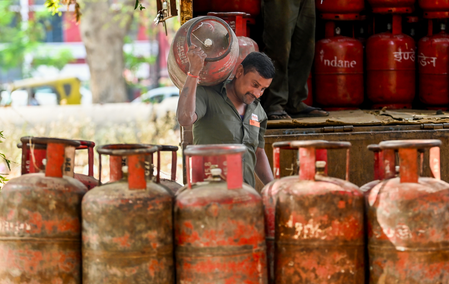
New Delhi, March 25 (IANS) The government on Wednesday dismissed reports claiming changes in LPG refill booking timelines, terming them misleading and unfounded.
The Ministry of Petroleum and Natural Gas (MoPNG) clarified that no revisions have been made to the existing refill booking norms for LPG connections.
The ministry stated that some media reports and social media posts had claimed that refill booking timelines had been altered to 45 days for Pradhan Mantri Ujjwala Yojana (PMUY) beneficiaries, 25 days for non-PMUY single-cylinder users, and 35 days for non-PMUY double-cylinder consumers.
“No such changes have been made,” the official statement said, adding that the current timelines remain unchanged.
As per the existing norms, LPG refills can be booked after 25 days in urban areas and 45 days in rural areas, irrespective of the type of connection.
The government also urged citizens not to believe or circulate such misinformation and to avoid unnecessary or panic booking of LPG refills.
It further assured that adequate LPG stocks are available across the country and there is no cause for concern.
Meanwhile, all domestic refineries are operating at high capacity with adequate crude inventories. Domestic LPG production has increased, and petrol and diesel stocks remain sufficient, according to the government.
The government has also ensured that ships carrying crude oil and LPG have arrived from multiple countries, and it continues to work on contingency plans to keep supplies uninterrupted.
In addition, a state-owned PSU firm – BPCL -- said that Bharat Petroleum rumours about petrol and diesel shortages in certain areas are completely unfounded.
"There is no shortage of fuel across the nation. India is a net exporter of petrol and diesel," the company said.
The Centre has also constituted seven empowered groups of officials and experts to handle the fallout of the Iran war on specific sectors of the Indian economy, including oil, gas, fertilisers, supply chains, and inflation.
--IANS
ag/na
Delhi Assembly once again receives bomb threat, email sender claims disillusionment with DMK
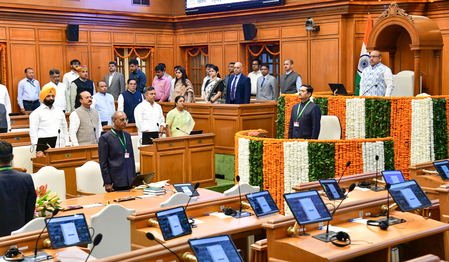
New Delhi, March 25 (IANS) The Delhi Legislative Assembly on Wednesday once again received a bomb threat via email, triggering heightened security and an immediate response from law enforcement agencies. The threatening message claimed that as many as 16 RDX-based Improvised Explosive Devices (IEDs) had been planted inside the Assembly premises, with a plan to detonate them at 1:40 P.M.
According to the Delhi Police, the sender identified himself as being from Coimbatore and alleged that he and his associates were supporters of a political party, DMK, but now felt betrayed. The email claimed that the individuals they once supported had subsequently been arrested, and that their attempts to bring attention to the matter were ignored by both the media and the courts.
The message further stated that, despite limited resources, the group had chosen to target the Delhi Legislative Assembly out of desperation. It also warned authorities to evacuate people from the premises, asserting that the intention was to cause damage to the property. The email reportedly included several controversial and inflammatory slogans, raising further concerns among officials.
This incident comes a day after a similar threat was received on Tuesday, when the Assembly and Speaker Vijender Gupta were targeted through separate emails. One of the emails warned that the Assembly would be blown up, while another extended the threat to a nearby Delhi Metro station.
Officials said that the email sent to the Speaker’s official account was received at 7:49 A.M., while another message was sent to the Assembly’s official email ID at 7:28 A.M.
The contents of Tuesday's email reportedly mentioned several high-profile figures, including Lieutenant Governor Taranjit Singh Sandhu, Prime Minister Narendra Modi, Union Home Minister Amit Shah, External Affairs Minister S. Jaishankar, Delhi Chief Minister Rekha Gupta, and Cabinet Minister Manjinder Singh Sirsa.
Following the threats, the Delhi Police launched a thorough investigation to trace the origin of the emails and assess their credibility. Security has been significantly tightened in and around the Assembly premises, as well as in nearby areas, as a precautionary measure.
Authorities have not ruled out any possibility and are treating the threats with utmost seriousness. Bomb disposal squads and other emergency services were placed on alert, and search operations were conducted to ensure the safety of the premises.
This is not the first such incident. Earlier, on February 23, Speaker Vijender Gupta had received a similar email threat from purported 'Khalistan' supporters, warning of a possible bomb blast targeting him and the Vidhan Sabha Secretariat. In that instance, the Speaker’s office promptly alerted the Delhi Police Commissioner, and necessary security arrangements were put in place.
The earlier email was allegedly sent by a group calling itself the 'Khalistan National Army' and had surfaced amid a controversy involving remarks attributed to Leader of Opposition Atishi in the Assembly, which were claimed to be disrespectful towards Sikh Gurus.
--IANS
jk/rad
UCC Bill not sudden move but result of long ideological commitment: Gujarat BJP chief
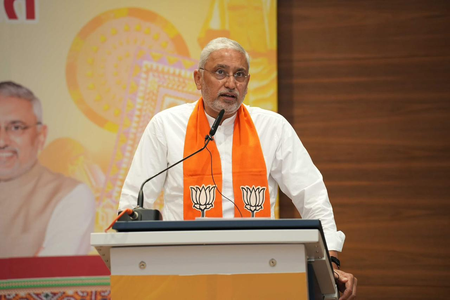
Gandhinagar, March 25 (IANS) Gujarat has become the second state after Uttarakhand to pass a Uniform Civil Code (UCC) Bill, with state BJP President Jagdish Vishwakarma on Wednesday stating that the move advances the goal of a uniform legal framework governing personal matters across communities.
In a statement issued following the Bill’s passage in the Assembly on Tuesday evening, Vishwakarma said the legislation, brought under the leadership of Prime Minister Narendra Modi and Chief Minister Bhupendra Patel, represents a firm step towards the principle of 'One Nation, One Law.'
He said the implementation of the UCC would address existing legal differences across communities in matters such as marriage, inheritance, succession, adoption, divorce, property rights and guardianship.
“At present, different laws exist based on religion, caste, sect and cultural beliefs in these matters. With the implementation of the UCC, these inconsistencies will now be removed,” he said.
Vishwakarma described the development as particularly significant for women in the state.
“This day is important for Gujarat and especially for the women of the state,” he said.
He added that the decision was the outcome of a long-standing ideological position rather than a recent move.
“This is not a sudden decision, but the result of continuous struggle, sacrifice and adherence to ideological commitment,” he said.
Referring to the Bharatiya Jana Sangh’s early resolutions, he said that in 1952 the party had called for the abrogation of Article 370, integration of Jammu and Kashmir, construction of a Ram temple in Ayodhya and the implementation of a Uniform Civil Code.
“Article 370 has already been abrogated, a grand Ram temple has been built in Ayodhya, and today Gujarat has become the second state after Uttarakhand to bring in the Uniform Civil Code,” he said.
He also criticised Opposition parties, alleging that they had resisted the UCC for political reasons.
“For decades, the Opposition opposed the UCC only for vote-bank and appeasement politics and made efforts to keep the country divided,” he alleged.
He added, “Those who used to say that the Ram temple will never be built or that if Article 370 is removed, rivers of blood will flow, have now been proven wrong.”
Emphasising the provisions of the UCC, Vishwakarma said, “The Uniform Civil Code provides equal rights to every citizen without discrimination on the basis of caste, religion or sect. It is a milestone for social justice and equality.”
He further said the passage of the Bill reflected the party’s stated approach to governance.
“The BJP works with the spirit of ‘Nation First’ and believes in ‘Sabka Saath, Sabka Vikas and Sabka Nyay’. The commitment made to the people has been fulfilled,” he said.
He added that the state government had acted in accordance with Article 44 of the Constitution and strengthened the foundation for a uniform legal system.
He said that with the resolve of the Jana Sangh, the commitment of the BJP and the leadership at the Centre, “India is moving forward in a new direction”.
--IANS
mys/rad
Nagaland woman found hanging in Chikkamagaluru; harassment allegations surface

Chikkamagaluru (Karnataka), March 25 (IANS) A young woman from Nagaland was found dead under suspicious circumstances in Chikkamagaluru district of Karnataka, on Wednesday.
Her body was discovered hanging at her residence in Aravindnagar, Chikkamagaluru city.
The deceased has been identified as 22-year-old Linsula. According to police, she was working at a resort. Preliminary investigations revealed that she had spoken to a person identified as Kivishe Kinimi for about half an hour prior to the incident. It has also come to light that she had mentioned the names Rajesh and Tejas in her diary.
Lashila Inchugar, connected to Linsula, has filed a complaint at the Basavanahalli police station against Rajesh and Tejas, alleging that they had been harassing her. Police have visited the spot and initiated further investigation.
Meanwhile, police sources confirmed that Linsula had mentioned in her diary that two youths, Rajesh and Tejas, were harassing her. She wrote that the two had begun subjecting her to physical and mental harassment under the pretext of love and a relationship.
Linsula had also noted this in her diary. She bore several responsibilities, including managing her family, taking care of her parents, and looking after their health. Despite facing harassment, she continued working while enduring it, police said.
The diary has been taken into police custody, and her family in Nagaland has been informed. More details are yet to emerge regarding the incident.
On, November 26, 2024, an incident of a 19-year-old woman from Assam, Maya Gogoi being stabbed to death in a Bengaluru hotel had come to light. The decomposed body of Maya Gogoi was found in service apartment that she booked with her boyfriend Aarav Harni. The investigations revealed that the accused boy friend had stayed with Maya Gogoi's dead body for a day.
As per the police, Harni stabbed Gogoi to death with a knife that he allegedly brought with him and stayed with the body for an entire day before walking out of the rented apartment in the Indiranagar area. Photos showed blood on a blanket and pillows in the room. A yellow nylon rope, that Harni allegedly ordered from a quick commerce site, is also seen on the floor.
During the investigation, the police found out that he had ordered a two-meter nylon rope from the quick commerce site Zepto.
--IANS
mka/rad
Panic buying at fuel stations in Hyderabad; petroleum dealers association says no shortage
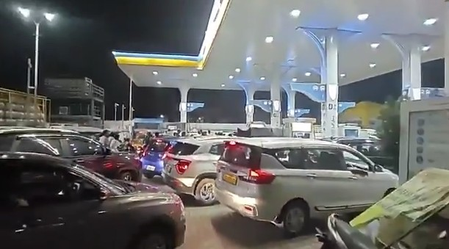
Hyderabad, March 25 (IANS) Chaos prevailed at petrol bunks across Hyderabad on Wednesday as rumours of fuel shortage due to the ongoing war in West Asia triggered panic buying by customers.
Long queues of motorists were seen at almost all retail outlets in the twin cities of Hyderabad, Secunderabad and the outskirts, even as authorities assured people that adequate stocks are available.
Hundreds of vehicles, including trucks, buses, vans and cars, were seen at major filling stations, leading to traffic jams. Motorists were seen waiting in queues for several hours to fill petrol and diesel.
Chaotic scenes were witnessed at fuel stations in the busy areas of Ameerpet, Khairatabad, Lakdi Ka Pul, Begumpet, Secunderabad, Nampally, Abids, Mehdipatnam, Koti, Attapur, Kukatpally, Erragadda, LB Nagar and Vanasthalipuram.
‘No stock’ boards were put up at several bunks as panic buying led to exhaustion of stocks in no time.
A similar situation prevailed in Medak, Mahabubnagar, Karimnagar, Warangal, Nirmal and other towns in Telangana.
Meanwhile, the Telangana Petroleum Dealers Association has assured people that there is no shortage of fuel, and adequate stock is available with HPCL, IOCL and BPCL
“Due to the circulation of false and misleading news regarding fuel shortage, many people are rushing to fuel stations and filling their tanks unnecessarily. This panic buying has led to an abnormal surge in sales -- nearly 2.5 to 3 times the normal levels -- resulting in temporary stock exhaustion at several retail outlets,” said Marri Amarender Reddy, president of Telangana Petroleum Dealers Association.
He assured citizens that there is no shortage of fuel and that supply chains are functioning normally.
The association also cautioned citizens that carrying petrol or diesel in cans for storage is against Petroleum and Explosives Safety Organisation (PESO) norms and poses a serious safety risk.
The Consumer Affairs, Food and Civil Supplies Department, Government of Telangana, categorically clarified that there is ‘absolutely no shortage of petrol, diesel, or domestic LPG anywhere in the state.
The department said the supply chain from oil refineries to local depots is fully operational, and self-sufficient stock is available to meet the regular daily requirements of all citizens across all districts.
Recent reports of long queues and temporary "No Stock" boards at certain retail petrol outlets are strictly the result of sudden, unwarranted panic buying fuelled by false rumours. When citizens unnecessarily rush to fill their tanks to full capacity, it creates an artificial scarcity, despite adequate fuel being available at the depots.
The department also stated that recent administrative changes regarding advance-payment models by Oil Marketing Companies (OMCs) have caused minor, temporary logistical adjustments for some local dealers. This is solely an internal administrative measure and has nothing to do with a lack of supplies.
Meanwhile, Chief Minister A. Revanth Reddy will be holding a meeting with top officials later in the day to review the availability of petrol, diesel and LPG.
--IANS
ms/dpb
HM Amit Shah to chair all-party meeting on West Asia conflict
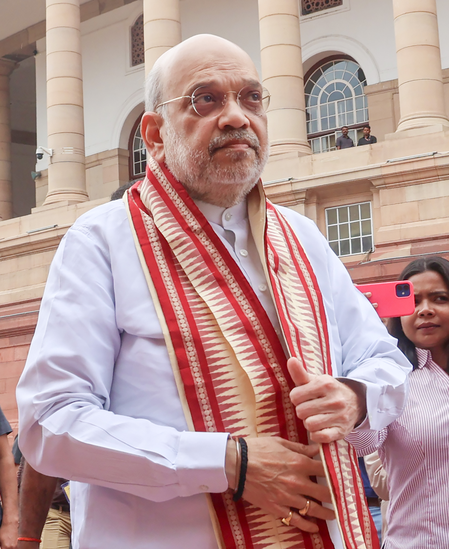
New Delhi, March 25 (IANS) Home Minister Amit Shah will chair the all-party meeting on Wednesday evening to brief political leaders on the evolving crisis in West Asia, amid rising concerns over its economic and security implications for India.
Five to six ministers, including External Affairs Minister (EAM) S. Jaishankar, will attend the meeting on behalf of the government.
Foreign Secretary Vikram Misri will provide a briefing on the latest situation in West Asia during the meeting.
The meeting is scheduled for 5 p.m. inside the Parliament complex.
The initiative follows statements made by Prime Minister Narendra Modi in both Houses of Parliament, where he described the situation as an "unprecedented crisis" with potentially long-lasting consequences.
The conflict in West Asia has now entered its fourth week, disrupting key maritime trade routes, particularly through the Strait of Hormuz. The tensions have contributed to volatility in global energy markets and raised concerns over supply chains and inflation, prompting the government to step up consultations with political stakeholders.
Opposition parties, including the Congress, have been pressing the government for a detailed discussion in Parliament on the issue. In the Rajya Sabha, Leader of the Opposition Mallikarjun Kharge criticised the government's decision to opt for a briefing instead of a full debate, arguing that the gravity of the situation warranted a comprehensive discussion in the House.
Leader of the Opposition in the Lok Sabha, Rahul Gandhi, also attacked the government, alleging that India's foreign policy has become "compromised" and driven by personal considerations rather than national interest. While welcoming the move to hold an all-party meeting, Gandhi stated that he would be unable to attend due to a prior engagement in Kerala.
The all-party meeting comes a day after Rajnath Singh chaired a high-level security review attended by Chief of Defence Staff General Anil Chauhan, the three service chiefs, and senior officials, including DRDO Chairman Dr Samir Kamat, to assess the evolving regional situation.
With geopolitical tensions escalating and their global fallout becoming more pronounced, the meeting is expected to serve as a key platform for the government to brief opposition leaders and seek broader political consensus on India's approach to the crisis.
--IANS
sd/
Guiding through danger: How Indian Navy is steering ships across Strait of Hormuz
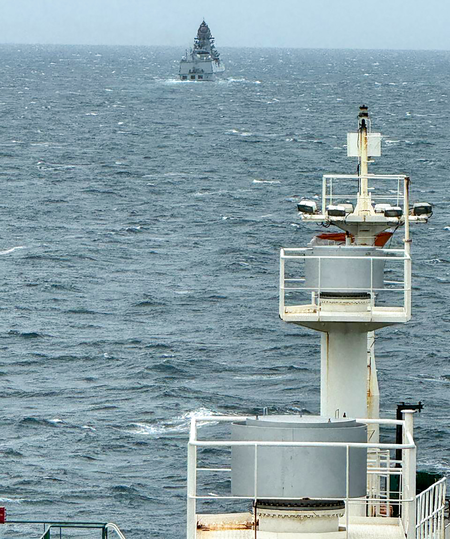
New Delhi, March 25 (IANS) In the tense waters of the Strait of Hormuz, where global energy flows have come under disruption, a quiet but determined effort is underway by the Indian Navy to keep the country's energy supply undisrupted.
As Iran's restrictions ripple across international energy markets amid the West Asia conflict, India, through diplomacy, has secured permission from Tehran to pass its ships through the Strait of Hormuz and has managed to sustain the movement of its shipments.
The Indian Navy has been given the responsibility of ensuring the safe return of the oil tankers. But this is not a conventional escort mission. Naval personnel are not merely accompanying tankers; they are guiding them, step by step, through one of the world's most sensitive maritime passages.
The Indian Navy has launched 'Operation Urja Suraksha'. This operation entails the positioning of over five advanced warships in the vital maritime chokepoint of the Strait of Hormuz.
According to government officials, the Navy remains in constant contact with vessels preparing to exit the Persian Gulf. Each ship is guided individually through the Strait, with precise instructions on routes and procedures designed to ensure safe passage.
The approach is cautious and deliberate, reflecting the risks that lie beneath the surface.
Once the vessels clear the Strait, Indian Navy destroyers and frigates take over, escorting them through the initial stretch of their onward journey. It is a layered security arrangement, combining guidance with protection.
This effort is being supported by an increased naval presence in the Gulf of Oman, where adequate warships and logistical resources have been deployed to ensure that escort operations continue without interruption.
For the crews aboard these tankers, the journey is far from routine. Modern shipping relies heavily on navigation systems built on hydrographic charts -- detailed maps of the ocean floor that make safe passage possible. Without them, movement through such waters would be fraught with danger.
The risks are not theoretical. According to media reports, US Intelligence agencies have alleged that Iran has deployed underwater mines in and around the Strait of Hormuz. These mines, capable of causing severe damage, add to the uncertainty that vessels must navigate. Other potential threats in the region further heighten the sense of caution.
It is in this environment that the Indian Navy's guidance becomes critical. By directing Indian-flagged vessels along carefully identified safe routes, it helps crews avoid unseen hazards and move forward with a measure of confidence.
Much of this capability rests on hydrographic charts, which remain indispensable. Beneath the sea's surface lies a constantly changing landscape. Ocean depths vary widely -- from just a few metres near harbours to several thousand metres in open waters -- and natural events such as tsunamis can alter the seabed over time.
These charts are created by specialised survey vessels that scan the ocean floor, mapping its contours and identifying safe navigation channels. Across the Arabian Sea and the Indian Ocean, a vast number of vessels -- ranging from warships to container carriers and oil tankers -- depend on charts produced by India.
The Indian Navy's hydrographic work extends beyond national waters. It also assists friendly countries, at their request, in surveying their Exclusive Economic Zones and preparing navigation charts. Agreements with several nations in the Indian Ocean Region allow India to contribute to safer maritime operations far beyond its own coastline.
Once prepared, these charts gain international acceptance and can be used by any country or commercial entity.
In a region marked by tension and uncertainty, this combination of guidance, expertise, and quiet coordination is helping ensure that ships continue to move -- carefully, steadily, and safely -- through one of the world's most critical waterways.
--IANS
sd/rad
Kerala Assembly polls: Varkala turns battleground as crossover twist reshapes electoral contest
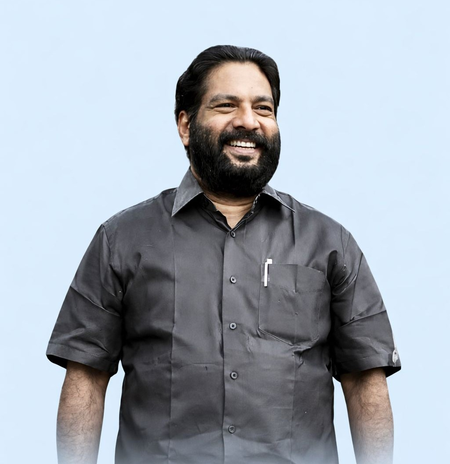
Varkala, March 25 (IANS) After the high-profile contest in Nemom, the political spotlight in Thiruvananthapuram district is firmly shifting north to Varkala in Kerala, where an unexpected turn of events has transformed an otherwise predictable contest into one of the most closely watched battles of the Assembly election.
Two time CPI(M) legislator, V. Joy, is seeking a hat-trick of victories from the constituency, having first won the seat in 2016 by defeating veteran Congress leader Varkala Kahar.
Joy retained the seat in 2021 when Kahar was replaced by a relatively junior candidate, consolidating his position as a strong regional figure and, more recently, as the powerful CPI(M) district secretary.
However, Kahar’s return to the fray has significantly altered the political dynamics.
A seasoned campaigner and three time former MLA from the constituency, Kahar brings with him both experience and a residual support base, setting the stage for a direct and intense contest with Joy.
What has added a dramatic twist to the race is the entry of BJP candidate S. Smitha, whose candidature has triggered considerable political ripples.
In a development that caught both cadres and observers off guard, Smitha was seen accompanying Joy during the filing of his nomination, only to surface hours later alongside state BJP president Rajeev Chandrasekhar, before eventually filing her nomination as the BJP candidate.
The optics of this sudden shift have not gone unnoticed.
Smitha’s political lineage adds another layer of complexity, her father, Sundaresan, had contested as a CPI(M) candidate in 2006, losing to Kahar during the latter’s second electoral victory.
Her crossover is being viewed as both symbolic and strategic, potentially cutting into traditional vote banks.
For Joy, the timing of this development is particularly challenging.
His leadership within the party’s district unit has reportedly faced internal dissent, with sections of the organisation expressing discontent.
The emergence of a candidate with perceived proximity, now contesting under a rival banner, could complicate his electoral arithmetic.
With three distinct political forces now actively in play, Varkala is shaping up as a constituency where margins could be tight and outcomes uncertain, making it a key seat to watch in the district.
--IANS
sg/rad
PM Modi to visit Gujarat on March 31 to inaugurate multiple urban development projects
Gandhinagar, March 25 (IANS) Prime Minister Narendra Modi will visit Gujarat on March 31 to inaugurate and lay foundation stones for a range of urban development projects, as the state highlights two decades of rapid urbanisation and infrastructure expansion.
The visit comes as Gujarat marks 20 years since 2005, when Narendra Modi, then Chief Minister, had declared the year as “Urban Year” with a focus on strengthening urban infrastructure.
The state government said the urban development journey was completed in two decades by 2025, during which Gujarat witnessed significant growth in planned city development and civic infrastructure.
Officials said cities across the state have seen the expansion of roads, street lighting, drinking water pipelines, sewerage systems and urban green spaces.
Housing has also been provided to economically and socially weaker sections in urban areas, alongside the implementation of multiple town planning schemes aimed at accelerating urbanisation and improving ease of living.
To sustain this trajectory, the government under Chief Minister Bhupendra Patel had announced 2025 as “Urban Development Year” in the previous state budget.
Gujarat’s transport infrastructure has expanded through road, rail and air connectivity projects.
Overbridges and underbridges are being constructed in major cities, including Ahmedabad, Rajkot, Vadodara and Surat to manage rising traffic.
The Sudarshan Setu bridge connecting Dwarka and Bet Dwarka has been opened, along with approach roads and parking facilities, easing access between the two locations.
Several highway and expressway projects are under development, including the Jamnagar-Bhatinda Highway, Vadodara-Mumbai Expressway and Porbandar-Dwarka National Highway.
The state has also announced two greenfield corridors -- the 430-km Namo Shakti Expressway from Deesa to Pipavav and the 680-km Somnath-Dwarka Expressway -- to strengthen regional connectivity.
Urban transport has seen expansion with metro rail projects. Phase 2 of the Ahmedabad Metro has recently been completed, improving connectivity between Ahmedabad and Gandhinagar, while 24 trainsets have been ordered for the Surat Metro.
The Mumbai-Ahmedabad bullet train project is also progressing through Gujarat. Since September 2022, when the first Vande Bharat train was flagged off in the state, five such trains are now operational.
Under the 'Amrit Bharat Station' scheme, 89 railway stations in Gujarat are being redeveloped, of which 18 have been inaugurated.
Airport infrastructure has also been upgraded. The Hirasar Greenfield Airport in Rajkot has been developed for Rs 1,405 crore, while Surat International Airport has been established with an investment of Rs 3,400 crore.
Regional connectivity under the UDAN scheme has expanded services at Bhavnagar, Jamnagar, Kandla, Keshod, Mundra and Porbandar airports.
In urban utilities, projects under the Atal Mission for Rejuvenation and Urban Transformation (AMRUT) 2.0 have been implemented to improve water supply and sewerage systems.
During 2025, water supply projects worth Rs 630.39 crore were executed, covering 82,328 households, while sewerage projects worth Rs 575.58 crore covered 24,206 households.
The works included the creation of 67 MLD of additional sewage treatment capacity and the laying of 113.31 km of sewer lines.
Under the Smart City Mission, six cities -- Ahmedabad, Surat, Vadodara, Rajkot, Gandhinagar and Dahod -- have undertaken 359 projects worth over Rs 11,507 crore, of which 357 projects valued at Rs 11,277 crore have been completed, with the remaining nearing completion.
Housing initiatives under the Pradhan Mantri Awas Yojana (Urban) have led to the construction of 9,19,204 houses in Gujarat for economically weaker and lower middle-income groups.
In Rajkot, 1,144 houses have been built under the Lighthouse Project using monolithic concrete construction technology.
Following this, more than one lakh additional houses have been approved under PMAY (Urban) 2.0, announced in 2025.
The state has also upgraded nine municipalities -- Nadiad, Surendranagar, Gandhidham, Morbi, Navsari, Mehsana, Anand, Vapi and Porbandar -- to municipal corporations, increasing the total number to 17 and extending urban governance and services to newly integrated areas.
In the 2026-27 state budget, Rs 33,504 crore has been allocated to the Urban Development and Urban Housing Department.
The 'Swarnim Jayanti Mukhyamantri Urban Development' scheme allocation has been increased by around 17 per cent to Rs 16,116 crore.
This year's budget also provides Rs 1,278 crore to develop Olympic-ready urban infrastructure, including sports complexes and public transport systems, in preparation for the Commonwealth Games 2030.
Additional provisions have been made for water supply, drainage, lake development, metro expansion in Ahmedabad and Surat, the Gujarat Metro Rail Project and the Swachh Bharat Mission (Urban).
Officials noted that in 2023, Ahmedabad hosted Urban-20 meetings under India’s G20 presidency, bringing together representatives from cities of member countries to discuss urbanisation and city planning.
The government said Gujarat’s urban growth has been driven by economic expansion, industrial development and infrastructure investment, transforming several areas into urban centres and attracting investment and migration.
--IANS
mys/dpb
PM should personally brief all-party meet on West Asia, say Oppn MPs
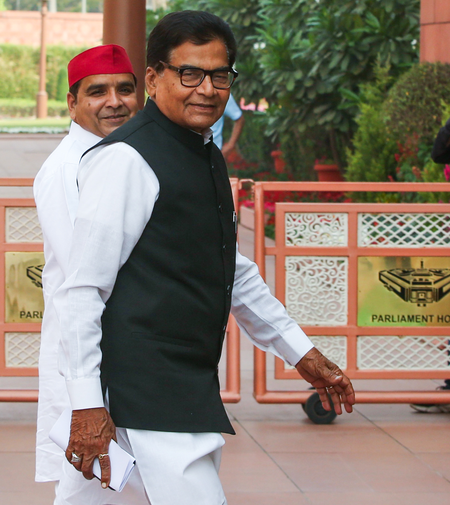
New Delhi, March 25 (IANS) Political leaders from across the spectrum reacted strongly on Wednesday ahead of the all-party meeting convened to discuss the ongoing West Asia crisis, with several welcoming the initiative but raising concerns over its timing and format.
Congress MP Saptagiri Sankar Ulaka welcomed the government’s move but emphasised the need for Prime Minister Narendra Modi to address all party leaders directly.
“The proposal for an all-party meeting is a positive step. But it is crucial that Prime Minister Modi personally briefs everyone about the situation in West Asia and India’s role in resolving it,” he told IANS.
Ulaka’s statement reflects a broader sentiment in the Opposition that the meeting should not be a routine briefing but a platform for full discussion.
From the Samajwadi Party, MP Ram Gopal Yadav highlighted concerns about the short notice.
“The meeting was called for 5 PM today, with notice sent just yesterday. From the Samajwadi Party, our leaders Javed Ali Khan and Dharmendra Yadav have been invited,” he said, signalling the party’s readiness to participate but also underscoring the need for proper preparation.
BJP MP, Shashank Mani Tripathi, praised the government’s approach and Prime Minister Modi’s earlier statements in Parliament.
“The day before yesterday, Prime Minister Modi addressed the Lok Sabha to inform the nation. He made it clear that we must act together to navigate this crisis,” he said, highlighting the ruling party’s focus on national unity amid the conflict.
Leaders from different parties reacted in line with their political positions: Opposition MPs stressed on transparency and a full debate, while ruling party MPs emphasised the need for coordinated action and support for the government’s response.
The all-party meeting is scheduled for 5 P.M., inside the Parliament complex today.
It will be chaired by Defence Minister Rajnath Singh, with External Affairs Minister S. Jaishankar expected to brief leaders on the latest developments and India’s diplomatic stance.
The meeting follows Prime Minister Modi’s statements in both Houses of Parliament, where he described the West Asia situation as an “unprecedented crisis” with potential long-term implications.
--IANS
rs/rad